
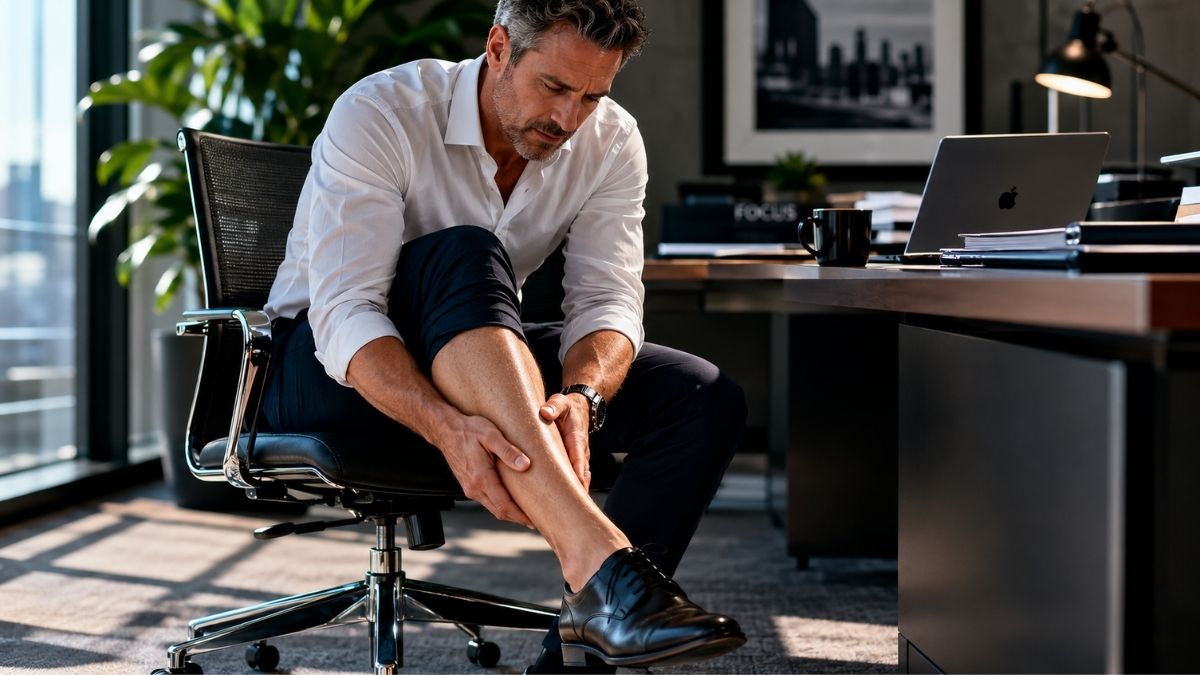
You sat down to get something done, and now your legs feel heavy and stiff without you doing anything strenuous. That feeling is not your imagination.
Most people who sit for hours at a desk do not know that their legs are quietly losing blood flow, and the fix takes under two minutes. This article is for desk workers and remote workers aged 30 to 60 who spend most of their day seated.
By the end, you’ll know exactly what prolonged sitting and vein health have to do with each other, and the specific moves that get blood moving again in under 120 seconds.
Vascular Stagnation Auditor
Assess the real-time impact of your desk routines on lower-limb venous return and generate a targeted 120-second calf pump activation protocol.
1. Uninterrupted Sitting Duration
On a typical workday, how long do you remain seated at your workstation before standing up or moving? (Select one)
2. Observed Lower-Limb Symptoms
Select any regular physiological changes you observe in your lower legs by the end of a long desk shift. (Select all that apply)
Modeling Popliteal Shear Rate…
Calculating fluid pooling and endothelial wall stress adjustments against current baseline.
Vascular Status
Your 2-Minute Calf Pump Counter-Routine
Based on your baseline profile, execute this sequence to break stagnation. Click any routine below to load it into the active desktop timer.
⚠️ Clinical Clearance Notice
If you have a historical baseline involving deep vein issues, peripheral arterial restrictions, structural heart weaknesses, or active localized skin mutations, secure direct clearance from your physician before introducing localized movement modifications or compression garments.
What Your Legs Are Losing Right Now
Your legs feel fine. You're just sitting. That's the problem. Your calf muscles are not just for walking; they are the second heart your veins depend on, and every long sitting session switches that second heart off.
Here is what that means. Deep veins in your lower legs run through the middle of your calf muscles. Every time those muscles contract, during a step, a climb, or even standing up to stretch, they squeeze those veins hard, pushing blood upward toward your heart. The moment you sit down and go still, that squeezing stops.
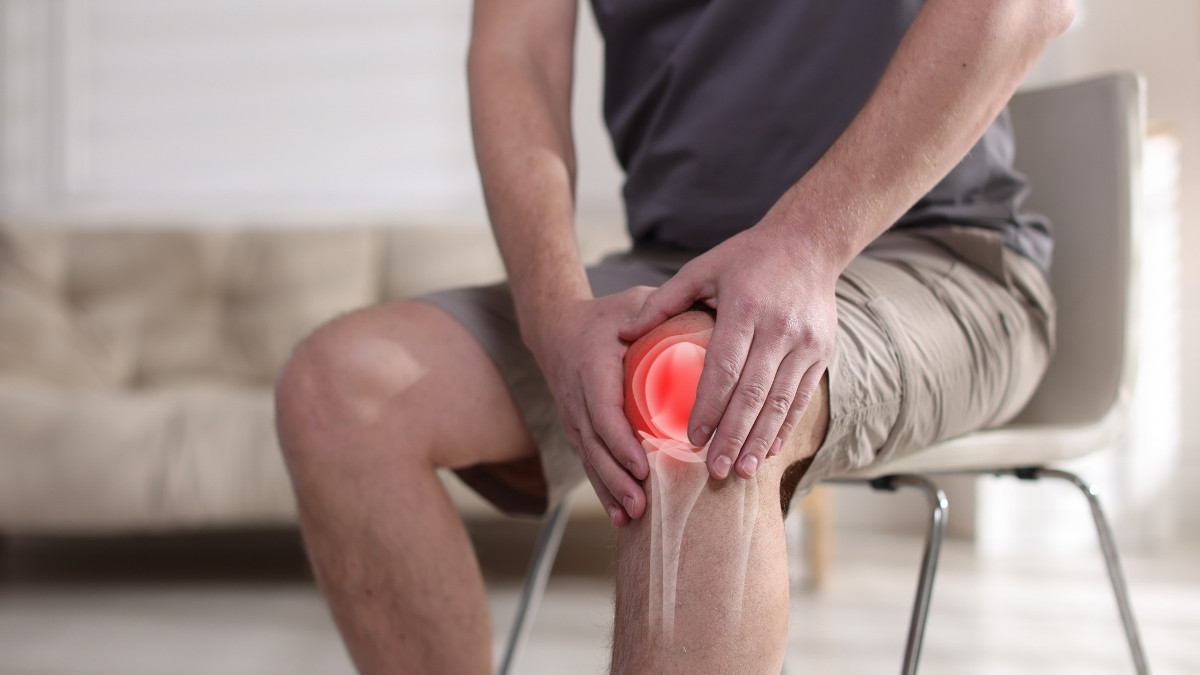
Blood starts pooling. It moves slowly. Pressure builds inside the vein walls. The valves designed to keep blood flowing in one direction now work against gravity without the muscle contractions that normally assist them.
Research confirms this happens fast. Studies in healthy young men and women found that blood flow and shear rate [the speed at which blood moves across vessel walls] in the popliteal artery [the major artery behind the knee] begin to decline within the first minutes of sitting.
This was not a result of hours of immobility. It started with the transition from standing to seated.
A separate population-based cohort study found that people with reduced calf muscle pump function were at significantly higher risk of venous thromboembolism [blood clots forming in the deep leg veins or lungs] compared to those with normal pump function, after a median follow-up of more than 11 years.
The mechanism is direct: less muscle activity means less pump action, which means slower-moving blood.
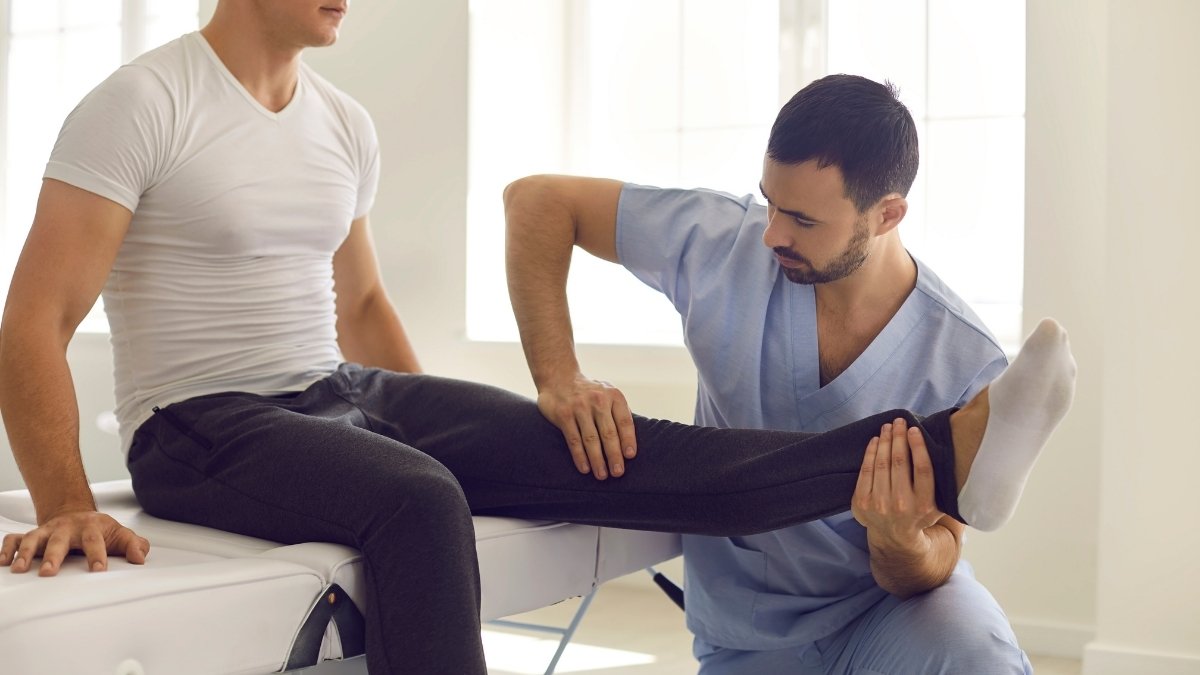
What you feel as leg heaviness is what the research measures as reduced venous return. The two descriptions are the same event. This is the core of how prolonged sitting and vein health connect: not through abstract long-term risk, but through a pump that stops working the moment you stop moving.
The Two-Minute Window You Keep Missing
You probably know you should take breaks. What you might not know is how little movement it actually takes to protect the blood vessels in your legs, and how quickly that protection kicks in.
Researchers at the University of Missouri studied what happened inside the popliteal artery of healthy adults during three hours of sitting. One leg was intermittently fidgeted, small repetitive foot movements, for one minute on and four minutes off.
The other leg stayed completely still. The fidgeting leg showed improved blood vessel function by the end of the session.
The still leg showed significant impairment.
One minute. Every five minutes of sitting.
That was enough.
In a separate scoping review of studies examining physical activity breaks during prolonged sitting, researchers found that activity breaks of any intensity improved endothelial function [the ability of blood vessel walls to expand and contract in response to blood flow] by an average of +0.5%, while prolonged sitting without breaks were associated with an average decline of -1.5%.
Even light movement, not a brisk walk, not exercise, was enough to reverse the downward trend.
The practical application is simple. You do not need to leave your desk. You do not need to break into a sweat. You need your calf muscles to contract, interrupt the stillness, and restart the pump.
This is the window most desk workers miss: the first 45 to 60 minutes of an unbroken sitting session. That is when the simple intervention still costs almost nothing. Once blood has been pooling for longer, the recovery takes more effort and more time.
Prolonged Sitting and Vein Health: What Happens Past the 30-Minute Mark
Most people think the risks of sitting too long are distant, something that catches up with you over years. The research on prolonged sitting and vein health tells a more specific story.
A 2024 meta-analysis of multiple studies, published in Scientific Reports, found that each additional hour of sedentary behavior per day is associated with a 2% higher risk of venous thromboembolism [a condition where blood clots form in the deep leg veins or lungs].
After the researchers adjusted for physical activity levels, sedentary time was still independently associated with a 19% higher VTE risk.
In other words, exercising regularly does not fully cancel out the effect of how long you sit without breaking it up.
One case-control study of adults aged 18 to 65 attending vascular clinics found that sitting for at least 10 hours in a 24-hour period, with at least two hours at a stretch without standing, was linked to elevated VTE risk in this working-age population.
In 2025, researchers using wrist accelerometers to measure sitting time objectively rather than relying on self-reports found that longer sitting bout duration was associated with greater VTE risk in women aged 63 and older.
Here is the counterintuitive finding. The 2024 meta-analysis showed that physical activity and sedentary time function as independent risk factors. Meeting your weekly exercise target reduces your risk, but it does not reset your vein health between sessions the way regular movement breaks do.
The risk is not about total hours. It is about how long you sit without interruption.

BEFORE YOU START: Talk to your doctor before adding compression stockings or a new movement routine if you have a history of blood clots, peripheral arterial disease, skin conditions on your legs, or heart failure. The steps below are appropriate for most healthy desk workers but are not a substitute for medical advice.
The Cheap Tool That Supports Your Veins All Day Long
You can not always stand up. Long calls, back-to-back meetings, and airline seats all make movement breaks impractical. For those stretches, graduated compression stockings do some of the work your calf muscles are not doing.
Graduated compression means the stocking is tightest at the ankle and gradually looser toward the knee. That pressure profile mimics the directional squeeze of a working calf muscle, pushing blood upward against gravity.
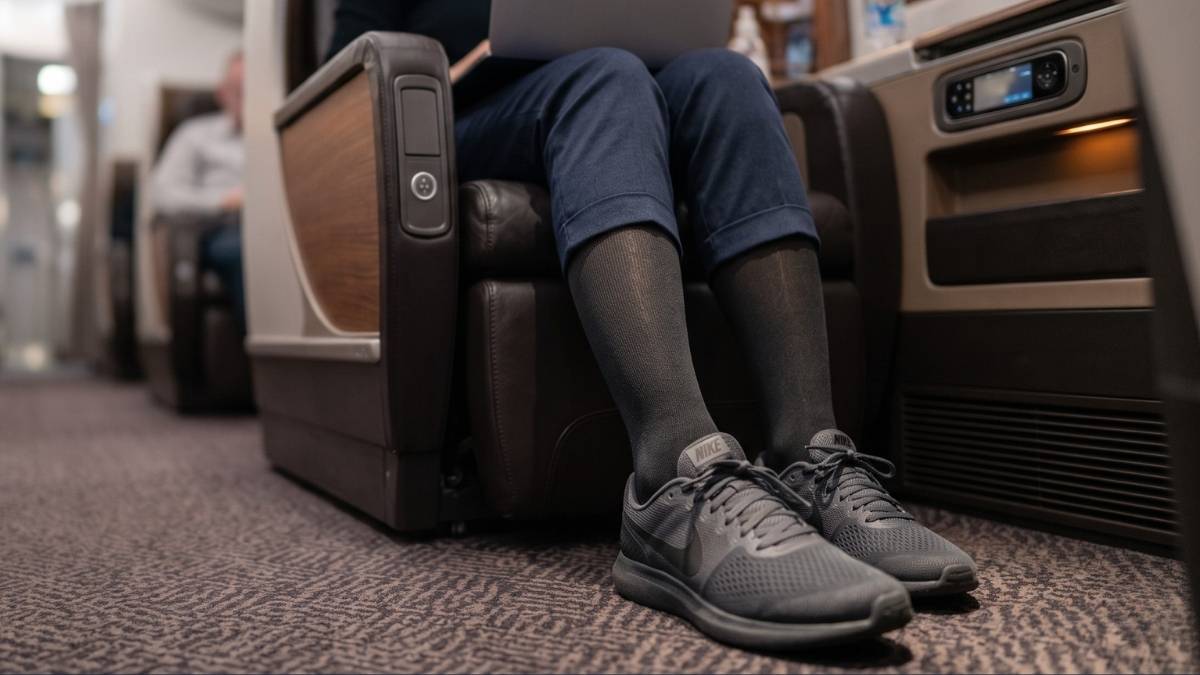
A randomized cross-over trial found that compression garment stockings reduced blood pooling in the lower limbs during prolonged sitting compared to no stockings in the same participants under the same conditions. The effect is not dramatic. Compression stockings are not a replacement for movement, but they provide meaningful support during the stretches when movement is not an option.
A few things to know before buying:
- Compression level matters. Mild compression (15 to 20 mmHg) is suitable for most desk workers; anything higher typically requires a medical recommendation.
- Graduated is different from uniform. Compression socks sold as "support socks" without a graduated profile do not produce the same venous effect.
- Who should not use them without medical clearance: Anyone with peripheral arterial disease [reduced blood flow to the legs due to narrowed arteries], open wounds or ulcers on the legs, or severe skin conditions. If you are unsure, ask your doctor first.
For everyone else, a pair of graduated compression socks worn during a long flight, a day of back-to-back meetings, or a stretch of deep work is one of the lowest-effort, lowest-cost tools available for vein health. The moments you can get up and move, though, are where the actual pump work happens.
Seated Moves That Restart Your Leg Pump (Ranked by Blood Flow Impact)
When you can move, these are the moves that matter most, ranked by how strongly they activate the calf pump and drive blood upward through the deep leg veins.
1. Standing calf raises
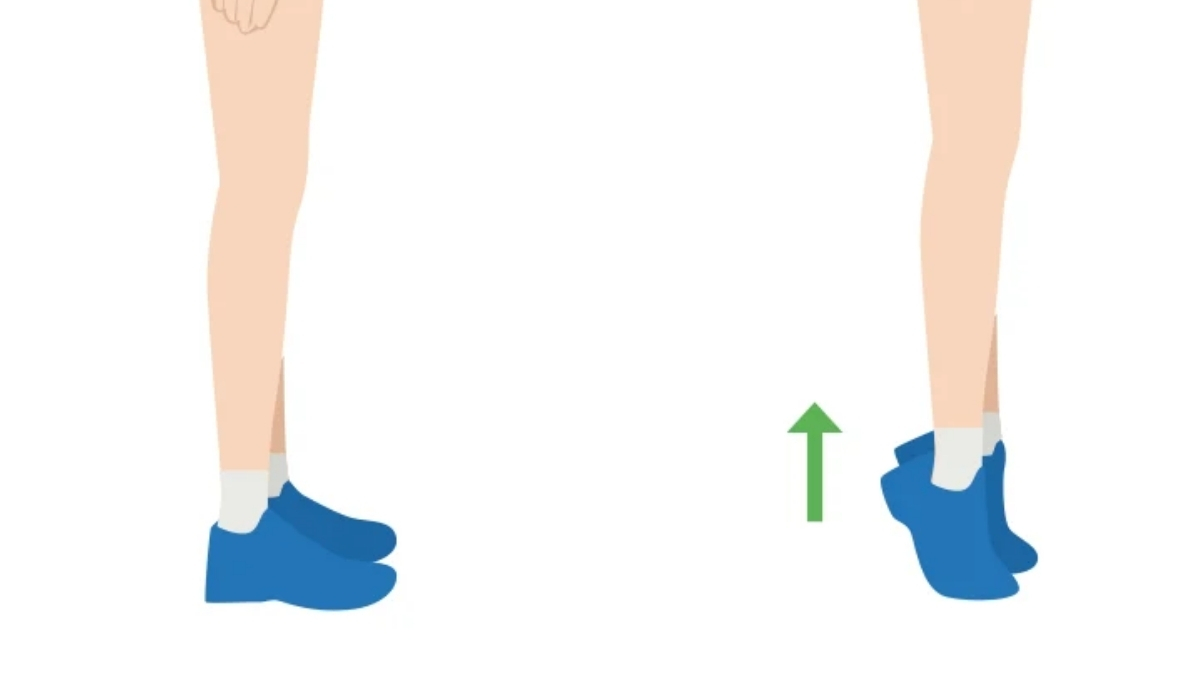
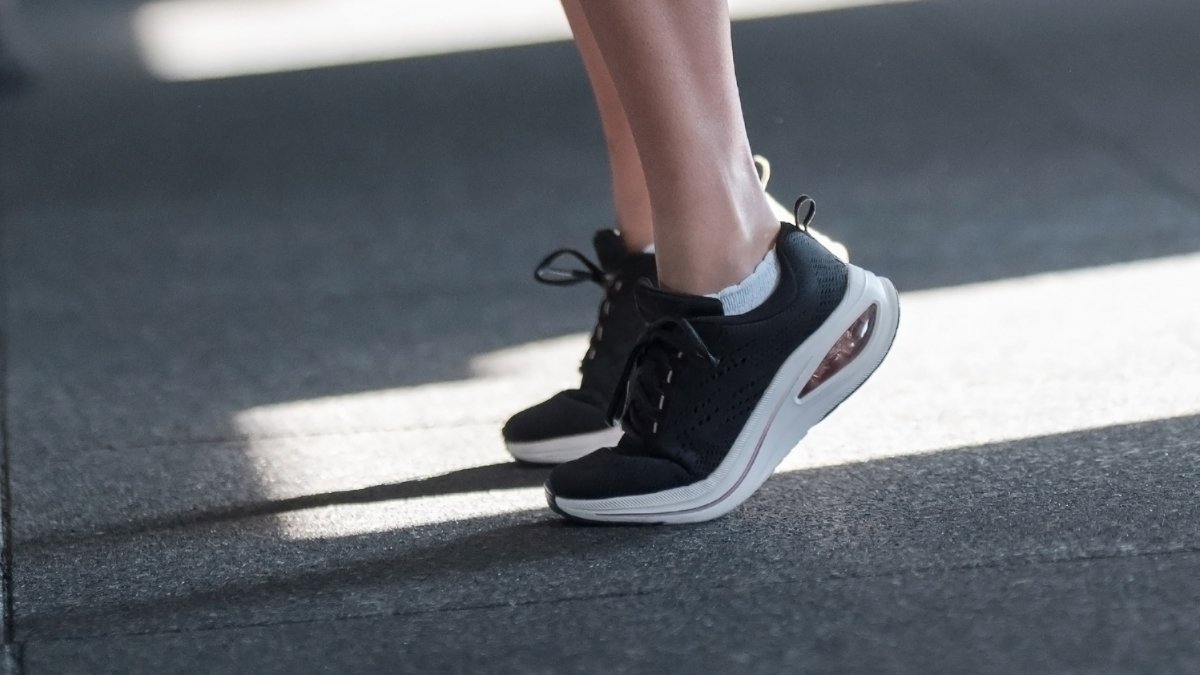
Stand up, rise onto the balls of your feet, then lower slowly. Ten to 15 reps. This activates the gastrocnemius and soleus (the full calf engine) and generates strong venous pumping action through the full calf muscle group. Do these every 45 to 60 minutes.
2. Ankle pumps (seated)
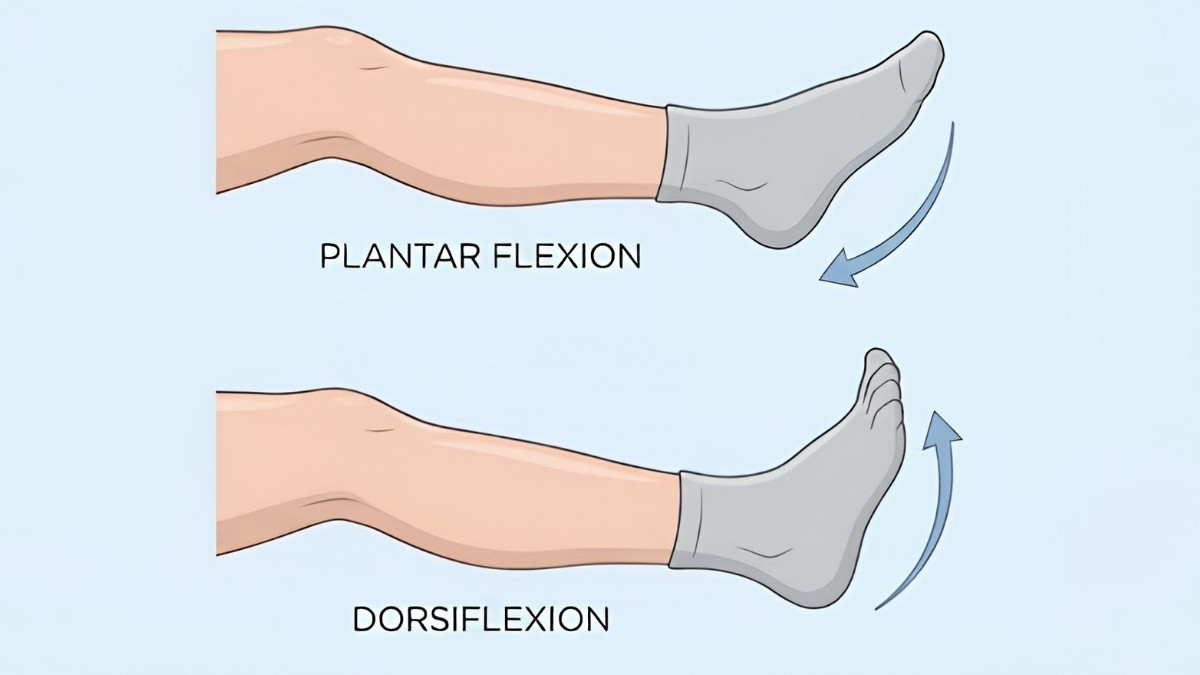
Sit with feet flat on the floor. Flex your foot upward toward your shin as far as it goes [dorsiflexion], then point it down [plantar flexion]. Twenty to 30 reps.
A 2022 study in healthy adults found that active ankle motion in the seated position significantly increased venous blood flow velocity compared to sitting still. Ankle pump exercises are also used in clinical settings to prevent DVT in patients who cannot walk.
3. Seated calf raises
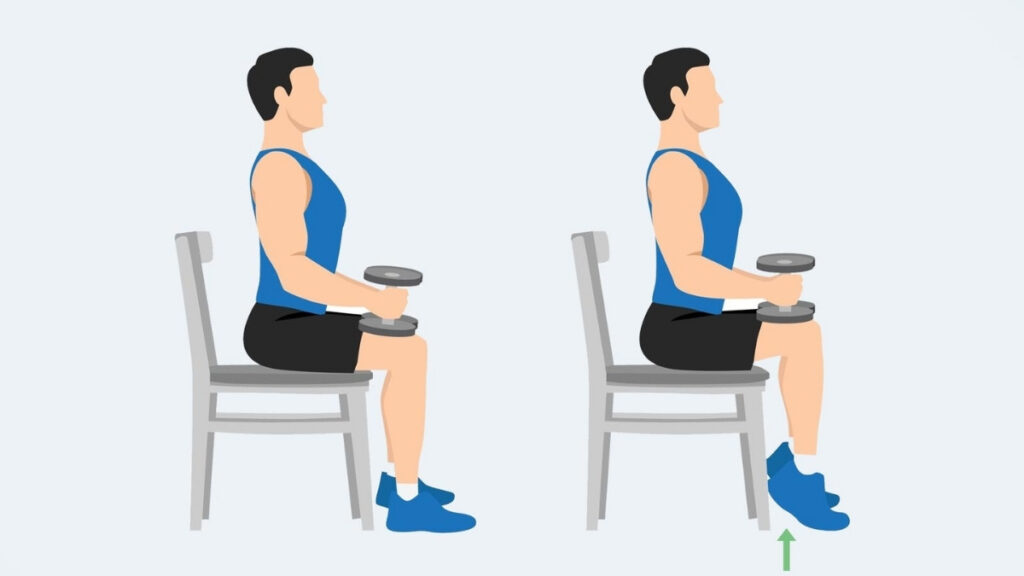
Same mechanics as standing calf raises, but with feet flat on the floor. Lift your heels while keeping your toes down. Lower slowly. Fifteen to 20 reps. Not as powerful as the standing version, but available whenever standing is not.
4. Alternating knee lifts
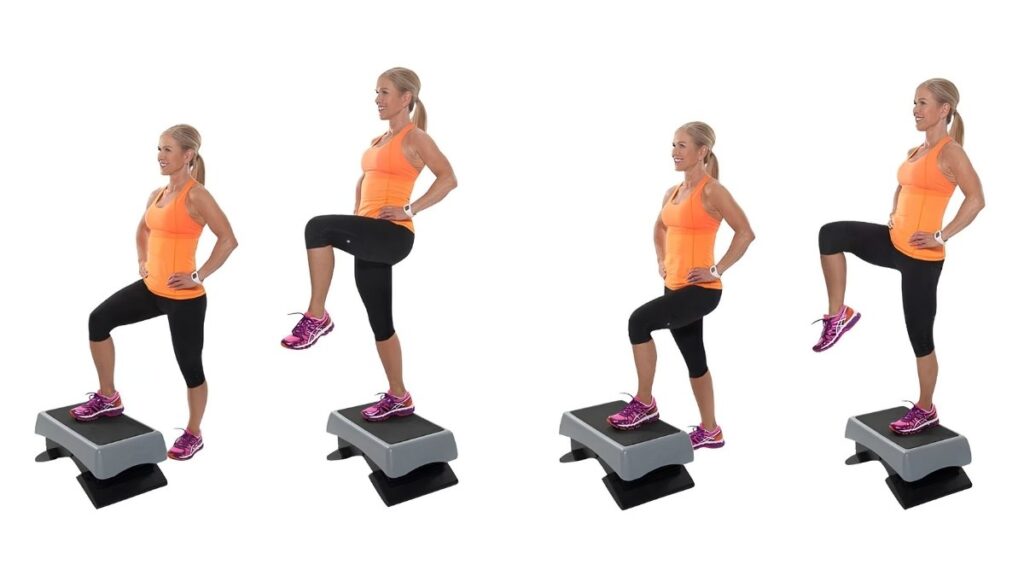
Sit upright. Lift one knee toward your chest, hold one second, lower. Alternate legs. Ten lifts per side. This supports venous return through the thigh veins rather than the calf, giving you a second route when the calves are fatigued.
5. Leg fidgeting (heel bounces or rapid foot taps)
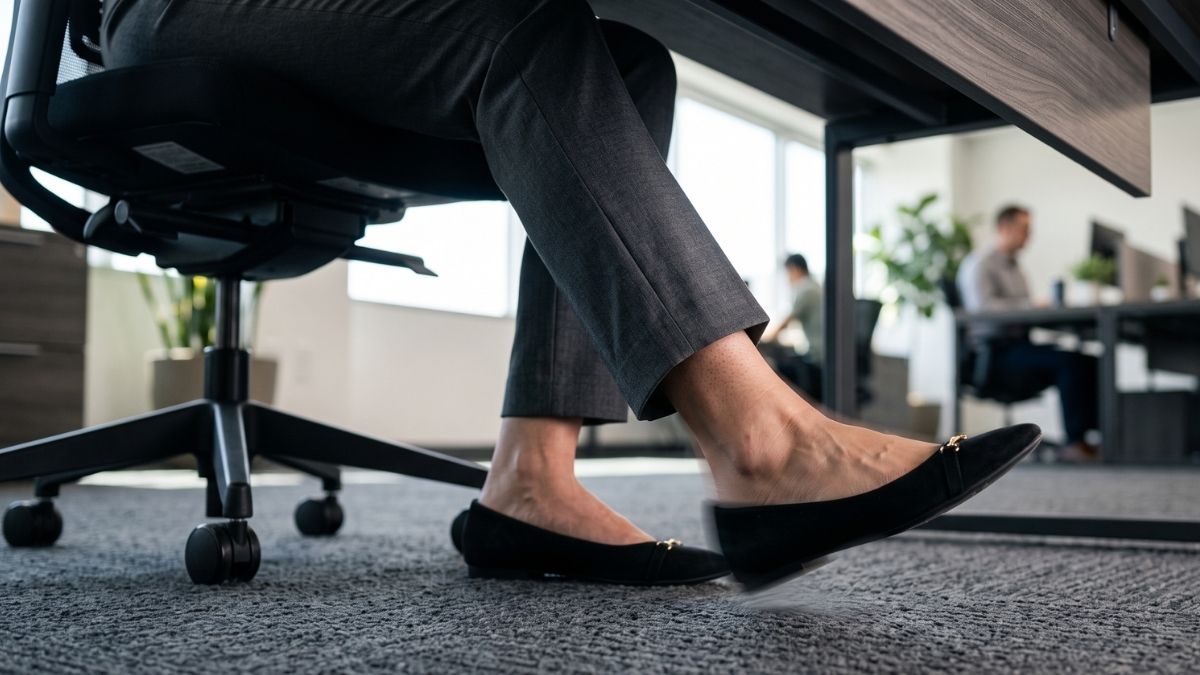
Rapid, low-effort foot taps or heel bounces while seated. One minute on, four minutes off while working.
The fidgeting study found this pattern was enough to prevent blood-flow impairment in the leg during a three-hour sitting session. The lowest per-rep benefit of the five options, but the one most compatible with continuous work.
The goal is not to pick one and do it once. The goal is to sequence them across a workday: calf raises when you stand, ankle pumps when you can not, fidgeting when neither is practical. What that routine still cannot answer is whether the problem in your veins has already moved past a simple fix.
Warning Signs Your Veins Are Already Struggling
Leg heaviness at the end of a long day is common and not always a warning sign. But some patterns deserve attention.
In one study of employees working in seated positions, clinical or ultrasound evidence of chronic venous disorder [a lasting condition where the leg veins have trouble moving blood back to the heart] was found in nearly 60% of the group. Many had no symptoms they considered significant.
Signs that your veins may need more than a movement routine:
- Swelling that doesn't resolve overnight. If your ankles or feet are still puffy in the morning after a full night's sleep, that is not normal day-end fluid shift.
- Visible rope-like veins. Bulging, twisted veins beneath the skin [varicose veins] that were not there a year ago, especially if they ache or burn.
- Skin changes on the lower leg. Brownish discoloration, a leathery or hardened texture, or itching around the ankle can signal longstanding venous pressure buildup.
- One leg noticeably more swollen than the other. Asymmetric swelling, especially with warmth or tenderness in the calf, warrants same-day evaluation. This is a possible sign of deep vein thrombosis and should not be waited out.
Seek immediate care if you experience: sudden severe leg pain, rapid swelling in one leg, or shortness of breath with or without chest discomfort. These may indicate a pulmonary embolism [a blood clot that has traveled to the lungs and is blocking blood flow], which is a medical emergency.
People at higher risk, including adults over 65, those with a personal or family history of DVT, people who are pregnant or recently postpartum, those on hormone therapy or oral contraceptives, and anyone with obesity, should talk to a doctor before relying on movement breaks alone to manage vein health.
Lastly,
The single most useful thing you can do today is set a timer. Set a phone timer to stand up and move your legs for two minutes every 45 to 60 minutes of sitting.
Everything you've read about prolonged sitting and vein health comes down to one thing your body already knows how to do: move. You do not need a gym, a standing desk, or a major schedule change. Start the timer now.
DISCLAIMER:
This article is for informational purposes only and does not constitute medical advice, diagnosis, or treatment. The content addresses vein health risks from prolonged sitting and is intended for general educational purposes only. Health conditions vary significantly between individuals — always consult a licensed physician or qualified healthcare provider before making any decisions about your health or medical care.