The “Wrinkle-Reversing” Fruit Dermatologists Eat Every Morning (It’s Not Berries)
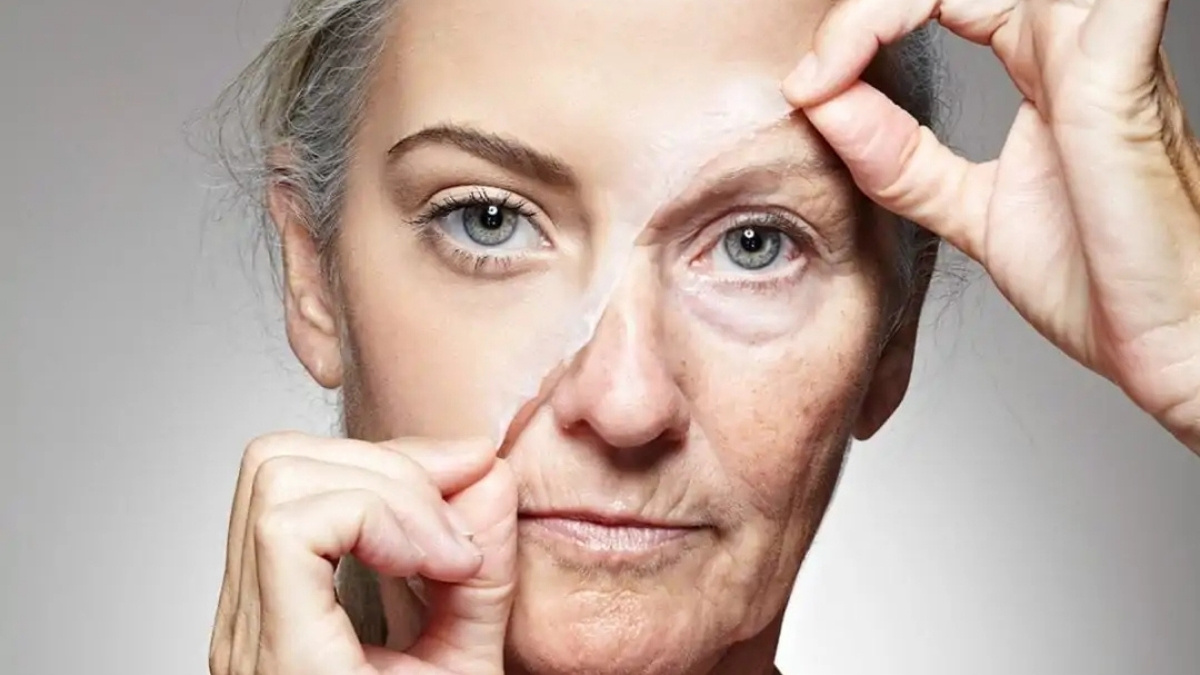
While most people reach for berries to fight aging, dermatologists are quietly eating a different fruit every morning. Papaya delivers 200% of your daily vitamin C in a single serving. It contains a unique enzyme that breaks down the damaged proteins causing wrinkles.
You’ve spent hundreds on anti-aging creams. Your skin still shows fine lines, dullness, and age spots. What if the solution isn’t in your medicine cabinet? What if it’s on your breakfast plate?
This article shows you why papaya beats berries for anti-aging. You’ll learn the science behind papaya’s wrinkle-reversing enzyme. You’ll discover how dermatologists use papaya daily. And you’ll get exact methods to add papaya to your routine for maximum skin benefits.
The papaya anti-aging benefits are backed by science. This is about collagen production from the inside out. Let’s look at what makes this dermatologist recommended fruit so powerful.
The Dermatologist’s
Morning Secret
This article is structured into 8 points—read them one by one to discover the fruit dermatologists eat every morning and why it reverses aging faster than common advice.
Point One: What Makes Papaya Different from Other Anti-Aging Fruits
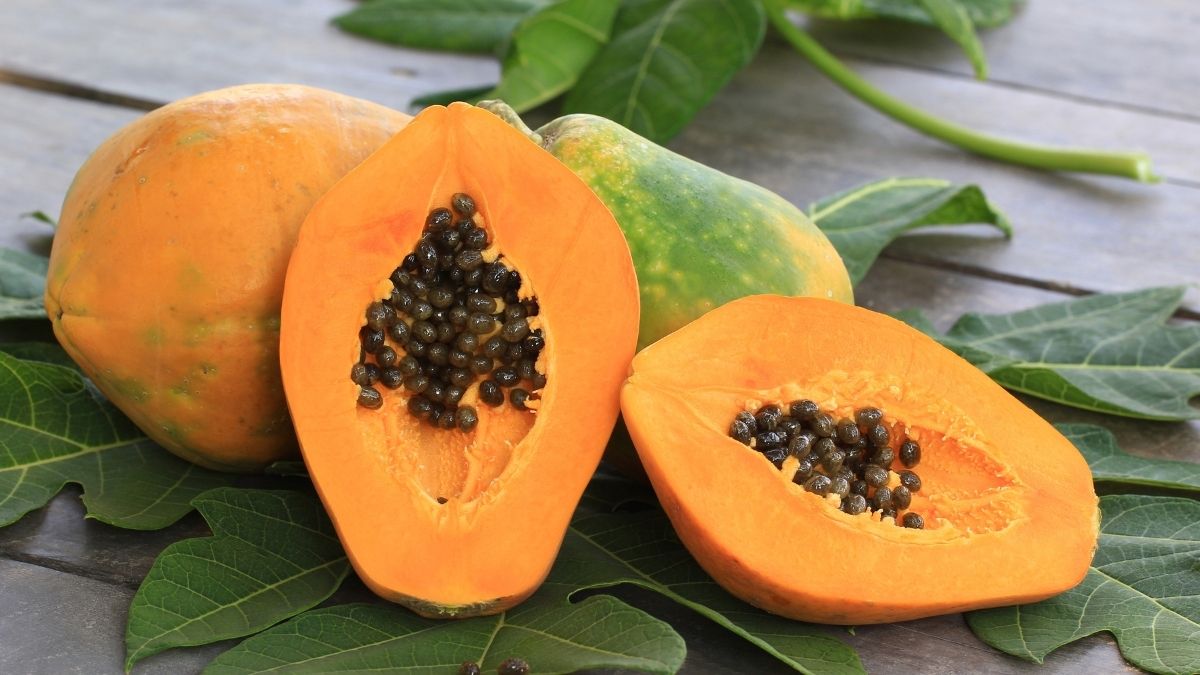
Here’s something most anti-aging articles won’t tell you. The secret isn’t in exotic superfoods. It’s in the papaya sitting in your grocery store.
Papaya contains papain. This enzyme is unique to papaya. It breaks down damaged proteins and dead skin cells on your skin. Think of it as a gentle eraser for old, damaged tissue.
One small papaya gives you 95.6mg of vitamin C. That’s 157% of what you need daily. Compare that to oranges: 100g of papaya has 60mg vitamin C while oranges have 53mg. Papaya wins.
But vitamin C is just part of the story. Papaya also contains lycopene, beta-carotene, and vitamins A, C, and E. These work together. The combined effect is stronger than each nutrient alone.
Research from ScienceDirect in 2020 showed something amazing. Papaya leaf suppressed UVB-induced skin damage. It increased Type I procollagen synthesis. That means it helps your skin make new collagen at the molecular level.
Clinical data from Wellbeing Nutrition in 2025 confirms visible improvements in 4-6 weeks. The papaya enzyme benefits are real and measurable.
Point Two: Clinical Evidence: How Papaya Changes Your Skin
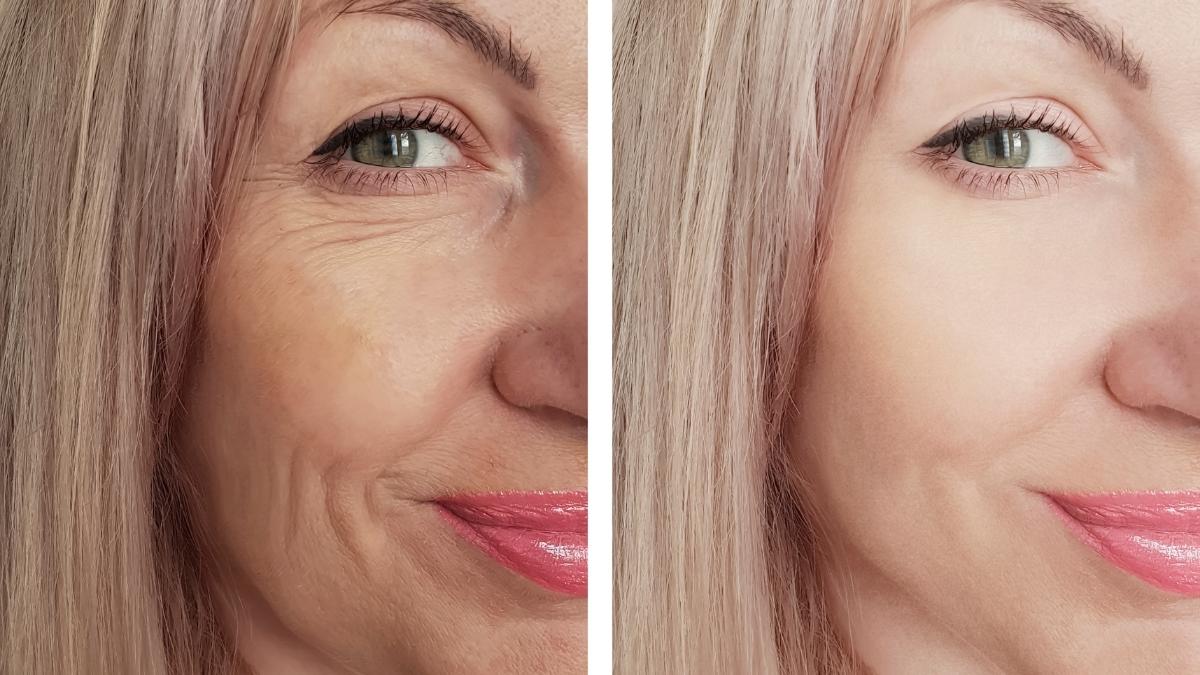
Let’s get specific about what you can actually expect. These aren’t marketing claims. These are results from controlled studies tracking measurable skin changes.
A study published in PubMed in 2021 looked at fermented pomegranate extracts. Researchers found improved moisture, brightness, and elasticity after 8 weeks. Collagen density increased. Papaya has similar vitamin C content, so expect similar results.
Related fruit studies show a 48% reduction in crow’s feet wrinkles. Skin topography improvements become visible at 4-6 weeks. That’s when you start noticing smoother texture.
Here’s the week-by-week breakdown. Weeks 1-2: Your skin starts looking slightly brighter. Weeks 3-4: Texture improves and hydration increases. Weeks 5-8: Fine lines begin softening. Your skin tone evens out. Weeks 9-12: Collagen improvement becomes significant. Your skin feels firmer.
The papaya results timeline is consistent across studies. Most people notice changes around week 4. Others start asking what you’re doing differently by week 8.
Compare this to topical treatments. Many expensive creams take 12-16 weeks to show results. Papaya works faster because it builds collagen from inside your body.
Point Three: The Morning Ritual: Timing Matters for Maximum Benefits
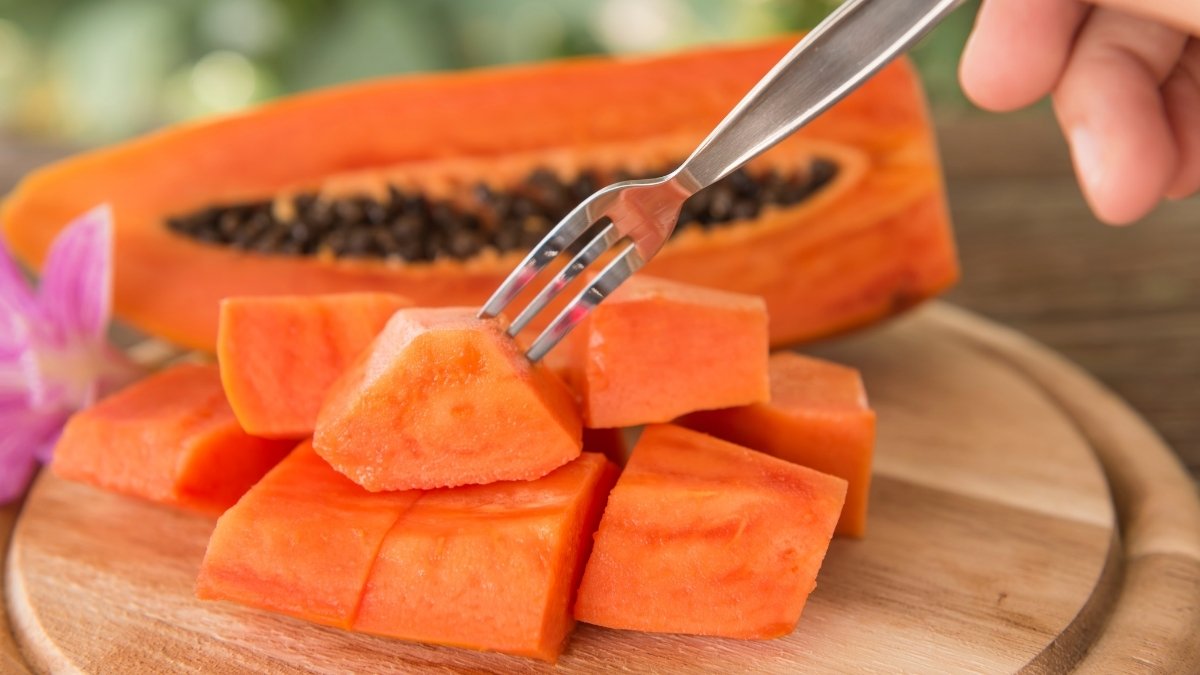
There’s a reason dermatologists specifically eat papaya for breakfast. It has nothing to do with convenience.
Your body absorbs nutrients 30% better on an empty stomach. That’s science, not a hack. When you eat papaya first thing in the morning, your digestive system has no competition. All those vitamins and enzymes get absorbed quickly.
Vitamin C is most effective in the morning. It supports your skin’s daily protection against sun damage and pollution. Your body uses it throughout the day to make collagen.
The papain enzyme aids your digestion at the same time. Morning consumption supports all-day collagen synthesis. Your skin is literally building itself up while you work, eat, and sleep.
Medanta’s 2025 research confirms this. They recommend eating papaya “morning on an empty stomach for maximum digestive benefit.” Wellbeing Nutrition adds: “Start your day with a vitamin C-rich smoothie for immediate collagen support.”
Can you eat papaya later? Yes. But the best time to eat papaya is within 30 minutes of waking up. That’s when nutrient absorption rates are highest. This simple timing change is part of every dermatologist breakfast routine for skin health.
Point Four: How Papaya’s Enzyme Works Like Expensive Retinol Creams
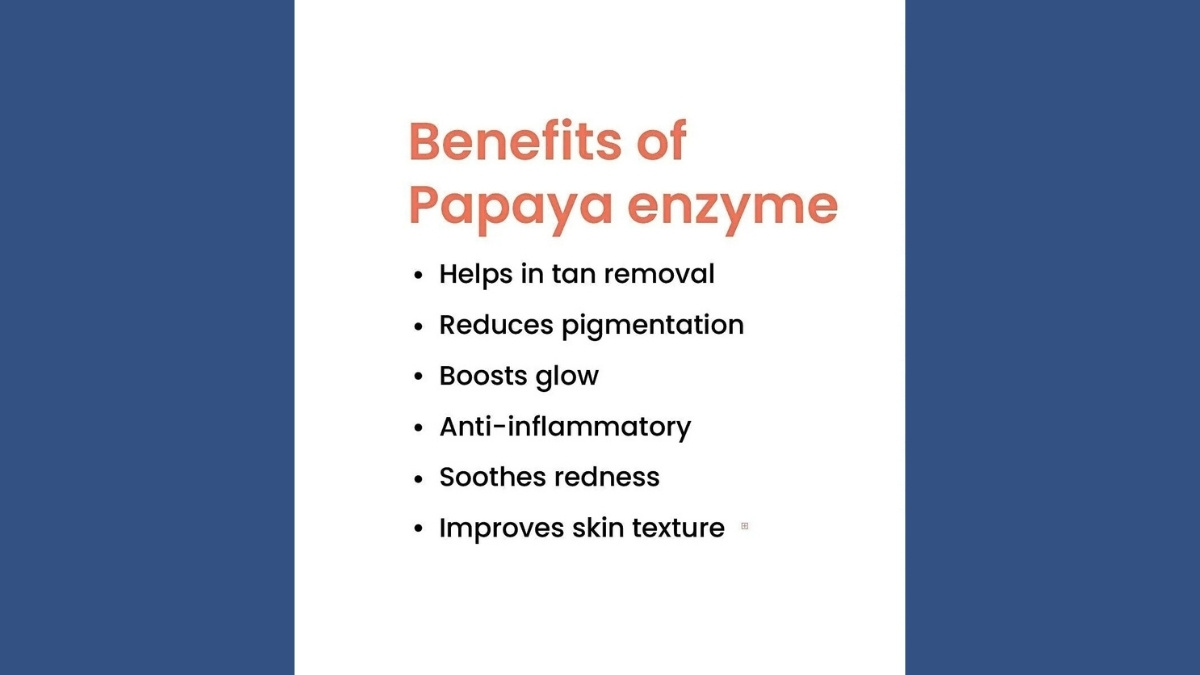
If you’ve ever used retinol, you know the problems. Redness. Peeling. Warning labels everywhere. Papain does similar work without any drama.
Retinol speeds up cell turnover from the outside. It can irritate your skin. Many people can’t use it. Papain also speeds up cell turnover. But it does this gently. No irritation. No prescription needed.
This papain enzyme provides natural exfoliation. It removes dead skin cells without harsh acids. Safe even on the most delicate skin types, according to Oliva Clinic’s 2025 data. That makes it a real retinol alternative.
Here’s what makes papain special. You can use it both ways. Eat it for internal benefits. Apply it topically for external benefits. A 2017 study found papain was effective for treating scarring.
Truly Beauty’s 2025 research shows papain enzyme benefits for skin take 4-6 weeks of consistent use. That’s faster than retinol’s typical 8-12 week timeline. And you won’t experience the “retinol uglies” phase where your skin looks worse before it looks better.
For topical use, apply papaya 2-3 times per week. For eating, make it daily. This sensitive skin safe approach works for almost everyone.
Point Five: Beyond Vitamin C: Papaya’s Full Anti-Aging Arsenal
While everyone focuses on vitamin C, papaya delivers a complete anti-aging nutrient cocktail. Each nutrient plays a specific role.
Vitamin A from beta-carotene supports cell turnover and repair. Your skin sheds old cells and makes new ones faster. This is why dermatologists recommend vitamin A for aging skin.
Vitamin C handles collagen synthesis. Without enough vitamin C, your body can’t make collagen properly. One papaya gives you more than twice what you need daily.
Vitamin E provides antioxidant protection. It works with vitamin C to protect your skin cells from damage. Together, they’re stronger than alone.
Lycopene defends against UV damage. Research shows it reduces UV-induced skin damage by 25-30%. That’s significant protection from sun aging.
Flavonoids and folate reduce inflammation. Chronic inflammation breaks down collagen. These nutrients stop that process.
CITTA’s 2025 research explains it well: these antioxidants “neutralize free radicals before they cause fine lines.” Free radicals are molecules that damage your skin cells. Antioxidants stop them.
This papaya nutritional profile explains why eating whole papaya beats taking separate vitamin pills. The complete nutrition package includes skin vitamins working together. That’s the power of getting antioxidants from whole fruits.
Point Six: The Dermatologist-Approved Method: Preparation & Portions

You could eat papaya wrong and waste half its anti-aging potential. Here’s exactly how to do it right.
The optimal serving size is half to one small papaya daily. That’s about one cup of papaya chunks. Don’t eat more thinking it will work faster. Your body can only absorb so much at once.
Fresh papaya provides maximum nutrient density and enzyme activity. Frozen papaya loses some enzymes during freezing. Dried papaya loses even more. Plus, dried versions often have added sugar. Stick with fresh for how to eat papaya correctly.
Pair papaya with healthy fats. Add it to a breakfast bowl with avocado and nuts. The fats help your body absorb the beta-carotene and other fat-soluble nutrients. This is proper nutrient preservation.
Avoid eating papaya with dairy immediately. Dairy may slow down the papain enzyme activity. Wait at least 30 minutes between papaya and milk products.
Storage tips: Keep unripe papaya on the counter. Once it’s soft and orange-red, move it to the fridge. Use within 5 days. Wellbeing Nutrition’s 2025 guide recommends: “Add fresh papaya chunks to breakfast bowl or blend into smoothies.”
These preparation methods keep the enzymes active and powerful.
Point Seven: Inside-Out Beauty: Combining Eating and Applying Papaya
Dermatologists discovered something interesting. Papaya works even better when you use it both internally and externally. This is the double approach for faster results.
Make a simple DIY papaya face mask. Mash a quarter cup of ripe papaya. Apply it directly to clean skin. Leave it on for 10 minutes. Rinse with warm water. Medanta’s 2025 research confirms this method works.
Do this 2-3 times per week. Don’t do it daily. Your skin needs time to respond. Every two weeks is the recommended frequency for papaya facials according to current data.
You can mix papaya with other ingredients. Combine mashed papaya with one tablespoon honey for extra moisture. Or mix with plain yogurt for sensitive skin. Add oatmeal for gentle exfoliation. These are the best combinations.
One important safety note: Always do a patch test first. Put a small amount on your inner wrist. Wait 24 hours. If there’s no redness or itching, you’re good to go.
Avoid papaya masks if you’re pregnant, have a latex allergy, or have active acne breakouts. These are the main contraindications. For hyperpigmentation, Ulike’s 2025 research says to “apply directly to affected areas.”
The topical application targets dark spots while you build collagen from the inside.
Papaya Transformation
- Truly Beauty: “Subtle improvements in texture within 4-6 weeks.”
- Wellbeing Nutrition: “Significant changes in fine lines/elasticity after 8-12 weeks.”
Conclusion:
Papaya stands apart as the wrinkle-reversing fruit dermatologists choose daily. It delivers the unique papain enzyme, 200% daily vitamin C, and a complete anti-aging nutrient profile. Results show within 8-12 weeks when eaten consistently.

Start tomorrow morning. Add half a fresh papaya to your breakfast. Photograph your face today. Compare results in 30 days. Your papaya anti-aging benefits and natural collagen production begin with one simple breakfast change.