The Surprising Lifestyle Mistake That Triggers Headaches Almost Every Day

You finish a video call and feel that familiar pressure building behind your eyes. Sound familiar? If you’re battling headaches almost every day, the culprit might not be stress or dehydration—it’s probably how you’re spending your workday.
You’ve tried pain relievers, adjusted your caffeine intake, and managed stress, but the headaches keep returning. The real issue? A trio of lifestyle mistakes working together: excessive screen time, poor posture, and irregular eating patterns.
Here’s what you’ll learn in this guide. You’ll discover the surprising connection between screen time and daily headaches. You’ll understand why your posture matters more than you think.
You’ll see how skipping meals silently triggers head pain. And most important, you’ll get 7 actionable solutions you can start using today to prevent screen time headaches and take control of your daily headaches lifestyle triggers.
The Hidden Connection: Screen Time and Daily Headaches

You finish a video call and feel that familiar pressure building behind your eyes. Sound familiar? That’s digital eye strain, and it’s affecting millions of people who spend just 2 hours or more staring at screens without breaks.
Here’s what the research shows. A recent 2025 study found that 90% of people who spend 7-9 hours daily looking at screens experience headaches. Among office workers who average 7 hours on computers each day, screen time headaches have become the norm rather than the exception.
Your eyes aren’t designed for screen work. When you look at a computer or phone, your eyes constantly refocus on pixels. This strains the tiny muscles around your eyes. Add blue light exposure and bright screen glare, and you’ve created the perfect recipe for computer vision syndrome.
The numbers are striking. In a study of 479 children, 78.3% reported headaches or eye pain from screen use. Even more telling, 41.7% of ophthalmologists—the doctors who treat eye problems—report getting headaches from their own screen use. The symptoms typically include frontal headaches (57.5% of cases), eye pain, and blurred vision.
But screen time alone isn’t the full story. Your body position while staring at those screens multiplies the damage.
Text Neck: How Poor Posture Triggers Constant Head Pain
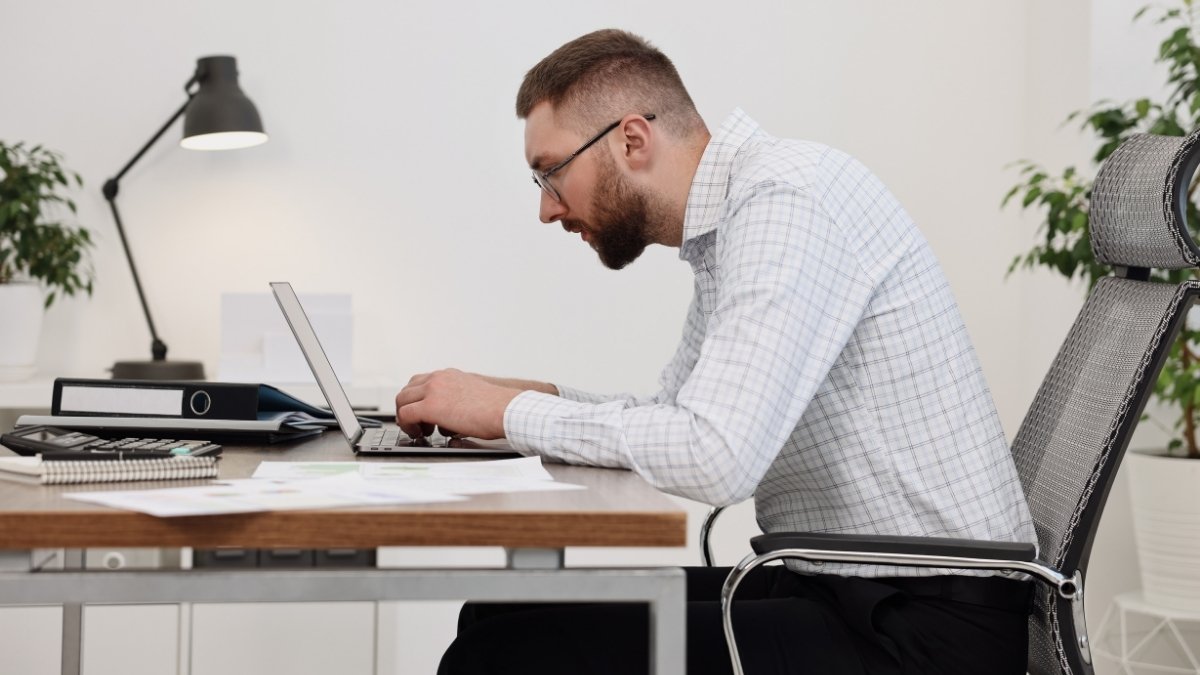
Look at how you’re sitting right now. Is your head jutting forward? That position is silently causing tomorrow’s headache.
Here’s the scary math behind posture headaches. For every inch your head moves forward from proper alignment, your neck has to support an extra 10 pounds of pressure. When you tilt your head at a 60-degree angle—typical when looking at your phone—your spine is supporting 60 pounds instead of the normal 10-12 pounds. That’s like carrying a bowling ball on your neck all day.
This forward head posture creates muscle tension that radiates trigger points straight to your skull. The position also compresses the greater occipital nerve, which causes migraine-like symptoms. Office workers spend 5-6 hours daily in poor sitting positions, and the damage adds up fast.
The stats prove this is widespread. Research from 2025 shows 73% of university students and 64.7% of remote workers report neck or back pain. Between 60-80% of people will experience neck pain in their lifetime. Text neck syndrome brings headaches, neck discomfort, shoulder pain, and arm pain—and it increases your risk of spinal disc pressure and degeneration.
This posture problem becomes even worse when combined with another common mistake: how we eat—or don’t eat.
Skipping Meals: The Silent Headache Trigger No One Talks About

You skip breakfast to save time, work through lunch to meet deadlines, and wonder why your head is pounding by 3 PM. The answer is simple: your brain is running on empty.
Skipping meals, especially breakfast, leads to hypoglycemia—low blood sugar. Your brain needs glucose to function. When glucose levels drop, it triggers neuron depolarization, and that’s what causes the pain. Research shows 57% of migraine sufferers report meal skipping as a trigger for their attacks.
The evidence is clear. A 2025 scoping review confirms that skipping meals triggers migraines through reduced brain glucose. In a study of 1,207 people, irregular eating ranked right alongside stress as a top headache trigger.
Here’s the striking part: when people fasted for 19 hours under stress, 93% developed headaches. Even without stress, 58% still got hunger headaches from fasting alone.
Regular meals work as a protective factor against migraines. When you eat consistently, you give your brain the steady fuel it needs. Irregular meal timing is a strong predictor of chronic migraine attacks. Your body can’t handle the ups and downs of blood sugar when you eat randomly or skip meals entirely.
When these three factors collide—excessive screen time, poor posture, and irregular eating—they create the perfect storm for daily headaches.
Why These Three Factors Work Together Against You

Here’s what makes this problem so insidious: each factor makes the others worse. They don’t just add up—they multiply the damage.
Start with screen time. When you stare at a screen, your blink rate drops from 15 times per minute down to just 4-6 times. This dries out your eyes and increases strain. Meanwhile, poor posture restricts blood flow to your brain, reducing oxygen delivery. Less oxygen means more pain and fatigue.
Now add low blood sugar to this mix. When you skip meals, your body loses its ability to handle stress from screens and poor posture. Hypoglycemia makes you more susceptible to all the negative effects of fasting compared to people with normal blood sugar levels.
There’s more. Slouching actually increases your stress hormone levels, which makes headache intensity worse. Decreased oxygen flow from forward head posture compounds the problem further. Each factor independently causes daily headaches lifestyle triggers—but when combined, they’re exponentially worse than any single cause.
Think of it like a domino effect. Screen strain creates muscle tension. That tension gets worse with poor posture. And low blood sugar removes your body’s ability to cope with either problem. You’re fighting a battle on three fronts at once.
Fortunately, once you understand how these factors interact, the solutions become clear.
The 20-20-20 Rule: Your First Line of Defense
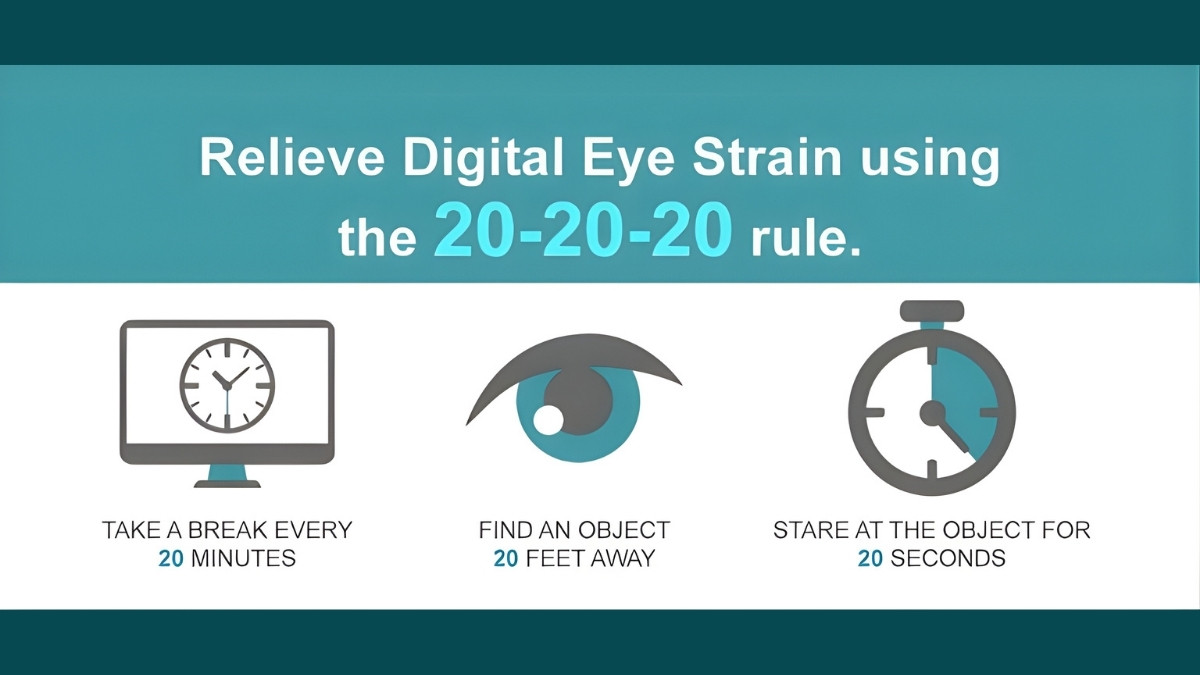
The single most effective habit you can adopt today costs nothing and takes just 20 seconds. It’s called the 20-20-20 rule, and it’s your best weapon to prevent screen time headaches.
Here’s how it works. Every 20 minutes, look at something 20 feet away for 20 seconds. That’s it. This simple break relaxes your eye muscles and reduces digital eye strain immediately. It also helps you maintain a normal blink rate of 14-16 times per minute, which keeps your eyes from drying out.
The American Academy of Ophthalmology recommends this rule for everyone who uses screens regularly. Studies show that people who follow the 20-20-20 rule have significantly fewer eye strain symptoms. The benefits start right away—no waiting weeks to see results.
Here’s a bonus: those 20 seconds also give you a chance to check and correct your posture. Use that break to pull your shoulders back and align your head properly. You can set phone reminders or download free apps that alert you every 20 minutes. Some people use browser extensions that dim their screen as a reminder.
Make this rule automatic. Set it up once, and let technology remind you throughout the day. Within a week, you’ll notice the difference in how your eyes and head feel.
But taking breaks is only half the solution. You also need to fix how you sit.
Ergonomic Setup: Position Your Screen and Body Correctly
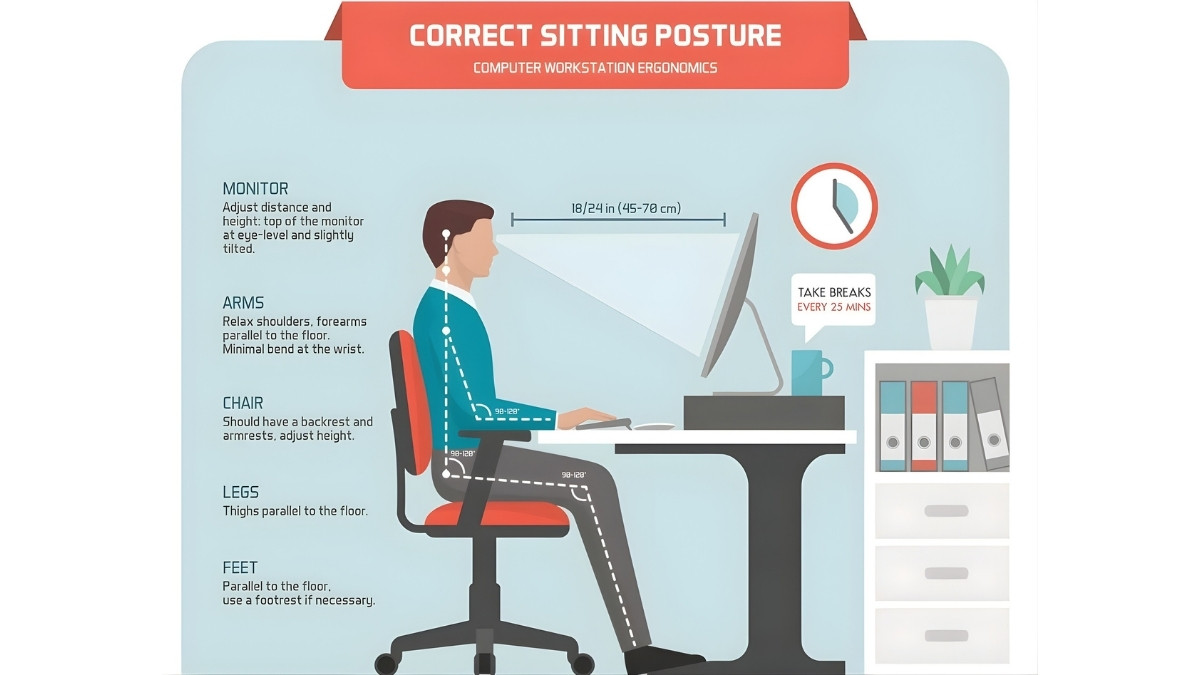
Most people set up their workspace once and never adjust it. That’s a costly mistake. Your ergonomic setup directly affects whether you get posture headaches or stay pain-free.
Start with your screen. Position it at eye level, 20-24 inches away from your face. This distance reduces the need for your head to lean forward. If your screen is too low, stack books under your laptop or use a monitor stand. Your eyes should hit the top third of the screen when looking straight ahead.
Now check your body alignment. When viewed from the side, your ears should align with your shoulders. That’s proper posture. Your feet should rest flat on the floor, and your chair should provide lumbar support for your lower back. If your feet don’t reach the floor, use a footrest.
Adjust your screen brightness to match your room lighting. Too bright or too dim forces your eyes to work harder. Position your keyboard and mouse close enough that your elbows stay bent at 90 degrees. This prevents shoulder strain that can trigger headaches.
Remember this: for every inch your head shifts forward, your neck supports an additional 10 pounds. Office workers who use proper ergonomics report far fewer musculoskeletal symptoms. These adjustments take 10 minutes to set up but save you hours of pain.
With your workspace optimized, it’s time to address your eating schedule.
Eat on Schedule: The 3-4 Hour Rule for Headache Prevention

Your brain needs fuel to function. When you skip meals, it sends a painful reminder in the form of a headache. The solution is simple: eat on a schedule.
Here’s the rule: eat something every 3-4 hours to maintain stable blood sugar. Never skip breakfast—eat within 1 hour of waking up. This gives your brain the glucose it needs to start the day strong. Research from 2025 confirms that regular meals serve as a protective factor against migraines.
What you eat matters too. Include protein and fiber in your snacks to stabilize glucose levels. Good options include Greek yogurt with berries, apple slices with almond butter, or a handful of nuts with a piece of fruit. These combinations prevent the blood sugar spikes and crashes that trigger hunger headaches.
Avoid high-sugar processed foods like candy, cookies, and sugary drinks. They cause your blood sugar to spike fast, then crash hard. That crash often brings a headache with it. Instead, focus on whole foods that provide steady energy.
Don’t forget hydration. Drink water throughout the day—not just when you feel thirsty. Dehydration is another common headache trigger that works alongside irregular eating patterns. Keep a water bottle at your desk and sip regularly.
Studies show that eating every 3-4 hours reduces migraine frequency significantly. The key is consistency. Your body thrives on routine.
These eating habits work even better when combined with specific posture exercises.
5-Minute Desk Exercises to Reset Your Posture

You can’t maintain perfect posture all day. That’s why regular reset exercises are essential to prevent text neck and the headaches it causes.
Start with neck stretches. Gently tilt your head to the right, holding for 10 seconds. Repeat on the left. Then tilt forward and backward, holding each position. These movements release muscle tension before it builds into trigger points that radiate pain to your skull.
Add shoulder rolls. Roll your shoulders forward 10 times, then backward 10 times. Do this every hour. It counteracts the forward hunch that comes from typing and using your mouse. This simple move improves circulation and reduces upper back strain.
Try chin tucks to realign your cervical spine. Pull your chin straight back like you’re making a double chin. Hold for 5 seconds, then release. Repeat 10 times. This exercise directly counters forward head posture and strengthens the muscles that support proper alignment.
For your upper back, place your hands behind your head and open your elbows wide. Hold this stretch for 15 seconds. It opens up your chest and counteracts the rounded shoulder position from sitting.
Finally, stand and walk for 2-3 minutes every hour. Movement breaks improve blood circulation to your brain, which prevents desk exercises from becoming just another thing you do while slouched. Physical therapy studies show posture correction reduces headache frequency by 50%.
Make these exercises non-negotiable parts of your day, like checking email.
Conclusion

Daily headaches often stem from three interconnected lifestyle factors: excessive screen time, poor posture, and irregular eating. The good news? You control all three. Apply the 20-20-20 rule to give your eyes regular breaks.
Fix your ergonomic setup so your body stays aligned. Eat every 3-4 hours to keep your blood sugar stable. And perform regular desk stretches to reset your posture throughout the day.
Start with just one change today—set a timer for 20-20-20 breaks or eat breakfast tomorrow morning. Small consistent actions eliminate daily headaches. You don’t need to overhaul your entire life at once. Pick one habit, make it stick, then add another.
Take control of your daily headaches by addressing these lifestyle triggers now. Your head will thank you.