Stop Ignoring Your Hands—Weak Grip Strength Now Predicts Early Mortality

Your doctor checks your blood pressure. Your cholesterol. Your weight. But nobody has ever measured how hard you can squeeze.
That is a serious gap. Because researchers have spent decades studying one simple number — your grip strength — and what they found should change how you think about your health. A weak grip is not just an inconvenience.
It is a warning sign. Studies now show it predicts early death more accurately than your blood pressure reading.
This article will show you the science behind grip strength and mortality, what a healthy number looks like for your age, how to test yourself at home in under five minutes, and a simple four-week plan to start fixing it today. No gym membership required.
Weak Grip Strength
& Early Mortality
This article is structured into 8 points—read them one by one to understand how weak grip strength may be linked to early mortality and what you can do to improve it.
Point One — What Grip Strength Actually Measures (And Why It Is Not Just About Your Hands)
Your grip strength is not really about your hands. It is a window into your whole body.
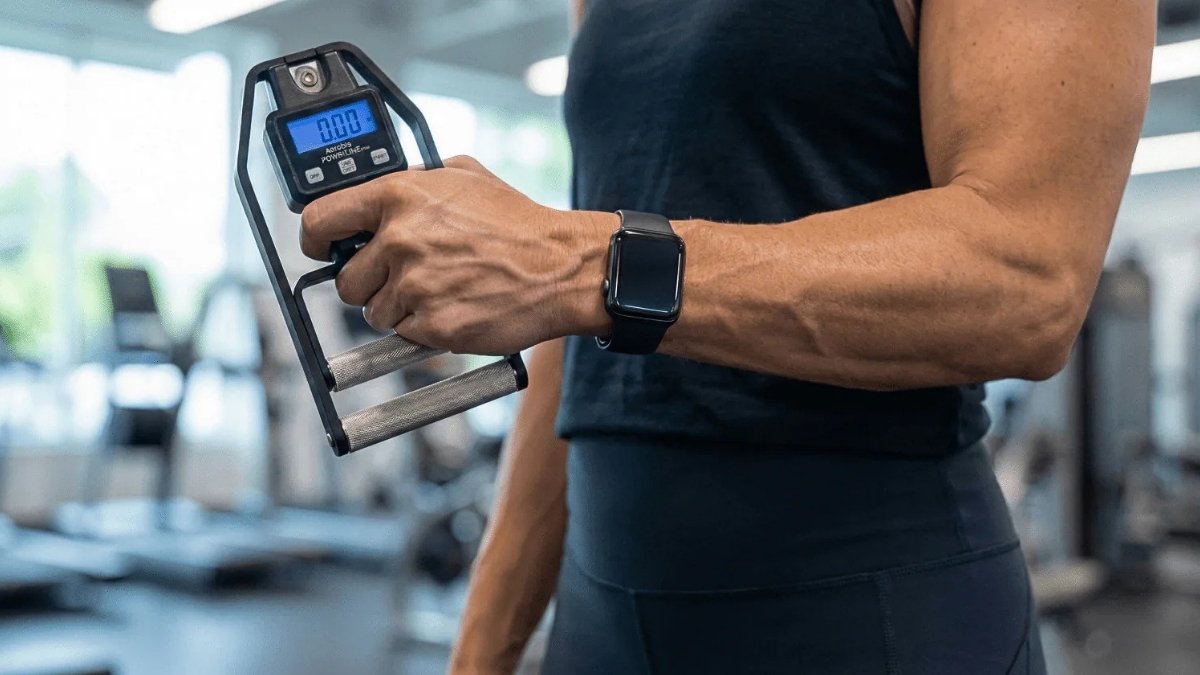
When researchers measure how hard you can squeeze, they are actually measuring your total skeletal muscle quality, your nervous system health, your hormone levels, and your metabolic function — all at once. Think of it as a quick snapshot of everything happening under the surface.
This is why scientists now formally call grip strength a “biomarker of aging.” A biomarker is a measurable signal that tells you what is happening inside your body. Grip strength is one of the easiest and cheapest biomarkers available.
Low grip strength is also linked to higher levels of inflammation markers like IL-6 and TNF-α — chemicals your body releases when it is under stress or aging too fast. These chemicals damage tissues and speed up disease.
At least three separate large-scale reviews have confirmed the link between weak grip and all-cause mortality. One pooled hazard ratio across 22 studies reached 1.79 — meaning weak grip nearly doubled mortality risk.
And here is the part most people do not know: grip strength has been found to be a stronger predictor of cardiovascular death than systolic blood pressure.
3 Quick Tips:
- Think of your grip strength as a report card for your whole body — not just your hands
- Low grip does not mean you are sick; it means your body is sending you an early signal worth paying attention to
- The earlier you catch a weak grip, the easier it is to fix
Point Two — The Research Is Overwhelming — Here Is What the Data Actually Says
Two million people. One consistent finding.

A meta-analysis covering over 2 million adults across multiple countries confirmed that higher grip strength is linked to a lower risk of early death — regardless of age, sex, or how long researchers tracked people.
The most important study is the 2015 PURE study, published in The Lancet. It followed 142,000 adults across 17 countries — rich and poor, young and old — and found that every 5 kg drop in grip strength increased the risk of dying from any cause by 16%. That is not a small number.
To put it plainly: a 5 kg drop is roughly the weight of a bag of flour. And losing that much squeezing power is enough to measurably shorten your life.
A separate meta-analysis of 38 studies looked at 1,907,580 participants and 63,087 deaths. The conclusion was the same — stronger grip means lower mortality risk. Interestingly, the protective effect was slightly stronger in women than in men.
A 2024 NHANES study of Americans aged 20 and older confirmed that simple absolute grip strength is the best single measure for predicting all-cause mortality.
3 Quick Tips:
- The 5 kg rule is your benchmark — a 5 kg drop in grip strength meaningfully increases your mortality risk
- This research comes from 17 different countries, so it applies to you regardless of where you live
- You do not need to be elderly for this to matter — the effect shows up in middle-aged adults too
Point Three — What “Normal” Grip Strength Looks Like by Age and Sex in 2026
Before you panic, you need a real number to compare yours against.
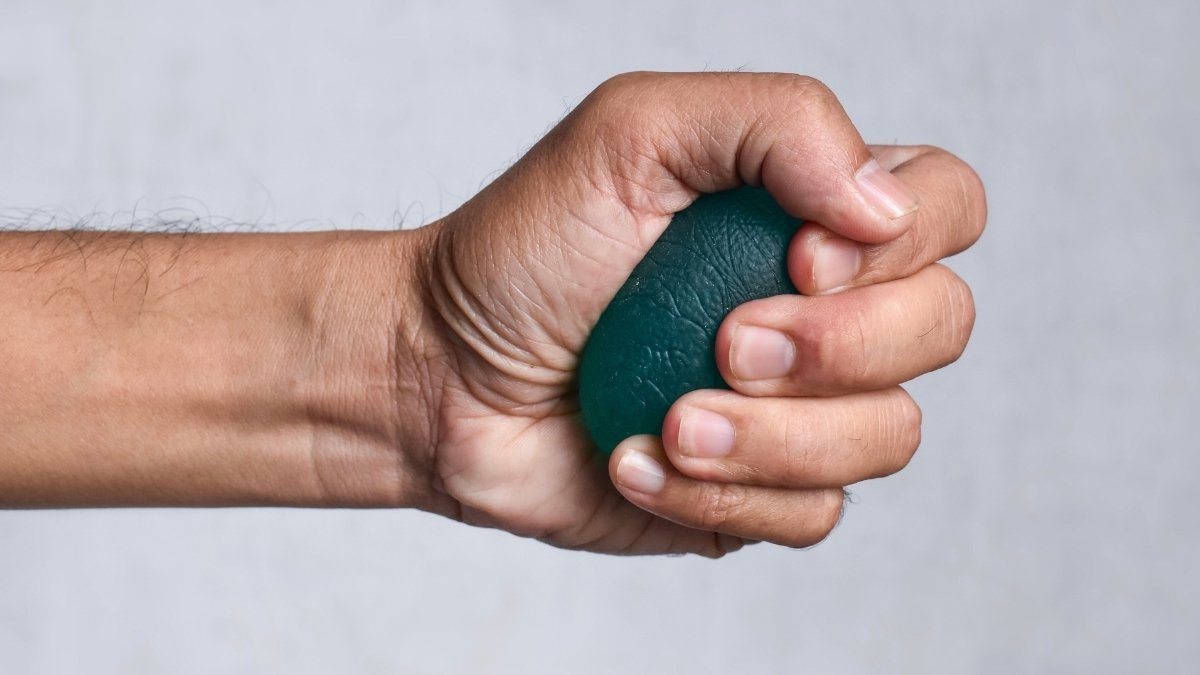
Grip strength peaks between ages 25 and 40 for both men and women. After that, it slowly drops. The decline speeds up after age 65.
Here is a practical reference. Men aged 20–24 typically score between 36.8 and 56.6 kg. Men in their 30s and 40s usually land in the high 40s to low 50s kg. Women aged 20–24 typically score between 21.5 and 35.3 kg. Women in mid-adulthood generally score around 30–35 kg.
By age 65–69, average grip strength drops to around 44 kg for men and 28 kg for women. By age 75–79, roughly 23% of women and 29% of men fall into the “weak grip” category.
The clinical cutoffs used in hospitals and research are clear: below 27 kg for men and below 16 kg for women. These numbers come from the European Working Group on Sarcopenia in Older People — one of the most respected bodies in aging research.
Your dominant hand is usually 5–10% stronger than your other hand. That is completely normal.
3 Quick Tips:
- Use the clinical cutoffs as your floor — below 27 kg for men and 16 kg for women is the danger zone
- Compare yourself to your age group, not to a 25-year-old athlete
- Your non-dominant hand being weaker is normal — do not ignore testing both sides
Point Four — How to Test Your Grip Strength Right Now (No Lab Required)
You do not need a doctor. You do not need an appointment. You need a $20 device and five minutes.
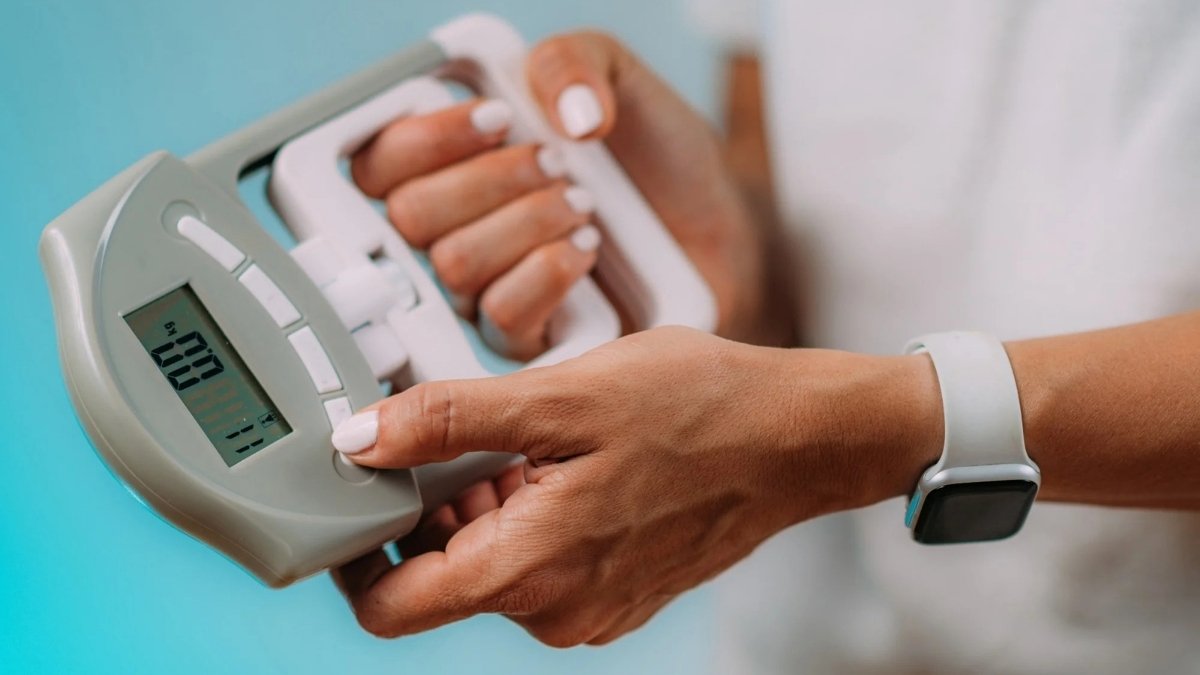
The tool is called a hand dynamometer. It is a small device you squeeze as hard as you can, and it gives you a number in kilograms. The gold-standard clinical version is the Jamar Hydraulic Hand Dynamometer, which costs $30–60 on Amazon.
But the Camry Electronic Hand Dynamometer at around $20–25 is validated, accurate enough for home use, and what most people should start with.
Here is the exact protocol. Sit down in a chair. Keep your feet flat on the floor. Hold the dynamometer at your side with your elbow bent at 90 degrees. Your wrist should be straight and your shoulder relaxed. Squeeze as hard as you can for 3 seconds.
Do this three times per hand, resting 30–60 seconds between each squeeze. Record your best score.
Then compare that number to the age and sex benchmarks from Point Three. If you fall below the clinical cutoffs — below 27 kg for men, below 16 kg for women — that is your signal to act. It is a flag, not a diagnosis.
3 Quick Tips:
- Test at the same time of day every time — grip strength varies morning to evening by up to 10%
- Never test immediately after a hard workout — your grip will be temporarily weaker and the reading will be inaccurate
- Track your score every 4–8 weeks using the same protocol to see real progress over time
Point Five — Why Your Grip Is Weakening (The Hidden Causes Most People Miss)

Most people with a weak grip are not sick. They are just living a modern life that has quietly removed almost every reason to grip anything hard.
Think about your day. You type on a keyboard. You scroll a phone. You steer a wheel. A smartphone requires less than 1 kg of force to hold. A proper deadlift requires 40–80 kg of grip force. Most people never come close to that number in a normal day.
This is a big part of the problem. Sarcopenia — which means age-related muscle loss — begins as early as age 30 and speeds up after 60. If you never challenge your muscles, you lose them faster. This is not optional biology. It happens to everyone.
Poor nutrition makes it worse. Low protein intake starves your muscles of the amino acids they need to stay strong. Low vitamin D and magnesium are also linked to lower grip scores. Chronic stress and poor sleep raise cortisol — a hormone that breaks down muscle tissue over time.
Chronic diseases like type 2 diabetes, heart disease, and kidney disease are also linked to grip decline. And the relationship goes both ways — weak grip can accelerate these conditions.
3 Quick Tips:
- Aim for at least 1.2–1.6 grams of protein per kg of body weight daily to support muscle maintenance
- Prioritize 7–9 hours of sleep — poor sleep directly reduces muscle recovery and grip strength over time
- Stop using phone carts and luggage wheels when you can carry things by hand — daily grip loading adds up
Point Six — The Diseases Linked to Weak Grip Strength (Beyond Just Dying Younger)
Dying younger is the headline. But weak grip strength is also quietly predicting some of the most serious conditions people in middle age are already worried about.

Start with the heart. A meta-analysis across 12 studies found that a 5 kg drop in grip strength was associated with a cardiovascular disease hazard ratio of 5.98. That is a massive number. Your hands, in a very real sense, are measuring your heart health.
Then there is the brain. UK Biobank data from over 40,000 participants showed that grip strength tracks with brain structure and mental health. People with weaker grip scores showed worse brain health markers and higher rates of depression. Grip strength and cognitive decline follow each other closely over time.
Bone health is also connected. Grip strength correlates directly with bone density and cortical thickness. People with weak grip are at higher risk of osteoporosis and fractures — especially after a fall.
Type 2 diabetes risk rises as grip strength falls. The relationship is bidirectional — weak muscles make blood sugar control harder, and poor blood sugar control weakens muscles further.
Finally, in hospitals, low pre-surgery grip strength is one of the strongest predictors of longer recovery time and worse surgical outcomes.
3 Quick Tips:
- If you have a family history of heart disease or dementia, testing your grip is especially important — it gives you an early warning signal you can act on
- Poor grip and depression often appear together — improving physical strength through training has well-documented mental health benefits
- If you are scheduled for surgery, tell your doctor your grip score — it is clinically relevant information
Point Seven — A Practical 4-Week Grip Strength Training Plan You Can Start Today

You do not need to overhaul your life. You need three sessions a week and about 20 minutes per session.
There are three types of grip to train. Crush grip is your basic squeezing force — closing your hand around something. Pinch grip involves your thumb and fingers holding flat objects. Support grip is your ability to hold on for a long time without letting go.
Grip Strength Protocol
In Weeks 1 and 2, focus on building the habit. Do dead hangs from a pull-up bar for 30 seconds. Do farmer’s carries with dumbbells — pick up something heavy and walk 30 meters, twice. Use a hand gripper for 3 sets of 10 squeezes per hand. If available, try towel pull-ups.
In Weeks 3 and 4, increase the load. Add more weight to farmer carries. Add plate pinches — hold a smooth weight plate between your fingers and thumb for 20 seconds, twice. Add barbell holds for 20–30 seconds. Extend your dead hangs to 45–60 seconds.
For home training with no equipment budget, a Captains of Crush Trainer gripper costs around $20 and works extremely well. Deadlifts, rows, and pull-ups without lifting straps are free grip training built into any gym program.
3 Quick Tips:
- Never use lifting straps on your warm-up sets — let your hands do the work and build strength naturally
- A $15–20 hand gripper at your desk is one of the best bang-for-your-buck health investments you can make
- If your grip fails before your back or legs on a deadlift, that is your body telling you exactly where to focus
Point Eight — The Long-Term Mindset — Track It, Protect It, and Never Stop Building It
Grip strength is not a problem you fix once. It is a number you track for life.

The research is clear on one thing: the only intervention proven to meaningfully reverse grip decline is resistance training. Not supplements. Not passive stretching. Consistent, progressive loading of your muscles over time.
You do not need a gym. Farmer carries, dead hangs, and a hand gripper can all be done at home in a small space. If you are over 50, this matters even more — sarcopenia accelerates in this decade, and every kilogram of muscle you hold onto pays serious long-term dividends.
You can also build passive grip loading into daily life. Carry groceries by hand instead of using a cart. Open jars without rubber grips. Use stairs and hold the railing actively. These are small habits, but they add up over years.
Retest your grip every 4–8 weeks using the same protocol. Most people see improvement within 6–8 weeks of consistent training. Celebrate small wins — going from 24 kg to 27 kg is a genuinely meaningful health improvement.
You will not feel grip strength declining — it happens slowly, silently, over years. But the data is clear: start measuring it, start loading it, and protect it before you are told you have to.
3 Quick Tips:
- Set a phone reminder every 6 weeks to retest your grip with your dynamometer — consistency in testing shows real trends
- As you age past 60, prioritize grip training at least twice weekly — this is when the stakes are highest
- Share your grip score with your doctor — it is a legitimate clinical data point that many GPs now recognize
Final Words,

Grip strength predicts early death more reliably than blood pressure. Normal ranges exist for your exact age and sex. Testing takes under five minutes with a $20 device. And consistent resistance training can reverse the decline at any age.
Check your grip this week. Compare it to the benchmarks in Point Three. Then act on what you find.
Your grip strength and mortality are more connected than you ever knew.
Weak grip strength predicts early death more than blood pressure. Learn your numbers, test at home, and build grip strength starting today.