She Whitened Her Teeth Naturally at 60 with 2 Home Hacks (The Natural Glow-Up Secret)
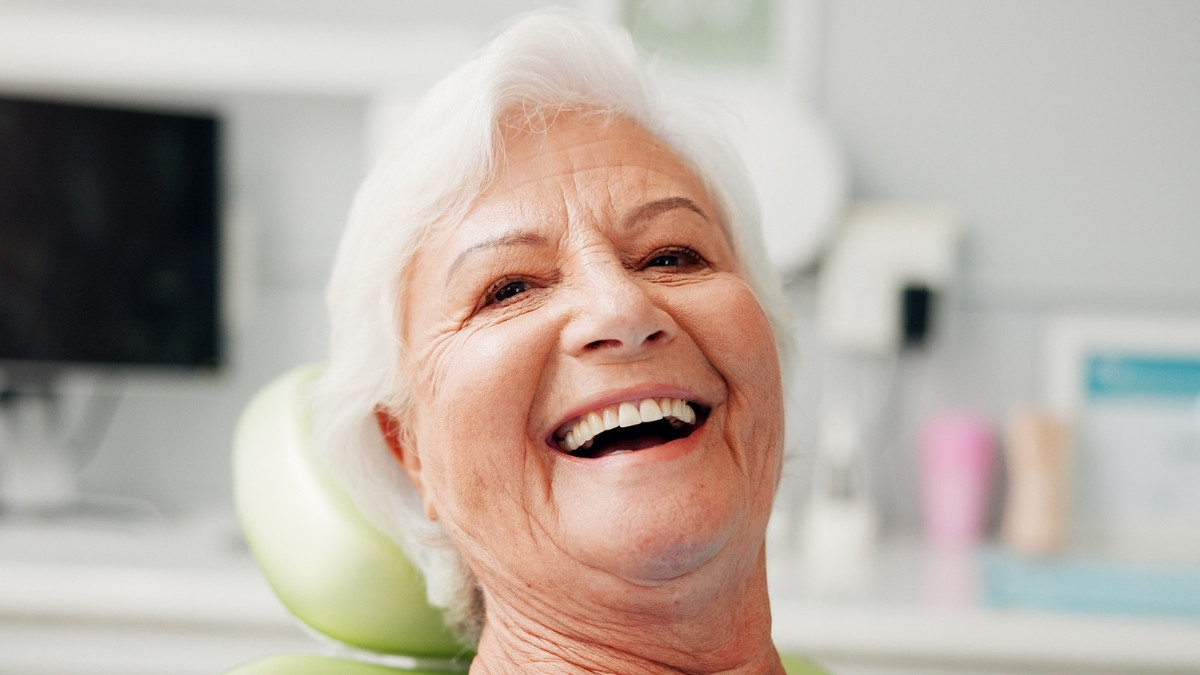
At 60, Maria saw her smile fade. Coffee stains. Tea marks. Years of wear made her teeth look yellow. She wanted whiter teeth but worried about damage.
Professional whitening costs hundreds. It can hurt sensitive teeth. Maria needed something safe for aging teeth.
She found two methods backed by science. Not social media trends. Real research from dental journals.
Here’s what you’ll learn. Why your teeth turn yellow after 60. Two natural methods that actually work. How to use them safely. What results to expect in 2-6 weeks.
Natural teeth whitening at 60 is possible. You just need the right approach for aging teeth. Let’s get started.
Radiant at 60
This article is structured into 8 points—read them one by one to discover the two simple home hacks that helped her naturally whiten her teeth at 60 and achieve a radiant glow-up.
Point One: Why Your Teeth Turn Yellow After 60 (The Science You Need to Know)
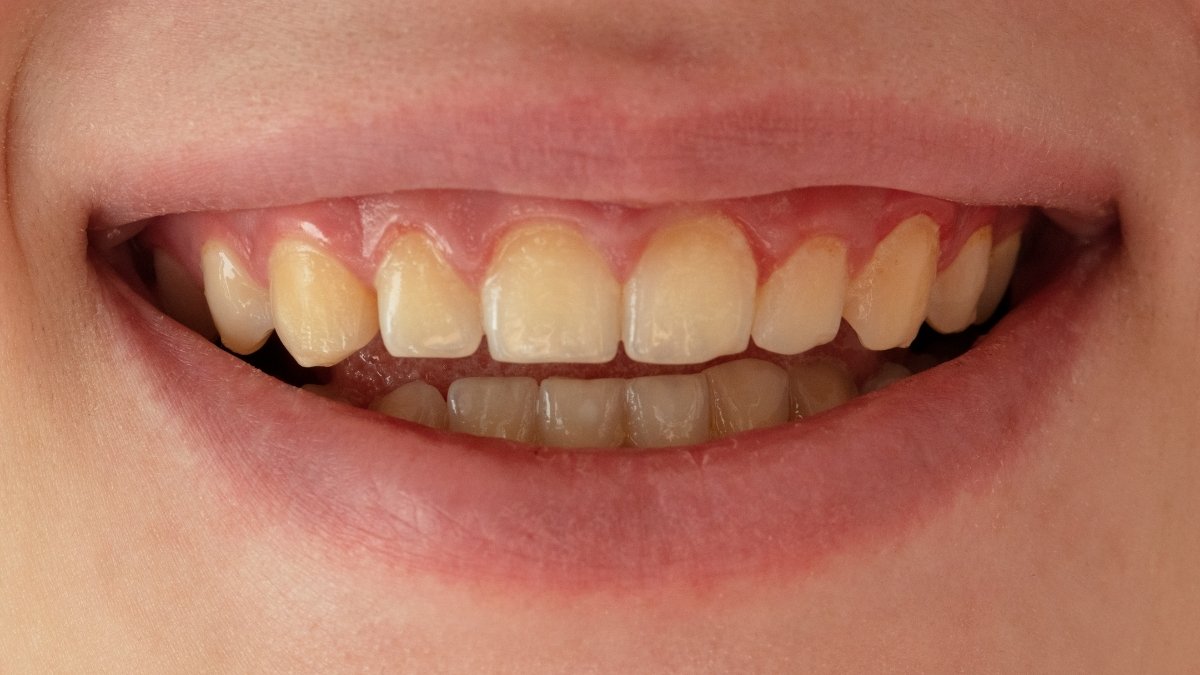
Your teeth change as you age. It’s not just about coffee stains.
Your enamel gets thinner. A 2020 study found enamel becomes 40% thinner by age 60. That outer white layer wears down. The yellow dentin underneath shows through. This is called intrinsic discoloration.
Then there are surface stains. Years of coffee, tea, and red wine build up on your teeth. These extrinsic stains sit on the enamel surface. Research shows they cause 60% of visible yellowing in adults over 60.
Some medications make it worse. Blood pressure pills and allergy meds can discolor teeth. Dry mouth from medications lets stains stick easier.
Here’s the good news. Natural methods work on surface stains. They can’t change your tooth color or fix thin enamel. But they can remove years of buildup.
That’s where baking soda and hydrogen peroxide come in.
Point Two: The First Natural Whitening Hack – Baking Soda (The Gentle Abrasive)
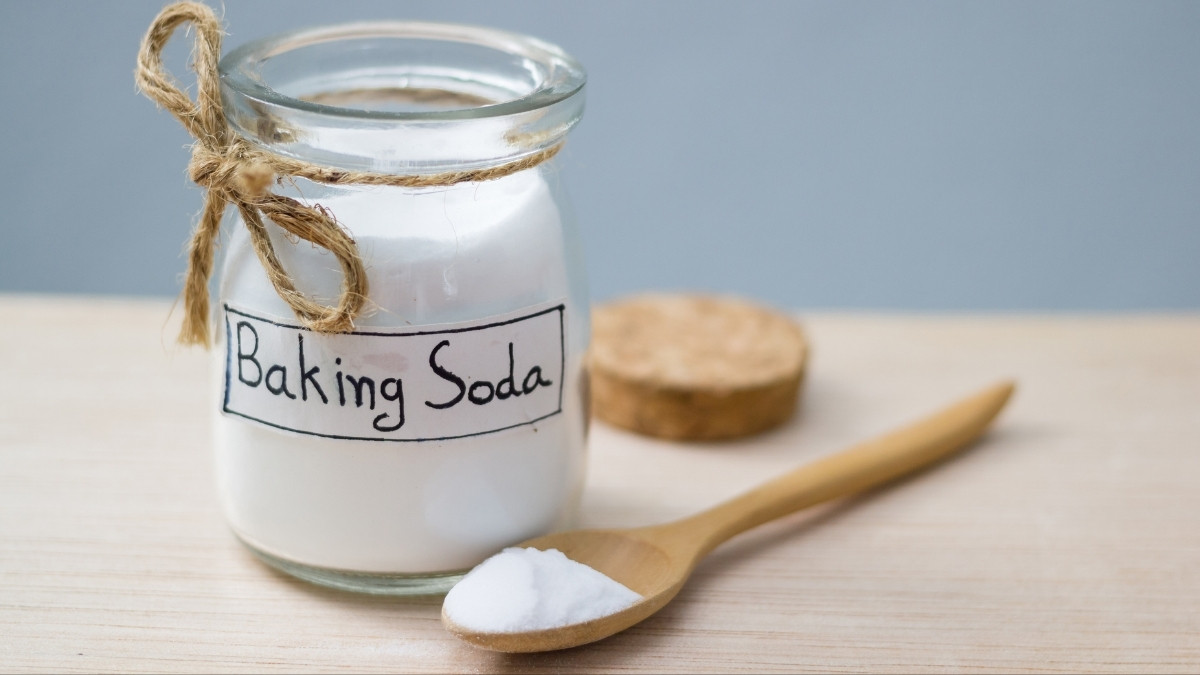
Baking soda scrubs away surface stains. It’s mildly abrasive. Think of it like fine sandpaper for your teeth.
The science backs this up. A Journal of the American Dental Association review found that baking soda effectively removes tooth stains. One clinical trial showed 60% stain reduction in six weeks.
Baking soda also creates an alkaline environment in your mouth. This reduces bacteria that cause yellowing.
Here’s how to use it safely. Mix 1 teaspoon baking soda with 2 teaspoons water. Make a paste. Apply it to your teeth with a soft toothbrush. Brush gently for 2 minutes. Rinse thoroughly.
Only do this 1-2 times per week. More than that damages your enamel. Your teeth at 60 are more sensitive than younger teeth.
Don’t brush hard. Let the baking soda do the work. Results take 4-6 weeks to show.
Point Three: The Second Natural Whitening Hack – Hydrogen Peroxide (The Gentle Bleach)
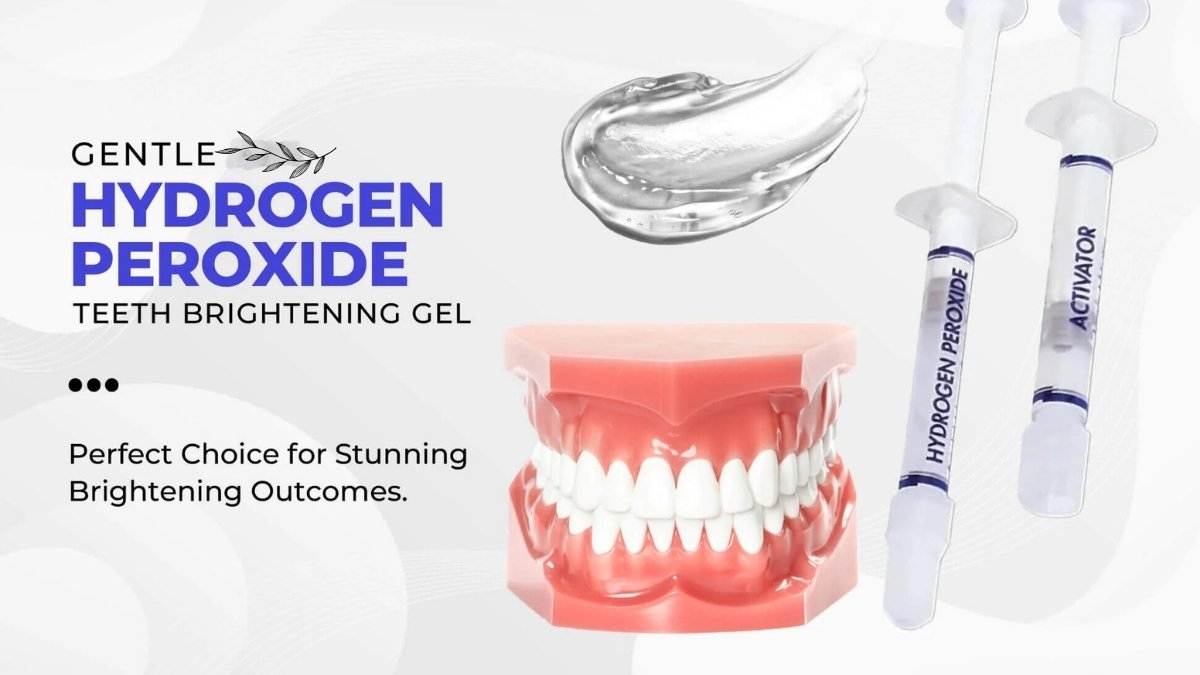
Hydrogen peroxide whitens through oxidation. It breaks down stain molecules at the chemical level. Dentists use this same ingredient.
Professional treatments contain 15-40% hydrogen peroxide. You only need 3% for home use. That’s the brown bottle from any drugstore.
Recent 2026 dental research confirms it works. The peroxide releases free radicals that attack chromophores. Those are the molecules that make stains visible.
Use it two ways. For a rinse: Mix 2 ounces of 3% hydrogen peroxide with 2 ounces water. Swish for 2-4 minutes maximum. Spit it out. Rinse with plain water.
For a paste: Mix the 3% peroxide with baking soda until thick. Apply for 2 minutes only.
Never use higher concentrations. Never swish longer than 4 minutes. This can burn your gums and damage enamel. Stick to 3% only.
Point Four: Combining the Two Hacks Safely (The Power Duo Method)
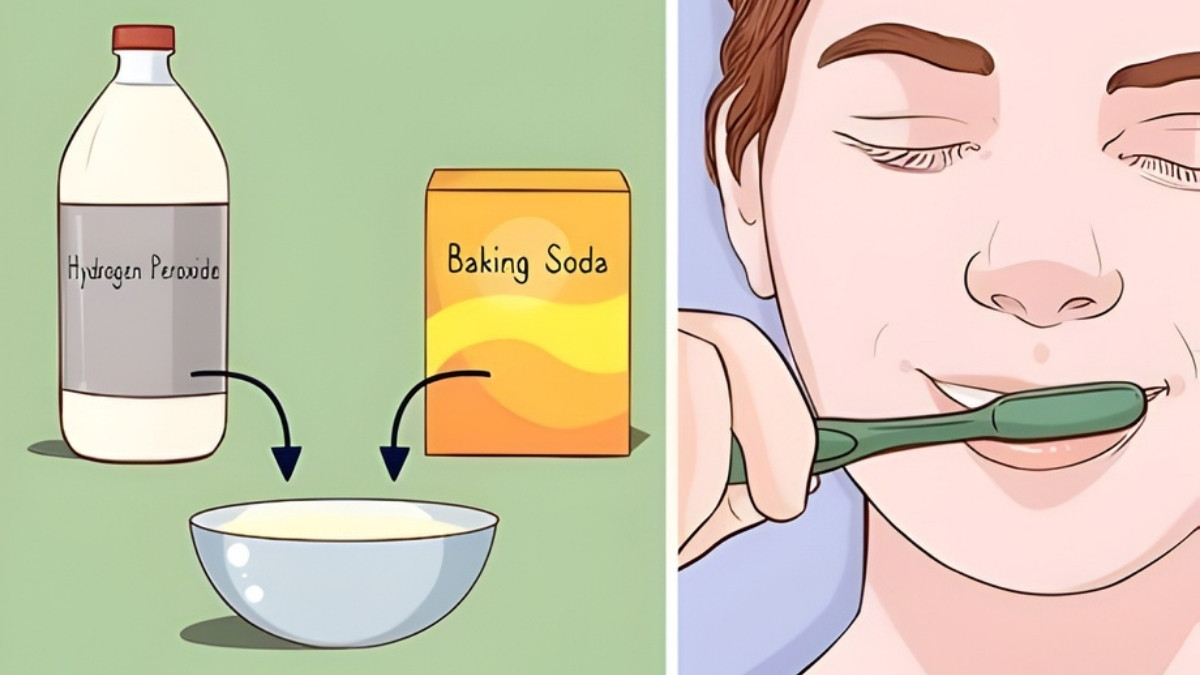
Together, these methods work better. Baking soda scrubs the surface. Peroxide bleaches deeper stains. They complement each other.
But mixing them at home carries risks. Studies confirm they work together to reduce plaque and whiten teeth. However, the American Dental Association warns against unsupervised home mixing. Wrong ratios can damage enamel or cause toxicity.
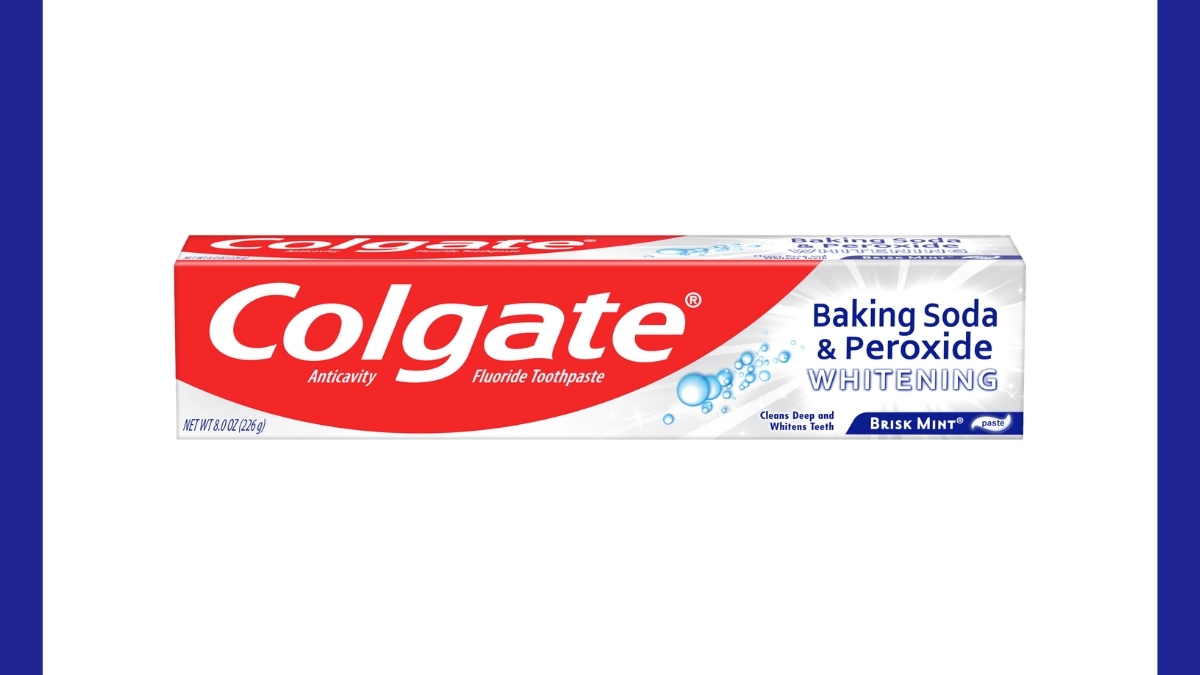
The safest option is buying ready-made products. Look for Colgate Baking Soda and Peroxide Whitening Toothpaste. It has the ADA Seal of Acceptance.
If you insist on mixing at home, use exact ratios. Mix 2 parts baking soda to 1 part 3% hydrogen peroxide. Apply for 2 minutes maximum. Once per week only for seniors.
Watch for sensitivity. If your teeth hurt, stop immediately. Your aging enamel needs gentler treatment than younger teeth.
Point Five: Special Precautions for Teeth Whitening After 60
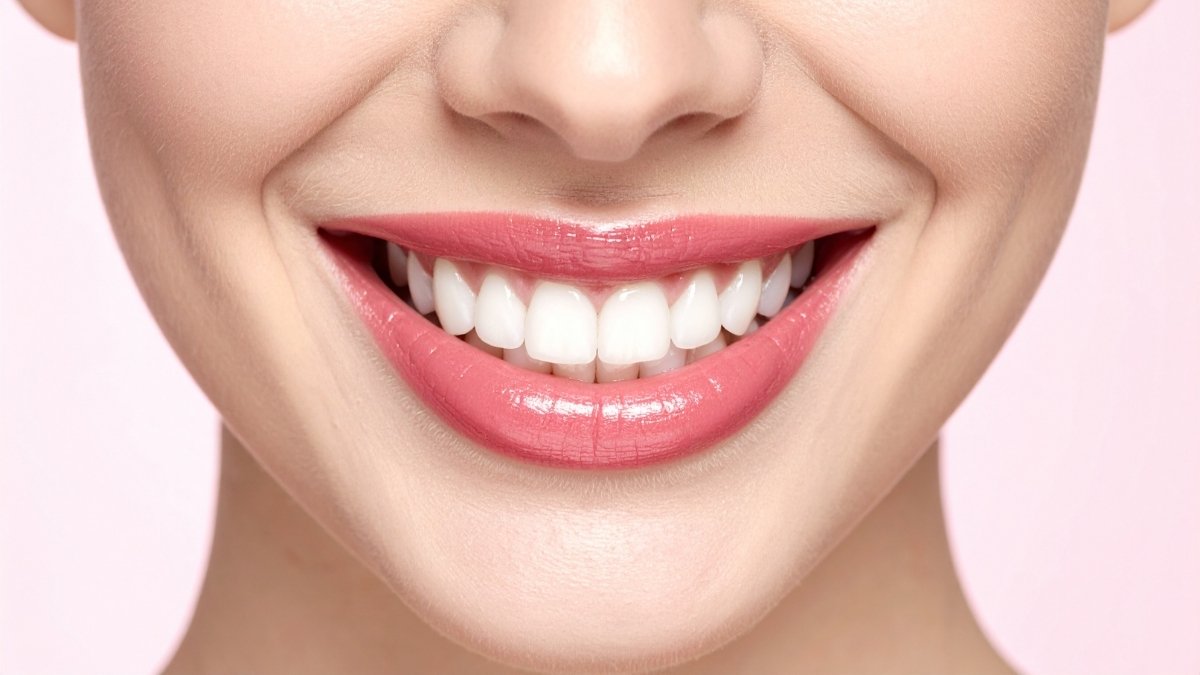
See your dentist first. This is not optional. You need to rule out cavities, gum disease, and exposed roots. Whitening products can damage teeth with these problems.
Dental professionals confirm most seniors can safely whiten. But only after a checkup. Your teeth are more porous and sensitive than younger teeth. Extra caution is necessary.
Watch out if you have dental work. Crowns, fillings, and veneers don’t whiten. You’ll end up with uneven coloring. Your natural teeth will be white. Your dental work will stay the same color.
Gum recession is a big concern. Many seniors have receding gums. This exposes tooth roots. Whitening products can cause chemical burns on exposed roots. Follow time limits strictly.
Dry mouth affects safety too. Many medications cause this. Saliva protects your teeth. Without enough, whitening products sit on teeth longer and cause more sensitivity.
Point Six: What These Methods CAN and CANNOT Do (Setting Realistic Expectations)
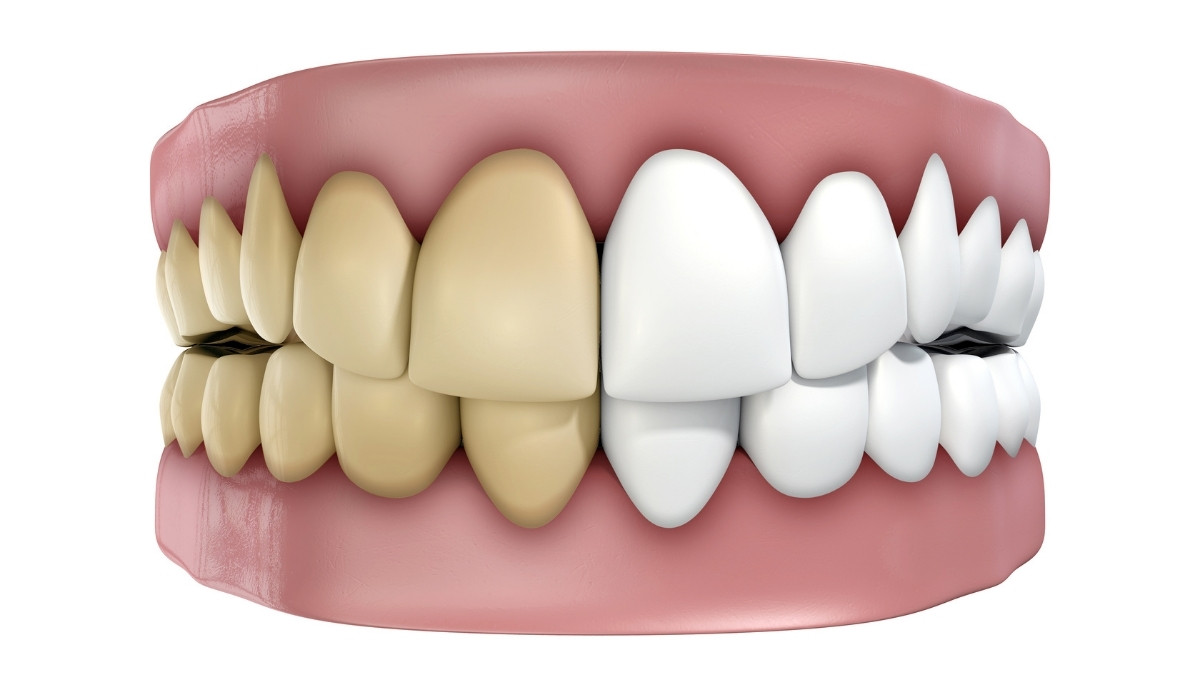
Let’s be honest about results. These methods work on surface stains. You can expect 60-80% improvement on coffee, tea, and wine stains.
The timeline is 2-6 weeks. The Mayo Clinic confirms baking soda toothpaste takes this long. Not overnight. Not in three days. Be patient.
Natural methods typically lighten teeth by 1-3 shades. Professional treatments can achieve 3-8 shades. Research shows this clear difference.
Here’s what won’t work. These methods can’t change your natural tooth color. They won’t fix intrinsic stains from inside the tooth. They can’t make aging enamel less transparent.
If you have deep stains from medication or trauma, see a dentist. Natural methods excel at removing food and drink stains. That’s it. They’re not magic.
Set realistic goals. A few shades brighter is a win at 60.
Point Seven: The Complete Whitening Routine for 60+ (Your Week-by-Week Plan)

Week 1-2 is preparation. Schedule your dental checkup. Get cleared for whitening. Test sensitivity by using a tiny amount of baking soda. See how your teeth react.
Week 3-6 is active whitening. Follow this schedule: Monday—use baking soda paste for 2 minutes. Tuesday through Sunday—brush with regular fluoride toothpaste. Thursday—use hydrogen peroxide rinse for 3 minutes. Friday through Sunday—regular toothpaste only.
Between treatments, protect your teeth. Use gentle brushing technique. Soft bristles only. Don’t scrub hard. Drink water throughout the day. This is critical if you take medications that cause dry mouth. Adequate saliva production helps protect teeth.
After 6 weeks, switch to maintenance. Use your chosen method once per month. This keeps results without overdoing it.
Consistency matters more than intensity. Gentle and regular beats aggressive and sporadic.
Point Eight: Protecting Your Results (Making Your Natural Glow Last)

Your results can last months with smart habits. Time your coffee drinking. Have it with breakfast, not throughout the day. Drink water after your morning coffee. This rinses away stain-causing compounds before they settle.
Use a straw for tea and wine. Less contact with your teeth means fewer stains. This simple trick helps a lot.
Switch to whitening toothpaste for daily maintenance. Choose one with the ADA Seal of Acceptance. It contains gentle abrasives that remove new surface stains.
Eat teeth-cleaning foods. Apples, celery, and cheese naturally scrub your teeth. They also stimulate saliva production.
Stay hydrated. Water is your best friend. It rinses your mouth naturally. This matters more as you age and produce less saliva.
Get professional cleanings every six months. Dentists remove buildup that home methods can’t reach. This keeps your whitening results fresh.
Final Words,
Baking soda and hydrogen peroxide work. They’re backed by science, not hype. Both are safe at 60 when used correctly.
Results take 2-6 weeks. You’ll see 1-3 shades of improvement on surface stains. Start with a dental checkup this week. Your brighter smile is achievable with methods backed by real research.