The Shocking Self-Care Mistake That’s Actually Increasing Your Stress Levels Daily

You downloaded the meditation app. You bought the journal. You set the alarm for 6 AM. And somehow, you’re more stressed than ever.
That’s not a coincidence. That’s a pattern.
Right now, millions of people are following self-care advice and still burning out. According to Mind Share Partners (2025), over 75% of U.S. workers report burnout — even as the wellness industry grows into a billion-dollar business. Something is clearly broken.
The problem isn’t that you’re lazy. The problem is that many popular self-care habits are secretly making your stress worse. Not better.
In this article, you’ll learn exactly which habits are backfiring, why they raise your cortisol instead of lowering it, and what to do instead. Every fix is simple, science-backed, and something you can start today.
No perfect morning routine required.
Uncover the Mistake
This article is structured into 8 points—read them one by one to uncover the common self-care mistake that may actually be increasing your daily stress levels and how to fix it.
Point One: The Self-Care Trap Nobody Warned You About
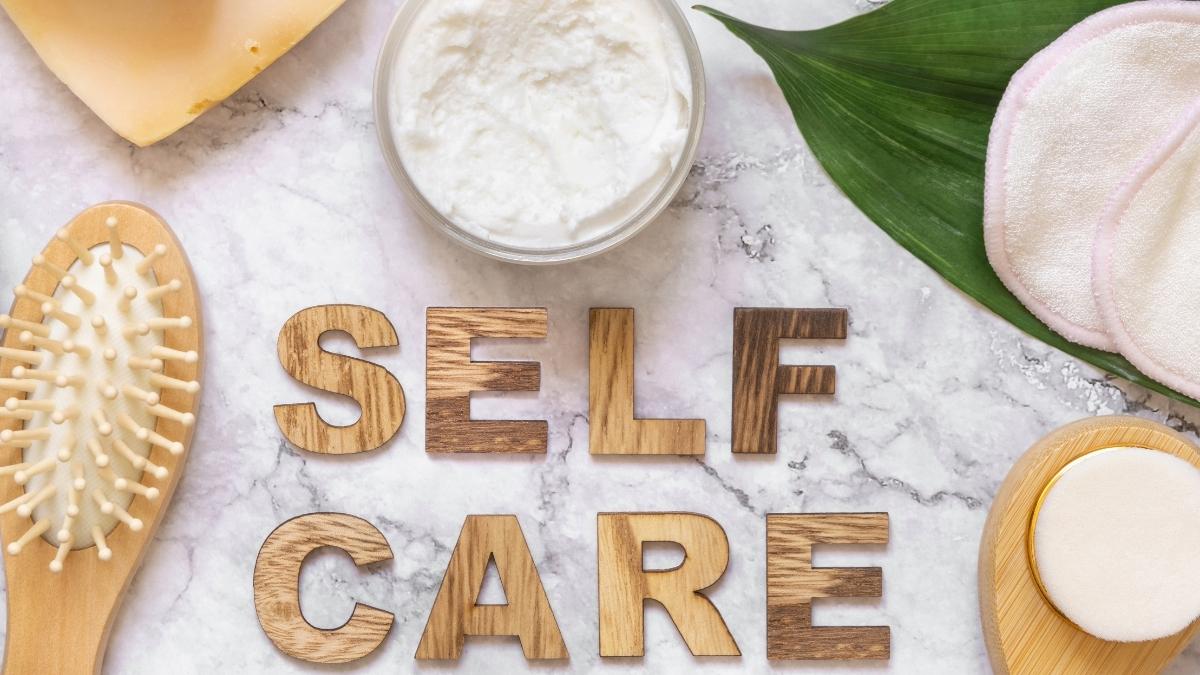
Imagine someone finishing a 30-day self-care challenge — bubble baths, gratitude lists, guided meditations — and still waking up at 3 AM with a racing heart. Sound familiar?
Here’s the problem. When self-care becomes another thing you have to do, your brain treats it like a task. And tasks create pressure. Pressure creates stress. That means your “relaxing routine” is quietly keeping you in the same stress cycle you’re trying to escape.
This is called the self-care paradox. The wellness industry sells products and perfect routines. But rest that’s scheduled, tracked, and performed isn’t real rest. It’s productivity in disguise.
Burnout costs the U.S. economy $300 billion per year, according to the American Institute of Stress. At the same time, wellness spending is at an all-time high. Both numbers are going up together. That tells you the products aren’t solving the problem.
Real self-care is not a performance. It’s a biological need.
The first mistake starts the moment your alarm goes off in the morning.
Point Two: The Morning Routine Obsession Wrecking Your Cortisol
Your body wakes up already stressed. That’s not a flaw — it’s biology.

In the first 30 minutes after waking, your cortisol levels naturally spike. This is called the Cortisol Awakening Response. It gives you energy and alertness. It’s supposed to taper off after that.
But here’s the problem. If you immediately fill those 30 minutes with cold showers, 5 AM workouts, journaling, affirmations, and podcast listening — you’re adding pressure on top of an already elevated stress response. Your nervous system reads that as: “We are behind. We are in danger.”
The “5 AM Club” trend sounds productive. But biologically, it can push an already tired body straight into fight-or-flight mode before the workday even begins.

Dr. Andrew Huberman from Stanford suggests a simple, evidence-based fix: get 5–10 minutes of natural morning light first. No phone. No to-do list. Just light. This gently regulates your cortisol rhythm without overloading it.
A slower morning is not a lazy morning. It may be the smartest thing you do all day.
Point Three: The Wellness App Addiction Keeping Your Mind Wired
Calm. Headspace. Oura Ring. WHOOP. These tools are everywhere in 2026 — and for good reason. They help many people.

But there’s a trap hiding inside them.
When you obsessively check your sleep score, stress level, HRV data, and meditation streak every morning, you’re adding mental load — not reducing it. Seeing a “low recovery score” before 8 AM can ruin your entire day. That anxiety is real, and it has a clinical name: orthosomnia. It’s the stress caused by over-monitoring your sleep data.
Gamified wellness — streaks, badges, daily reminders — activates the same dopamine-pressure loop as social media. It stops feeling like care and starts feeling like a job.
Think about this: meditating for 10 minutes on an app, then spending 20 minutes analyzing your mindfulness score. That’s not relaxation. That’s more screen time dressed up as wellness.
The fix is simple. Pick one or two days a week to put the tracker away. Let your body rest without being measured.
Point Four: The Exercise Mistake That Spikes Your Stress Hormones
Exercise is one of the best stress relievers that exists. But only when it’s done right.
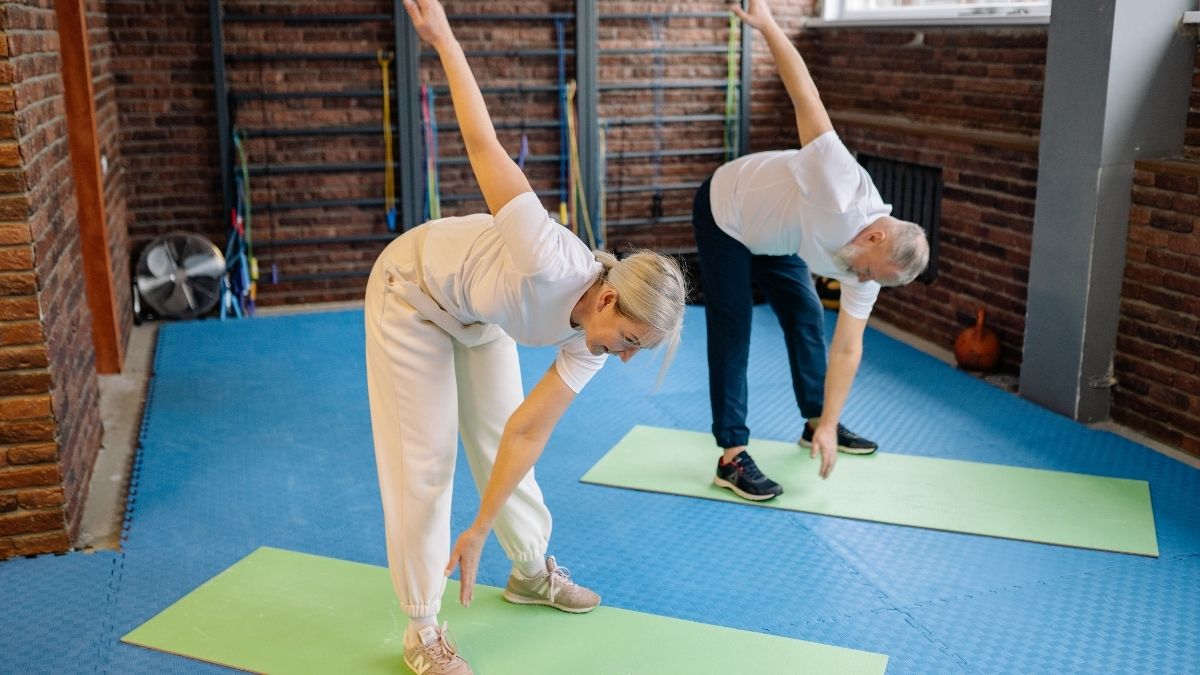
When you exercise, your body releases endorphins that lower cortisol and improve your mood. That’s real. That’s science. But there’s a catch most fitness content ignores.
If you do intense workouts every single day with no rest, your cortisol stays chronically elevated. Your body treats a brutal HIIT session the exact same way it treats a work deadline — as a physical threat. Cortisol doesn’t care why it’s being triggered.
There’s also a psychological side to this. Many people exercise to “earn” food, burn off guilt, or punish themselves for being lazy. That mindset makes every workout a source of shame. And shame is a stress trigger, not a motivator.
Dr. Kelly McGonigal, Stanford psychologist and author of “The Joy of Movement,” found that exercise motivated by joy actually reduces stress. Exercise motivated by guilt amplifies it.
Move your body. But move it because you like how it feels — not to pay off an invisible debt.
Point Five: The Journaling Habit That Makes Your Anxiety Worse

Journaling helps with stress. Research supports it. James Pennebaker at the University of Texas has shown that structured emotional writing reduces stress biomarkers in the body.
But there’s a version of journaling that makes anxiety worse. It’s called venting journaling.
This is when you write every day about what’s wrong, who upset you, and what you’re afraid of — with no resolution, no reframe, and no closure. When you do this, your brain replays the stressful event. That replay activates the same threat response as the original experience. You’re not releasing the stress. You’re rehearsing it.
The fix is simple. Use this 3-step journaling method instead:
Step 1 — Write what bothered you. Two minutes max. Get it out. Step 2 — Write why it makes sense that it bothered you. This is self-compassion. Step 3 — Write one small thing you can do or accept today. This restores your sense of control.
That last step is everything. It moves your brain from stuck to solution.
Point Six: The Social Media Self-Care Content Rewiring Your Brain for Stress
Scrolling through calming reels, aesthetic morning routine videos, and wellness influencers feels like self-care. It is not.

Even “relaxing” content on a screen keeps your brain in an alert, reactive state. Screens signal wakefulness to your nervous system. There is no such thing as passive, restful screen time.
On top of that, watching someone else’s perfect routine — the matching journal set, the glowing skin, the 5 AM sunrise workout — triggers social comparison. You don’t feel inspired. You feel behind. That feeling has a name: comparison stress. And it raises cortisol just like any other stressor.
In 2025, one in four U.S. adults experienced a mental illness. That period also saw record-high social media use. These two facts are not unrelated.
Your “5-minute scroll” also rarely stays 5 minutes. The algorithm is built to extend your session. What starts as self-care becomes 45 minutes of cortisol exposure.
Three real replacements: a 10-minute walk with no phone, one page of a physical book before bed, or a real conversation with someone you like.
Point Seven: The Boundary-Setting Mistake That Exhausts You Further
Setting boundaries is now the most popular self-care advice online. And it is genuinely important.
But most people are doing it in the most exhausting way possible.
Here’s what usually happens. You say yes to something you don’t want to do. You resent it. You eventually snap and declare a boundary — after the damage is already done. Now you have conflict to manage, guilt to process, and a relationship to repair. That’s not self-care. That’s stress management after a preventable crisis.
This is reactive boundary-setting. It costs enormous mental energy. In 2025, nearly 85% of workers reported burnout, according to Wellhub. A big reason is that people wait too long to set limits.
The fix is proactive boundaries — clear, calm, and set before resentment builds.
Three simple tools:
- Set the limit before you need it.
- Use this script: “I’m not available for [X] after [time]. I can do [Y] instead.”
- Default to “Let me check my calendar” for any new request. That pause alone prevents overcommitment.
Boundaries that prevent fires cost less energy than boundaries that put them out.
Point Eight: What Real Self-Care Actually Looks Like in 2026
Real self-care in 2026 is not an aesthetic. It’s not a product. It’s not a morning routine that looks good on video.
It’s biological. It’s relational. And it’s sustainable.

A study referenced by the National Institute of Mental Health found that 66% of people who practice self-care feel mentally stronger and better equipped to handle challenges. But the key is whether that self-care is genuinely restorative — or just another performance.
The six principles that actually work: consistency over intensity, nervous system regulation over stimulation, social connection over solo wellness, real rest as a non-negotiable, joyful movement, and intentional use of technology.
You don’t need a dramatic wellness weekend. You need small, honest habits done every day.
Here’s a 7-day starter plan — one action per day:
- Day 1: Sleep 7–8 hours.
- Day 2: 10-minute outdoor walk, no phone.
- Day 3: Call someone you enjoy talking to.
- Day 4: Write 3 gratitude sentences.
- Day 5: Skip one social media session.
- Day 6: Say no to one thing.
- Day 7: Sit quietly for 5 minutes. No screen, no goal.
Start with one. Just one.
Final Thoughts,
Self-care only works when it matches what your body and mind actually need — not what the wellness industry sells you. Stop performing rest. Start practicing it. Pick one fix from this article and try it today. Because the most powerful self-care habit you can build in 2026 is the one that genuinely makes you feel less stressed.