Researchers Reveal the Best Time of Day to Move for Health [You’re Probably Doing It Wrong]
![Researchers Reveal the Best Time of Day to Move for Health [You're Probably Doing It Wrong]](https://savvyhipster.com/wp-content/uploads/Add-a-heading-2025-12-15T165903.370.jpg)
A groundbreaking 2024 study tracking 30,000 adults for 8 years revealed that the time you exercise could be just as important as the exercise itself.
You’re already working out regularly. You’re doing everything right. But here’s the problem: you might be exercising at the wrong time and missing out on serious workout benefits like faster weight loss, better blood sugar control, and lower disease risk.
Your body’s circadian rhythm changes how exercise affects you. Morning, afternoon, and evening workouts do different things to your body. The best time of day to exercise depends on what you want to achieve.
This guide shows you the latest 2024-2025 research on exercise timing. You’ll learn specific time windows for weight loss, heart health, and metabolic benefits. Plus, you’ll get practical strategies to match your workout schedule to your personal body clock and goals.
Let’s fix your timing.
Why Exercise Timing Matters: The Science Behind Your Body Clock

Your body runs on an internal clock. It’s called your circadian rhythm, and it controls more than half of what happens inside you. Your body temperature, hormone levels, and how fast you burn calories all change throughout the day.
Here’s what’s wild. Your body temperature is lowest when you wake up and highest in late afternoon. Your muscles work differently at 7 AM than at 7 PM. Mitochondrial efficiency peaks during the late afternoon NPR, which means your cells produce energy better then.
Exercise acts like a reset button for your body clock. Scientists call this a “zeitgeber” (time-giver). When you work out, you’re telling your muscles, liver, and pancreas what time it is. They adjust and start working on a schedule.
This matters because morning, afternoon and evening physical activity were all associated with a lower risk of Type 2 diabetes and obesity, with risk reductions ranging from 20 to 64% Nature. That’s huge. The time you choose can cut your disease risk by more than half.

Ever feel awful working out after flying across time zones? That’s jet lag messing with your body clock exercise timing. Night shift workers face this every day, and it increases their health risks. Your body wants to move at consistent times.
Morning Exercise (6 AM – 12 PM): Benefits and Who It’s Best For
Morning workouts have a secret weapon: your body is ready to burn fat. People naturally have elevated levels of cortisol and growth hormone in the morning—both involved in metabolism Time. This hormone combo helps you torch calories.

Here’s the research. Exercising between 7 a.m. and 9 a.m. was associated with a lower body mass index TODAY.com. Plus, morning workouts, particularly between 8 and 11 a.m., are linked to a lower risk of heart disease and stroke, especially in women Mission Health. Morning movers also tend to eat fewer calories all day.
The biggest win? You’ll actually do it. When you work out first thing, life can’t get in the way. No excuses, no evening cancellations.
Try this 20-minute routine: Five minutes of stretching, ten minutes of cardio (walk, jog, or bike), five minutes of bodyweight exercises (push-ups, squats). Done before your coffee gets cold.
Need fuel first? Grab a banana, yogurt, or energy bar 30 minutes before. Your stomach will thank you.
Morning exercise for weight loss works because it shifts your body clock earlier. You’ll wake up easier, feel hungrier at breakfast, and sleep better at night. Your whole day syncs up.
Afternoon Exercise (12 PM – 6 PM): Peak Performance Window
Want to lift heavier and run faster? Work out in the afternoon. Researchers pinpointed the ideal time for your heart to exercise is between 11 am and 5 pm. This is when your body hits peak performance.

Your body temperature rises throughout the day. By afternoon, your muscles are warm and flexible. You’ll lift more weight, move faster, and feel stronger than morning workouts. Athletes know this—they consistently break personal records in afternoon training sessions.
Here’s the science. The efficiency of mitochondria peaks during the late afternoon. Your body naturally burns 10% more calories in late afternoon compared to morning. Plus, warmed-up muscles mean lower injury risk. No pulled muscles from tight, cold tissue.
Afternoon workout benefits make this the best time for strength training. It’s also a smart compromise if you want heart health, muscle building, and fat loss all at once.
Office workers, try this: Block your calendar from 12-1 PM twice a week. Hit the gym during lunch. Eat a light snack at 11 AM (apple with peanut butter works great), work out, then have lunch after.
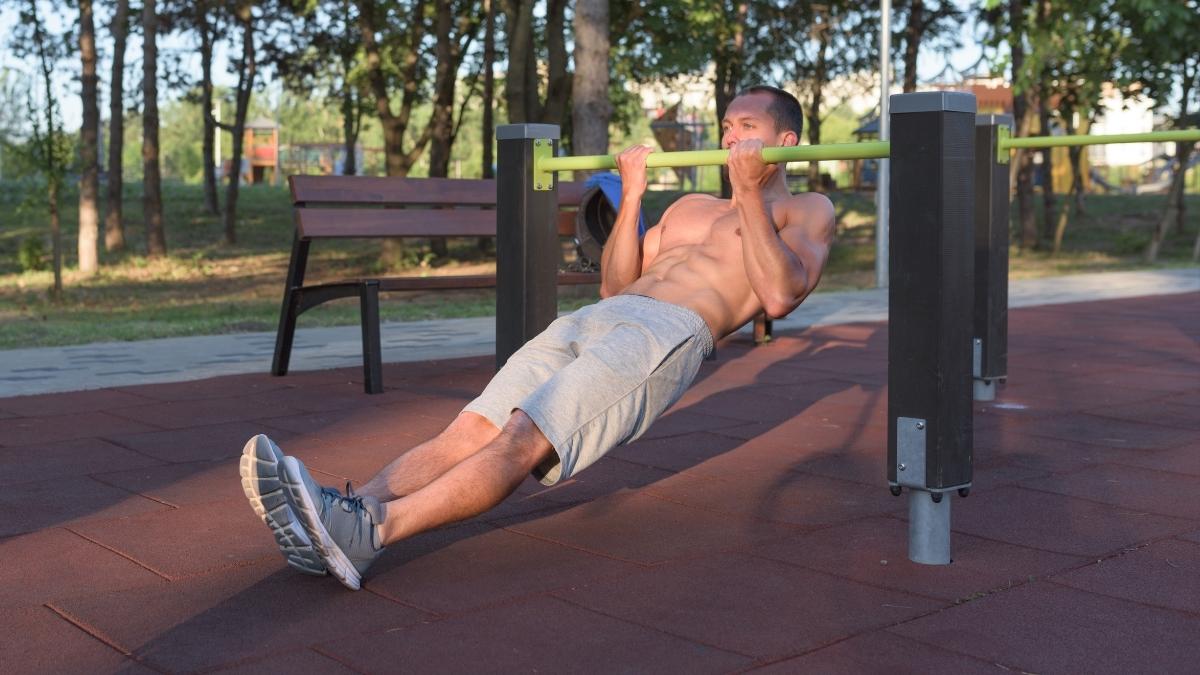
Your body is literally built to perform best in the afternoon. Use it.
Evening Exercise (6 PM – Midnight): The Surprising Health Champion
This changes everything. A 2024 study tracking 30,000 people for eight years found something shocking. Heart-pumping exercise in the evening was associated with the lowest risk of mortality and cardiovascular disease for people with obesity.

The numbers are massive. 61 per cent mortality risk reduction and 36 per cent cardiovascular disease risk reduction for evening exercisers with obesity. Evening exercise was most beneficial for microvascular disease (52% risk reduction). No other time comes close.
Evening workouts crush blood sugar problems. Your body handles insulin better after evening movement. People with diabetes see huge improvements in blood sugar control when they exercise at night instead of morning.
Worried about sleep? Don’t be. Most people sleep fine after evening exercise. Just finish your workout three hours before bed if you’re sensitive.
Try this simple routine: Walk for 20 minutes after dinner. That’s it. Start there. Your body will use that post-meal glucose instead of storing it as fat.
Evening workout benefits are especially powerful if you’re carrying extra weight or dealing with blood sugar issues. The research is clear. Night exercise advantages can literally save your life.
Clock Your Health
Three 10-minute walks beat one 30-minute session. Optimal health is movement throughout the day.
Understanding Your Chronotype: Are You a Lark or an Owl?
Are you a morning person or a night owl? Your chronotype determines when you have the most energy. Fight it, and you’ll quit. Work with it, and exercise gets easier.
Morning people (larks) wake up ready to move. Night owls feel dead until noon, then come alive at night. There’s no right or wrong. Your genes play a big role in your chronotype and exercise preferences.

Here’s the good news. Exercising regularly in the morning can train your muscles’ clocks to perform just as well at that time of day. Your body adapts in 3-6 weeks. But forcing yourself to work out at the wrong time kills motivation.
Quick chronotype test: When do you naturally wake up on weekends? When do you feel most energetic? That’s your real chronotype, not what your alarm clock says.
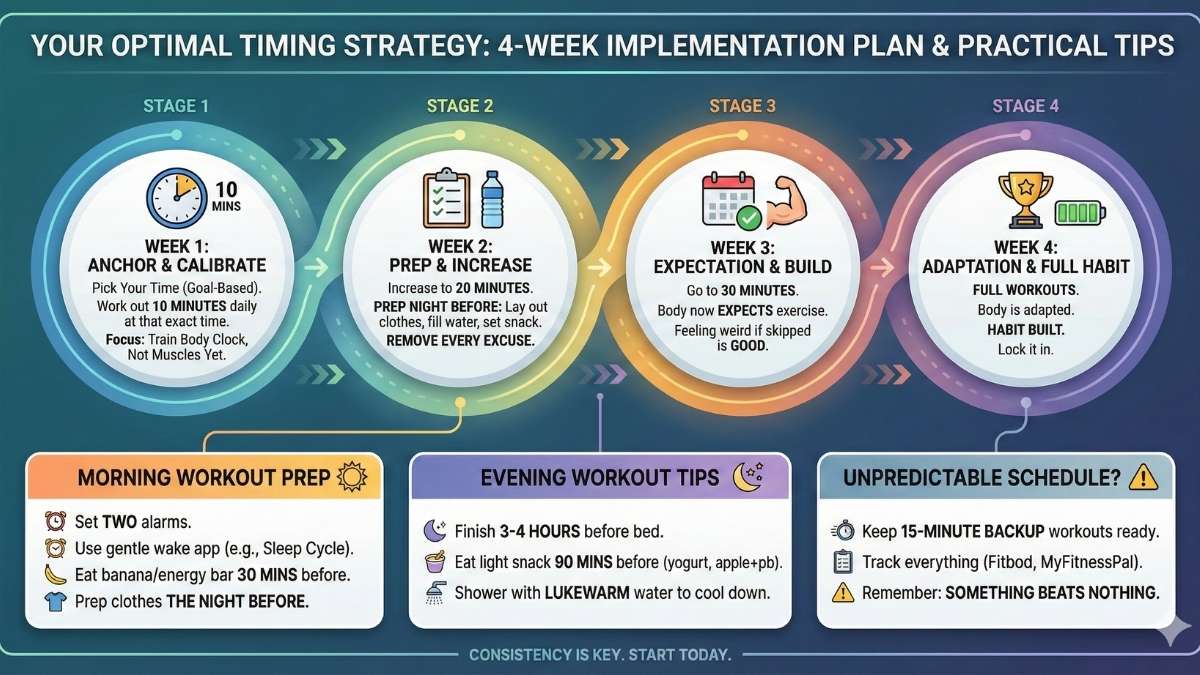
Night owls trying morning workouts should start slow. Go to bed 15 minutes earlier each week. Put your workout clothes next to your bed. Make it stupid easy to start.
Body clock adaptation takes time. Give yourself six weeks before you decide morning workouts don’t work. Your muscles need time to reset their internal clocks.
Don’t force 5 AM workouts if you’re naturally a night person. Pick evening instead.
The Consistency Principle: Why Regular Timing Matters Most
Here’s what matters more than finding the “perfect” time: picking one time and sticking with it. Working out at the same time every day may increase your ability to stick to an exercise routine. Your body learns the pattern and gets ready for it.
Same-time training aligns your body clocks. Your muscles start warming up before you even begin. Your energy peaks at that hour. After a few weeks, working out feels easier because your body expects it.

If you’re just starting, forget about optimal timing. Exercise consistency beats everything else. A beginner who works out at 10 PM every night will see better results than someone chasing the “best” time and skipping workouts.
Build it into your routine with habit stacking: “After I pour my coffee, I do 10 squats.” “When I get home from work, I change into workout clothes before sitting down.”
Block your calendar like it’s a doctor’s appointment. Can’t reschedule a heart surgery, right? Treat your training schedule the same way.
Get an accountability partner. Text them when you finish. Simple workout habit formation starts with showing up at the same time, same place, every single day.
What If You Can’t Control Your Timing? Making the Best of Your Schedule
Life is messy. Your schedule changes daily. Kids get sick, bosses need overtime, life happens. Here’s the truth: the best time to exercise is whenever you’re actually going to do it.
Any exercise at any time beats no exercise. Period. Stop waiting for the perfect moment that never comes.
Fluidity Over Rigidity
At the Last,
The research is clear. Evening exercise (6 PM-midnight) shows the strongest evidence for obesity and metabolic disease, cutting mortality risk by 61%. Morning workouts (7-9 AM) are best for weight loss and building consistent habits. Afternoon exercise (11 AM-5 PM) gives you peak performance and heart health benefits.

But here’s what matters most: consistency at the same time beats chasing the “perfect” hour. Your chronotype and personal schedule should guide your choice, not what works for someone else.
Your action plan: Track your workout times for one week. Notice your energy levels, performance, and how you feel afterward. Then experiment with your optimal window for 3-4 weeks—that’s how long it takes for your body clock to adapt. Remember: the best workout time is the one you’ll actually stick with.
Whether you choose morning, afternoon, or evening, understanding the best time of day to exercise for your specific goals can help you maximize results while building a sustainable, lifelong fitness habit.