Over 65? These 7 Daily Movements Keep You Independent Longer Than Any Medication (Geriatricians Agree)
Every year, over 36 million older adults fall. That’s a staggering number. But here’s what matters more: research from Johns Hopkins and the CDC shows that specific daily movements can reduce your fall risk by up to 28%. These simple exercises maintain your independence far longer than any medication can.
Falls are the leading cause of injury and death in adults 65 and older. You might worry about losing your independence. That fear is real and valid. But here’s the truth most doctors won’t tell you.
Medications don’t fix the root problems. They don’t strengthen weak muscles. They don’t improve your balance. They don’t restore the mobility you’ve lost over time.
Most seniors do less than one-third of the physical activity they need. This gap between what you’re doing and what your body needs is where falls happen.

What You’ll Learn Here
This guide shows you seven evidence-based movements that geriatricians recommend for fall prevention. You’ll learn exactly how to perform each movement safely, even if you haven’t exercised in years.
You’ll see why these balance exercises for seniors work better than pills for maintaining independence in aging. And you’ll discover how to start today, regardless of your current fitness level.
Why Movement Beats Medication for Senior Independence
Your doctor can prescribe pills for blood pressure, cholesterol, and a dozen other conditions. But no medication builds the muscle strength you need to get off the toilet independently. And that’s the problem.
Here’s what really happens as we age. Your muscle strength drops 3-8% every decade after age 30. Your muscle mass shrinks 3-5% in that same time. These losses directly cause the things you fear most—falls, loss of independence, and moving into assisted living.

Medications treat symptoms. Exercise fixes the root problem. When you practice balance exercises for older adults, you’re rebuilding the physical capacity that prevents falls in the first place. Research proves this works better than pills. Balance training cuts your fall risk by 23-24%. Programs that combine strength and balance work even better, reducing falls by 28%.
Geriatricians know this truth. As Better Health While Aging explains, normal daily activities aren’t enough. Your muscles naturally weaken with age, and only targeted movement can fight back.
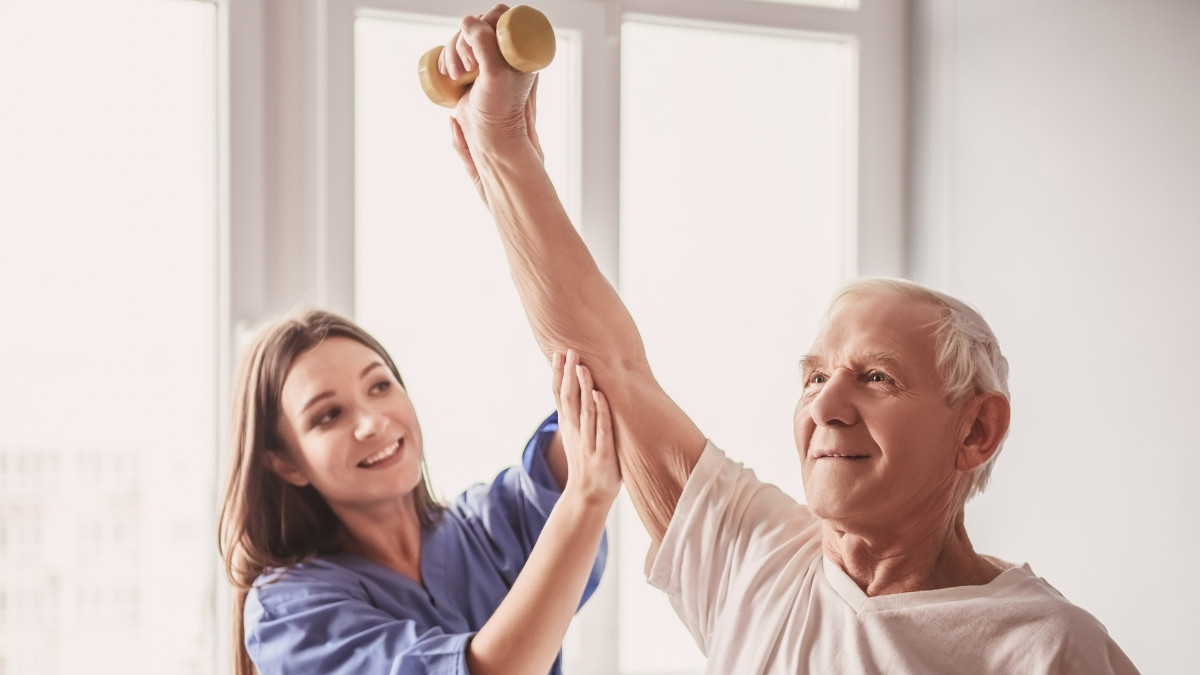
The numbers tell a clear story. Over 36 million older adults fall each year. One in four seniors will fall. Yet less than one-third of people over 65 do the exercises that prevent these falls. The gap between what works and what people actually do is costing lives and independence.
These 7 Daily Movements KEEP YOU INDEPENDENT
Longer Than Any Medication.
Movement #1: Chair Rises (Sit-to-Stand)
Can you stand up from your toilet without pushing off the seat? If you struggle with this, you’re losing the ability to live independently. Chair rises fix this problem.
A European study tracked seniors for six years. Those who stood up easily from chairs lived longer. Those who struggled had higher death rates. This sit to stand exercise literally predicts how long you’ll stay independent.
Think about your daily life. You stand up from the toilet, kitchen chairs, your couch, and your bed. Every single time requires leg strength. Without it, you need help. With it, you stay in control of your life.
Here’s how to do chair rises safely:
Sit near the front edge of a sturdy chair. Place your feet hip-width apart, flat on the floor. Cross your arms over your chest. Lean forward slightly. Press through your heels and stand up. Lower yourself back down with control. Don’t drop into the seat.
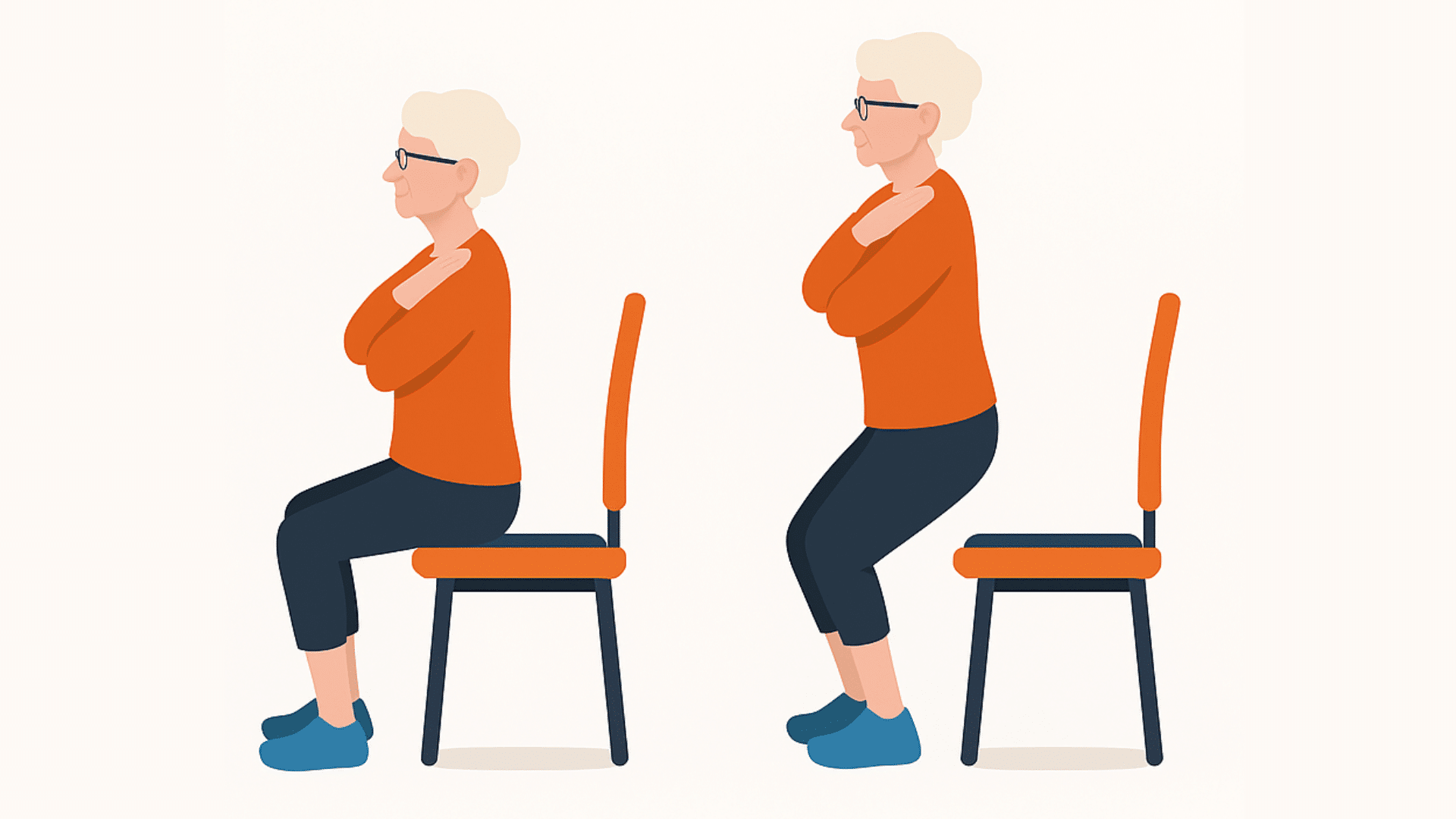
Can’t do it without your arms? That’s fine. Use the armrests. Add a cushion to make the seat higher. Start with just 2 repetitions if that’s all you can manage.
Work up to 10 chair rises, twice each day. This leg strength is what independence looks like.
Movement #2: Single-Leg Balance
Try this right now. Stand on one foot for 10 seconds. Can’t do it? A 2022 study in the British Journal of Sports Medicine found that people who can’t balance on one leg for 10 seconds face higher death rates.
This single leg stand exercise tests everything at once—your balance, leg strength, and coordination. It’s exactly what you do when you step over your grandkid’s toy on the floor or climb stairs. Real life requires you to balance on one foot dozens of times each day.
Here’s how to practice safely:
Stand behind a sturdy chair or next to your kitchen counter. Lift one foot slightly off the ground. Hold this position. Keep your standing knee slightly bent, not locked. Switch to the other leg. That’s it.
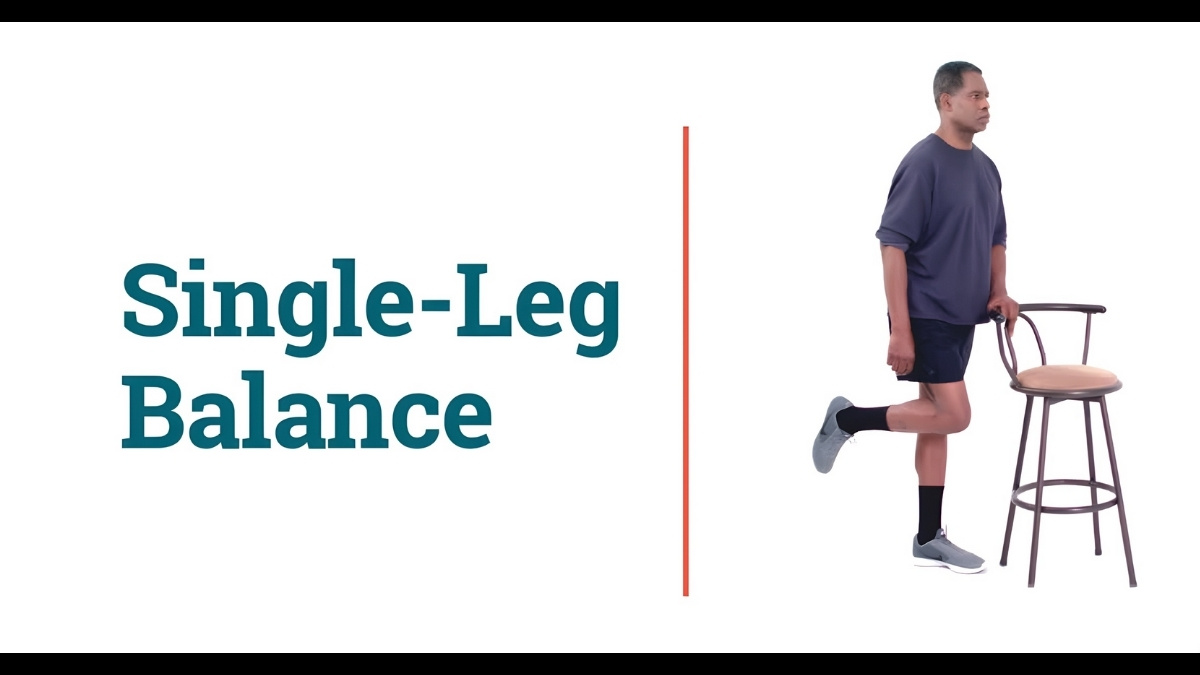
Start by holding the chair with both hands for 10 seconds. When that feels easy, use just one hand for 30 seconds. Eventually, let go completely and aim for 60 seconds. You can even try it with your arms crossed or eyes closed.
Doctors use this balance training elderly exercise in fall risk assessments. It strengthens your ankles, legs, and core muscles. It also teaches your body where it is in space, which stops you from tripping.
Movement #3: Heel-to-Toe Walking (Tandem Walk)
Do you ever feel wobbly when you walk? This heel to toe walk fixes that problem by training your body to stay steady while moving.
Walking requires you to balance on one foot while the other swings forward. This tandem gait seniors exercise makes that skill stronger. It builds the confidence you need to walk without fear of falling.
Here’s the right way to do it:
Stand next to your kitchen counter or along a wall. Place the heel of your front foot directly against the toes of your back foot. Take a step forward, keeping your feet in this heel-to-toe line. Look straight ahead at a fixed spot on the wall, not down at your feet. Take 10-20 steps forward.
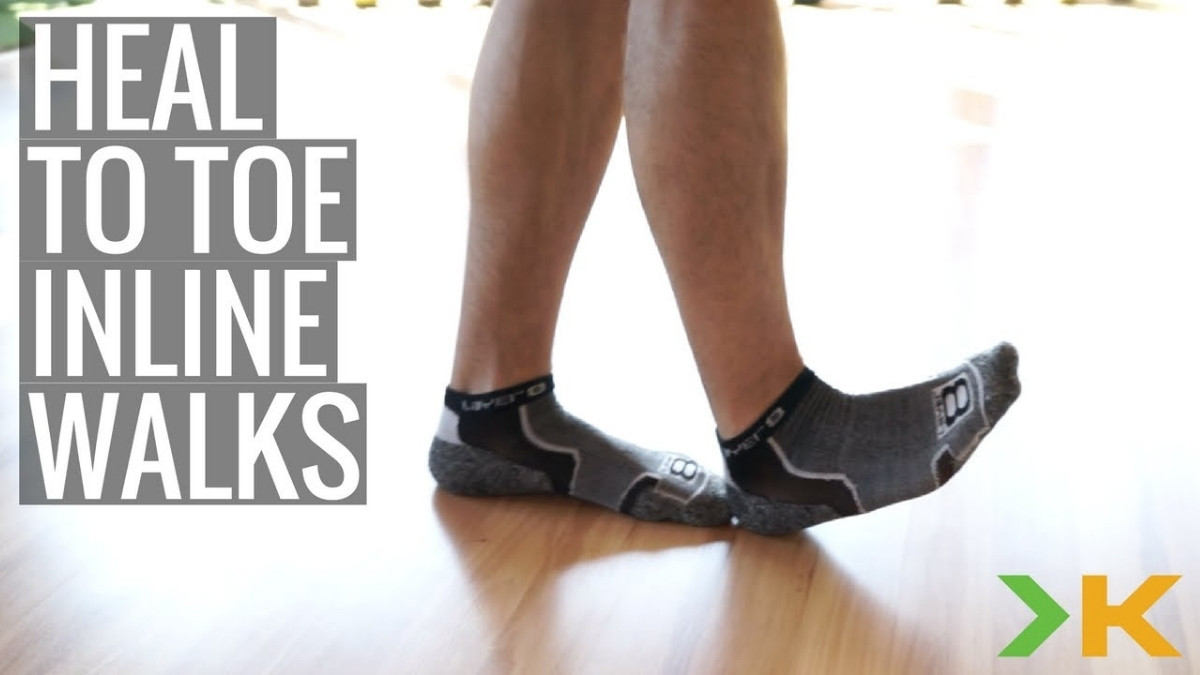
Too hard? Start with your feet slightly offset instead of touching. Keep one hand on the counter for support. When this feels comfortable, try it with just a light touch. Eventually, walk with your arms at your sides or crossed over your chest.
Clear your path of rugs, cords, and anything you could trip over. If you don’t have room for 10 steps, just do 4-8 back and forth. This walking balance improvement exercise works even in small spaces.
Movement #4: Calf Raises (Heel Raises)
Weak ankles make you unstable. Every step you take requires your calves and ankles to push you forward. When these muscles weaken, your walking gets shaky and you’re more likely to fall.
Research proves that ankle strengthening exercises improve how you walk and reduce ankle instability. Strong calves give you the power to climb stairs, walk confidently, and catch yourself if you stumble.
Here’s how to do calf raises seniors can safely perform:
Stand behind a chair and hold it lightly for balance. Place your feet hip-width apart. Slowly lift your heels off the ground, rising onto the balls of your feet. Hold for 2-3 seconds at the top. Lower back down with control. Do 10-15 repetitions, rest, then repeat for 2-3 sets.
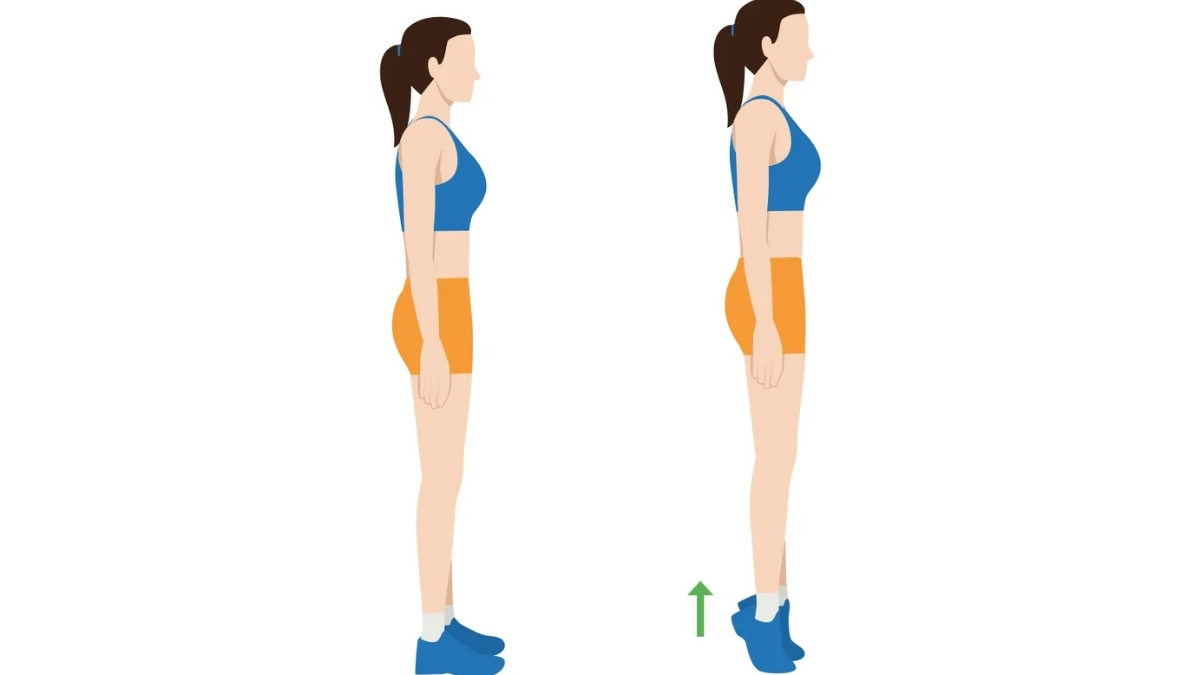
Can’t stand? Sit in a sturdy chair and lift your heels while seated. This seated version still strengthens your calves. When standing gets easy, try holding light weights or doing one leg at a time.
Go slow. Speed doesn’t matter here. Control does. These calf raises also improve blood flow in your lower legs, reduce swelling in your feet and ankles, and eliminate stiffness. Strong calves mean better balance improvement elderly adults need to stay independent.
Movement #5: Standing Marches: Build Strength for Everyday Life
Your hip flexors do more work than you might think. Every time you climb stairs, get out of a car, or walk through the grocery store, these muscles are firing. Standing marches strengthen them in a way that directly helps your daily routine.
How to Do It
Stand with your feet hip-width apart. If you feel wobbly, keep one hand on a chair or counter. Lift one knee up toward your chest. Go as high as feels comfortable. Lower it back down. Now lift the other knee. Keep switching legs for 20 to 30 seconds. Your back stays straight. Your chest stays up.
Make It Easier or Harder
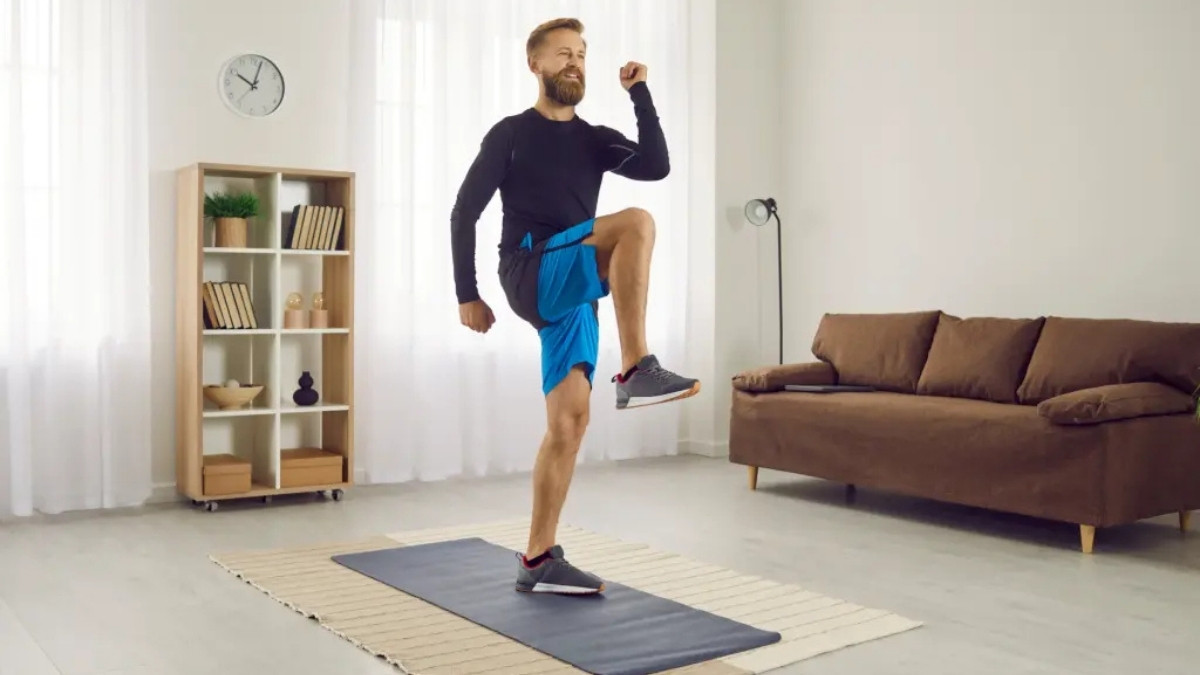
New to exercise? Start by marching while sitting in a chair. Once that feels good, try standing with support. When you’re ready, swing your arms as you march. This adds rhythm and works your coordination. Eventually, you can march without holding anything. Work up to 60 seconds at a time.
Why It Works
Research shows that eight weeks of step marching improves your balance and leg strength. It also builds your confidence. When you feel stronger, you worry less about falling. That confidence changes how you move through your day.
Movement #6: Hip Circles: Loosen Stiff Joints in Minutes
Sitting for hours makes your hips tight. You feel it when you stand up or try to walk smoothly. Hip circles fix this problem by moving your joints through their full range of motion.
How to Do It
Stand behind a chair and hold it for balance. Place your feet shoulder-width apart. Now move your hips in large circles, going counterclockwise first. Your shoulders stay still. Your feet stay planted. Only your hips move. Do five circles to the left. Then do five circles to the right. Repeat this two or three times.
Getting the Movement Right
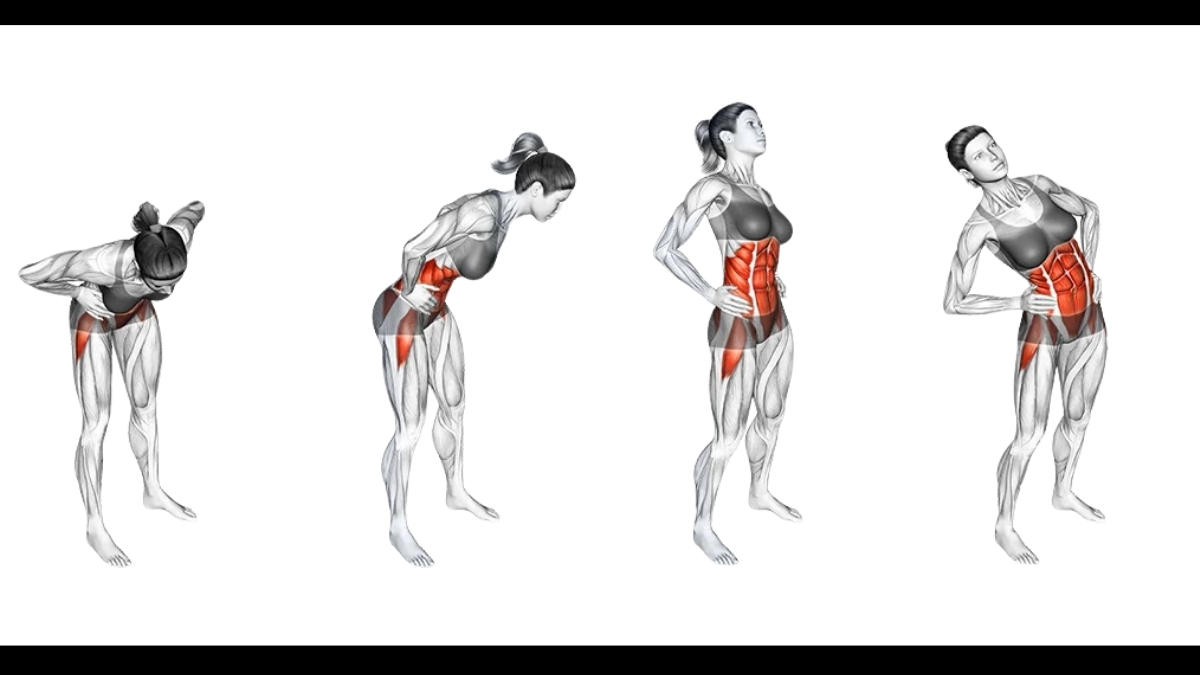
Think of drawing big circles with your hips. The movement should feel smooth, not jerky. Keep breathing normally as you circle. Don’t hold your breath. If the circles feel small at first, that’s okay. Your range will improve with practice.
What You’ll Notice
Your hips will feel looser right away. Walking becomes more fluid. You might also notice less tension in your lower back. That’s because tight hips often pull on your back muscles. When you free up your hip joints, your whole body moves better. This simple exercise takes less than two minutes but makes a real difference in how you feel.
Movement #7: Toe Raises: Stop Tripping Over Small Objects
You catch your toe on the carpet edge. You stumble on uneven sidewalks. This happens because the muscles that lift your foot get weak over time. Toe raises fix this problem by strengthening the front of your ankle.
How to Do It
Stand near a counter or chair for support. Keep your heels flat on the floor. Now lift your toes up toward your shins as high as you can. Hold this position for three to five seconds. Lower your toes back down with control. Do this 10 times.
Try It Sitting Down
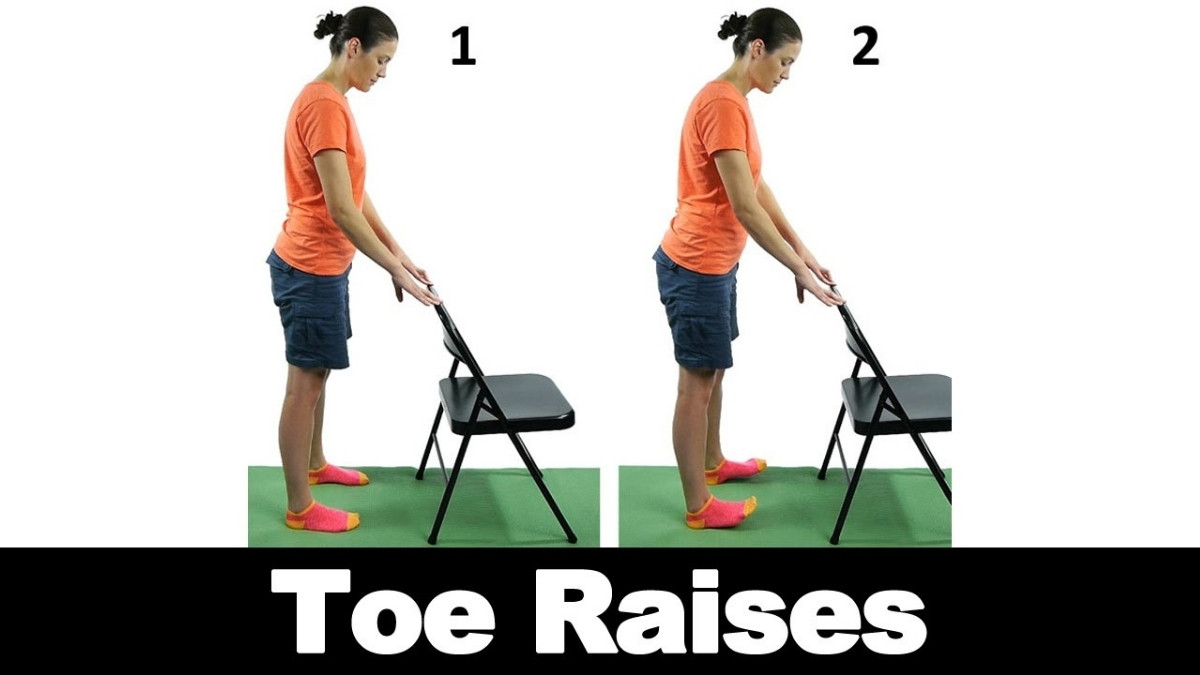
If standing feels unsteady, sit in a sturdy chair instead. The lifting motion is exactly the same. Your heels stay on the floor while your toes lift up. This option is safer if you’re worried about losing your balance.
Why This Exercise Matters
Toe raises work the tibialis anterior muscle. That’s the muscle running down the front of your shin. When this muscle is strong, you can lift your foot higher with each step. You clear obstacles more easily. You’re less likely to trip on small bumps or uneven ground. This exercise also pairs perfectly with calf raises. Together, they strengthen both sides of your ankle and reduce strain on your shins.
Creating Your Daily Routine: A Practical 15-Minute Plan
Daily Routine Plan
- 10 Chair Rises
- 30s Single-Leg Balance (each side)
- 15 Calf Raises
- 10 Steps Heel-to-Toe (3x)
- 30s Standing Marches
- 5 Hip Circles (each way)
- 10 Chair Rises
- 30s Single-Leg Balance
- 10 Toe Raises
Final Thoughts,
These seven movements fix the real problems that cause falls. Weak muscles. Poor balance. Stiff joints. Research proves that exercise works better than medication for keeping you independent. That’s worth repeating. Moving your body beats pills when it comes to staying on your feet.
You don’t need to be perfect. You just need to be consistent. Start with what you can do right now. If that’s one exercise, that’s enough. Add more when you’re ready. Fifteen minutes a day can cut your fall risk significantly. But only if you actually do it.
Do This Today: Stand up and try one chair rise. Just one. Use your hands if you need to. Do five repetitions total. That’s your start. Tomorrow, add the single-leg balance for 10 seconds. Hold onto something sturdy. Within one week, you’ll have a complete routine.
These balance exercises for seniors aren’t just about preventing falls. They’re about living the independent, active life you deserve. The life where you walk confidently. Where you play with your grandkids. Where you go where you want, when you want. That life starts with one chair rise. Do it now.