
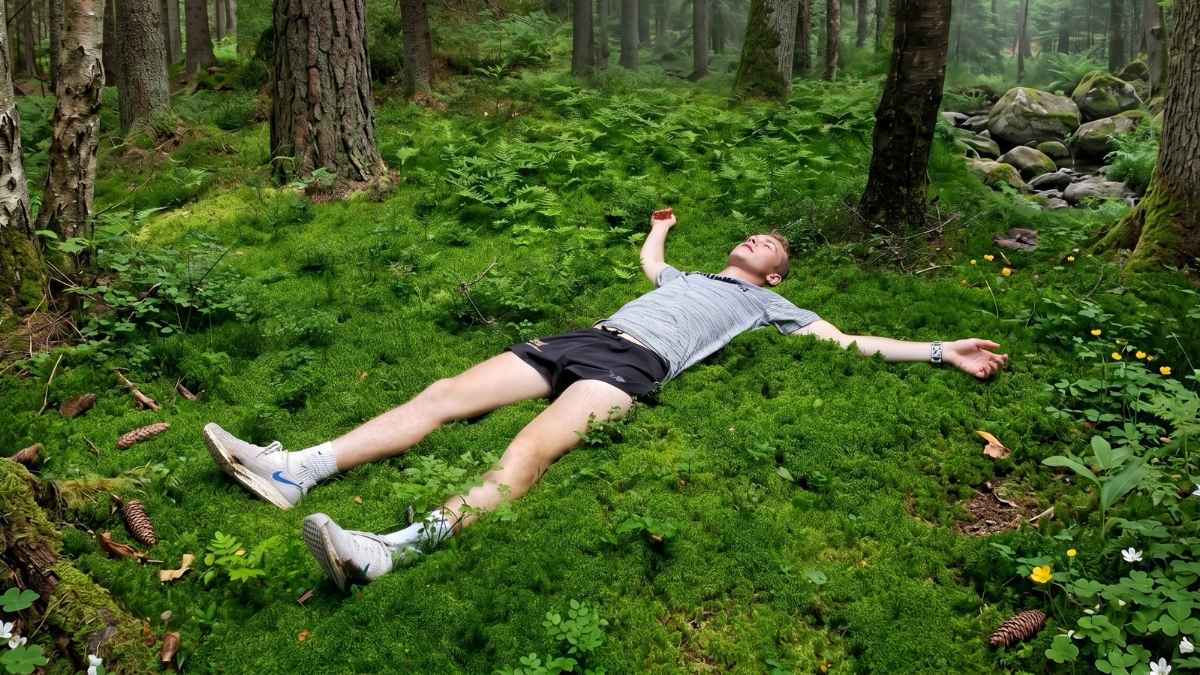
Your body is stuck in a chemical emergency. And the cure is 20 minutes away from your front door.
Right now, 83% of U.S. workers are dealing with work-related stress. Nearly 85% reported burnout in 2025. That is not a personality problem. That is a cortisol problem.
Cortisol is your stress hormone. It was built for short emergencies — not 10-hour workdays and midnight phone scrolling. When it stays high too long, it wrecks your sleep, your weight, your mood, and your health.
Here is what most people miss: science has found a simple, free reset. It is not a supplement. It is not a breathing app. It is going outside — with intention.
What This Article
Explains
What cortisol is doing to your body.
Why you are not getting enough nature.
What the research actually says.
How to fix it starting today.
Point One: What Cortisol Is Actually Doing to Your Body Right Now

Cortisol is not your enemy. It is your body’s alarm system. When danger comes, cortisol floods your blood to give you energy and focus. That is a good thing — in short bursts.
The problem is modern life never turns the alarm off. Work pressure, screens, bad news, financial stress — they keep pulling the emergency lever. And your body keeps responding as if a tiger is in the room.
Over time, that causes real damage. High cortisol leads to central belly fat, muscle loss, high blood pressure, and blood sugar problems. These are not rare diseases. These are things millions of people already have and just accept.
It gets worse. Chronic cortisol keeps your heart and arteries under constant strain. It suppresses your immune system. It raises your risk of depression, digestive problems, and serious heart disease. Research even links long-term cortisol overload to Alzheimer’s and Parkinson’s disease.
Nearly 72% of U.S. employees now face moderate to very high stress at work — a six-year high. Stress costs the U.S. economy $300 billion every year. This is not normal. It is a health crisis hiding in plain sight.
Quick Tips:
- Notice physical signs of high cortisol: belly weight gain, poor sleep, constant fatigue
- Track how many hours per week you feel “switched off” — most people score very low
- Tell your doctor if you have more than three of these symptoms regularly
Point Two: The Nature Deficit — Why Most People Are Not Getting Enough
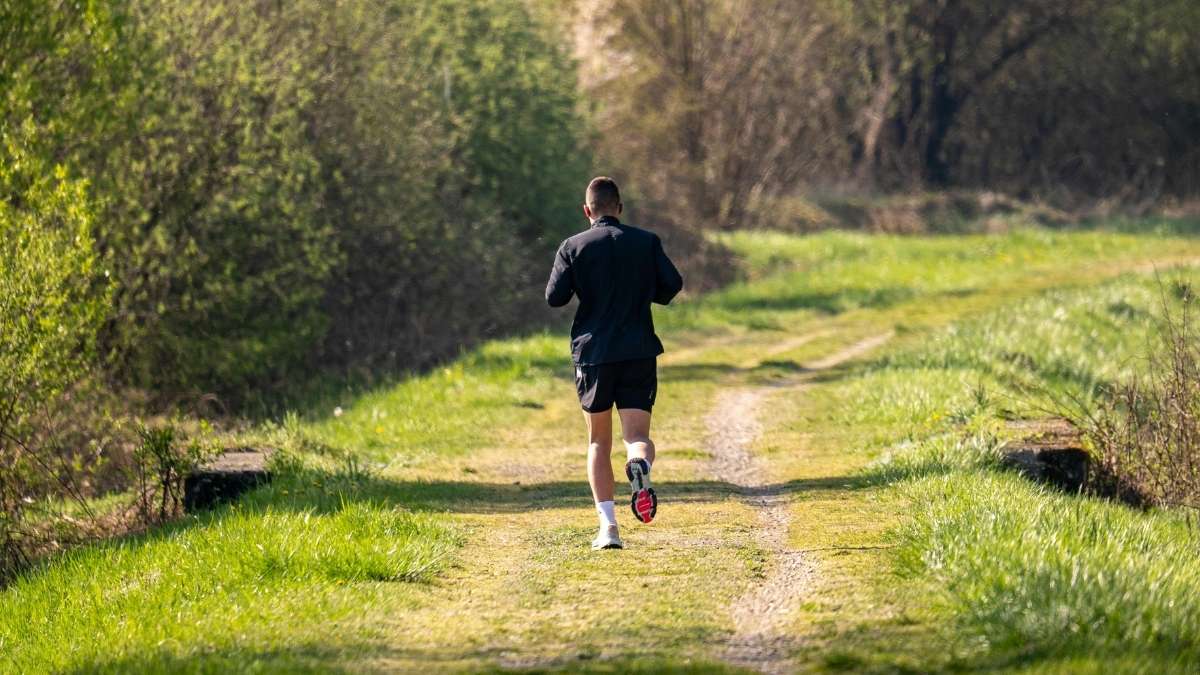
Here is a number that should bother you. Nearly one in five Americans spends less than 15 minutes outside every single day. Not 15 minutes in a forest — 15 minutes outdoors, total.
More than 58% of Americans spend one hour or less outside per day. Over 60% spend five hours or fewer in nature each week. And most of them say they are satisfied with that. That satisfaction is the real problem — they do not know they are running on empty.
Meanwhile, the average American spends 109% more time on their phone than taking outdoor walks each month. For Gen Z, that number jumps to 134%. We have traded the outdoors for screens without realizing what we lost.
A poll of 2,000 adults found that 57% crave outdoor time more than ever. And research says people need about 67 minutes outside daily to feel genuinely refreshed. Most people are hitting a fraction of that.
This gap is not laziness. It is structural. Urban living, desk jobs, long commutes, and constant screen demands have made staying indoors the default. But your biology was never designed for this.
Quick Tips:
- Check your phone’s screen time settings — compare it honestly to your outdoor time this week
- Set a simple goal: 20 minutes outside at least 3 days this week
- Tell one person about your goal — accountability doubles your follow-through rate
Point Three: What Science Says About Nature Therapy and Cortisol (The Hard Evidence)

Let’s get to the actual numbers — because this is not just a wellness trend.
A 2025 meta-analysis found that nature exposure dropped salivary cortisol by 21% and another stress marker by 28%. That happened from brief, simple time in nature. No equipment. No training. Just being outside.
A landmark University of Michigan study found that 20 to 30 minutes sitting or walking in nature caused cortisol to drop at its steepest rate. Participants chose any place they personally considered nature — a park, a garden, even a tree-lined street counted.
A 2024 study at Walter Reed National Military Medical Center found that walking a green trail caused a 104% increase in heart rate variability — a direct sign the body shifted out of stress mode. A 2025 study in Scientific Reports showed that repeated forest walks specifically reduced long-term cortisol in older adults. Urban walks did not produce the same result.
A review of 143 studies confirmed what these individual findings suggest: greenspace exposure consistently lowers cortisol. This is a decade of converging evidence, not one lucky study.
Quick Tips:
- You do not need a forest — any green space with natural elements counts
- Aim for 20–30 minutes minimum, not 5, to hit the cortisol-lowering threshold
- Repeat the habit at least 3 times per week for cumulative benefit
Point Four: The Biology Behind Why Nature Works

Why does standing under a tree feel different from standing in a parking lot — even if both are outdoors?
The answer starts with phytoncides. Trees release these natural airborne chemicals as part of their own defense system. When you breathe them in, something measurable happens in your body. Your cortisol drops. Your natural killer immune cells increase.
Your blood pressure lowers. Dr. Qing Li at Nippon Medical School in Tokyo has spent two decades documenting this. The forest is literally exhaling something that heals you.
Next is your nervous system. Your body has two modes: fight-or-flight (sympathetic) and rest-and-digest (parasympathetic). Chronic stress keeps you locked in fight-or-flight. Forest bathing — shinrin-yoku — activates the parasympathetic system and physically flips that switch. That is not a metaphor. It shows up in blood tests and heart monitors.
Then there is Attention Restoration Theory, developed by psychologists Rachel and Stephen Kaplan. Nature requires soft, effortless attention — no decisions, no deadlines. That gives your overloaded prefrontal cortex time to actually recover.
Even birdsong alone activates the parasympathetic system. Your nervous system was wired for nature long before it was wired for Wi-Fi.
Quick Tips:
- Breathe deeply and slowly when outside — this activates the parasympathetic response faster
- Look up at trees or sky instead of at the ground — visual input matters for restoration
- Leave earbuds out — natural sounds do biological work that music cannot replace
Point Five: Your Practical Nature Therapy Starter Plan for 202
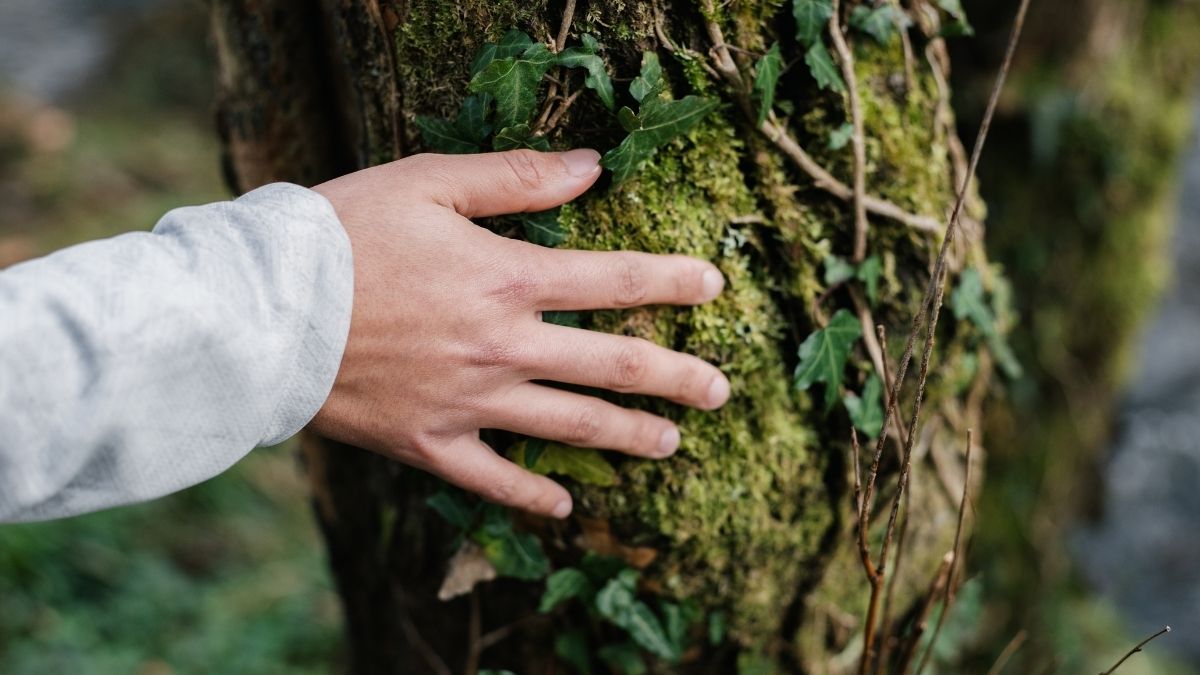
Here is what an effective, research-backed nature habit looks like in real life — not on a retreat, not on a weekend getaway. Right now, in your actual schedule.
Minimum Effective Dose
That is it. Start there. The research does not require a national park — it requires your presence.
🧘 5-4-3-2-1 Grounding
Use this when you arrive. It takes under five minutes and pulls your attention away from stress.
Things you can see
Things you can touch
Things you can hear
Things you can smell
Thing you can taste
Schedule it like an appointment. Morning walks before checking your phone are highest-impact — cortisol peaks in the morning, and nature exposure can reduce that spike. Eat lunch outside instead of at your desk.
Plan one 45-minute session on weekends. Research shows just five extra hours of outdoor time per month can boost happiness by 43%.
Leave your phone on airplane mode. Do not track pace or calories. Goal-free walks restore you. Performance-focused walks keep the stress system active.
Quick Tips:
- Use AllTrails (free) to find green walking routes near your home or workplace
- Download iNaturalist (free) to identify local plants — it deepens sensory engagement
- Put “outside time” in your calendar as a recurring block, three times a week
Point Six: Real Barriers, Honest Answers, and How to Stay Consistent

You have read the evidence. You know it works. And you still might not go outside. That is human. Let’s fix the most common reasons.
“I live in a city — there is no nature near me.” Research says this is not true. Urban parks, street trees, a patch of grass, a view of the sky — all of these activate the restorative response.
Nature therapy works in rural, suburban, and urban settings. County parks and nearby waterfronts count. Green exercise — cycling or walking through any green space — is a fully evidence-backed form of nature therapy.
“I don’t have 20 minutes.” You do. It is currently on your phone. The average American spends more than twice as much time on their phone as they do walking outdoors each month. Moving 20 minutes of screen time outside is not a sacrifice. It is a swap with a measurably better return.
“The weather is bad.” Japanese forest bathing research ran year-round, in all seasons. Cold air sharpens alertness. Phytoncide levels from trees are highest in summer and autumn but present all year. Weather is rarely the real barrier — discomfort is.
“I went outside and nothing changed.” Passive outdoor time does not count. Walking while on a call, checking messages on a park bench, or standing on a busy street does not lower cortisol. You need visual green, reduced digital noise, and some form of sensory engagement. Intentional presence is the active ingredient.
Anchor the habit to something you already do. Morning coffee becomes morning coffee outside. Dog walking becomes a slower, phone-free walk. Lunch becomes a park bench lunch.
Quick Tips:
- Find your nearest green space on Google Maps right now — save it as a favourite
- Start with just two intentional outdoor sessions per week before building to three or more
- Stack nature time onto an existing habit so it requires no extra willpower to remember
Cortisol &
Outdoor Time
Chronic cortisol damages your heart, weight, sleep, and brain.
Notice your symptoms and talk to your doctor.
Most people get far less outdoor time than their body needs.
Aim for 20 minutes outside, 3 days a week.
20–30 mins in nature drops cortisol by 21%.
Any green space counts — park, garden, or street trees.
Trees release phytoncides that lower cortisol and boost immunity.
Leave earbuds out and breathe deeply outdoors.
Just 5 extra outdoor hours per month boosts happiness by 43%.
Schedule it like an appointment and use AllTrails.
Urban parks count; screen time can simply be swapped.
Attach nature time to a habit you already do daily.
20–30 mins outside, 3× a week, is your ultimate cortisol reset.
Go outside today — no perfect conditions needed.
Lastly,

Nature therapy is not a trend. It is a biological reset your body was built for. Just 20 to 30 minutes in a green space, three times a week, lowers cortisol, restores your nervous system, and protects your long-term health. The research is clear. The cost is zero. Go outside today.