‘I sleep like a baby at 71. Here’s my “wind-down” mobility sequence 30 minutes before bed’

For years, I’d lie awake at 2 AM, staring at the ceiling while my body ached and my mind raced. Nothing worked. Not warm milk, not counting sheep, not reading until my eyes burned. Then I discovered something simple: 30 minutes of evening movement could transform my nights.
Here’s the problem most doctors won’t tell you. Over 20% of seniors struggle with staying asleep and waking up stiff. Traditional sleep advice doesn’t fix the real issue—your body is stuck in “alert mode” when it should be winding down.
I’m going to show you the exact 8-step evening mobility routine that activates your parasympathetic nervous system and releases muscle tension. This isn’t theory. This is backed by 2024-2025 research and tested on my 71-year-old body for over 300 nights straight.
Evening Release
I’m going to show you the exact 8-step evening mobility routine that activates your parasympathetic nervous system and releases muscle tension.
Point One: Why Counting Sheep Never Worked (The Science My Doctor Never Explained)
At 68, my doctor handed me a prescription for sleep medication. I refused. Instead, I spent months researching why my body fought sleep every night, and what I learned changed everything.
At 68, my doctor handed me a prescription for sleep medication. I refused. Instead, I spent months researching why my body fought sleep every night, and what I learned changed everything.
Your body has two modes: go and rest. The sympathetic nervous system is your gas pedal. The parasympathetic nervous system is your brake. Most seniors stay stuck with their foot on the gas all evening, then wonder why they can’t sleep.
Here’s what happens as you age. Your circadian rhythms shift. Melatonin production declines.

Seniors need the same 7-9 hours of sleep as younger adults, but getting it becomes harder. Sleep deprivation increases your fall risk, speeds up cognitive decline, and damages your cardiovascular health.
Reading before bed or watching TV seems relaxing, but it doesn’t release the physical tension locked in your muscles. Your mind might feel tired, but your body is still wound tight.
Research from the 2024 European Journal of Applied Physiology found that 60-minute stretching sessions three times per week for four months significantly improved sleep quality in adults.
The solution isn’t passive relaxation. Your body needs active movement to shift into rest mode. That’s where this sequence comes in.
Point Two: The 30-Minute Window That Activates Your ‘Rest Mode’

Timing is essential for better sleep. The best window for gentle stretching is 15–30 minutes before bed, allowing your core body temperature to drop naturally afterward.
This gradual cooling signals your brain to release melatonin and prepare for sleep. Starting too early or too late can disrupt this process.
Intense exercise within three hours of bedtime can raise body temperature and activate your stress response, making sleep harder. Gentle stretching, however, activates the parasympathetic nervous system and creates a smooth transition into rest.
Keeping the same routine and bedtime each night strengthens your circadian rhythm and improves sleep consistency.
Point Three: Releasing the Tension Zone (Neck and Shoulders: 5 Minutes)
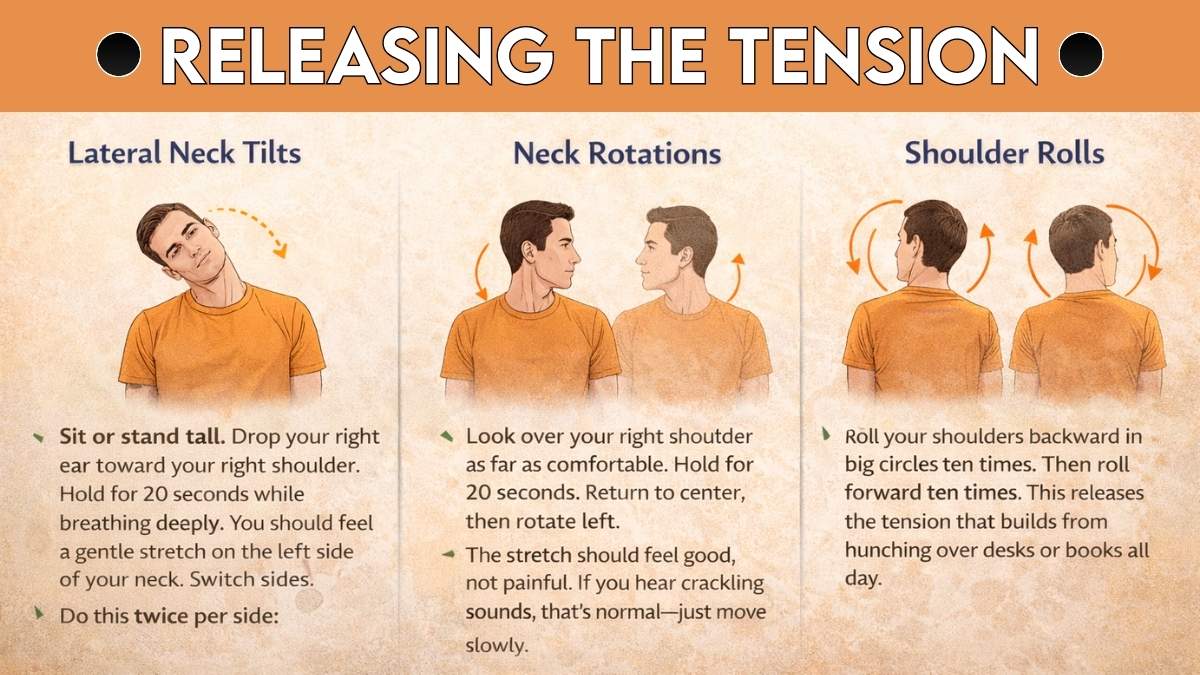
Your neck and shoulders hold every worry from the day. Every email you read, every bill you paid, every time you looked down at your phone—it all collects right here. We start at the top because releasing this tension first makes everything else easier.
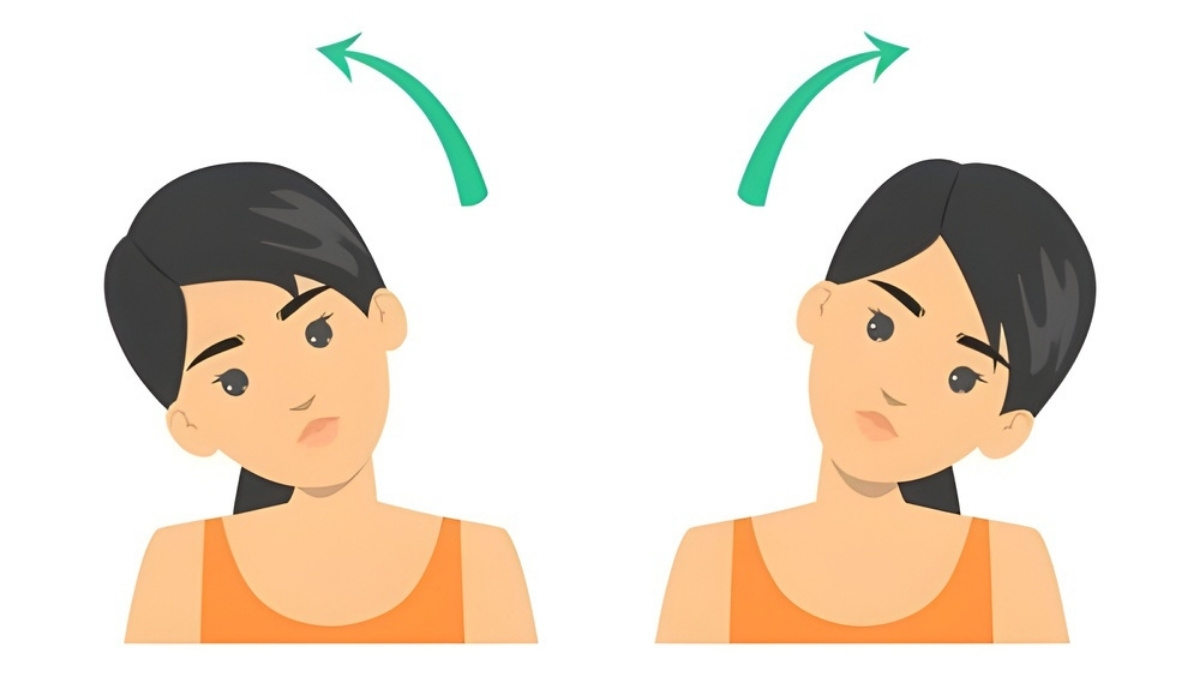
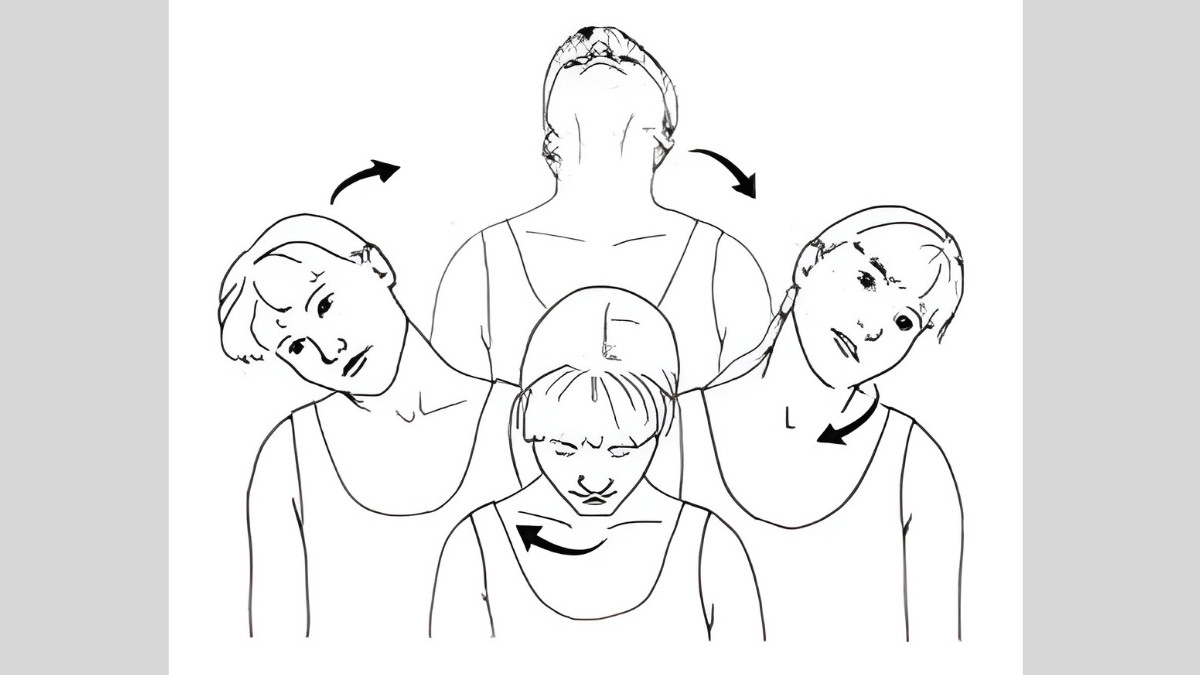
Lateral Neck Tilts:
Sit or stand tall. Drop your right ear toward your right shoulder. Hold for 20 seconds while breathing deeply. You should feel a gentle stretch on the left side of your neck. Switch sides. Do this twice per side.
Neck Rotations:
Look over your right shoulder as far as comfortable. Round for 10 seconds. Return to center, then rotate left, then back and down. The stretch should feel good, not painful. If you hear crackling sounds, that’s normal—just move slowly.
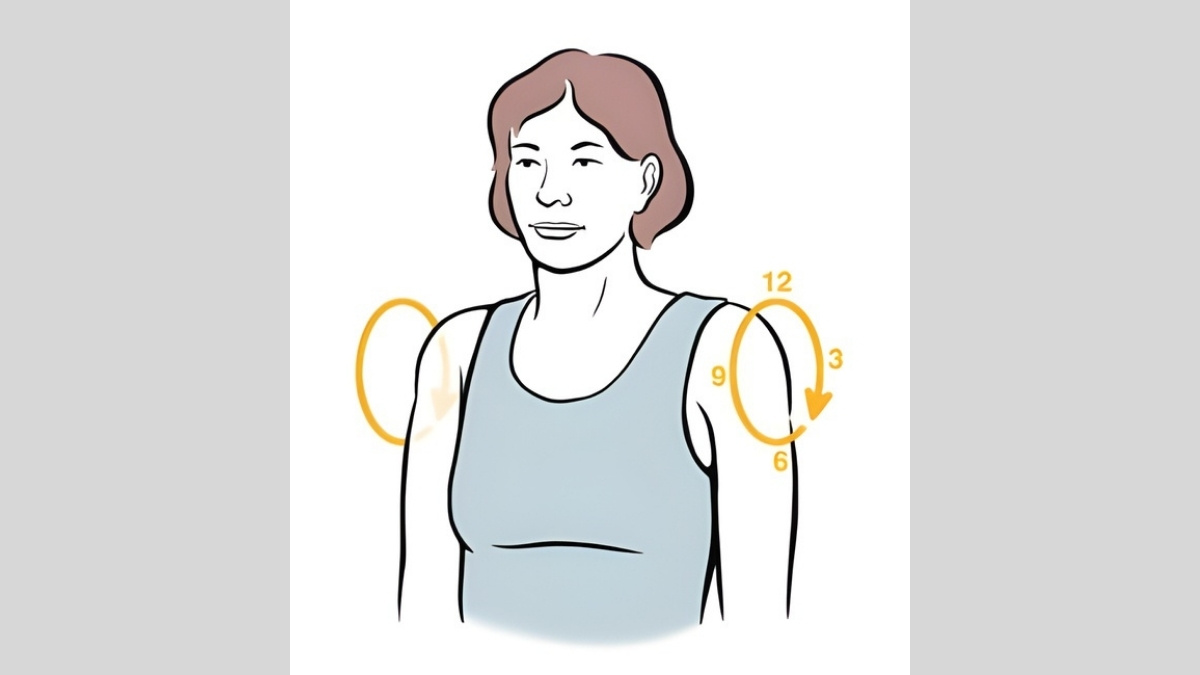
Shoulder Rolls:
Roll your shoulders backward in big circles ten times. Then roll forward ten times. This releases the tension that builds from hunching over desks or books all day.
After one week of doing these neck stretches for seniors, my tension headaches vanished completely. Shoulder mobility is also crucial for finding comfortable sleep positions throughout the night. When your upper body is loose, you naturally sleep better.
Point Four: Unlocking Your Spine (Cat-Cow and Gentle Twists: 5 Minutes)
Your spine is the highway for every nerve signal in your body. When it’s stiff, every system suffers—including sleep. This five-minute segment creates spinal flexibility that most seniors have lost.
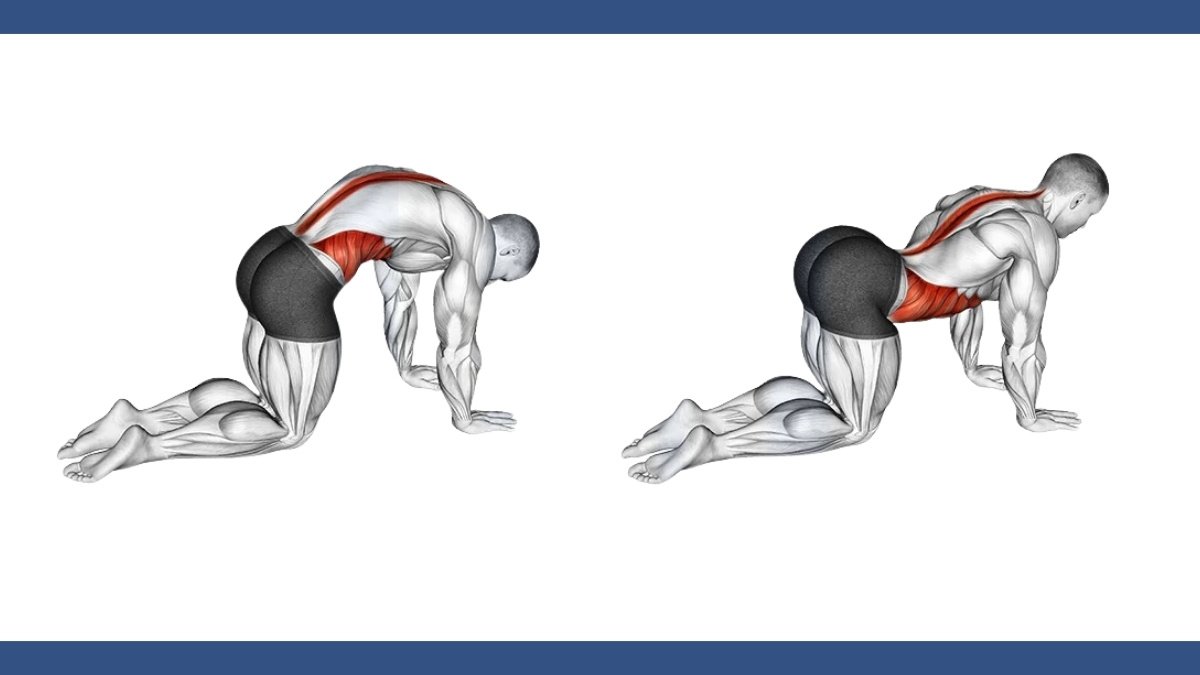
Cat-Cow Stretch: Get on your hands and knees. If that’s hard on your knees, I’ll give you a chair version. Inhale and drop your belly toward the floor while lifting your chest and tailbone (cow pose).
Exhale and round your spine, tucking your chin and tailbone (cat pose). Move slowly between these positions ten times, matching your breath to movement.
According to Veronica Najera, a senior yoga instructor, cat-cow mobilizes the spine, increases body awareness, and soothes the nervous system. This isn’t just stretching—you’re communicating directly with your autonomic nervous system.
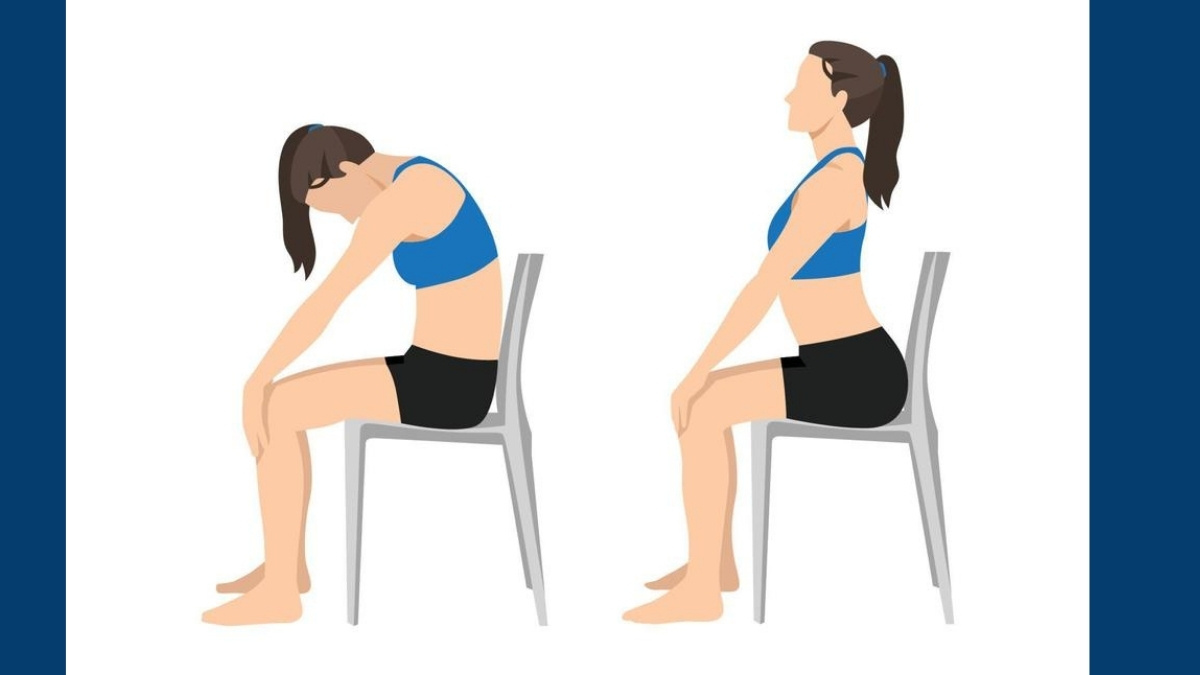
Chair Modification: Sit at the edge of a sturdy chair with your hands on your knees. Do the same spinal movements—arch your back on the inhale, round it on the exhale.
Supine Twist: Lie on your back and bring both knees to your chest. Drop both knees to the right side while keeping your shoulders flat. Hold for 30 seconds. Switch sides. This releases lumbar mobility and resets your nervous system.
I felt my lower back release on day three. First time in years.
Point Five: Opening the Hips (Where We Store Daily Stress: 8 Minutes)
If your hips are tight, you’ll toss and turn all night trying to find a comfortable position. Every hour you sit during the day, your hip flexors shorten. By evening, they’re pulling on your lower back and making rest impossible.
Figure-Four Stretch:

Lie on your back. Cross your right ankle over your left thigh, making a “4” shape. Pull your left thigh gently toward your chest. You’ll feel this in your right hip, glute, and lower back. Hold 30 seconds per side. This targets exactly where people who sit a lot need it most.
Hip Rotations:
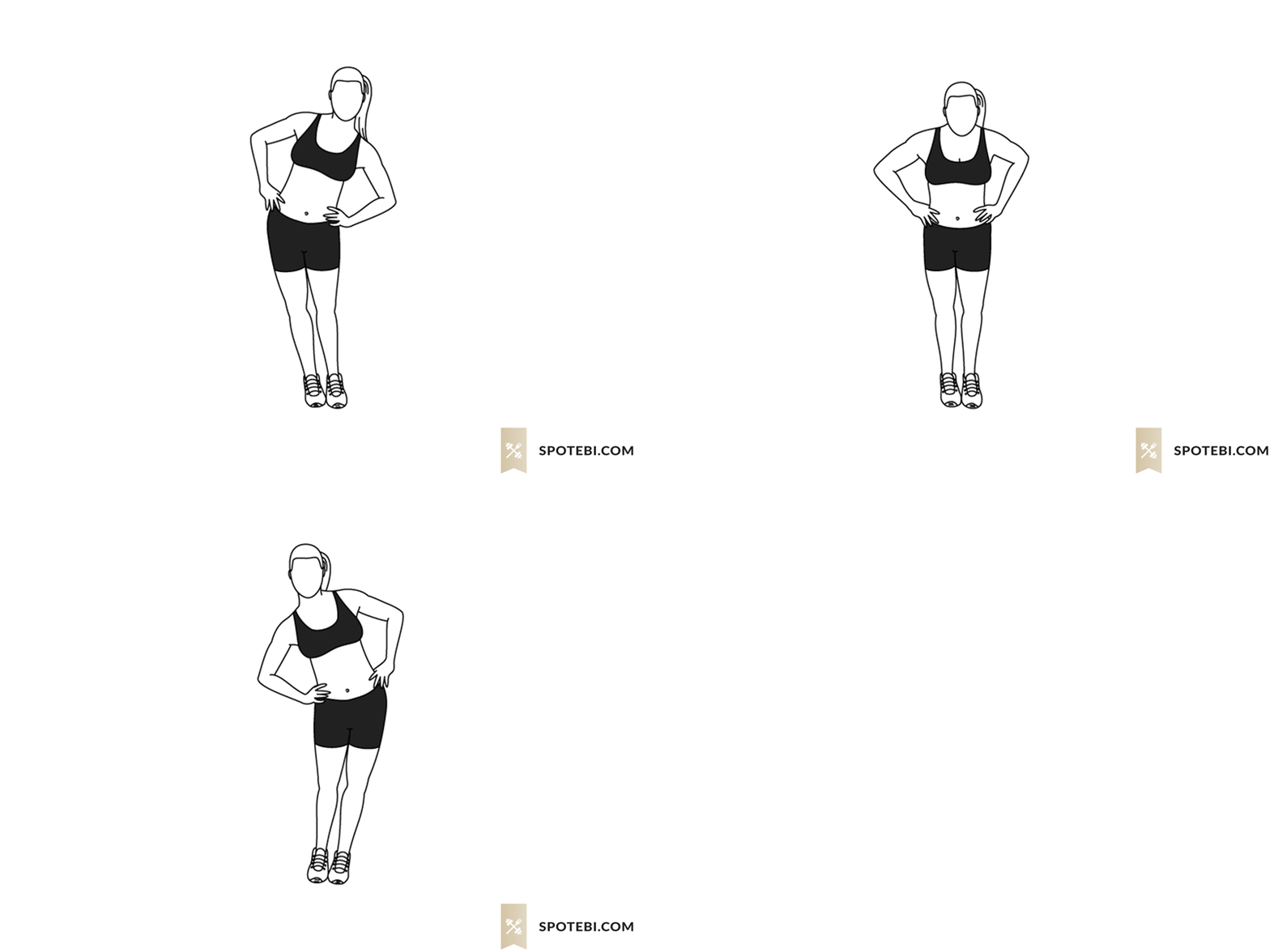
Stand with one hand on a wall or sturdy chair for balance. Circle your free hip ten times clockwise, then ten times counter-clockwise. Switch legs. This improves hip flexibility and promotes blood flow to your lower body.
Ankle Circles:

Lift one foot off the ground. Make 20 circles clockwise, then 20 counter-clockwise. Switch feet. This simple move promotes circulation and reduces nighttime leg cramps that wake many seniors up.
My restless legs syndrome reduced by 80% within three weeks of adding this hip work. Lower body stretching before bed makes an enormous difference in sleep comfort.
Point Six: Gentle Core Work (Building the Foundation: 4 Minutes)
Core work before bed sounds wrong. But we’re not doing crunches. We’re engaging the stabilizers that support every position you’ll sleep in tonight.
Modified Plank:
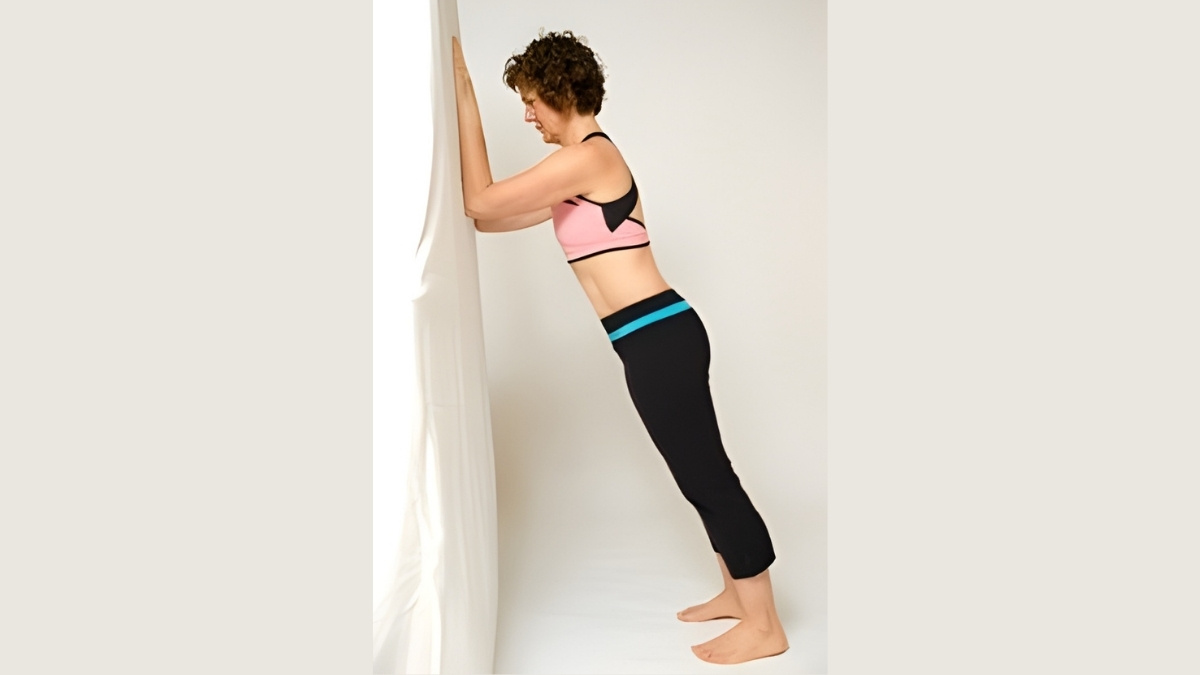
I do wall planks because floor exercises hurt my knees. Place your hands on a wall at shoulder height. Walk your feet back until your body forms a straight line.
Hold for 30 seconds while breathing normally. Work up to one minute over several weeks. This builds core stability without exhausting you.
Bridge Pose:
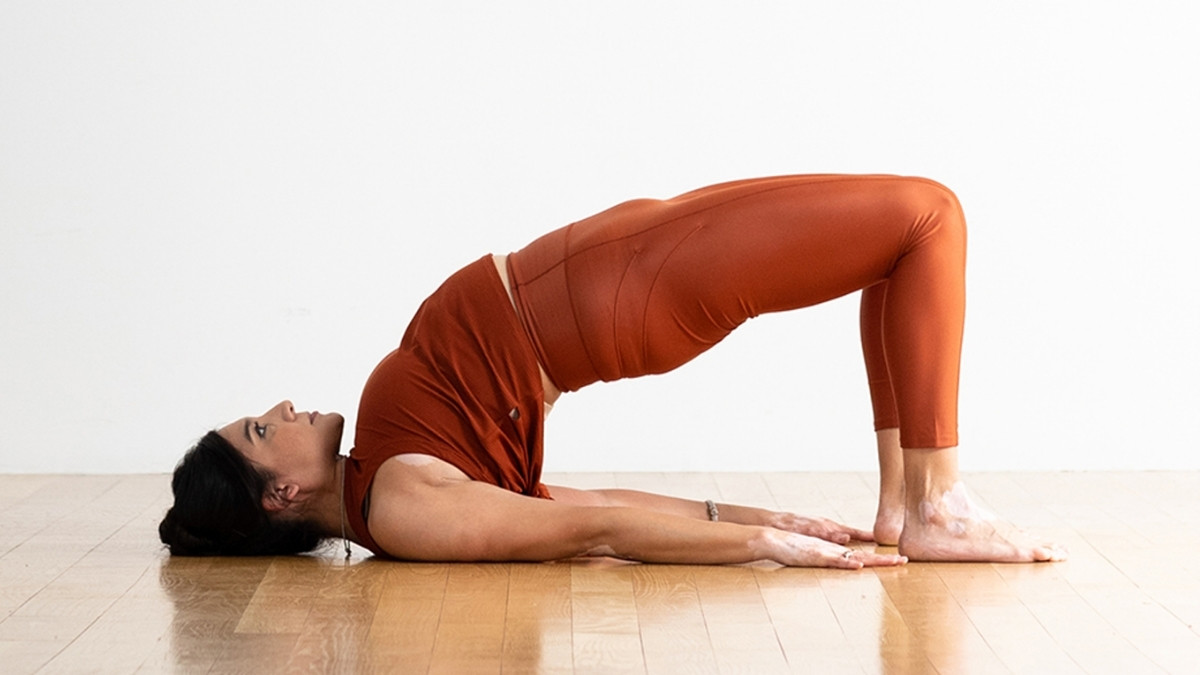
Lie on your back with knees bent and feet hip-width apart. Lift your hips toward the ceiling until your body forms a straight line from shoulders to knees. Hold for 30 seconds. Lower slowly.
Rest for 10 seconds, then repeat three more times. Bridges stretch and strengthen your lower back according to personal trainers at Bend Personal Trainers.
Seated Core Engagement:
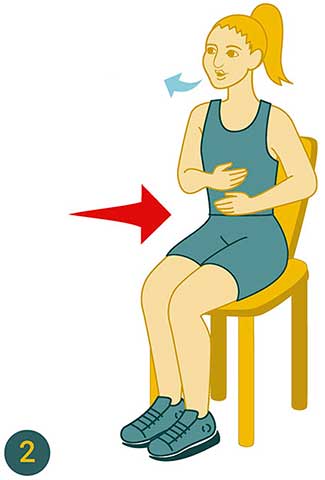
Sit tall in a chair. Pull your navel toward your spine while continuing to breathe. Hold for 20 seconds. This teaches your core to engage without strain.
A stable core means less compensating with your back during sleep. You wake up with less pain and stiffness. Start with 30 seconds for each exercise and add time gradually.
Point Seven: Switching to ‘Rest Mode’ (Final Relaxation: 5 Minutes)
This final five minutes is where the magic happens. Everything before this prepared your body. Now we flip the switch from go to rest.
Legs-Up-the-Wall:
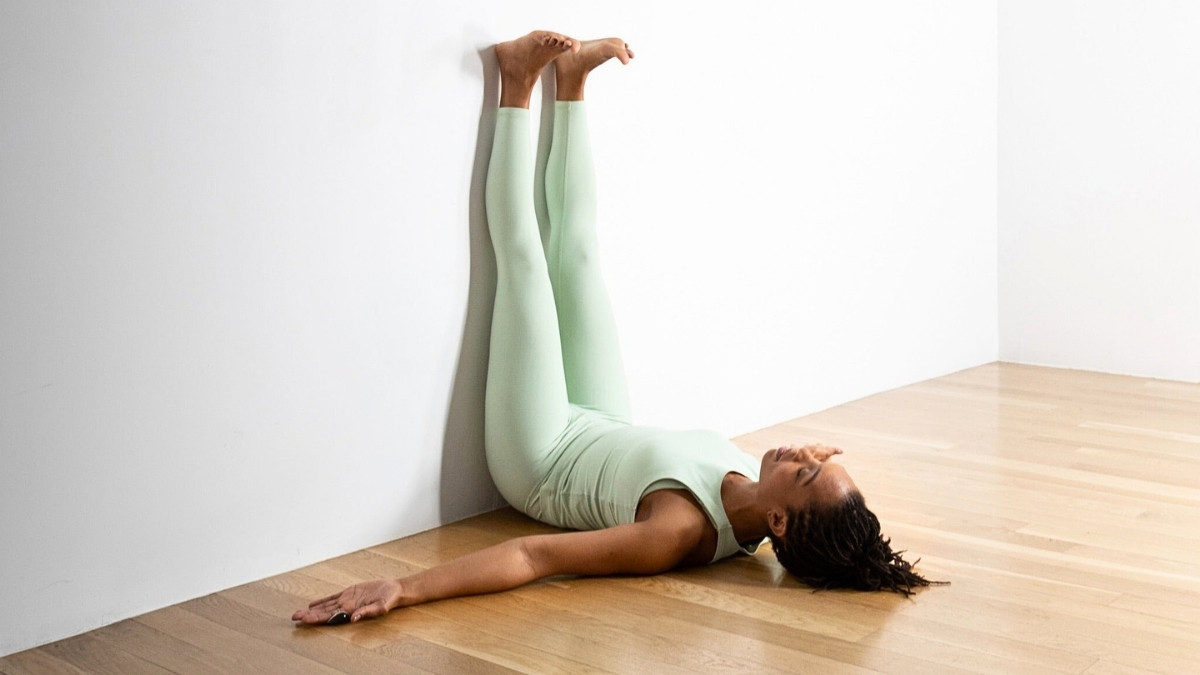
Scoot your bottom close to a wall and extend your legs straight up. Rest your arms at your sides, palms up. Stay here for two to three minutes. This pose relieves tired legs and improves circulation while triggering your parasympathetic nervous system.
Child’s Pose:
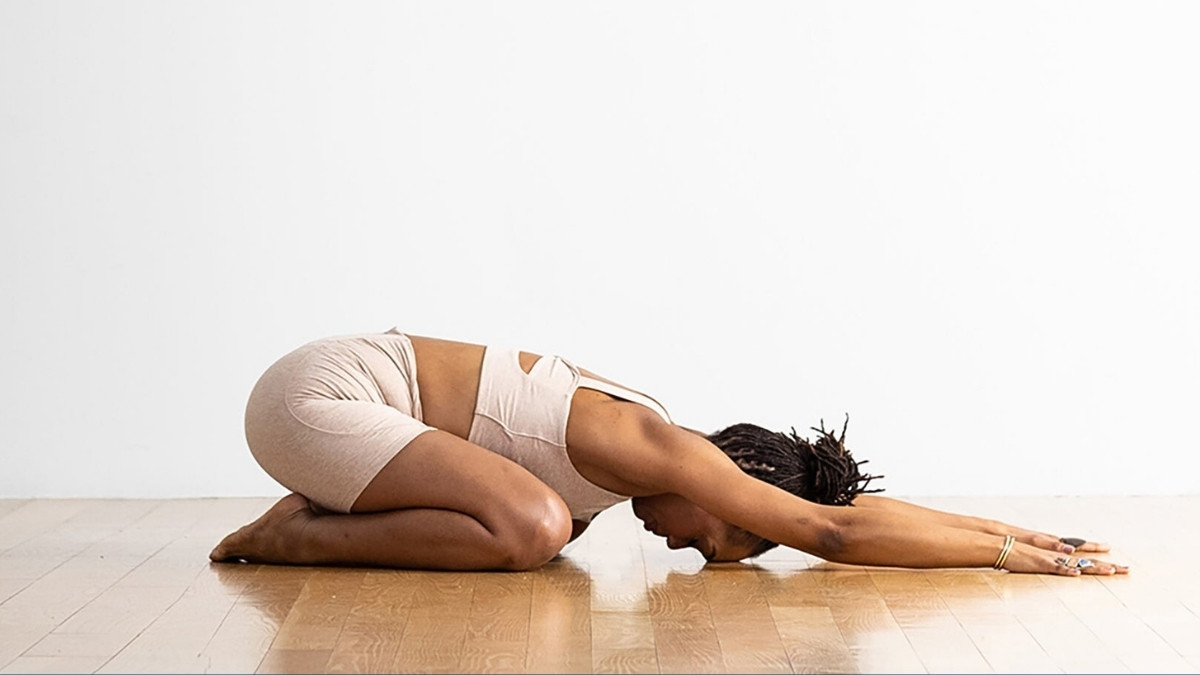
Kneel on the floor and sit back on your heels. Fold forward with your forehead resting on the floor (or a pillow). Extend your arms forward or rest them by your sides. This releases tension in your back, shoulders, and neck. If kneeling hurts, do a seated forward fold in a chair instead.
Box Breathing:

Still lying down or seated, breathe in for four counts. Hold for four. Breathe out for four. Hold for four. Repeat five to ten times. Slow breathing with extended exhalation stimulates your vagus nerve, which controls the relaxation response.
I feel tingling in my fingertips, then a wave of calm spreads through my whole body. This is measurable parasympathetic activation, not imagination. When you feel that beautiful heaviness, go directly to bed. Don’t fight it.
Point Eight: Making It Stick (The Environment and Routine: 3 Minutes)
You have the sequence. Now let’s make sure you actually do it every night, because the best routine is the one you follow consistently.
Sleep Sync
Set Up Your Space
Use dim, warm lighting to cue melatonin. Keep temp 60-67°F (CDC optimal). Replace TV with gentle nature sounds.
Same Time Nightly
Consistency is key. Start routine within a 15-minute window. Set an alarm (e.g., 9:30 PM) to trigger the habit.
Track Progress
Log sleep quality (1-10) and morning stiffness. Watch patterns emerge. Faster sleep onset often happens within 5 days.
Modify as Needed
Mobility issues? Perform the routine from a chair or bed. The principles work regardless of your position.
Final Words,
This 30-minute evening mobility routine transforms sleep by addressing what pills can’t fix: physical tension and nervous system activation. By releasing muscle tension and triggering parasympathetic dominance, you create the real conditions for deep, restorative sleep.

Start tonight with just the neck and shoulder work. Add one new section every few days. Track how you feel. This wind-down mobility routine restores the vitality that quality rest provides at any age.