How Much Protein Do You Actually Need After 50 to Prevent Muscle Loss?
Nearly 50% of adults above age 80 experience sarcopenia. But muscle loss starts much earlier than you think.
You’ve heard conflicting advice about protein. Some experts say the standard recommendation is fine. Others claim you need double that amount. Meanwhile, you’re noticing it’s harder to maintain strength. You worry about becoming frail or losing your independence as you age.
Here’s what you need to know. This article shows you exactly how much protein you need after 50 based on current research. You’ll learn why your body’s protein requirements change with age.
You’ll discover the best protein sources and timing strategies. And you’ll see how to combine protein with exercise for maximum muscle protection.
The science is clear. Getting enough protein can help prevent muscle loss and keep you strong.
Complete Protein Guide
Your Protein Needs
More than you think daily
Why It Changes
Your body needs more as you age
Timing Matters
When to eat throughout the day
Best Food Sources
Foods with the most protein
Supplements
When powder might help
Exercise Connection
Strength training is required
Meal Planning
Eat enough every day
Why Your Protein Needs Change After 50
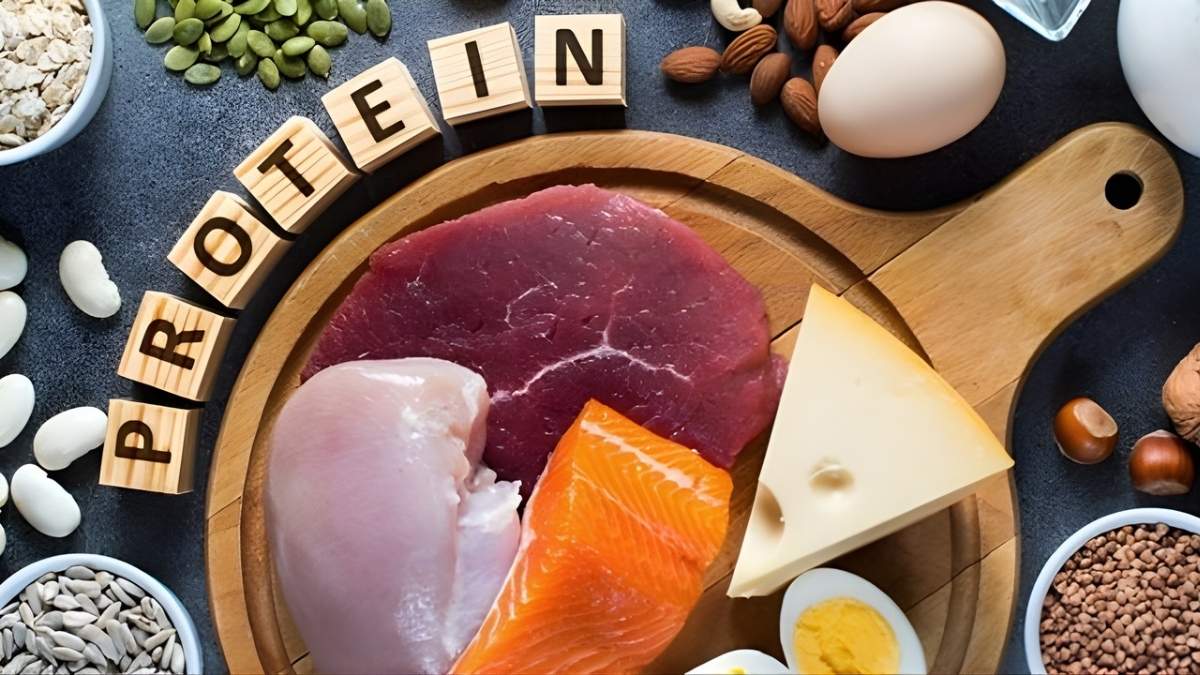
Your muscles become resistant to protein as you age. Scientists call this anabolic resistance. It means your body needs more protein to build the same amount of muscle compared to when you were younger.
Here’s the problem. Adults over 50 experience approximately 70% greater protein requirements compared to young adults. Your muscles simply don’t respond as well to the protein you eat.
The numbers tell a stark story. You lose 0.5% to 2% of total muscle mass each year starting around age 50. By age 30, muscle mass starts declining roughly 1-2% per year. That loss speeds up to 3-10% per decade as you get older.
This affects your daily life more than you realize. Climbing stairs gets harder. Carrying groceries becomes a challenge. Opening jars takes more effort. Your risk of falling increases.
But here’s the good news. Higher protein intake overcomes anabolic resistance. Your body can still build and maintain muscle. You just need to feed it more protein than before.
Up to 71% of older adults don’t meet daily protein requirements. Don’t be one of them.
The Science-Backed Numbers: How Much Protein You Actually Need
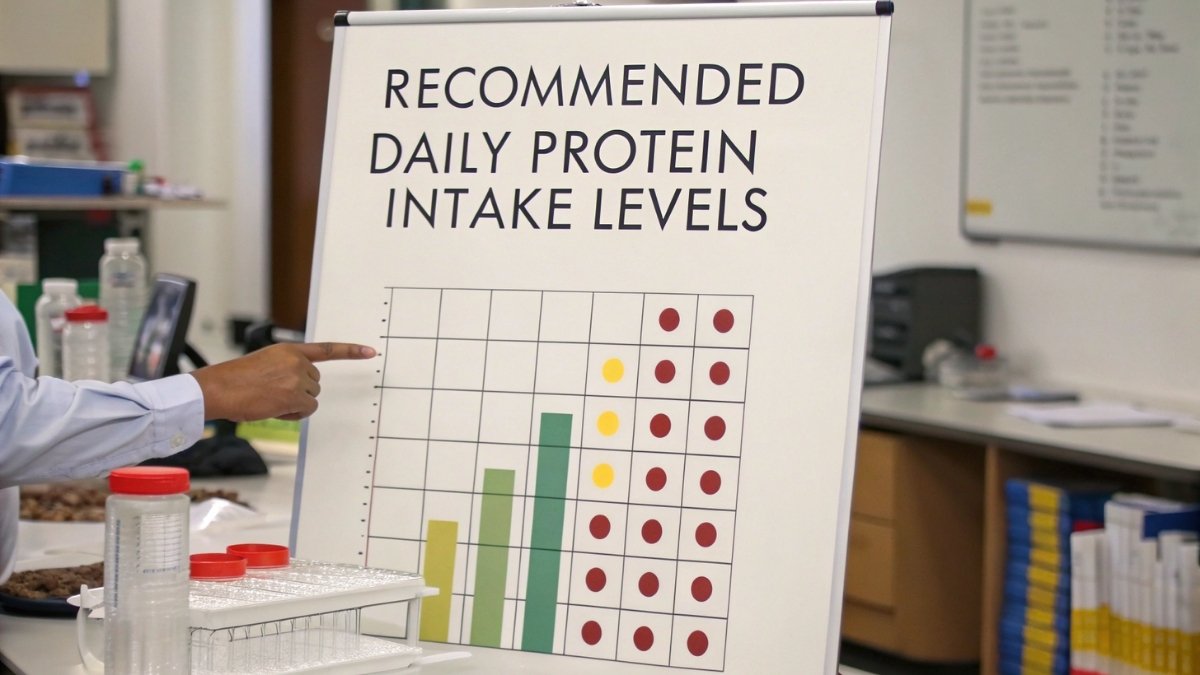
The standard RDA recommends 0.36 grams per pound of body weight. That’s 0.8 g/kg for your total weight. This amount is inadequate for people over 50.
Current research tells a different story. You need 1.2-1.6 grams per kilogram of body weight. That’s roughly double the federal recommendation.
Let’s make this simple with real examples. A 165-pound person weighs 75 kg. Multiply 75 by 1.2 to get 90 grams of protein daily as a minimum. Multiply by 1.6 to get 109 grams as an upper target.
Do you lift weights or do endurance training? Active individuals need even more. Research shows up to 1.7 g/kg/day for those who exercise regularly.
Many people worry about kidney damage. The research is reassuring. Healthy adults can safely consume up to 1.5 g/kg/day without affecting kidney function.
Here’s your action step. Calculate your weight in kilograms by dividing your pounds by 2.2. Then multiply that number by 1.2 for your minimum daily protein target.
Protein Timing Matters: The 30-Gram Rule Per Meal
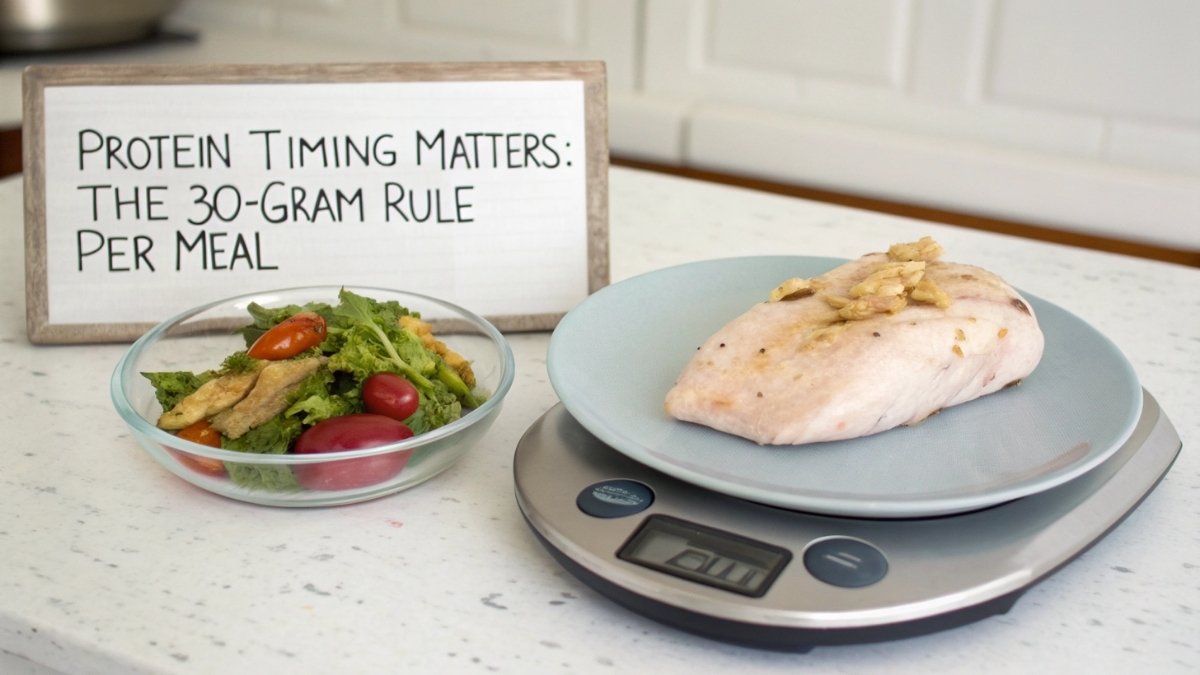
Eating all your protein at dinner doesn’t work. Your body can only use so much protein at one time. The rest goes to waste.
Research shows the optimal dose is approximately 35 grams per meal for elderly adults. You can also calculate this as 0.40 g/kg per meal. This amount maximizes muscle protein synthesis.
Here’s what experts recommend. Aim for roughly 20-30 grams of protein at each meal. Add 10-20 grams at snack times. This even distribution keeps your muscles building throughout the day.
The post-workout window matters too. Consume 30-35 grams of protein within two hours of working out. This helps your muscles recover and grow stronger.
Let’s look at a breakfast example. Two scrambled eggs give you 12 grams. Add Greek yogurt for 15 grams. Pour a glass of milk for 8 grams. That’s 35 grams total.
Most people skip protein at breakfast. They grab toast and coffee. This is a missed opportunity. Your muscles need protein in the morning just as much as at dinner.
Spread your protein across the day. Your muscles will thank you.
Best Protein Sources for People Over 50

Not all protein sources work the same way. Whey protein is particularly effective for building muscle in older adults. It works better than plant-based proteins or casein for people your age.
The key is leucine. This essential amino acid triggers muscle building. Complete protein sources rich in leucine give you the best results.
Top animal sources pack the most protein per serving. Chicken breast delivers 31 grams per 4 ounces. Salmon provides 25 grams per 4 ounces. Eggs, Greek yogurt, and cottage cheese are also excellent choices.
Plant sources work too, but you need more of them. Tofu, tempeh, and lentils are solid options. Quinoa and edamame round out your choices. One cup of lentils gives you 18 grams of protein.
Here’s an important comparison. To get 2.7 grams of leucine, you need 32 grams of whey protein. But you’d need 47 grams of casein, 55 grams of soy protein, or 48 grams of pea protein.
About 60% of total protein intake among older adults comes from animal sources. Mix both animal and plant proteins for best results. Variety ensures you get all essential amino acids.
Protein Supplements: When You Need Them and Which to Choose

Whole foods should be your first choice. But sometimes supplements make sense. Poor appetite makes eating enough protein hard. Dietary restrictions limit your options. Recovery from surgery increases your needs.
Whey protein supplements are particularly effective for muscle building in older adults. Research backs this up. Studies show 1.2-1.5 g/kg/day of milk or whey protein with resistance exercise enhanced muscle mass in older adults.
You have three main types to choose from. Whey digests quickly and works well post-workout. Casein digests slowly and works better at night. Plant-based options include pea and soy protein.
Watch out for added ingredients. Sugar content can range from 1 gram to 23 grams per scoop. Read labels carefully. Some supplements cause digestive issues. The industry lacks strict regulation, so quality varies.
How do you use protein powder? Mix it in smoothies for an easy breakfast. Stir it into oatmeal. Blend it with water for a quick snack.
Compare the cost. Protein powder costs about $0.40 per 25 grams of protein. Eggs cost about $0.20 per 6 grams. Supplements are convenient but not always cheaper.
Exercise is Non-Negotiable: Protein Without Strength Training Doesn’t Work

Here’s the hard truth. You can eat all the protein in the world. But without resistance training, you’ll still lose muscle. Strength training is the most important way to prevent age-related muscle loss.
The research is crystal clear. Resistance exercise with or without nutrition is most effective for improving quality of life in people with sarcopenia. But combining both gives you the best results.
How much do you need? The minimum effective dose is approximately 120 minutes per week of moderate intensity. Deliver this in three sessions spread across the week.
What counts as resistance training? Free weights work great. Resistance bands are effective and cheap. Bodyweight exercises cost nothing. Push-ups, squats, and lunges all count.
Start safely if you’re new to this. Begin with lighter weights. Focus on proper form before adding more weight. Consider working with a trainer for your first few sessions.
The results are worth it. Resistance training in older adults increases strength by 9-15%. It also increases lean body mass by approximately 1.1 kg.
Focus on compound movements. Squats, lunges, rows, and chest presses work multiple muscle groups at once.
Practical Meal Planning: Putting It All Together
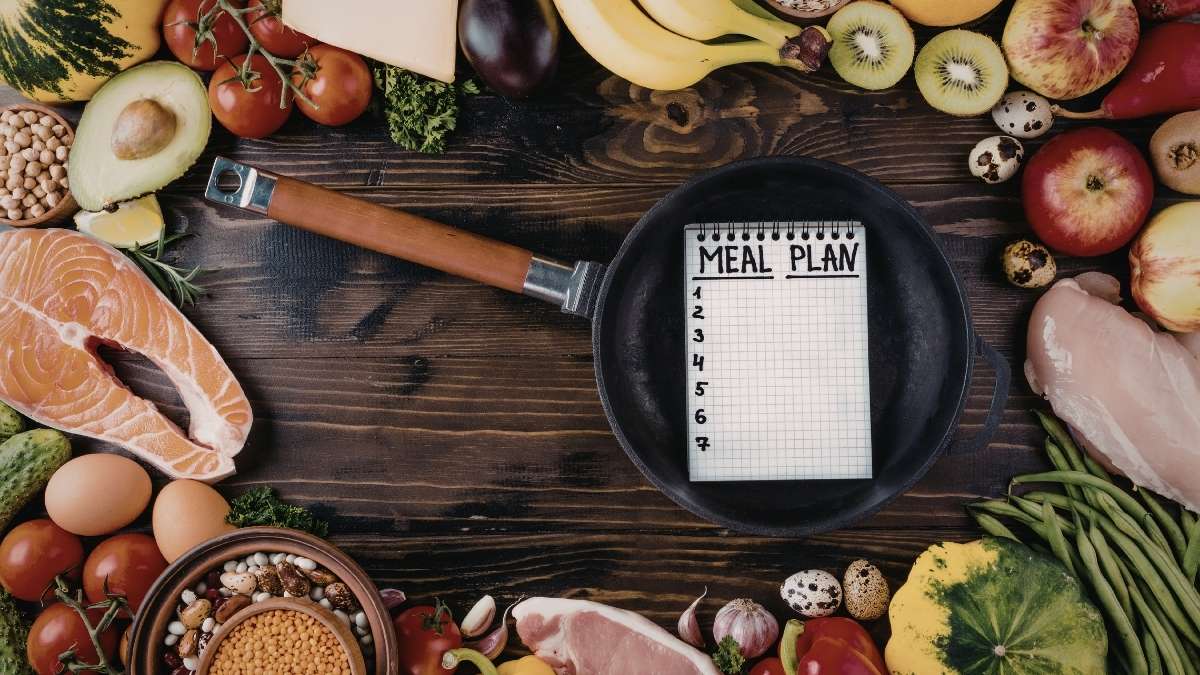
Theory means nothing without action. Here’s how to make this work in your daily life starting tomorrow.
Sample day hitting 100 grams of protein: Breakfast includes three eggs scrambled with cheese and whole wheat toast (25g). Mid-morning snack is Greek yogurt with berries (15g). Lunch features grilled chicken breast over salad with chickpeas (35g). Afternoon snack is a protein shake (25g). Dinner serves baked salmon with quinoa and vegetables (30g).
Simple protein-boosting strategies for each meal work wonders. Add cheese to eggs. Choose Greek yogurt over regular. Snack on nuts instead of crackers. Top salads with chicken, tuna, or hard-boiled eggs.
Prep-ahead ideas save time during busy weeks. Cook a batch of chicken breasts on Sunday. Hard-boil a dozen eggs. Portion out Greek yogurt into small containers.
Budget-friendly options exist everywhere. Eggs cost about $0.20 per 6 grams of protein. Canned tuna is cheap and shelf-stable. Dried beans and lentils cost pennies per serving.
What if your appetite is low? Eat smaller, more frequent meals. Choose nutrient-dense foods. Drink protein shakes between meals.
Final Thoughts:
After 50, your body needs significantly more protein than standard guidelines suggest. Aim for 1.2-1.6 g/kg body weight daily. Distribute this evenly across meals with 25-35 grams per meal. Combine protein intake with resistance training at least twice weekly.

Calculate your protein target today using your weight in kilograms. Start by adding one high-protein food to breakfast tomorrow. Meeting your protein needs after 50 is your most important strategy for muscle loss prevention and maintaining independence.