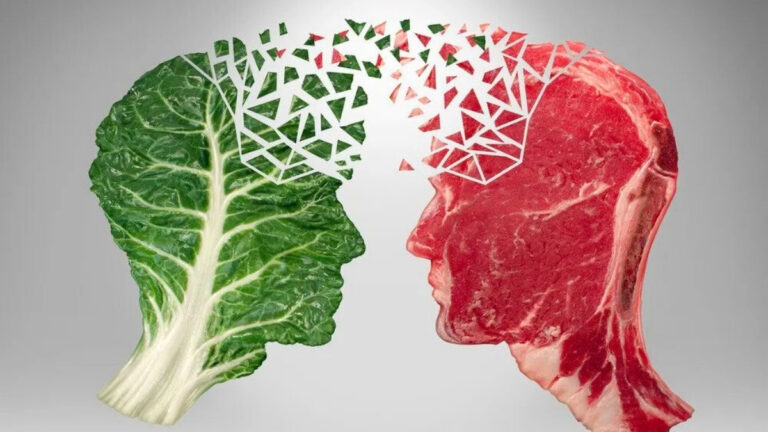
“Hara Hachi Bu” vs. Super-Sizing: How 80% Full Beats the All-You-Can-Eat American Dream

Americans eat until their plates are empty. That’s just what we do. But 92% of restaurant meals give you more calories than you need in one sitting. Your waistline shows it.
Meanwhile, people in Okinawa, Japan, do something different. They stop eating at 80% full. It’s called Hara Hachi Bu. And these people live longer than almost anyone else on Earth.
You know you overeat. You feel stuffed after dinner. Your pants don’t fit like they used to. Restaurants serve pasta portions big enough for four people, and you finish it all.
This article shows you how eating until 80% full works. You’ll learn why your brain needs 20 minutes to feel full. You’ll get simple tricks to use today. And you’ll finally understand what your body is trying to tell you about hunger.
The 80% Advantage
Inflammation
Longevity
This article is structured into 8 points—read them one by one to understand how the “Hara Hachi Bu” rule outperforms the all-you-can-eat American mindset.
Point One: What Is Hara Hachi Bu and Why It Works
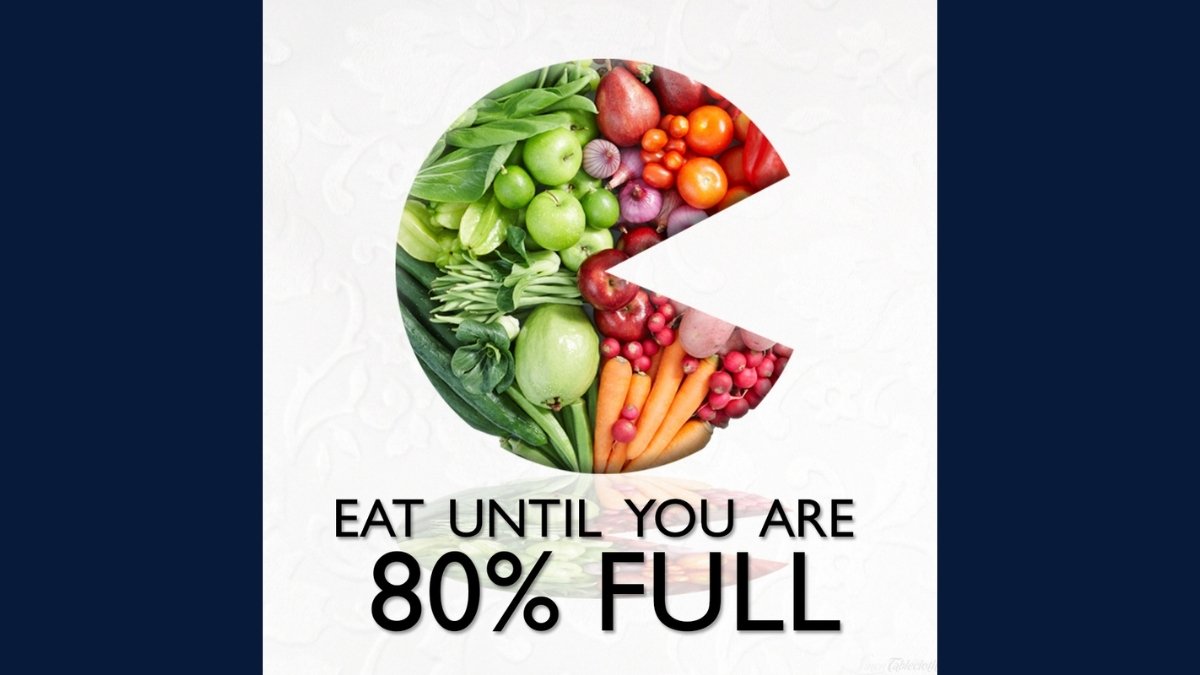
The 80% Philosophy That Keeps People Alive Longer
Okinawa has 50 people over 100 years old for every 100,000 residents. That’s the highest rate in the world. These people eat 1,800 to 1,900 calories per day. Their BMI stays between 18 and 22. Compare that to Americans over 60, who average a BMI of 26 to 27.
Hara Hachi Bu
The Logic: When you stop at 80%, you’re actually already satisfied. Your brain just hasn’t caught up yet.
Listen to your body’s signals, not your plate’s size.”
This isn’t a diet. It’s awareness. You’re not restricting food or counting calories. You’re listening to your body’s signals instead of your plate’s size. Studies show people who practice Hara Hachi Bu eat fewer calories without trying.
They gain less weight over time. They eat more vegetables and fewer processed foods.
Point Two: How America Supersized Its Way to an Obesity Epidemic

Why Your Portions Keep Growing and Your Health Keeps Shrinking
Portion sizes started growing in the 1970s. By the 1980s, they exploded. French fries, burgers, and sodas became 2 to 5 times bigger than the originals.
Check these numbers: Cookies are now 700% larger than USDA standards say they should be. Pasta servings are 480% bigger. Muffins grew by 333%. The Cheesecake Factory serves fettuccini that could feed a family of four by government standards.
Here’s the problem: 92% of American restaurant meals exceed what you need for one meal. Many single meals have more calories than you need all day. Women get hit harder because they need fewer calories than men.
The “value” trap makes it worse. A 7-Eleven 16-oz drink costs 5 cents per ounce. But a 32-oz Big Gulp only costs 2.7 cents per ounce. You think you’re saving money. You’re actually buying more than you need.
Right now, 40% of American adults have obesity. That’s 4 in 10 people. Nineteen states have obesity rates above 35%. Nearly 75% of adults are overweight or have obesity.
Point Three: What Eating Until 100% Full Is Really Costing You

The Real Price of Cleaning Your Plate
Overeating hits you right away. You get indigestion, stomach pain, acid reflux, and fatigue. You feel bloated. Your body slows down digestion to handle all that food. Your stomach, intestines, pancreas, kidneys, and liver work overtime.
The long-term costs are worse. Excess weight increases your risk of high blood pressure, type 2 diabetes, heart disease, stroke, and certain cancers. Studies say about 500,000 Americans die each year from problems related to excess weight.
Your wallet suffers too. Obesity costs America $173 billion per year in medical care. If you have obesity, you spend $2,500 more on medical care each year than someone at a normal weight. By 2035, the global cost could hit $4.3 trillion per year.
Here’s the cycle: Constant overeating stretches your stomach. A stretched stomach needs more food to feel full. So you eat more. You gain weight. Your metabolism changes. Without stopping this pattern, it keeps getting worse.
By 2050, experts predict 260 million Americans will be overweight or have obesity.
Point Four: How to Actually Know When You’re 80% Full
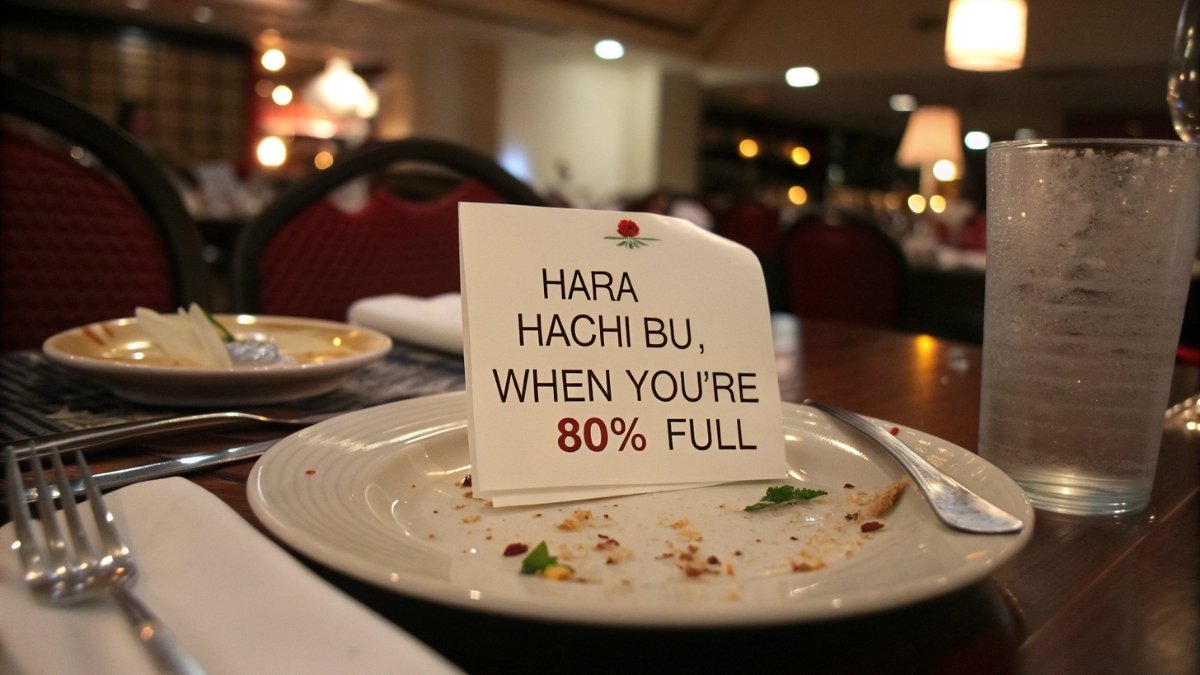
Your Body’s Signals You’ve Been Missing
Think of hunger on a scale of 1 to 10. One means you’re starving. Ten means you’re uncomfortably stuffed. At 8, which is 80% full, you feel satisfied but not uncomfortable. You could eat more, but you don’t need to.
Your body sends hormones to tell you about hunger and fullness. Ghrelin makes you hungry. Leptin tells you to stop eating. These hormones take 15 to 20 minutes to reach your brain and do their job.
Physical hunger feels different from emotional hunger. Physical hunger builds slowly. Your stomach growls. You have low energy. You’ll eat different foods. You stop when satisfied. Emotional hunger hits suddenly. You want specific foods. You eat past fullness. You feel guilty after.
Try this during your next meal: Put your fork down halfway through. Take three deep breaths. Ask yourself: Am I still physically hungry? Is this hunger or just habit? How does my stomach actually feel right now?
A 2024 study found that people who eat mindfully follow dietary guidelines better. They eat less processed food. They have lower BMI and better blood sugar.
Point Five: Practical Strategies to Escape Portion Distortion

Simple Tricks That Work in Real Life
At restaurants, order an appetizer as your main course. Or ask for a to-go box right when your food arrives. Put half the meal in the box before you start eating. Share entrees with someone. Many restaurants will serve half portions if you ask.
At home, use smaller plates. Switch from 12-inch plates to 9 or 10-inch plates. Serve food at the stove or counter instead of putting everything on the table. Pre-portion your snacks into small containers. Keep tempting foods where you can’t see them.
Slow down your eating. Put your fork down between every few bites. Chew each bite 20 to 30 times. Drink water between bites. Set a timer for 20 minutes. Don’t finish eating before the timer goes off.
Plan your meals with protein, fiber, and healthy fat. These keep you satisfied longer. Fill half your plate with vegetables, a quarter with protein, and a quarter with complex carbs like brown rice or sweet potatoes.
A 2024 study found that 51% of consumers want smaller portions. People now care more about portion sizes than about sugar or sodium content.
Point Six: Your 14-Day Hara Hachi Bu Starter Plan

How to Start Eating at 80% Full This Week
14-Day Starter Plan
- Rate hunger 1-10 before/after meals.
- Write down triggers (e.g., empty plate vs. TV ending).
- Chew 20-30 times per bite.
- No Phone. No TV. Just taste and smell.
- Rate fullness (1-10).
- Only eat if truly hungry.
- Try leaving 2-3 bites on the plate.
- Stop at Level 7 or 8.
- Want seconds? Wait 20 mins first.
- Celebrate wins; don’t judge slips.
Days 1-3: Just watch yourself eat. Don’t change anything yet. Notice when you start eating and how fast you eat. Rate your hunger before and after meals on a 1-to-10 scale. Write down what makes you stop eating. Is it an empty plate? The end of a TV show? Just observe.
Days 4-7: Now slow down. Make each meal last at least 20 minutes. Put your fork down between bites. Chew each bite 20 to 30 times. Turn off the TV. Put your phone away. Eat at a table. Pay attention to how your food tastes and smells.
Days 8-11: Stop halfway through your meal. Pause for 2 minutes. Rate your fullness on that 1-to-10 scale. Only keep eating if you’re truly still hungry. Try leaving 2 or 3 bites on your plate. Notice if the food tastes as good at the end as it did at the start.
Days 12-14: Put it all together. Stop eating when you reach level 7 or 8 on the scale. If you want seconds, wait 20 minutes first. Celebrate when you do well. Don’t beat yourself up when you don’t.
Point Seven: Why Ancient Okinawan Practice Works in 2026 America

Old Wisdom Backed by Modern Science
Okinawa is a “Blue Zone.” That’s one of five places where people live the longest, healthiest lives. Dan Buettner made a Netflix show about it in 2023 called “Live to 100: Secrets of the Blue Zones.”
The Okinawan diet helps. They eat stir-fried vegetables, sweet potatoes, tofu, and bitter melon. But the portion control matters just as much as the food itself. They eat similar foods to Americans but in the right amounts.
Hara Hachi Bu works like natural calorie restriction. Back in the 1930s, a scientist named Clive McCay found that eating fewer calories helped laboratory animals live longer. Stopping at 80% full might do the same thing for humans.
The best part? This practice works with any diet. Keto, vegan, Mediterranean, paleo, standard American food. It doesn’t matter what you eat. It’s about how much you eat and when you stop.
Traditional diets fail. Research from 2019 shows people regain 50% of lost weight after 2 years. After 5 years, they’ve regained 80%. Hara Hachi Bu works better because it’s not a diet. It’s awareness.
Point Eight: Making 80% Full Your New Normal (Without Perfection)

How to Build a Sustainable Practice That Actually Lasts
Use the 80/20 rule about the 80% rule. Practice Hara Hachi Bu 80% of the time. The other 20% of the time—at celebrations, nice restaurants, holidays—you can eat until you’re pleasantly full. This keeps you from feeling deprived.
Busy? Prep meals on weekends. Set a timer for meals so you eat slowly. Parents? Model this behavior for your kids. Make it a family thing. Social person? Master those restaurant tricks. Tell friends what you’re doing. Stress eater? Add meditation, exercise, or therapy to support this practice.
Don’t measure success by your weight. Look at your energy levels. Do you crash after meals? Check your digestion. Less bloating and acid reflux means it’s working. Notice your mental clarity. Food fog should go away. Pay attention to your emotions. Less guilt around food is a win.
Find someone else doing this. Join online groups about mindful eating. Work with a dietitian who knows intuitive eating. Take a mindfulness-based eating class.
If eating becomes stressful, go back to basics. Just eat without distractions. Notice your fullness without controlling it. Some days you might stop at 90%. That’s okay. Remember why you started. It’s about health and energy, not punishment.
Conclusion:

America’s super-sized portions created an obesity crisis affecting 40% of adults. Okinawans do the opposite. They eat until 80% full and live longer, healthier lives. Your brain needs 15 to 20 minutes to register fullness. Stop before you’re completely full and you’ll escape portion distortion.
Start with one meal today. Put your fork down halfway through, pause for two minutes, and check your hunger level. You don’t need to be perfect. Just start listening to your body instead of your plate.