Just 5 Minutes of This Daily Routine Restores Balance and Prevents Devastating Falls

Every 11 seconds, an older adult in the United States ends up in an emergency room because of a fall. That number is not made up. It comes straight from CDC data updated in January 2026.
Most of those falls were preventable. But no one told these people what to do before it happened.
You might already feel your balance slipping. Maybe you grabbed a counter last week. Maybe someone you love just broke a hip. Either way, you are in the right place.
This guide gives you a real, science-backed 5-minute daily routine. No gym. No equipment. No trainer needed. Just five simple moves done at home every day that can cut your fall risk significantly. Let’s get into it.
Restore Balance in
Just 5 Minutes
Point One — Why Falls Are the Silent Crisis No One Talks About Enough

Most people do not talk about falling. It feels embarrassing. It feels like admitting something is wrong. But silence is making this problem worse.
Here is the truth: over 14 million older adults — that is 1 in 4 people aged 65 and older — fall every year in the United States. The CDC confirmed this again in their January 2026 update. Falls are the number one cause of fatal and non-fatal injuries in this age group.
If you fall once, your chances of falling again double. And about 37% of people who fall need medical treatment afterward. In 2021, falls caused more than 38,000 deaths and sent nearly 3 million people to emergency rooms.
The cost? Healthcare spending on non-fatal falls reached $80 billion in 2020. That number is expected to pass $101 billion by 2030. This is not a small problem. It is a public health crisis hiding in plain sight.
But here is the part that changes everything: falls are not inevitable. Your risk is modifiable. That means you can do something about it starting today.
3 Action Tips:
- Tell your doctor if you have fallen in the past year, even once
- Take the free Falls Free CheckUp at ncoa.org to know your current risk level
- Write down the last time you felt unsteady — awareness is the first step
Point Two — What Actually Causes Your Balance to Get Worse Over Time
Your balance is not one thing. It is three systems working together at the same time.

First, your eyes give your brain visual clues about where you are in space. Second, your inner ear — called the vestibular system — detects when your head moves and helps keep you level. Third, sensors in your muscles and joints, called proprioception, tell your brain where your body is positioned at every moment.
All three of these systems weaken as you age. Muscle strength drops 3 to 8% every decade after age 30. Muscle mass shrinks 3 to 5% per decade. Your reflexes slow down, which means you cannot catch yourself as fast when you start to slip.
Some medications make this worse. The CDC lists tranquilizers, sedatives, antidepressants, and even some over-the-counter medicines as things that affect your steadiness.
Here is the good news: all three systems respond to training. You can rebuild them at any age. That is exactly what this routine does.
3 Action Tips:
- Check all your medications with your doctor or pharmacist and ask if any affect balance
- Practice standing still with your eyes closed for 5 seconds near a wall — this tests your proprioception safely
- Get your vision checked yearly, as poor vision is a direct fall risk factor
Point Three — What Science Says About Short Daily Balance Sessions
You might think five minutes is not enough to make a real difference. The science says otherwise.
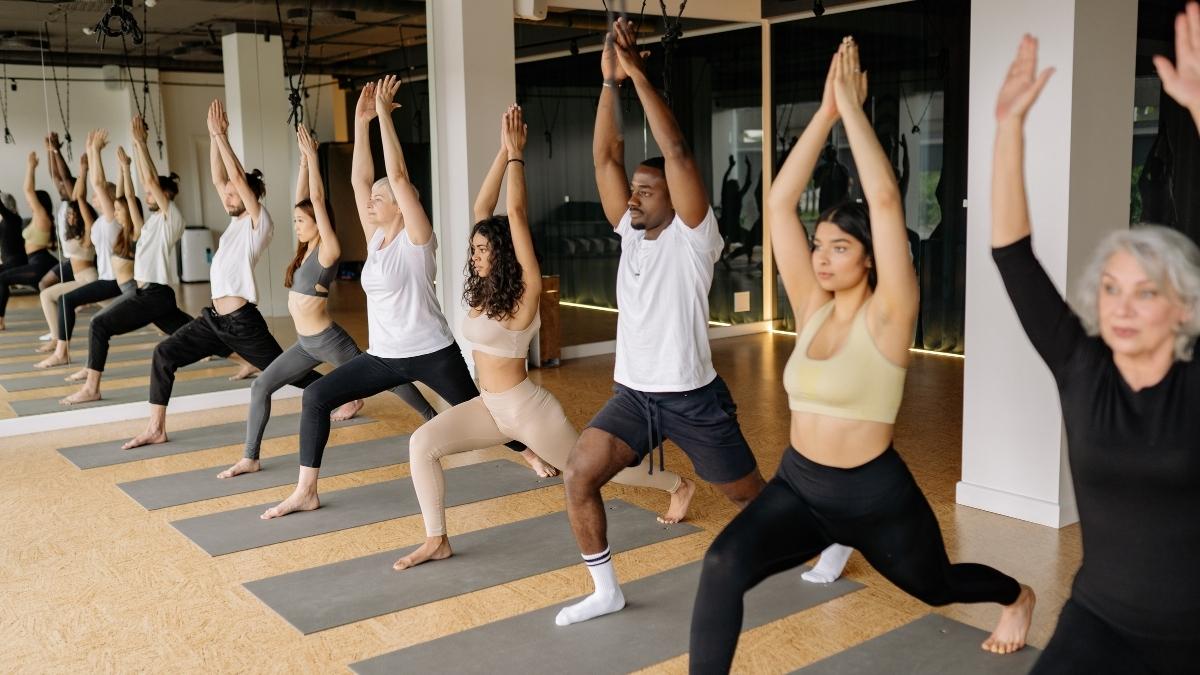
A 2025 randomized controlled trial looked at adults aged 80 and over. The group that did regular balance and strength exercises had a fall risk of 25.4%. The group that did nothing had a fall risk of 44.3%. That is a massive difference from exercise alone.
A large review of 116 studies, covering 25,160 participants, found that exercise reduces fall rates by 23%. Balance and functional exercises specifically brought that number to 24%. Another major review found that strength and balance training can cut falls by up to 50% in older adults living at home.
Short daily sessions work because they build neural pathways. Every time you practice balance, your brain gets better at automatic correction. You do not have to think about it. Your body just responds faster.
Consistency beats length every time. Five minutes daily is more powerful than 35 minutes once a week.
3 Action Tips:
- Start the routine the same time every day so your brain connects it to a habit automatically
- Do not skip more than one day in a row, especially in the first month
- Keep a simple notebook and write down one small improvement you notice each week
Point Four — The Complete 5-Minute Daily Balance Routine (Step-by-Step)
You need one sturdy chair or counter and about six feet of open floor. That is it. Here are your five exercises.
Exercise 1 — Single-Leg Stand (1 minute, 30 seconds each side)
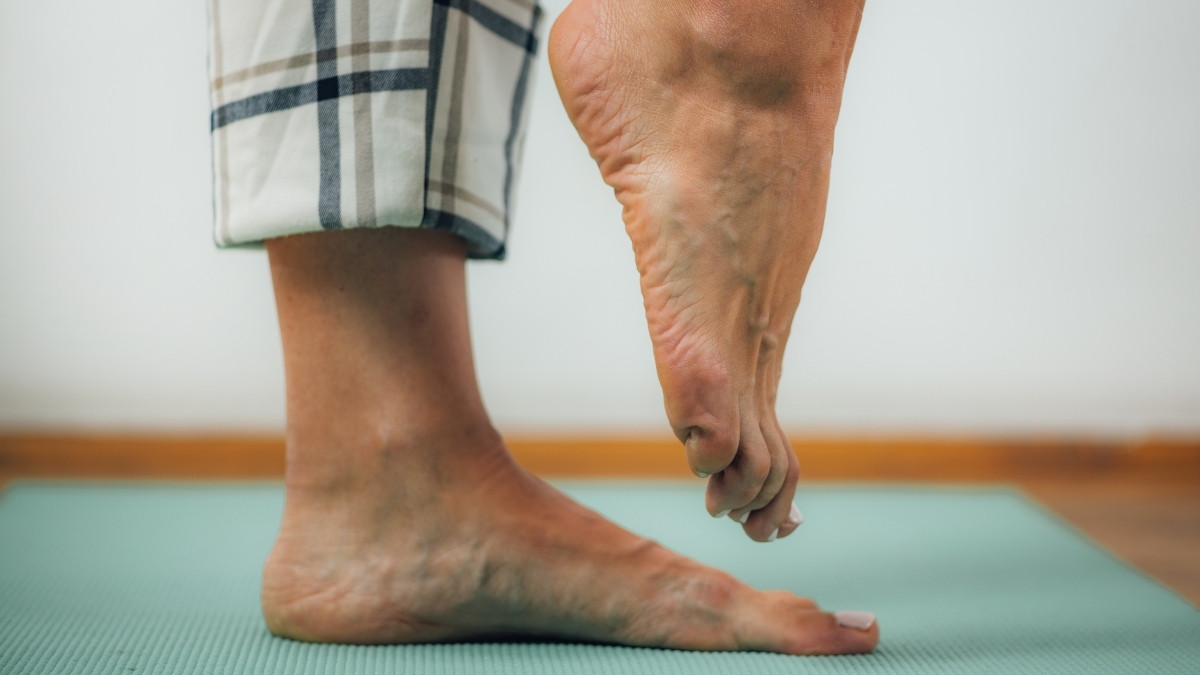
Hold the back of a chair lightly. Lift one foot off the floor. Hold 10 seconds. Lower it. Repeat 3 times per leg. As you get stronger, reduce your grip. This builds ankle stability and trains proprioception in each leg separately.
Exercise 2 — Heel-to-Toe Walk (1 minute)
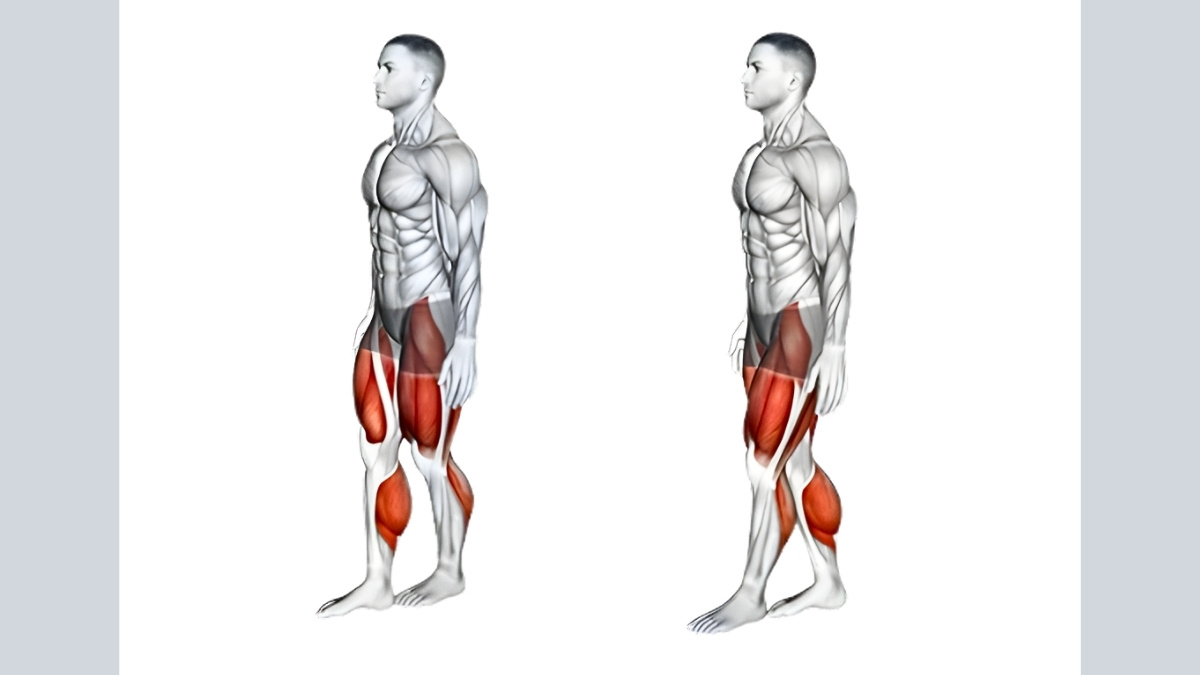
Stand near a wall. Place your right heel directly in front of your left toes. Take 10 to 15 slow steps forward. Keep your eyes ahead, not down. Rest and repeat. This improves coordination and activates the stabilizing muscles in your hips.
Exercise 3 — Heel and Toe Raises (1 minute)
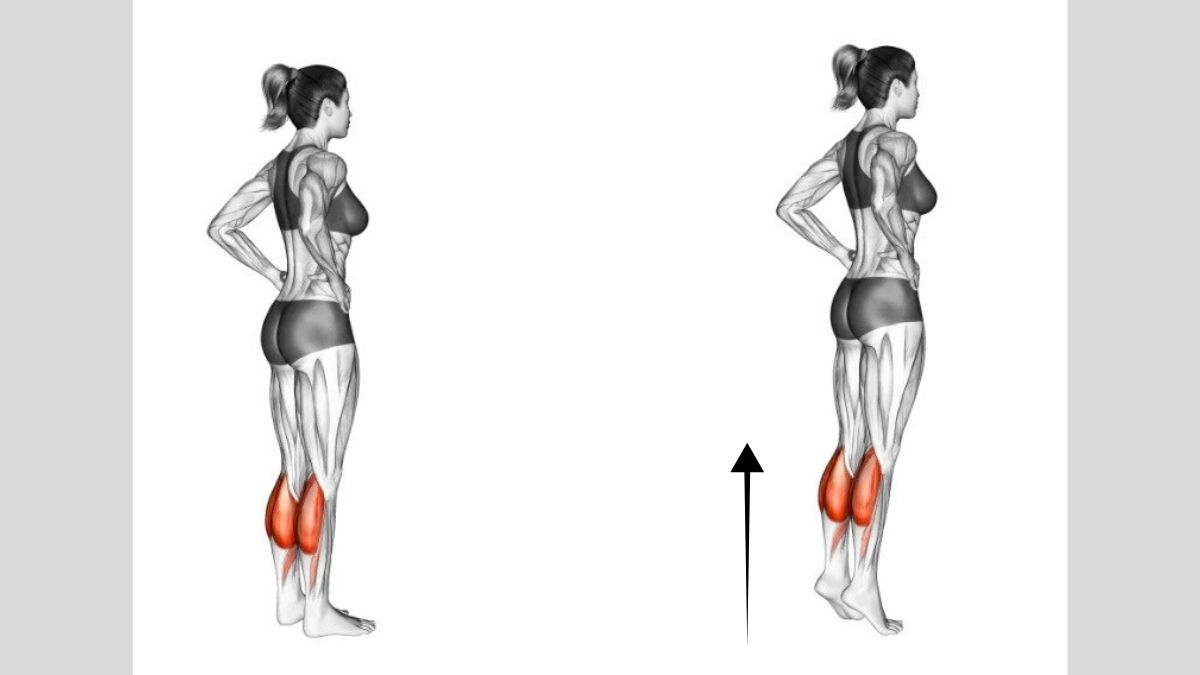
Stand near a counter. Rise onto your tiptoes. Hold 5 seconds. Lower. Do 10 reps. Then lift your toes while keeping heels down. Hold 3 seconds. Lower. Do 10 reps. This activates the ankle muscles that react first when you start to lose balance.
Exercise 4 — Marching in Place (1 minute)
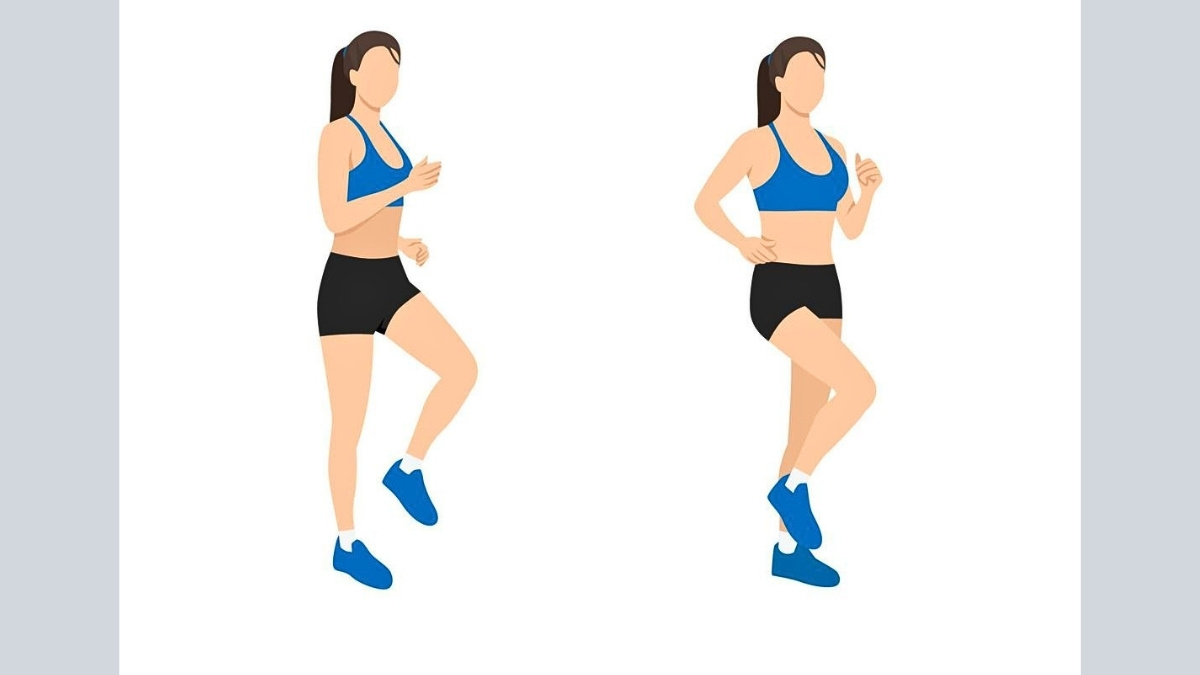
Stand near a wall. Slowly lift your right knee to hip level. Hold 2 seconds. Lower. Switch legs. Continue for 60 seconds. This challenges your vestibular system and builds hip strength.
Exercise 5 — Sit-to-Stand Without Hands (1 minute)
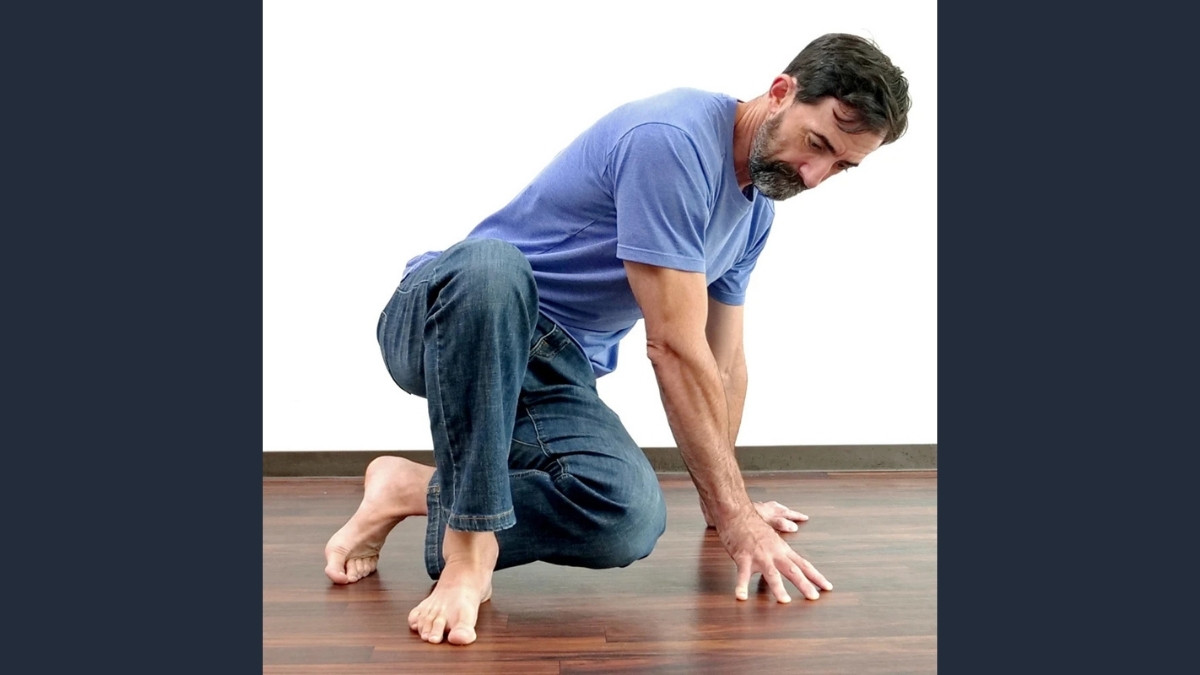
Sit in a firm chair. Cross your arms over your chest. Rise to standing slowly. Sit back down with control. Do 5 to 8 reps. Use hands lightly if needed at first. This directly builds the leg strength that stops collapse-type falls.
3 Action Tips:
- Always keep a chair within arm’s reach during all five exercises
- Wear shoes with non-slip soles, not socks on smooth floors
- If any exercise causes pain, stop and consult your doctor before continuing
Point Five — Common Mistakes That Cancel Out Your Results
Five minutes a day only works if those five minutes are done right. Most people make at least one of these mistakes without knowing it.
The biggest mistake is moving too fast. Speed kills the benefit of balance training. The whole point is to move slowly and make your stabilizing muscles work harder. When you rush, those muscles coast. Slow down on purpose.
The second mistake is skipping the safety setup. Exercising near nothing to grab is dangerous during training, not just during daily life. Always have a chair or wall within reach before you start.
The third mistake is inconsistency. Balance is a skill. Your brain builds it through repetition. If you skip four days out of seven, the neural adaptation never happens. You stay stuck.
The fourth mistake is wrong footwear. Socks on smooth floors during heel raises or single-leg stands is a real fall risk. Shoes with grip are non-negotiable.
The fifth mistake is never making the exercises harder. Once it feels easy, your brain stops adapting. Reduce chair support. Hold longer. Add repetitions.
3 Action Tips:
- Count to three on every movement — up for three, hold for three, down for three — to force slow control
- Set a non-negotiable rule: shoes on before the routine starts, every single time
- When a single-leg stand reaches 30 seconds easily, try it with eyes closed near a wall
Point Six — How to Build the Habit So You Actually Do It Every Day

The hardest part of balance training is not the exercises. It is remembering to do them. Here is how to fix that.
Use habit stacking. Pick something you already do every morning — making coffee, brushing your teeth, watching the morning news. Do your five minutes immediately after that thing. No decision required. It just follows automatically.
Put a chair in a visible spot in your living room or kitchen and leave it there permanently. When you walk past it, it reminds you. That visual cue does more than a phone reminder ever will.
Tell one person — a spouse, a neighbor, a sibling — that you are doing this routine daily. Social accountability works. Research from a 2025 study showed that 54% of older adults who started an exercise program kept doing it three or more times per week. Most people who start, stick with it.
Track one thing: how long you can hold the single-leg stand. Write it down on week one. Watch it grow. Progress is the strongest motivator there is.
3 Action Tips:
- Place your exercise chair next to your coffee maker or TV as a permanent visual trigger
- Text one person your streak count each week — even just “Day 7 done”
- Record your single-leg stand time in seconds every Sunday morning to track real progress
Point Seven — When to See a Professional and What Programs Actually Work
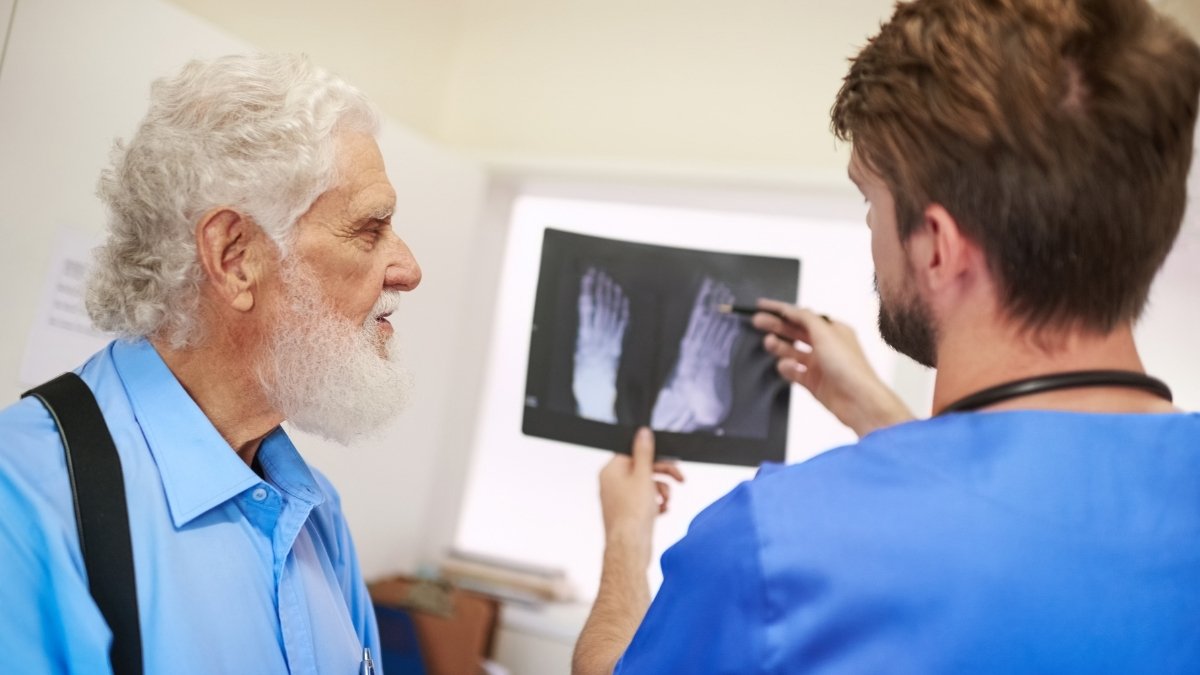
A daily home routine is a strong start. But some people need more than a home routine, and knowing when to ask for help is smart, not weak.
See a doctor or physical therapist before starting if you have fallen two or more times in the past year. Also get checked if you feel dizzy often, have numbness in your feet, or have a condition like Parkinson’s disease or a history of stroke.
The CDC’s STEADI program offers a free fall risk screening tool at cdc.gov/falls. You can use it today. The National Council on Aging runs a free Falls Free CheckUp at ncoa.org. Both take under ten minutes and give you a clear picture of your risk level.
Programs that are proven to work and still widely available in 2026 include: the Otago Exercise Program, delivered by physical therapists in your home; Tai Chi for Arthritis and Fall Prevention, available at most YMCAs and senior centers; and Matter of Balance, a group program that specifically addresses fear of falling.
3 Action Tips:
- Visit cdc.gov/falls today and complete the free STEADI fall risk screening
- Ask your doctor about a referral to a physical therapist for a Timed Up and Go (TUG) test — it measures balance in under a minute
- Search “Tai Chi for Arthritis near me” to find a free or low-cost local class endorsed by the CDC
Point Eight — What to Expect in Your First 30 Days of Doing This Routine

Week one will feel awkward. Your single-leg stand might only last three to five seconds. You might wobble on the heel-to-toe walk. That is not failure. That is your nervous system being challenged for the first time in a long time.
Week two is when small changes appear. Your brain starts firing faster signals to your stabilizing muscles. The sit-to-stand gets a little smoother. The heel-to-toe walk feels less shaky. These are real neurological improvements happening inside your body.
Week three brings a shift in everyday confidence. You step off a curb and do not hesitate. You reach overhead without bracing yourself. You walk on uneven ground without looking down constantly. These changes are not in your head — they are in your nervous system.
Week four is where most people cross the line from effort to habit. Many can hold a single-leg stand without touching the chair at all. Research confirms that balance improvements typically become measurable between four and eight weeks of consistent training.
At day 30, you will not just be safer. You will feel safer.
3 Action Tips:
- Take a short video of your single-leg stand on Day 1 and again on Day 30 — the visual proof is motivating
- Do not compare your Week 1 performance to anyone else — only compare it to your own Week 2
- At the end of Week 4, add one small challenge: close your eyes for 5 seconds during the single-leg stand
Lastly,

Falls are not an unavoidable part of getting older. Balance is a skill your body can rebuild. Five minutes a day, done consistently, is enough to make a real difference. Start with the single-leg stand today. Do it again tomorrow. That is all it takes to begin.