

The strengths after 60 that best predict independence almost never get tested. Checkups cover weight, blood pressure, and cholesterol, while grip, balance, and leg power rarely come up.
These strengths fade quietly. You start pushing off the chair arms, taking shorter steps, and gripping the stair rail a little tighter.
Each change feels small on its own. Added together, they are how independence slips away.
Then one stumble, one missed step, or one hard time getting up from the floor shows how much was already lost. The earlier you catch a slip, the easier it is to reverse.
Researchers have found simple markers that show where you stand, years before that day arrives. Most take about a minute and need no equipment, and the first one is hiding in your hands. A strong showing on several of them tells you something real about how well your body is aging.
Here is the honest part. Nobody has measured all seven together and ranked you against 90% of your age group.
What research does show is that each one tracks with longer life, fewer falls, or more independence. The studies below describe groups of people, not you, so treat your results as a nudge, not a verdict.
Your Strengths After 60 at a Glance
Skim this scorecard first, then read why each one matters.
1. Grip Strength: Your Hands Keep Score
Your grip is a stand in for overall muscle strength. That is why researchers use a simple squeeze to estimate how strong the rest of your body is.
The numbers are striking. In a 28 country study of older adults, risk of death from any cause kept dropping as grip got stronger, up to about 42 kilograms (93 pounds) for men and 25 kilograms (55 pounds) for women.
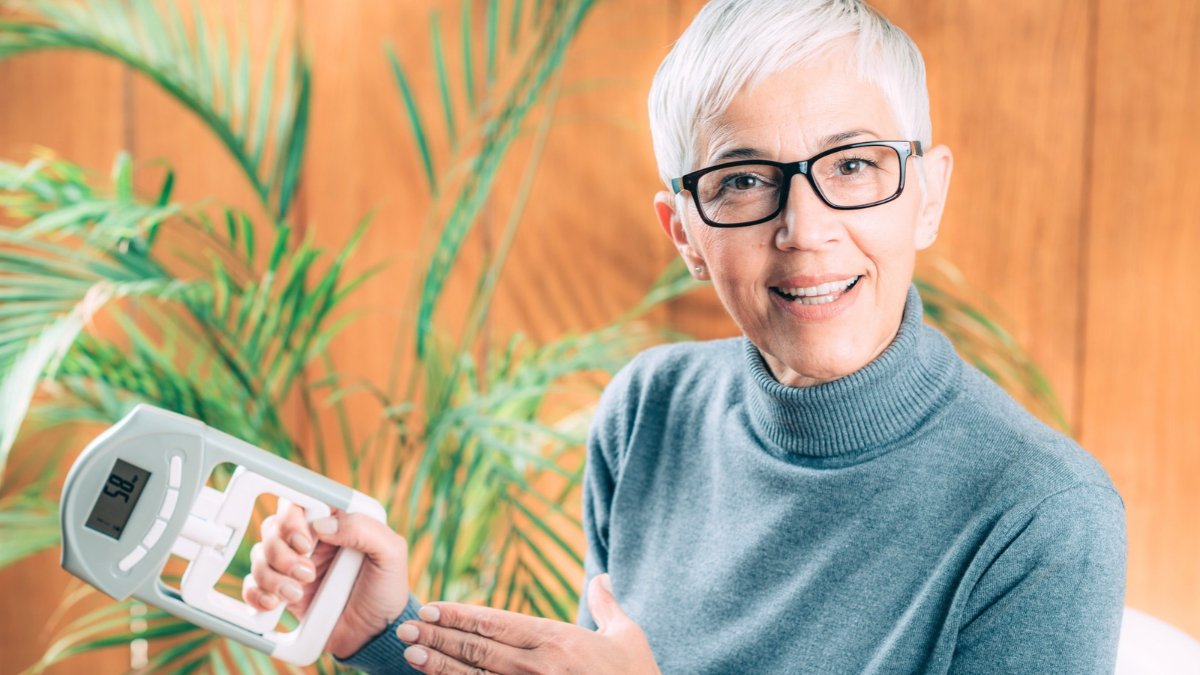
An earlier Hiroshima study followed 4,912 adults aged 35 to 74 for decades. Every 5 kilogram step up in grip strength was linked to roughly 11% lower risk of death in men and 13% lower in women.
The pattern holds in very old age too. In a Dutch study of 85 year olds, the weakest grips carried higher risk, and so did grips that weakened fastest over four years.
How to check it: Ask a physical therapist or clinic about a handheld dynamometer. At home, try an informal version: carry two full grocery bags for a full minute. If your hands quit before your legs do, that is useful information.
How to build it: Carrying, pulling, and squeezing all count. Heavy bag carries, resistance band rows, and squeezing putty or a soft ball work your grip directly, and the CDC recommends muscle strengthening on at least 2 days a week for older adults.
2. Walking Speed: The Pace That Predicts Your Years
Walking asks your heart, lungs, nerves, muscles, and joints to cooperate. That is why your usual pace works as a summary of how the whole system is running.
A 2011 JAMA analysis pooled nine studies covering 34,485 adults aged 65 and older. A pace of about 0.8 meters per second matched typical life expectancy for age and sex.
At 1.0 meters per second or faster, survival was longer than expected. Speeds of 1.2 meters per second and above tracked with exceptional life expectancy, and each extra 0.1 meters per second was linked to about 12% lower risk of death.
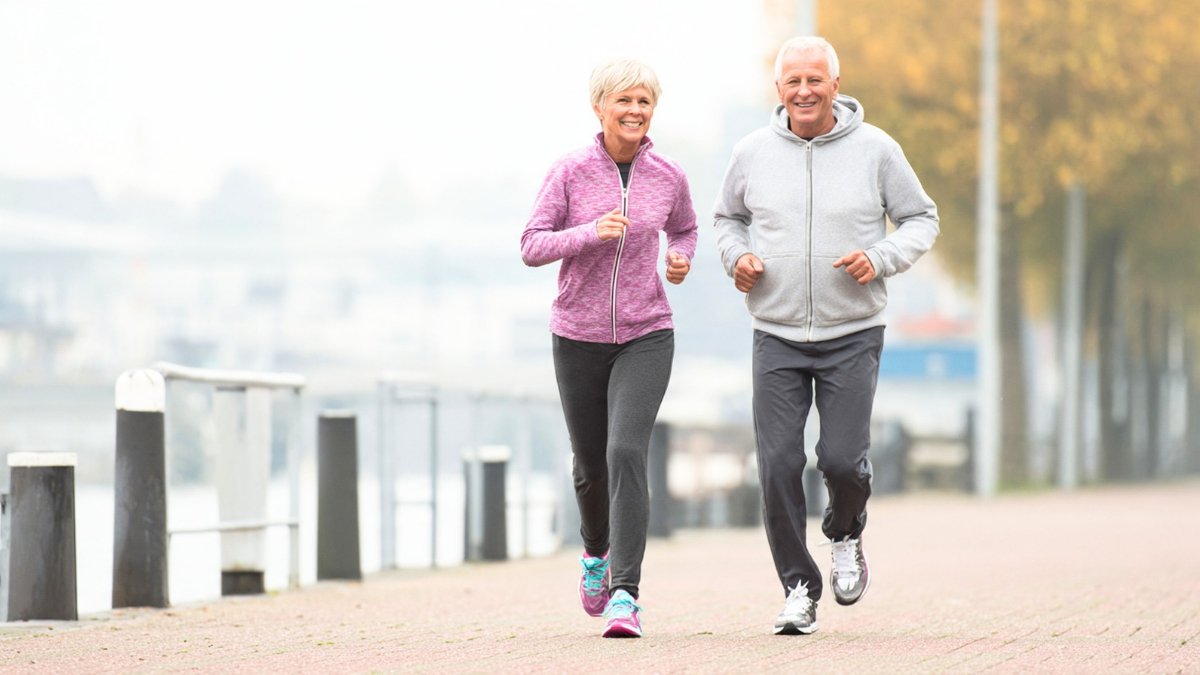
How to check it: Mark off 4 meters (about 13 feet) on the floor. Start a few steps back so you cross the first line at your normal pace, then time yourself to the second line. Four seconds equals 1.0 meters per second, and five seconds equals 0.8.
How to build it: Brisk walking where you can talk but not sing counts as moderate activity, and the CDC target is 150 minutes a week. The researchers noted that these survival estimates still need validation before clinical use, so treat your time as a signal, not a score.
3. One Leg Balance: The 10 Second Test Doctors Keep Talking About
Standing on one leg calls on your muscles, joints, eyes, inner ear, and brain at the same moment. When one of those slips, the wobble shows up fast.
In a British Journal of Sports Medicine study of 1,702 adults aged 51 to 75, about 1 in 5 could not hold the pose for 10 seconds. Over a median of seven years, 17.5% of that group died, compared with 4.6% of those who could.
After accounting for age, sex, body mass index, and health conditions, failing the test was linked to 84% higher risk of death. The participants were relatively affluent adults in Brazil, and the study shows a link, not proof that balance training changes survival.
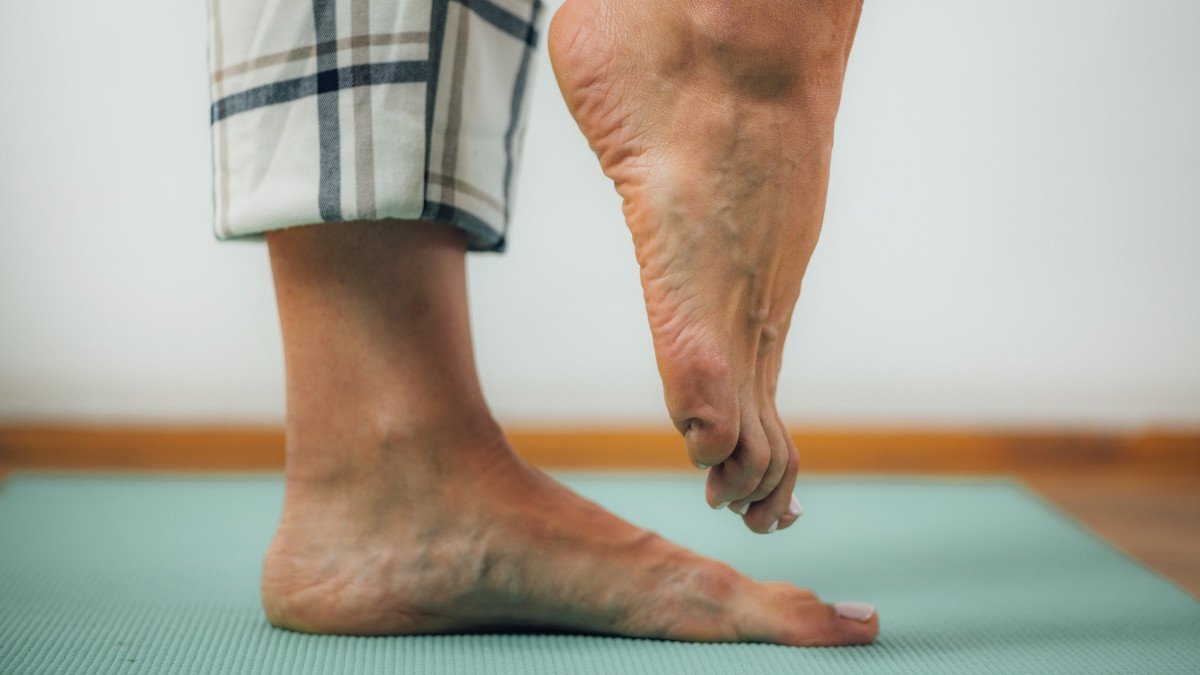
How to check it: Stand barefoot beside a counter. Rest the front of one foot against the back of your standing leg, keep your arms at your sides, look straight ahead, and time 10 seconds. You get three tries.
How to build it: Balance responds to practice, and the lead researcher said improvement can show up after only a few sessions. Try one leg stands while brushing your teeth, and add walking heel to toe along a hallway.
4. Leg Power: How Many Times Can You Stand Up in 30 Seconds?
Every time you rise from a chair, toilet, or car seat, your thighs and hips do the lifting. When that power fades, falls get more likely, which is why the CDC uses this test to screen older adults for fall risk.
How to check it: Use a sturdy chair with no arms and a seat about 17 inches high, pushed against a wall. Cross your arms over your chest with feet flat, then rise to a full stand and sit back down as many times as you can in 30 seconds. If you have to push with your arms, stop and score zero.
At ages 60 to 64, men below 14 and women below 12 land in the below average range. Men above 19 and women above 17 score above average.
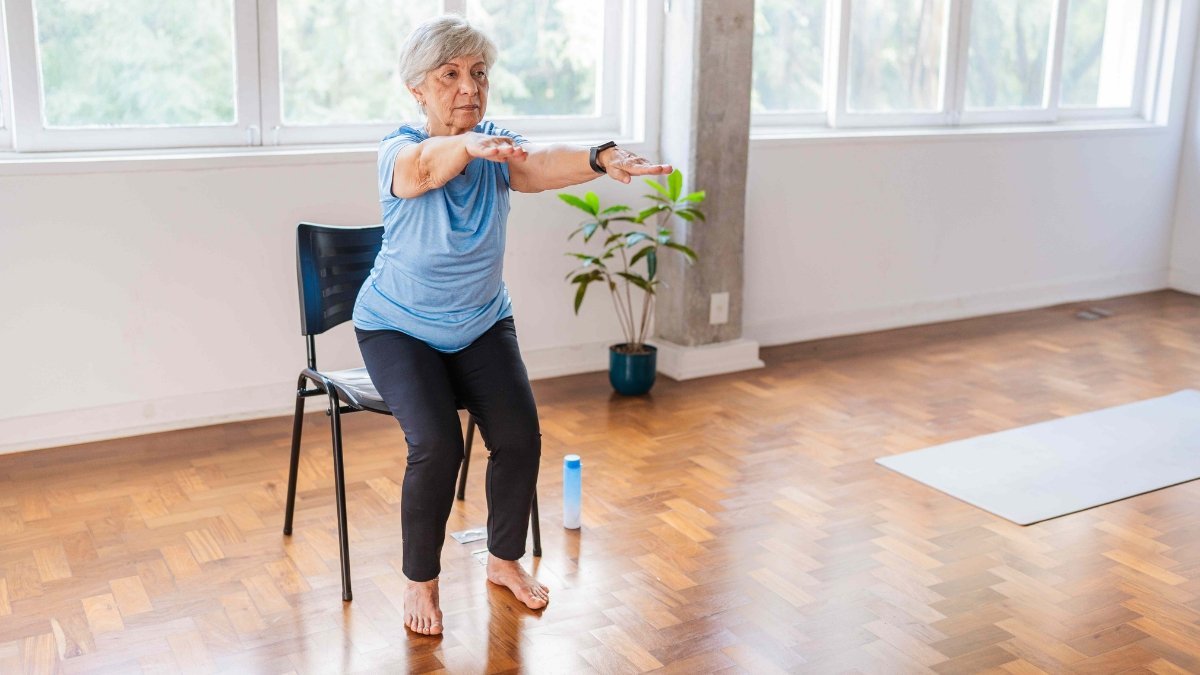
At 70 to 74, below average means fewer than 12 stands for men and fewer than 10 for women. A low score signals higher fall risk, and it also responds to training.
Everyone’s body responds differently, so check with your doctor before trying these tests or exercises if you have an existing condition, joint pain, or take medication.
How to build it: Practice sit to stand reps from a sturdy chair, lowering yourself slowly instead of dropping. Squats, step ups, and leg presses work the same muscles, ideally on 2 or more days a week.
5. Floor Rise: Can You Get Down and Back Up Without Help?
Few moves ask for as much at once as sitting on the floor and standing back up. You need leg strength, core strength, balance, flexibility, and coordination, all in about ten seconds.
A Brazilian team tested this on 2,002 adults aged 51 to 80. Scores run from 0 to 10, and you lose a point each time you use a hand, knee, forearm, or the side of a leg for support.
Over about six years, 159 of the participants (7.9%) died. Each 1 point higher score was linked to 21% lower risk of death, and the lowest scorers had 5 to 6 times the risk of the top group.
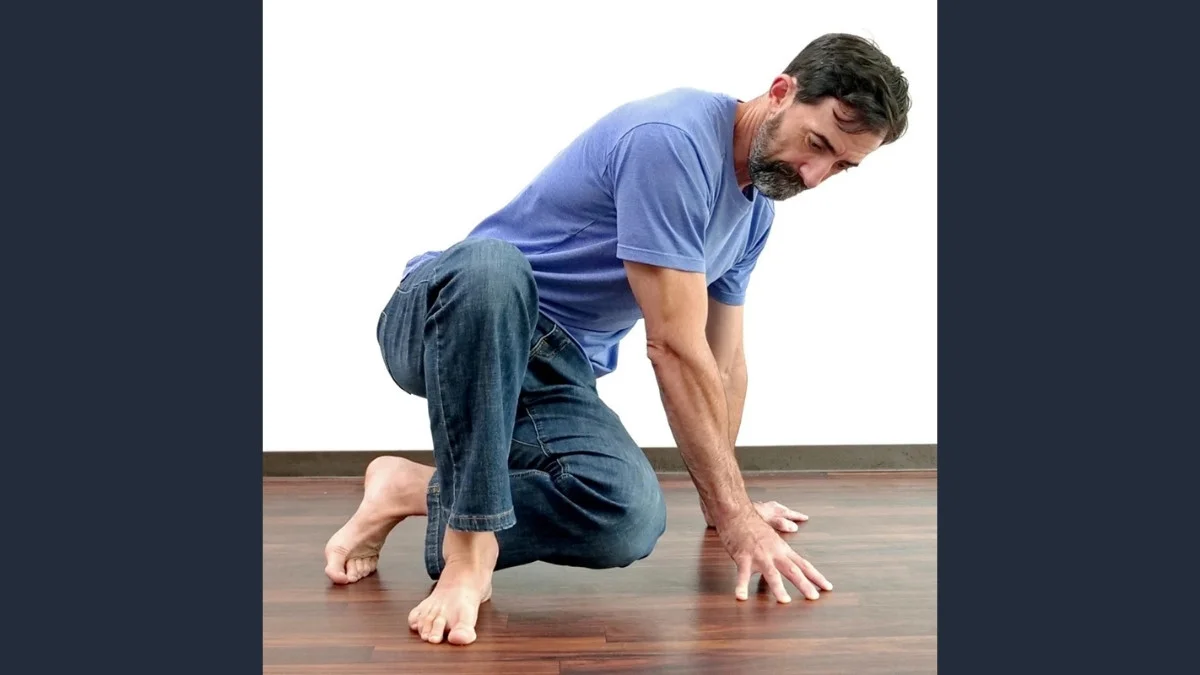
Needing more than one hand or knee for support was tied to roughly double the death rate over six years. Experts caution that this is a marker, not a cause, and a sore knee does not predict a short life.
How to check it: Clear a space and go barefoot, with a sturdy couch or chair nearby for safety. Lower yourself to sit on the floor, then stand back up using as little support as you can. Count each hand, knee, or forearm you used.
How to build it: Practice the movement a few times a week, using only the support you need and trimming it over time. If you have knee, hip, shoulder, or balance problems, skip this test and ask your doctor or physical therapist first.
7 Functional Strength Benchmarks
Quick clinical checks and target performance results to evaluate healthy aging and physical resilience.
Handheld dynamometer at a clinic.
Time 4 meters at your usual speed.
Hold one leg for 10 seconds.
Count chair stands in 30 seconds.
Sit on the floor, then stand up.
Climb 4 flights briskly.
Walk while naming every other letter.
6. Stair Power: Four Flights in Under a Minute
Climbing stairs makes your heart pump hard to feed working muscles. That turns the climb into a real world look at how well your heart and lungs deliver oxygen.
Aerobic fitness has some of the strongest evidence on this whole list. Cleveland Clinic researchers followed 122,007 adults who took treadmill tests, and those with the lowest fitness had about five times the risk of death compared with the elite group.
Low fitness carried a risk as high as or higher than smoking, diabetes, or coronary artery disease, and the benefit kept growing with no upper limit. The average age was 53, but among patients 70 and older, elite fitness still carried nearly 30% lower risk than high fitness.
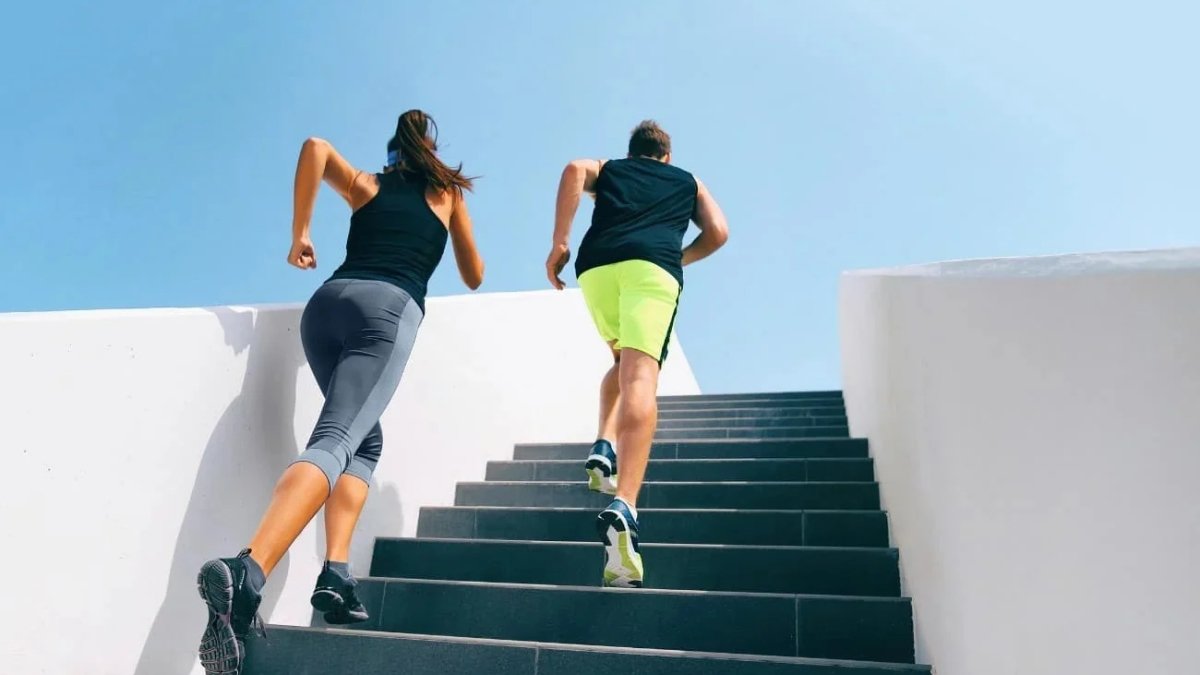
A smaller Spanish study presented at a 2020 European Society of Cardiology meeting linked stair speed to treadmill results. Among 165 patients, those who climbed 60 stairs in under 45 seconds reached a fitness level tied to low yearly death risk, while those who took 90 seconds or longer did not.
The lead researcher said that more than a minute and a half is worth a talk with your doctor. The patients had known or suspected heart disease, so this is a screening idea, not a diagnosis.
How to check it: Find four flights, about 60 steps. Climb at a fast pace without running, use the handrail, and time yourself. Under 60 seconds is a good sign.
How to build it: Aim for 150 minutes a week of moderate activity, or 75 minutes of vigorous activity. Take the stairs daily and add a few more flights as it gets easier.
7. Mental Sharpness That Keeps Pace With Your Feet
Walking while thinking is harder than it looks. It pulls on attention, working memory, and processing speed at once, which is why researchers use it to catch changes early.
Early research found that older adults who stopped walking when a conversation started were more likely to fall later. Joe Verghese and his team at Albert Einstein College of Medicine turned that observation into a test: walk at a normal pace while reciting every other letter of the alphabet.
Slow walking speed during that test has been linked to higher risk of both falls and dementia. The good news is that the brain responds to effort too.
In the Canadian Study of Health and Aging, people who exercised at least three times a week were more likely to hold steady or improve on thinking tests over five years (42% versus 28%). In the ACTIVE trial of 2,802 adults aged 65 and older, a speed of processing program was linked to 29% lower dementia risk after 10 years.
How to check it: Walk across a clear room at your normal pace while saying A, C, E, G, I, and so on. If you slow down sharply, stop, or lose your place, mention it to your doctor.
How to build it: Keep moving, since regular exercise is linked to better thinking scores. Practice chatting while you walk, and keep learning new skills that make your brain work faster.
What Wears Each Strength Down, and What Rebuilds It
Nighttime Leg Symptoms & Giveaway Clues
A clinical breakdown mapping what you feel at night to its most likely culprit and defining giveaway clue.
A sudden, hard knot in the calf or foot.
A creeping, crawling urge to move the legs.
Rhythmic jerks while you sleep.
Burning or pins-and-needles sensation.
Foot or toe pain that wakes you from sleep.
Try This Today: The Five Minute Strength Check
- Time your 4 meter walk and write the number on a sticky note.
- Stand on one leg for 10 seconds per side while brushing your teeth, with one hand near the counter.
- Do 10 slow sit to stand reps from a sturdy chair.
- Take the stairs once today at a brisk pace, holding the rail.
- Carry a full grocery bag in each hand down a hallway, slowly, three times.
Stop and Call Your Doctor If You Notice:
- Chest pain, pressure, or unusual shortness of breath during stairs or walking
- New dizziness, or a sudden loss of balance that is not normal for you
- Sudden weakness or numbness, especially on one side of the body
- New confusion or trouble finding words
What to Do With Your Results,
Count how many of the seven you passed. If you passed most, you are protecting something valuable, so keep training it. If you missed a few, you just found where to start.
Every one of these responds to practice. Write your numbers down, then check again in a month or two.