
Can you sit on the floor and stand back up without grabbing the couch? Many adults over 50 slowly lose that ability, and most never notice until the day it matters.
Here is what makes it risky. Muscle and flexibility fade a little every year, and the floor is the first place the gap shows.
After a fall, a person who cannot get up may lie there for an hour or more. Then the fear of falling again can shrink their world even further.
There is a small fix. A 5 minute daily floor transition practice trains the exact movement that keeps you independent, and you can do it beside a sturdy chair.
This article covers what the research really shows, how the practice works, and how to start safely this week. It promises no miracles. It offers a simple, practical skill you can keep for life, starting today.
Before making any changes based on this article, talk to your doctor, especially if you take medication, have joint or balance problems, or live with a diagnosed condition.
The Simple Floor Test Linked to Living Longer
Brazilian physician Claudio Gil Araújo noticed that many of his older patients struggled with ordinary movements, like bending down to pick something off the floor. So his team built a quick check called the sitting rising test.
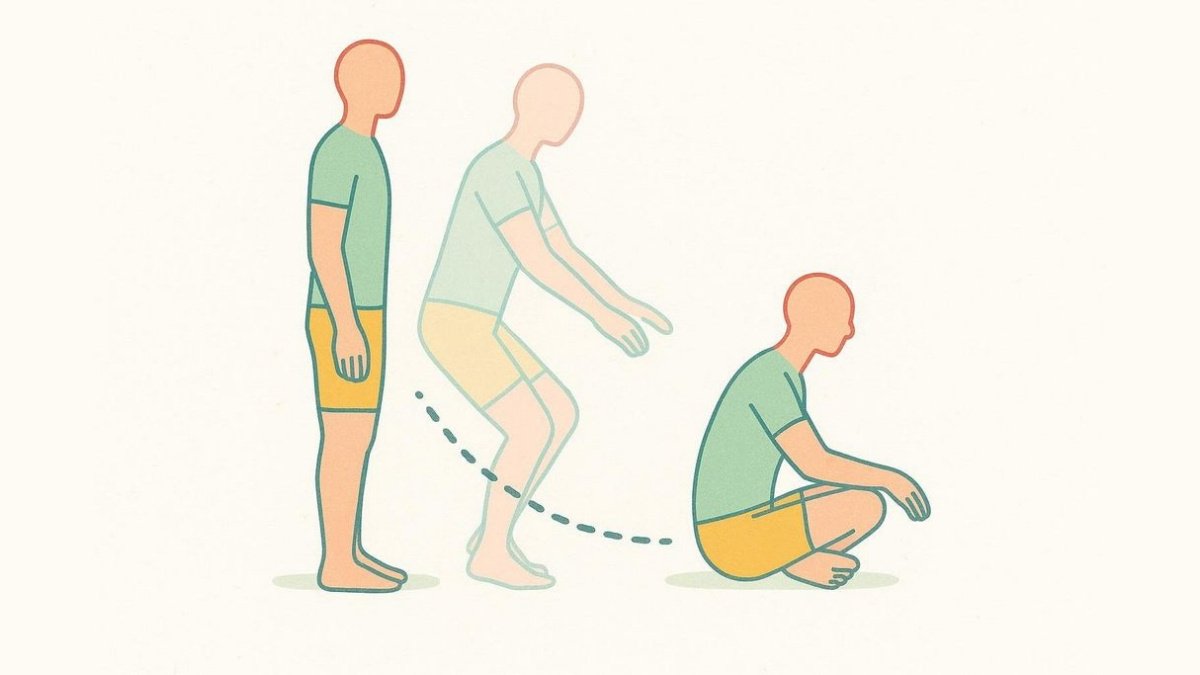
Here is how it works. You lower yourself to the floor and stand back up using as little support as possible. Each half of the movement scores up to 5 points, for a total of 10.
You lose a point each time you use a hand, a knee, or a forearm for support, and half a point for a wobble.
The team followed 2,002 adults aged 51 to 80 for a median of 6.3 years. Those who scored 0 to 3 were about 6.5 times as likely to die during that period as those who scored 8 to 10. Every one point gain in the score was linked to a 21 percent lower risk of death from any cause.
A 2025 follow up in the European Journal of Preventive Cardiology covered 12 years. Poor scorers had about 3.8 times the risk of dying from natural causes, and about six times the risk of dying from cardiovascular causes, compared with top scorers.
Now the honest part. This is an association, not proof. A low score does not cause an early death, and no study has shown that five minutes of daily practice adds years.
What the test does capture is flexibility, muscle strength, and coordination in a single movement. Those are the same qualities a daily floor transition practice trains.
What Your Body Does Every Time You Go Down and Up
Going to the floor and back looks simple. It is actually a full body event.
In a motion lab study of healthy adults aged 66 to 81, getting from lying down to standing took about 6 seconds on average.
Peak hip bend landed near 90 to 97 degrees and peak knee bend near 118 to 129 degrees, depending on the technique.
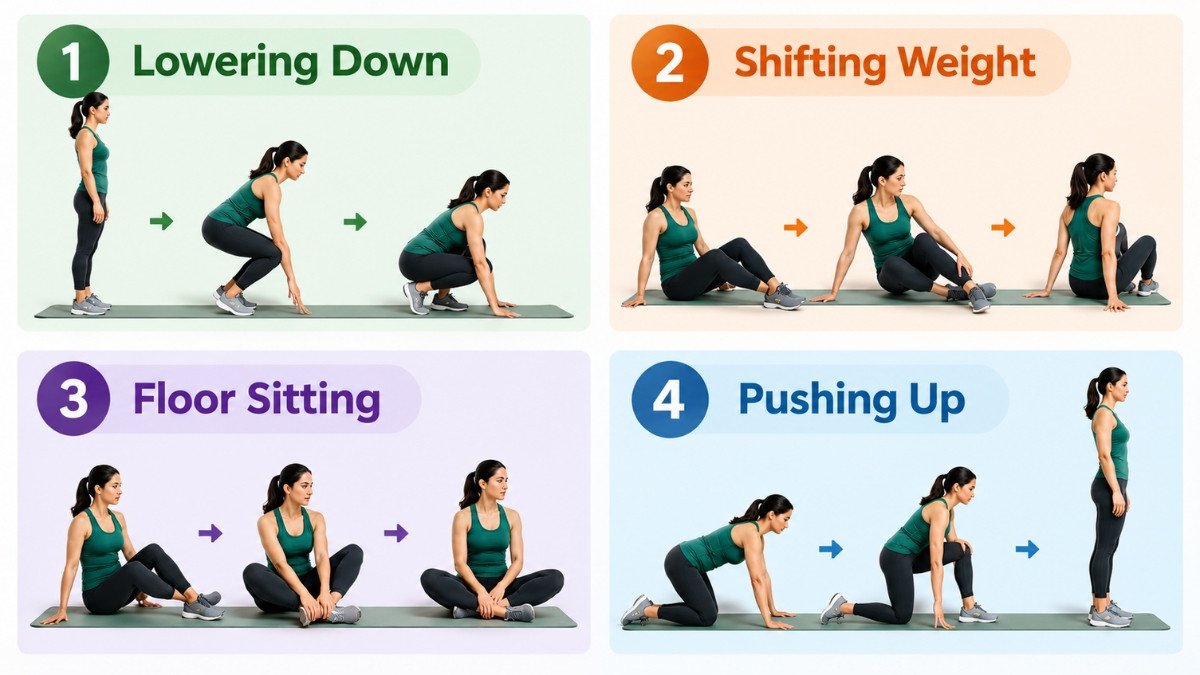
Movement Phases & Daily Life Relevance
A breakdown of physical phases during lower body movement and how they translate into daily functional tasks.
Thighs and hips control your weight as the knees and hips bend deeply.
Core, shoulders, and balance system steady you as you turn.
Hips and ankles reach into a deep functional bend.
Thigh, hip, and calf muscles produce the power required to stand.
Researchers who watched older adults rise from the floor saw three common styles. Twelve of 20 sat straight up first, four used a side sit, and four rolled over.
No single technique fits everyone. That is why the practice below lets you find your own path.
Why Strength Fades and Falls Follow
Harvard Health notes that adults who skip regular strength training can lose 4 to 6 pounds of muscle per decade. After 60, the pace can climb to about 3 percent a year.
Here is the encouraging part. Harvard also points out that disuse plays a bigger role than many people suspect, and strength and power training can help reverse the slide.
Stronger muscles also mean fewer falls. When a fall does happen, people with stronger muscles are less likely to be seriously hurt.
The CDC reports that about 1 in 4 adults 65 and older fall each year, adding up to roughly 36 million falls. The agency also notes that falling once doubles your chances of falling again.
Fear makes it worse. Many people who fall become afraid of falling, cut back on activity, and get weaker, which raises the risk further. Studies also link a greater fear of falling with more trouble sitting down on and rising from the floor.
The Hour That Changes Everything
Doctors call an hour or more on the floor after a fall a long lie. In a BMJ study of mostly frail adults over 90, most of those who fell could not get up after at least one fall, and about 3 in 10 spent an hour or more on the floor.
Long lies are strongly associated with serious injuries, hospital admission, and moves into long term care.
Here is the gap most articles miss. Plenty of pages teach you how to get up after you fall. Very few tell you to practice before you need it.
The 2022 world guidelines for falls prevention and management, published in Age and Ageing, stress the importance of getting up from the floor independently. They recommend that older adults practice the skill, and they note that evidence shows it can be regained.
The 5 Minute Daily Floor Transition Practice
You need a soft mat or carpet, a sturdy chair or couch within arm’s reach, bare feet or grippy socks, and your phone nearby. Clear the space around you.
The guidelines favor a method called backward chaining. You start from standing, work your way down to the floor, then reverse the same steps to come back up.
Everyone’s body responds differently, so check with your doctor before trying this if you have joint pain, balance problems, osteoporosis, or take medication that can cause dizziness.
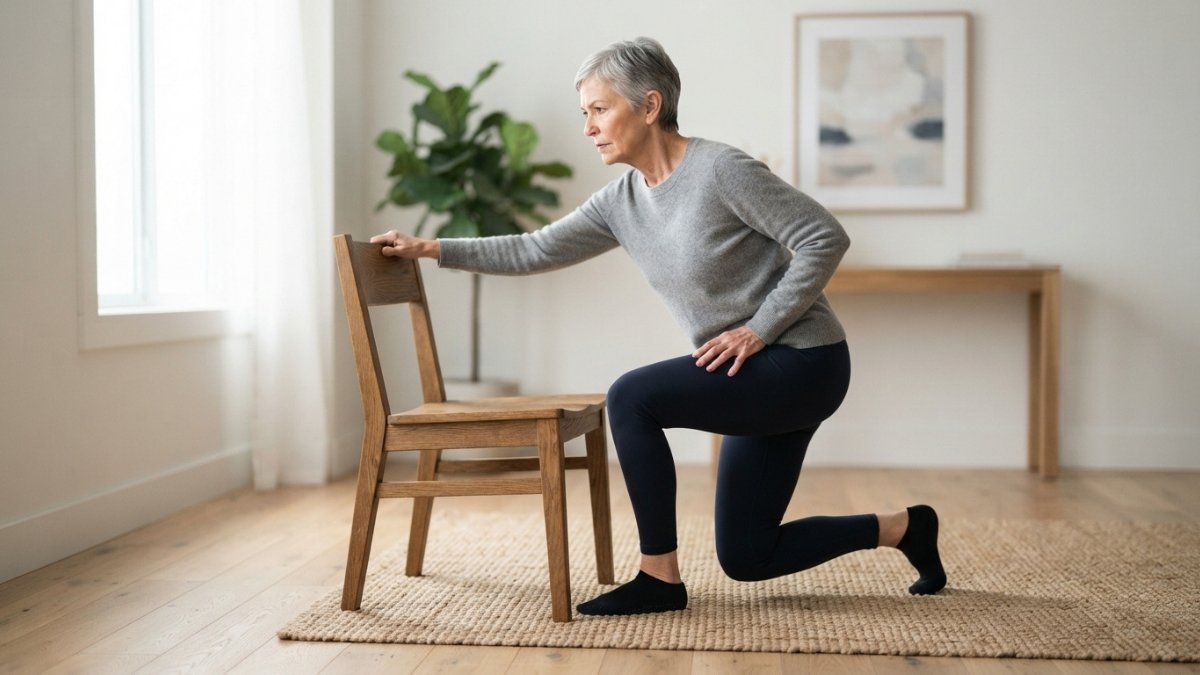
Going down
- Stand beside the chair with one hand resting on the seat.
- Step one foot back and lower into a half kneel, keeping your weight on the front leg and the supporting hand.
- Place your other hand on the floor and lower your hips to sit to one side.
- Settle into a comfortable seat, or roll onto your back for the full version.
Coming back up
- Roll onto your side and push up through your hands until you reach hands and knees.
- Place your nearest hand on the chair seat and bring your stronger leg forward, with that foot flat and the other knee still down.
- Press through the front foot, straighten both legs, and stand tall.
- Pause and breathe before you walk away.
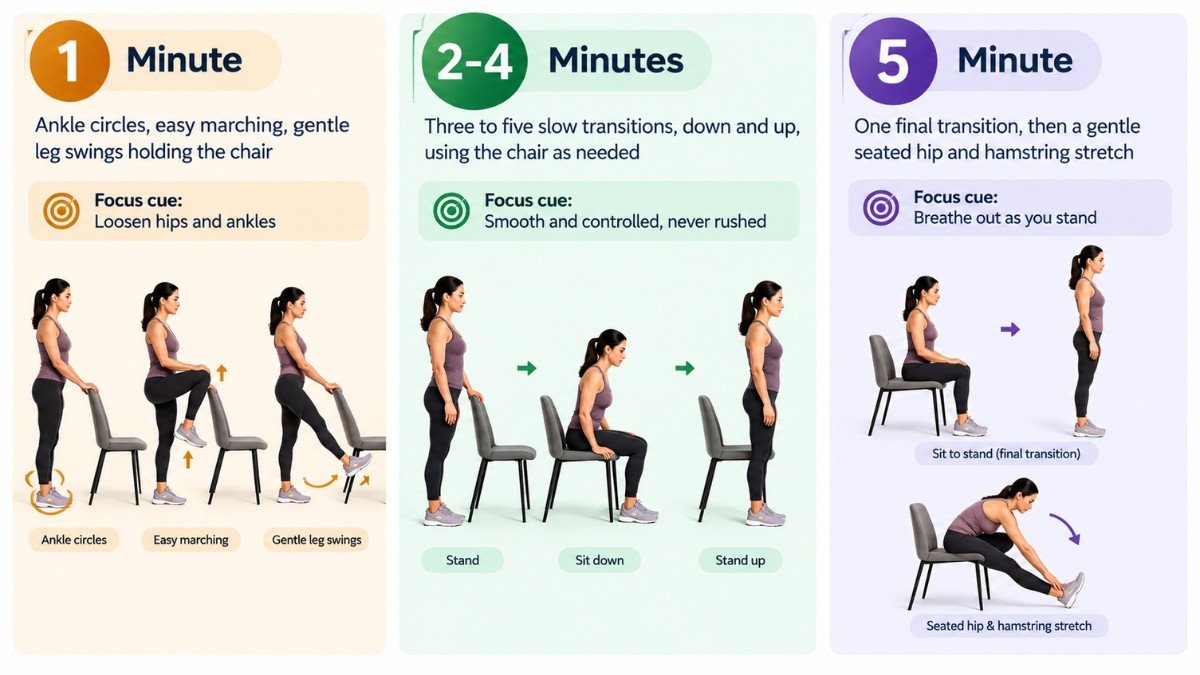
5-Minute Chair Mobility & Transition Flow
A structured, low-impact seated flow designed to mobilize joints and practice functional sit-to-stand movements.
Ankle circles, easy marching, and gentle leg swings while holding the chair.
3 to 5 slow transitions, down and up, using the chair support as needed.
One final transition, followed by a gentle seated hip and hamstring stretch.
Want to make it harder? Borrow the logic of the sitting rising test, which rewards fewer supports. When a step feels steady, ask for less help: a full hand on the chair, then fingertips, then nothing.
Try This Today: The Floor Habit That Sticks
- Pick a cue you never skip, like right after your morning coffee or before the evening news.
- Leave the mat and chair in one spot so setup takes under a minute.
- Count a slow 3 seconds on the way down during your first round.
- Each week, drop one support only if the movement feels steady.
- Stop when your form slips, not when you are exhausted.
Questions People Ask Before They Start
What if my knees hurt?
Fold a towel or cushion under the knee, shorten the range, or skip the kneeling step. Sharp pain is a stop sign.
How long until I notice a difference?
No study has timed this exact practice, so no honest source can promise a date. What research does show is that strength can be improved at any age, and that the floor skill can be regained with practice.
Track your own progress instead. Write down how many supports you use each week.
Who should check with a doctor first?
Anyone with hip or spine problems, osteoporosis, a recent surgery, or ongoing dizziness. The researchers behind the sitting rising test advise doing it with another person present, and say people with hip or spine conditions should avoid the test.
When To Stop and Call a Doctor
- Chest pain, shortness of breath, or a racing heartbeat during or after the practice
- Dizziness, blurred vision, or near fainting when you stand
- Sharp joint pain, new numbness, or a joint that gives way
- A fall where you hit your head or cannot get up, so call for help right away and do not keep trying
Keep the Skill You Cannot Afford to Lose
The research does not say five minutes on the floor will add years to your life. It says that strength, balance, and flexibility track how well we age, that muscle fades without use,

and that world guidelines want older adults to practice getting up before they ever need to.
A daily floor transition practice trains all of it in the time it takes to heat a cup of tea.