

Getting out of a low chair now takes a push from your hands, and you have started to notice.
That is not just “getting older.” After 60, muscle loss can speed up to about 3 percent a year, and the weaker your legs get, the harder stairs, groceries, and surprise stumbles become.
The good news is that the best exercises for rebuilding aging muscle are simpler than most people expect, and you can do all five at home.
Before you start any new exercise routine, talk to your doctor, especially if you have a heart condition, joint problems, osteoporosis, or take medication that affects your blood pressure or balance.
Why Muscle Fades, and Why It Can Come Back
Harvard Health Publishing reports that age related muscle loss can begin around age 35, at roughly 1 to 2 percent a year. After 60, it can accelerate to about 3 percent a year.
Adults who skip regular strength training can lose an estimated 4 to 6 pounds of muscle per decade.
Doctors call this sarcopenia. Estimates for adults over 60 range from about 10 to 27 percent, depending on how it is defined.
It is not only about size. The nerve signals that tell your muscle fibers to fire also weaken with age and lack of use, which is part of why you feel slower and weaker, not just smaller.
The stakes are real. Disability is 1.5 to 4.6 times higher in older people with moderate to severe sarcopenia than in people with normal muscle mass, according to Harvard.
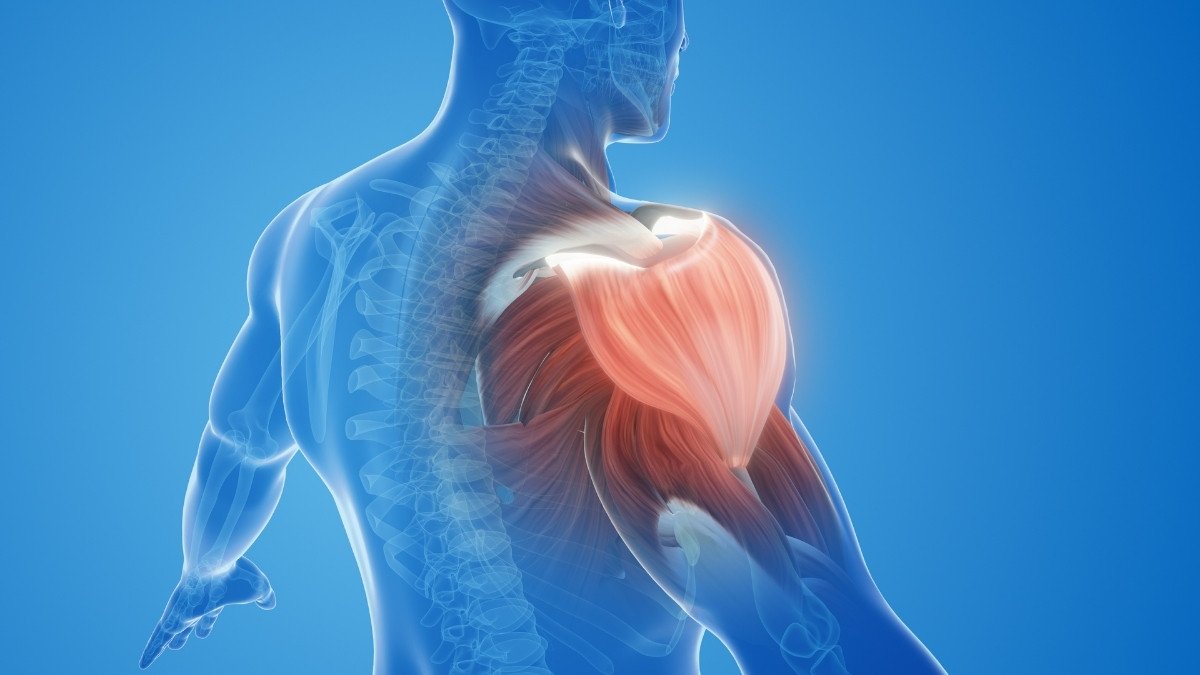
Now the encouraging part. A meta analysis of randomized trials in very elderly adults found that resistance training increased both muscle strength and muscle size.
It is rarely too late to start.
What the Research Really Says (and What It Doesn’t)
Here is the honest version. No single study crowns five exercises as the winners.
What large reviews agree on is that resistance training is the most effective way to rebuild aging muscle, and that training the big muscle groups across the whole body works best.
The five moves below are the everyday versions of that advice: standing up, pulling, pressing, stepping, and hinging.
The Resistance Training Impact Matrix
A scientific breakdown of what clinical studies reveal about resistance training outcomes across strength, everyday function, muscle size, and supplements.
Muscle strength
Improves consistently with resistance training, even in very elderly adults.
Everyday function
Chair stand times improved by about 1.7 to 2.3 seconds when resistance work was paired with balance or aerobic training.
Muscle size
Gains observed in many trials, but less consistent in people who already have sarcopenia.
Extra supplements
Little added benefit on top of exercise alone for overall muscle function.
One finding matters most for beginners. A 2025 network meta analysis of 151 randomized trials found that even a low volume of resistance training meaningfully improved physical function in healthy older adults.
Bigger strength gains seemed to need more volume, so think of your first month as the foundation, not the finish line.
The 5 Best Exercises for Rebuilding Aging Muscle
Each move uses large muscle groups, needs almost no equipment, and can be made easier or harder. Federal activity guidelines call for strength training at least two days a week, so aim for two or three nonconsecutive days.
Start with 1 set of 8 to 10 repetitions per move, and build toward 2 sets as it gets easier. Move smoothly and breathe out on the effort.
1. Sit to Stand From a Chair
Sit near the front edge of a sturdy chair with your feet flat. Stand up briskly, then lower yourself back down over about three seconds.
This is the most useful move for your legs. In a study comparing muscle activity, sit to stand was the only exercise tested that drove all the hip and thigh muscles above 40 percent of their maximum, the level needed to stimulate strength gains. The traditional bed exercises it was compared with did not reach that level across all the muscles.
Speed matters too. Researchers describe muscle power, meaning how quickly you can produce force, as a stronger predictor of functional limitations than other physical abilities.
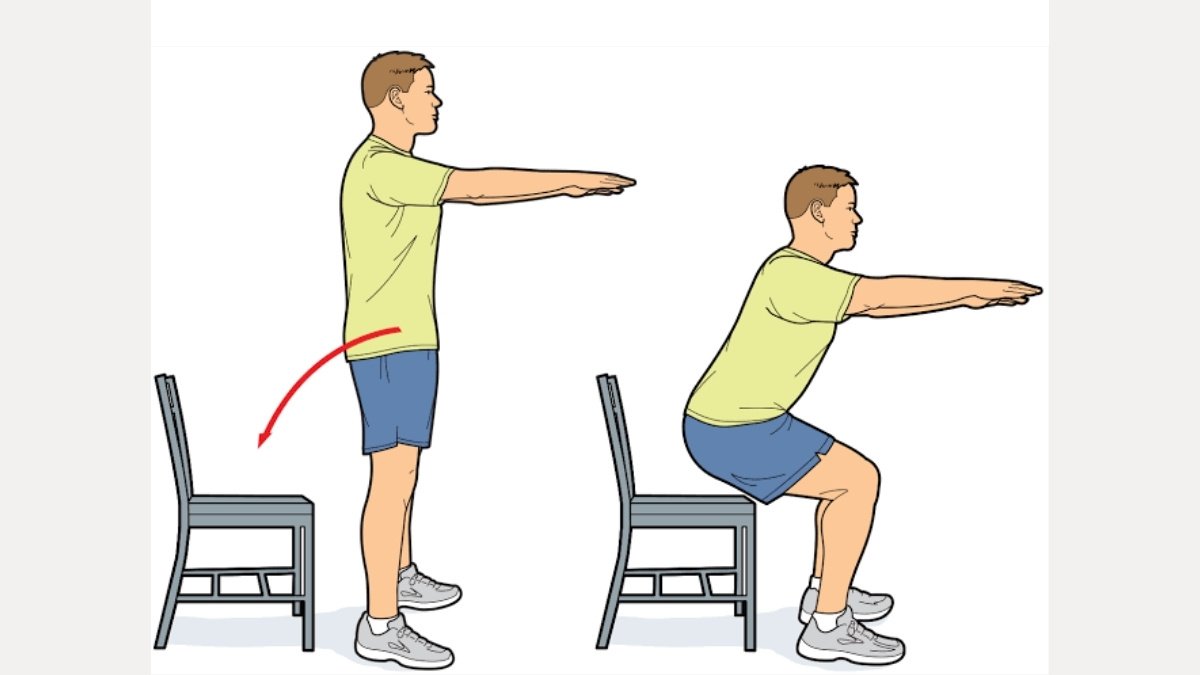
A recent meta analysis of adults 60 and older found that lifting with the intention to move fast, at moderate intensity, worked better for everyday function than slower lifting. That is why the standing part should be brisk and the sitting part slow.
Make it easier with a higher seat or a light push from your hands. Make it harder with a lower chair or a weight held at your chest.
Quick self check: Cross your arms over your chest and time five sit to stands as fast as you safely can. Write the number down and test again in eight weeks.
Trials of older adults with sarcopenia found that well rounded exercise programs improved times on this very test by roughly 1.7 to 2.3 seconds.
2. Band Row
Anchor a resistance band at chest height, using a door anchor made for bands or a sturdy pole. Stand tall holding one end in each hand, pull your elbows back, and squeeze your shoulder blades together.
Return slowly. Your upper back, rear shoulders, and biceps all do the work.
These pulling muscles counter the forward slump that comes from years of sitting, and they help you stand taller and pull open heavy doors.
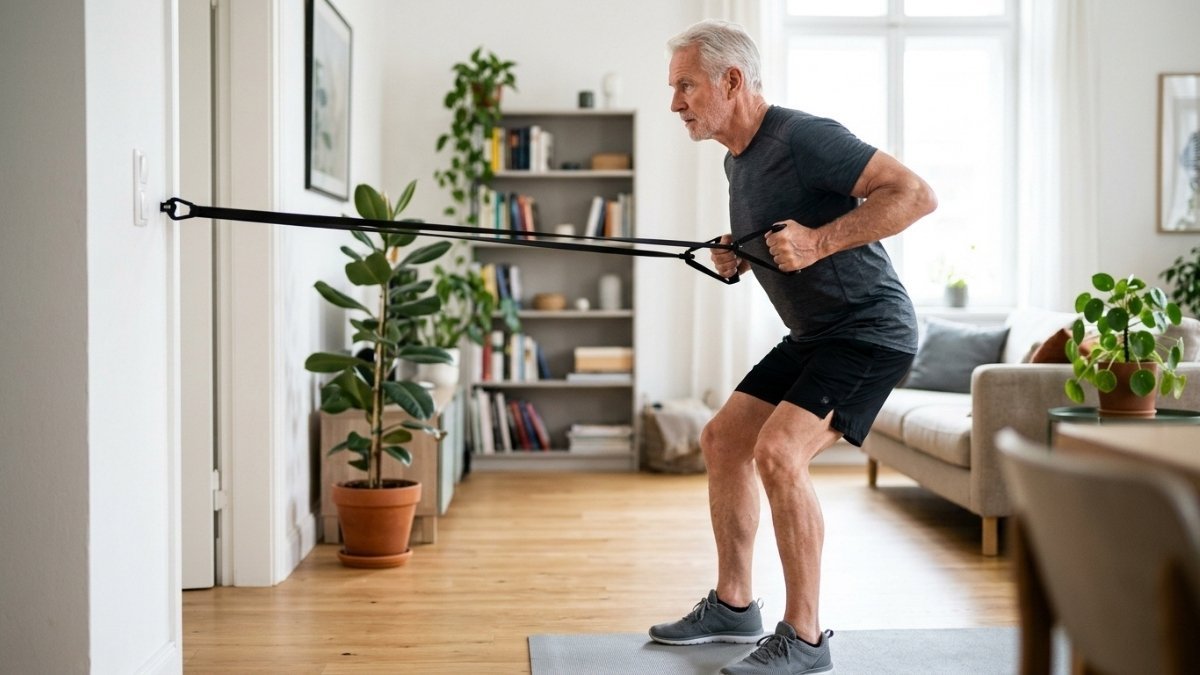
Bands also have research behind them. A meta analysis of trials in older adults with sarcopenia suggested that moderate intensity resistance training using elastic bands may be the best training prescription for this group.
They are cheap, adjustable, and gentle on joints. Harvard advises beginners to start with exercise bands or light hand weights.
Choose a tension where the last two repetitions feel challenging but your form stays smooth.
Everyone’s body responds differently, so adjust the sets, repetitions, and band tension to what feels safe for you, and check with your doctor first if you have shoulder pain or take blood pressure medication.
3. Counter Push Up
Place your hands on a sturdy kitchen counter, a little wider than your shoulders. Keep your body in one straight line, lower your chest toward the counter, then press back up.
Your chest, shoulders, and the backs of your arms do the pressing. Your core works to keep your body straight.
Dr. Beth Frates of Harvard Medical School includes push ups in a beginner strength routine, calling them an easy way to build arm and upper body strength.
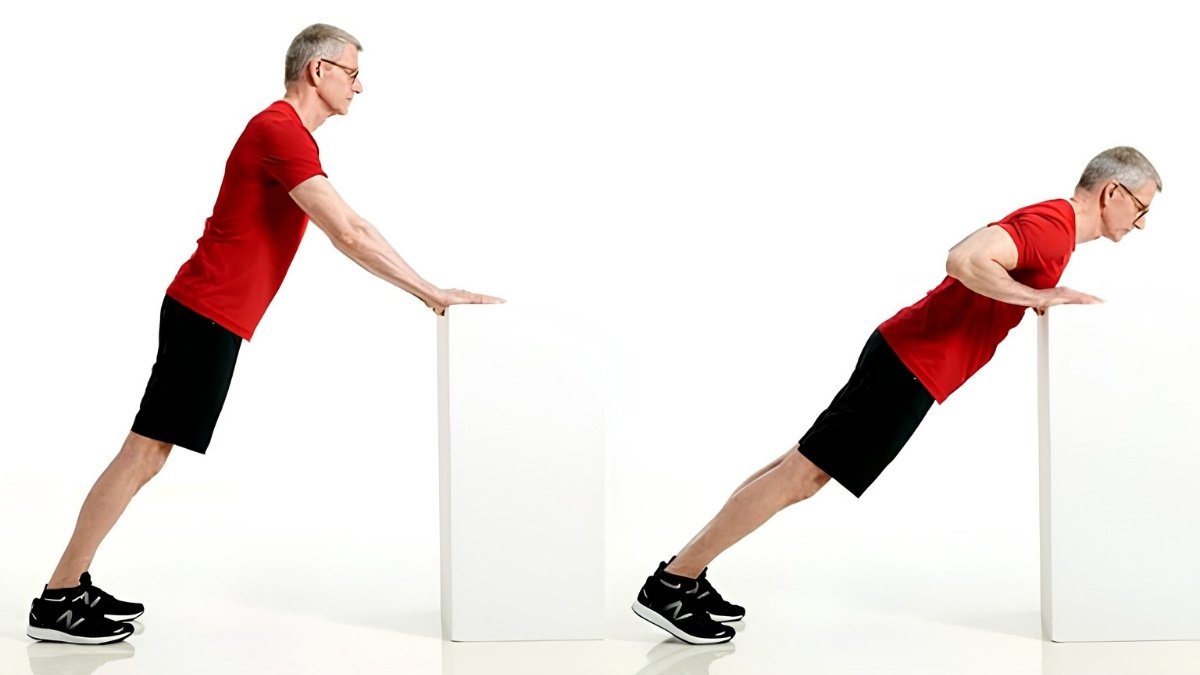
There is a bigger payoff too. The ability to push yourself up from the floor or out of a chair is a skill worth protecting.
Start with 6 to 10 repetitions. As it gets easier, lower your hands to a sturdy bench, then a stair, and eventually the floor.
4. Step Ups
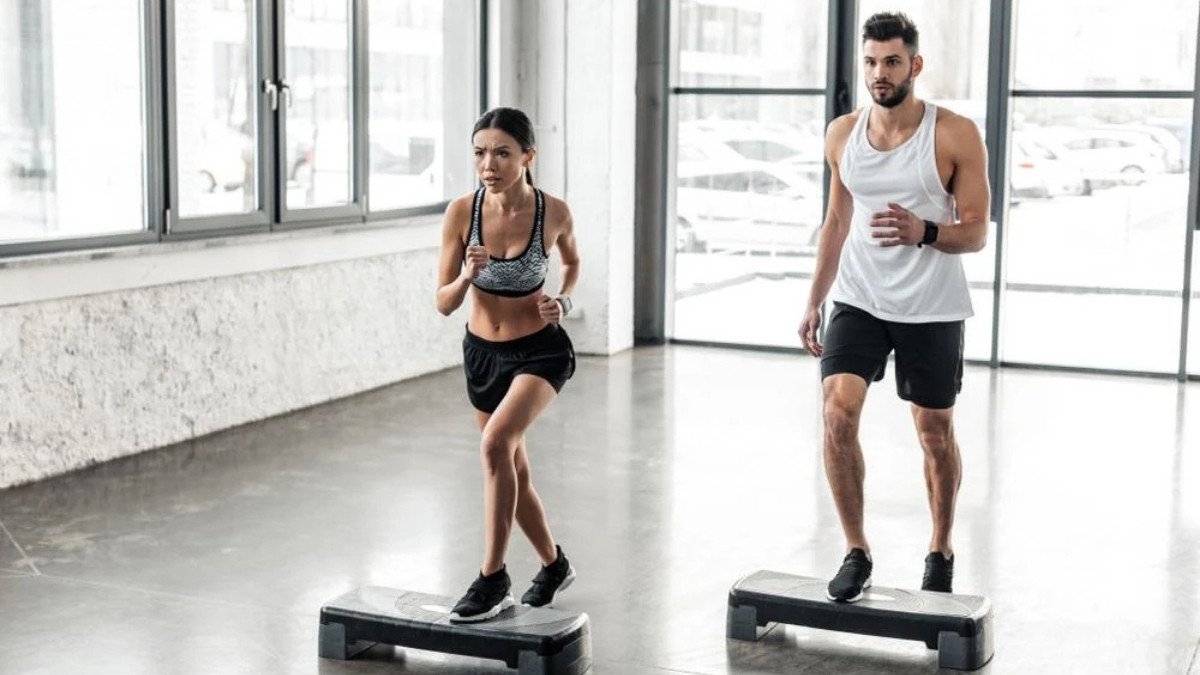
Stand facing the bottom stair or a low, sturdy step, holding the handrail. Step up with one foot, bring the other up, then step down slowly and switch your leading leg on the next set.
Step ups train one leg at a time, which builds the strength and balance you need on stairs, curbs, and uneven ground.
That balance piece is not a bonus. In a 2023 network meta analysis, programs that paired resistance training with balance work improved chair stand speed,
and the combination of resistance, aerobic, and balance training ranked among the best for quality of life.
Falls are the reason this matters. Harvard notes that loss of muscle mass can lead to dangerous falls.
Start with 6 to 8 repetitions per leg. Press through your whole front foot and avoid pushing off the back foot.
5. Hip Hinge With Light Weights
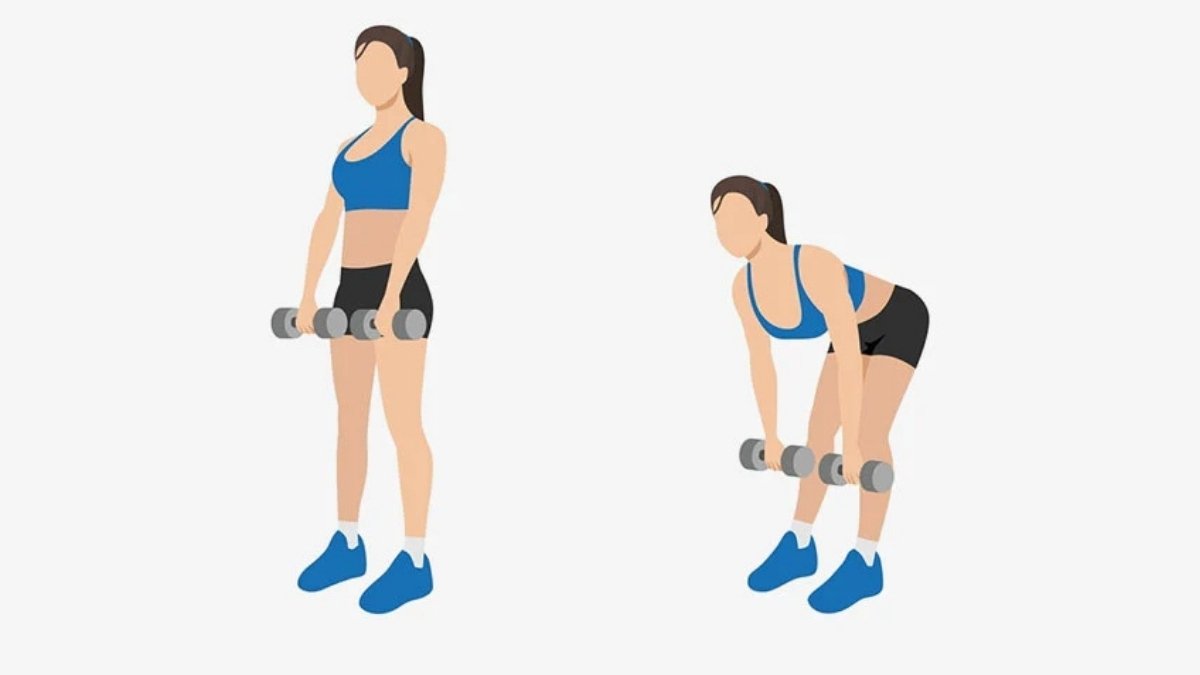
Stand with your feet hip width apart, holding a light dumbbell or a grocery bag in each hand. Push your hips straight back, keep your back flat, and slide the weights down your thighs to about knee level.
Squeeze your glutes to stand tall again. Think of closing a car door with your hips.
This works the back of your body: glutes, hamstrings, and lower back. They are the muscles you use to pick things up off the floor and carry groceries.
An umbrella review of 14 systematic reviews recommends training the large muscle groups in a total body approach, because sarcopenia affects all of your skeletal muscles. The hip hinge gives your glutes, hamstrings, and lower back a dedicated workout of their own.
Start with no weight, then add light weights once the movement feels smooth. Do 8 to 10 repetitions.
If you have osteoporosis or back pain, ask your doctor or a physical therapist to check your form first.
Your Simple Weekly Plan
You do not need a gym membership or an hour a day. Here is what a realistic week looks like.
The Weekly Fitness Schedule
A structured, balanced weekly routine combining strength sessions, aerobic walks, and vital recovery periods to optimize your physical health.
Monday & Thursday
All five exercises, 1 to 2 sets each
Two nonconsecutive strength days meet the federal minimum requirements.
Tuesday & Saturday
Easy walk, 20 to 30 minutes
Aerobic work paired with resistance training ranked exceptionally well in clinical trials.
Wed, Fri & Sunday
Rest or gentle stretching
Muscle tissue rebuilds and grows stronger exclusively during active recovery.
Harvard’s guidance suggests keeping strength sessions to three days a week or fewer, so your muscles have time to recover.
The Protein Piece Most Guides Skip
Exercise sends the signal to rebuild. Protein supplies the material.
The standard recommended intake is about 0.8 grams per kilogram of body weight per day. An international expert group on aging and protein recommends at least 1.0 to 1.2 grams per kilogram daily for adults over 65.
To estimate it in pounds, multiply your body weight by about 0.45 to 0.54. A 170 pound person would aim for roughly 77 to 92 grams a day.

The same group notes that older muscles need more protein at each sitting, about 25 to 30 grams per meal, to switch muscle building on. Spread it out instead of loading it all at dinner.
Exercise still comes first. An umbrella review found that adding supplements to resistance training had limited extra effect on muscle function.
If you have kidney disease, ask your doctor before raising your protein intake.
Try This Today
- Time five sit to stands from your kitchen chair and write the number on a sticky note.
- Do one set of sit to stands while the coffee brews each morning.
- Leave a resistance band next to the TV remote so it is hard to forget.
- Anchor each meal with a protein such as eggs, Greek yogurt, fish, or beans, aiming for 25 to 30 grams.
- Put two strength days on your calendar this week, like Monday and Thursday.
Questions People Ask

How soon will I notice a difference?
Plan on a few months, not a few days. Harvard says that sticking with a beginner strength routine for a few months should improve your strength.
A review of trials in adults 65 and older also found that program length influenced growth in fast twitch muscle fibers, the ones you rely on for quick reactions.
Will my muscles actually get bigger?
Often, but do not judge progress by the mirror alone. Gains in muscle size are real in many trials, yet they are less consistent than gains in strength and everyday function.
Track how easily you stand, climb, and carry instead. Your five sit to stand time is a good place to start.
What if I already have sarcopenia?
Resistance training is still the core treatment, and supervised programs are recommended. Ask your doctor for a referral to a physical therapist who can tailor the moves to you.
Stop and Call Your Doctor If You Notice:
- Chest pain or pressure, or severe shortness of breath during exercise
- Dizziness or fainting when you stand up or exercise
- Sharp or sudden joint pain, which is different from normal muscle burn
- Sudden weakness on one side of the body, a drooping face, or trouble speaking (call emergency services right away)
The Short Version,
Muscle loss is real, but it is not a one way street. Strength training is the most reliable tool researchers have found, and these five moves put it within reach of anyone with a chair, a counter, and a resistance band