

Most people assume aging well comes down to genetics or luck. It doesn’t, not entirely.
Harvard researchers just tracked what more than 105,000 people ate in their 40s and 50s, then followed them for three decades to see who actually made it to 70 in good shape: no major disease, sharp memory, strong body, and a life they could still run on their own terms. Only about 1 in 11 people pulled it off.
The diet mattered more than almost anything else the researchers measured. Turns out there’s a specific eating pattern that stood out from the rest, and it’s not the one most people are already following.
Before making any changes based on this article, talk to your doctor, especially if you are currently taking medication or have a diagnosed condition.
What This Study Actually Looked At
This wasn’t a small, short term trial. Researchers from the Harvard T.H. Chan School of Public Health, working with the University of Copenhagen and the University of Montreal,
pulled data from two of the longest running health studies in the world: the Nurses’ Health Study and the Health Professionals Follow Up Study.

Together, those two studies followed more than 105,000 women and men, all between the ages of 39 and 69 when they enrolled, from 1986 to 2016. Participants filled out detailed food questionnaires again and again over the following 30 years.
The researchers weren’t just checking whether people lived longer. They defined “healthy aging” as reaching age 70 without cancer, heart disease, diabetes, or other major chronic illness,
while also staying mentally sharp, physically capable, and free of significant mental health decline. That’s a much higher bar than simply staying alive, and it’s the part most headlines about longevity leave out.
Out of the full group, only 9,771 people (about 9.3 percent) met that bar. The question the study was really asking: what were those people doing differently in midlife?
The Diet That Came Out On Top
The researchers scored participants against eight different well known healthy eating patterns, including the Mediterranean diet, the DASH diet, and a plant forward index.
One diet consistently predicted healthy aging better than the rest: the Alternative Healthy Eating Index, or AHEI, a scoring system developed at Harvard specifically to measure diet quality against chronic disease risk.

The AHEI isn’t a trendy meal plan with a name and a book deal. It’s a scorecard built around a simple idea: some foods protect long term health, and some quietly work against it.
People who scored highest on the AHEI in midlife had an 86 percent greater chance of aging healthily by 70, and were more than twice as likely to reach that bar by 75, compared to people who scored lowest.
That’s not a minor edge. That’s the difference between spending your 70s traveling and gardening, or spending them managing a chronic illness.
The foods most strongly rewarded by the AHEI score:
- Vegetables and fruit, eaten consistently, not occasionally
- Whole grains, in place of refined ones (think steel cut oats over instant, whole wheat over white)
- Nuts and legumes, as a regular protein and fat source
- Unsaturated fats, particularly from olive oil and other plant oils
- Fish and seafood, in moderate, steady amounts
The foods that worked against a good AHEI score:
- Red and processed meat, including deli meat and bacon
- Sugar sweetened beverages, sodas and sweetened juices especially
- Sodium, mostly from processed and packaged foods, not the salt shaker
- Refined grains, white bread, white rice, and most packaged baked goods
The researchers also looked separately at ultra processed foods, industrially manufactured products loaded with additives, preservatives, and refined ingredients.
Higher intake of these, particularly processed meat and sugary or artificially sweetened drinks, was tied to lower odds of healthy aging, independent of overall diet quality.
Why Unsaturated Fat Kept Showing Up
One detail worth pulling out on its own: across nearly every healthy aging measure the researchers tracked, higher intake of unsaturated fat (the kind found in olive oil, avocados, nuts, and fatty fish) was linked to both physical and cognitive resilience decades later.
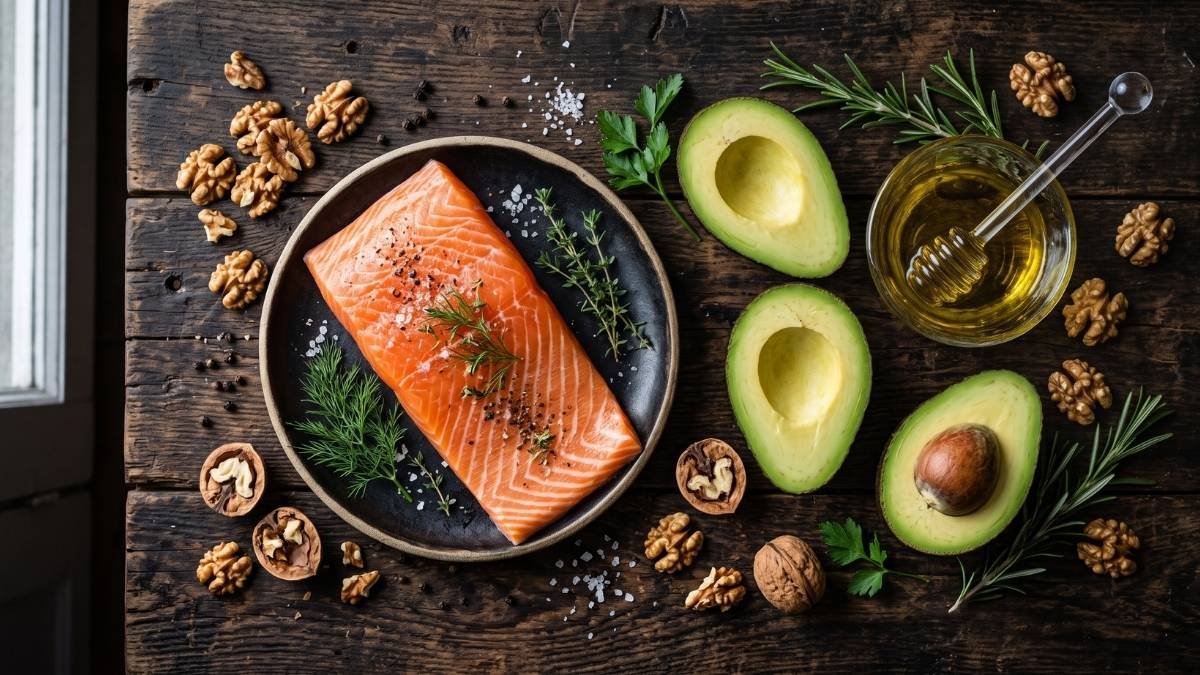
People who ate less of this and leaned more on trans fats, sodium, and red or processed meat were the ones who tended to age less well, even after the researchers adjusted for smoking, exercise, and overall calorie intake.
Everyone’s body responds differently, so check with your doctor before trying this if you have an existing condition or take medication.
This lines up with a growing body of research on fat quality rather than fat quantity. The type of fat on the plate seems to matter more than how much fat is there in total, at least for how the body and brain hold up over time.
How The AHEI Compares To A Typical American Diet
AHEI vs. Western Diet
A direct, side-by-side look at how an anti-inflammatory eating pattern (AHEI) replaces the standard, highly processed choices of a typical Western diet.
Vegetables & Fruit
Eaten abundantly and featured at most meals throughout the day.
Often restricted to only 1 or 2 small servings a day.
Grains
Composed mostly of complex, intact whole grains.
Mostly refined, stripped white bread, and regular pasta.
Protein Sources
Rich in fish, legumes, nuts, and moderate amounts of poultry.
Heavy, daily reliance on red meat and highly processed meats.
Dietary Fats
Relies on healthy sources like olive oil, raw nuts, and avocado.
Dominated by butter, fried foods, and trans fats in packaged snacks.
Sweetened Drinks
Rarely consumed; hydration is mostly water, unsweetened tea, or coffee.
Regular, often daily intake of sugary sodas, energy drinks, or fruit juices.
Sodium Levels
Mostly natural sodium levels, achieved through minimal processed food intake.
Excessively high, largely hidden in packaged convenience and restaurant meals.
No Single “Perfect” Diet, But A Clear Pattern
One thing the researchers were careful to point out: all eight of the dietary patterns they studied, including the Mediterranean diet and DASH, were linked to better odds of healthy aging.
None of them failed. The AHEI simply came out ahead, and a plant centered pattern called the Planetary Health Diet Index wasn’t far behind it.
That’s a useful thing to hear if the AHEI feels rigid or unfamiliar. The researchers’ own conclusion was that there’s no single one size fits all diet for aging well.
What mattered across every version that worked was the same underlying shape: heavy on plants, light on ultra processed food, and thoughtful about where the fat and protein come from.
Try This Today
The Daily Habit That Actually Works
- Swap one refined grain for a whole grain today (white rice to brown, white bread to whole wheat)
- Add a handful of nuts or a serving of legumes to one meal
- Replace one sugar sweetened drink with water or unsweetened tea
- Cook with olive oil instead of butter for one meal
- Add a vegetable to a meal that currently doesn’t have one
None of these require an overhaul. The study measured decades of small, repeated choices, not a single dramatic diet change.
Common Questions About This Study
Does this mean the AHEI guarantees healthy aging?
No. This is an observational study, meaning it shows a strong association, not direct proof of cause and effect. People who eat this way may also differ in other habits the study couldn’t fully separate out, like activity level or access to healthcare.
Is it too late to start this in your 60s or later?
The study measured diet in midlife, roughly the late 30s through late 60s, and tracked outcomes for up to 30 years afterward. That doesn’t mean starting later has no value. Diet quality has been linked to better health outcomes at nearly every stage of life in other research, even if this particular study didn’t test starting later.
Who might need to be careful with this approach?
People managing kidney disease, certain digestive conditions, or those on medications affected by vitamin K intake (like warfarin) should talk to a doctor before significantly increasing vegetable or legume intake, since some of these foods can interact with treatment.
How long before diet changes like this show any benefit?
This study tracked outcomes over decades, so it isn’t designed to answer that question directly. Other research suggests markers like blood pressure and blood sugar can respond within weeks, while the kind of long term outcomes measured here take sustained years of consistent eating.
The Bottom Line,
The headline finding here isn’t complicated: a diet built around vegetables, fruit, whole grains, nuts, legumes, and healthy fats, with minimal red meat, processed food, and sugary drinks, was tied to a dramatically higher chance of reaching 70 in good health, both physically and mentally.

It’s not a new diet trend. It’s what nutrition researchers have been saying for years, now backed by three decades of real world data on over 100,000 people.