
You used to get down on the floor with your kid and pop right back up without thinking about it. Now it takes a plan, and maybe a groan.
That’s not just an ego thing. It’s usually the first visible sign of the muscle, joint, and balance decline that quietly speeds up after 40, and left alone, it turns into real limitations within a decade, the kind that show up as thrown backs, missed steps, and a doctor flagging your heart.
There’s a small, specific set of movements that exercise researchers actually use to separate men who are aging well from men who are headed for trouble, and almost nobody trains any of them on purpose.
Before making any changes based on this article, talk to your doctor, especially if you are currently taking medication, have a heart condition, or have not exercised regularly in a while.
This four week challenge uses five exercises, each one built around a specific marker that researchers use to measure how well a man’s body is actually holding up, not how he looks in a t-shirt. Do them consistently for a month and you’re training the exact things doctors check for when they want to know if your body is aging faster or slower than your birth certificate says.
What “Beating Most Men Your Age” Actually Measures

The “90 percent of men your age” idea in this headline isn’t a marketing line pulled out of thin air. It’s a rough way of describing what happens when you compare yourself against the real performance categories researchers use to sort men by fitness and health risk.
Take grip strength. A Norwegian study that followed nearly 7,000 adults for 17 years found that every drop in grip strength was tied to a meaningfully higher risk of dying from any cause, with similar patterns for heart disease and respiratory illness. A separate Japanese cohort that tracked close to 5,000 adults for three decades found that men aged 35 to 54 with the strongest grip had roughly half the mortality risk of men with average grip strength.
Push up capacity tells a similar story. Harvard researchers studied over 1,100 active firefighters with an average age of 39.6 and found that the men who could do more than 40 push ups had a 96 percent lower risk of a cardiovascular event over the next 10 years compared with men who couldn’t do more than 10. Push up count turned out to be a stronger predictor than a treadmill test.
Cardiorespiratory fitness, meaning how efficiently your heart and lungs deliver oxygen during effort, might be the single biggest factor of all. A Cleveland Clinic study published in JAMA Network Open followed more than 122,000 patients with an average age of 53 and found that low fitness was a stronger predictor of death than smoking, diabetes, or high blood pressure, with no ceiling on how much benefit higher fitness provided.
And balance matters more than most men assume. Researchers in Brazil followed 1,702 adults aged 51 to 75 and found that men and women who couldn’t balance on one leg for 10 seconds had an 84 percent higher risk of dying within the next decade than those who could. By age 70, roughly half of people fail that simple test.
Those four markers, grip, push up capacity, cardiorespiratory fitness, and balance, are what this challenge trains. Train them consistently and you’re genuinely moving yourself out of the bottom of the pack and toward the categories researchers associate with better long term odds.
The Longevity Protocol
The core five exercises proven to target the critical physical markers of aging and long-term survival.
Goblet Squat
Rebuilds the foundational leg strength lost to age related muscle decline.
Push Up
Push up capacity is directly tied to a 96 percent lower heart disease risk in the Harvard firefighter study.
Farmer’s Carry
Grip strength is one of the most consistent predictors of long term survival in large global studies.
Single Leg RDL
Trains the exact balance skill linked to mortality risk in the Brazilian one leg stance study.
Brisk Interval Walk
Builds cardiorespiratory fitness, which remains the strongest single predictor of long term survival found so far.
1. The Goblet Squat
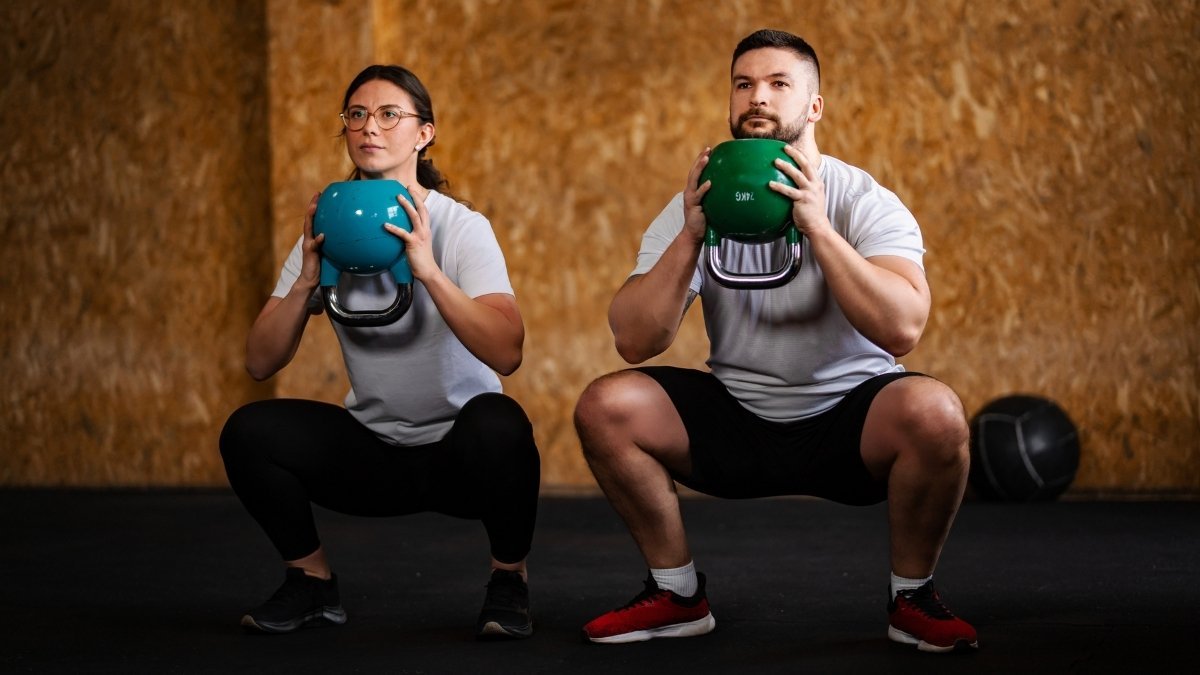
Hold a dumbbell or kettlebell close to your chest with both hands, then squat down until your thighs are close to parallel with the floor, and stand back up. It’s a simple movement, but it’s doing serious work under the surface.
Muscle mass typically starts declining around age 30, and most research puts that decline at roughly 3 to 8 percent per decade, with the pace often picking up after 60.
The squat pattern is also the same movement clinicians quietly assess when they watch how easily a patient stands up from a chair or the floor, since struggling with that motion is an early flag for functional decline.
Start with a weight you can control for the full set without your form breaking down. Aim for 3 sets of 10 to 12 reps, 3 times a week, and increase the weight gradually as it gets easier.
2. The Push Up
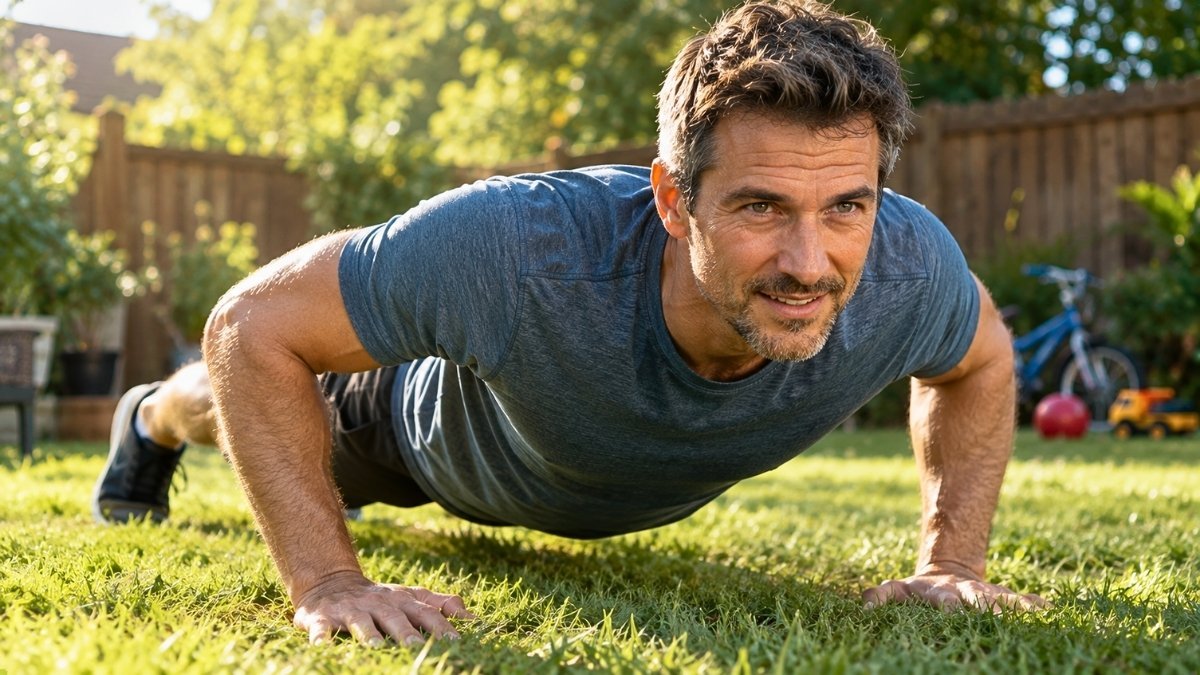
This one is old news to most men, but almost nobody trains it with a real target in mind. Hands under shoulders, body in a straight line from head to heel, lower down and press back up.
Beyond the obvious chest and shoulder strength, push up capacity appears to reflect something deeper about cardiovascular health. In the Harvard firefighter study, the men who could do more than 40 push ups had a dramatically lower risk of heart problems over the following decade than the men who topped out under 10, and that gap held up even after accounting for other factors like age and body weight.
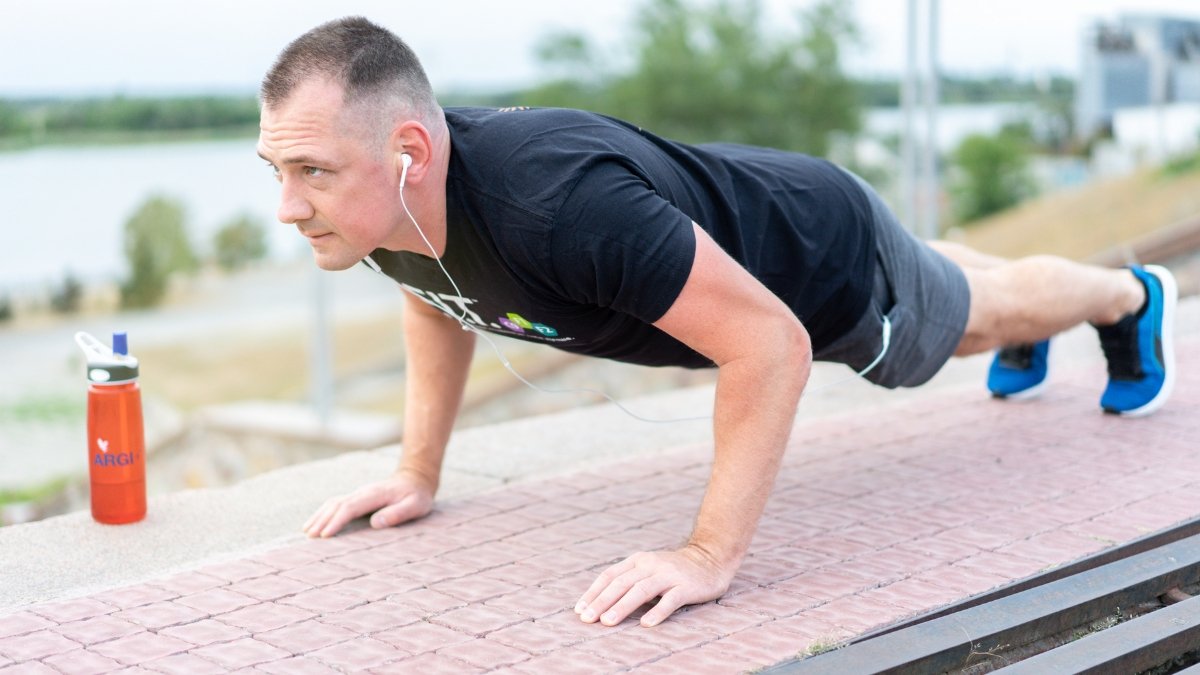
Test your current max in one set to know your starting point, then work toward 3 sets, using an incline version (hands on a couch, bench, or counter) if a full push up isn’t available to you yet. Three sessions a week is enough to build real capacity.
Everyone’s body responds differently, and these numbers are general guidelines, not a prescription. Check with your doctor before starting a new squat, carry, or interval routine if you have an existing joint, heart, or back condition.
3. The Farmer’s Carry
Grab a heavy dumbbell, kettlebell, or even a loaded duffel bag in each hand, stand tall, and walk. That’s the whole exercise, and it’s deceptively brutal.
This is the most direct way to train grip strength, which multiple large, long running studies have connected to survival odds independent of age or overall muscle mass. Researchers believe grip strength works partly as a stand in for total body muscle quality and partly as a marker of general physical resilience, which is why doctors sometimes use a simple hand dynamometer test the same way they’d check blood pressure.
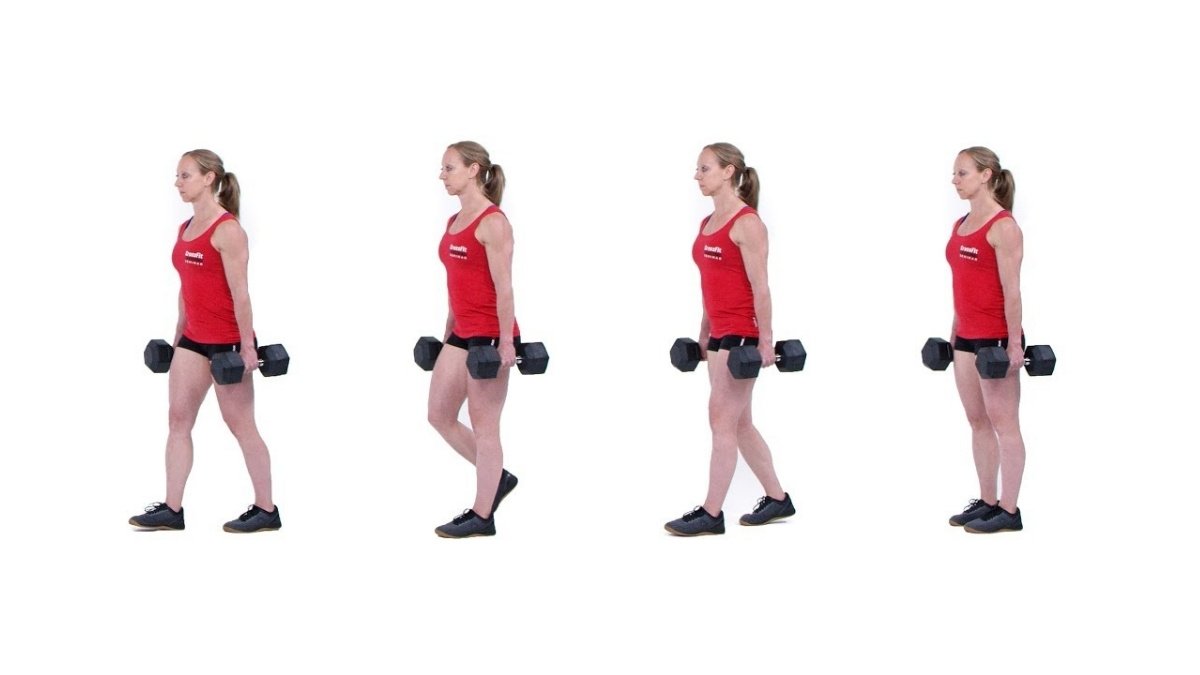
Load up with a total weight around your body weight, split evenly between both hands, and walk for 40 to 60 seconds per round. Three to four rounds, 2 to 3 times a week, is a solid target.
Try This Today
- Carry two full grocery bags for 30 seconds right now and notice if your forearms or grip give out first
- Stand barefoot on one leg for 10 seconds tonight, near a wall or counter in case you need to catch yourself
- Do one set of push ups, using an incline against your kitchen counter if the floor feels like too much today
- Pick two days this week and put “20 minutes, no excuses” directly on your calendar
4. The Single Leg Romanian Deadlift
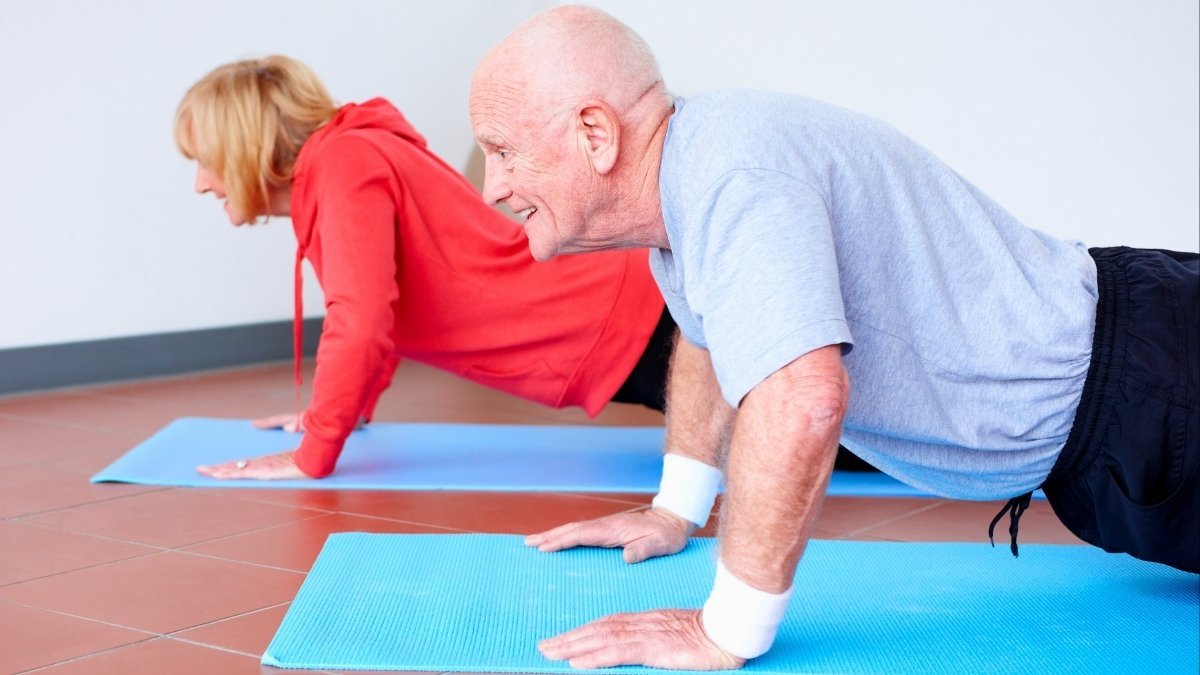
Stand on one leg with a slight bend in the knee, then hinge forward at the hips while your free leg extends behind you, lowering your torso until it’s roughly parallel to the floor, then return to standing. Hold onto a wall or chair lightly at first if your balance needs the extra support.
This move trains the hamstrings and glutes that support your hips and lower back, but the balance component is the real prize.

Given that men who can’t hold a 10 second one leg stance face a meaningfully higher mortality risk over the following decade, and that ability quietly fades starting in midlife, this is one of the few common exercises that trains that skill directly instead of by accident.
Work up to 2 to 3 sets of 6 to 8 reps per leg, 2 times a week. Balance improves faster than most men expect once you’re actually practicing it on purpose.
5. The Brisk Interval Walk
Alternate between a pace that genuinely challenges your breathing and an easy recovery pace, either outdoors or on a treadmill with the incline raised. This is the cardio piece, and it’s arguably doing the heaviest lifting of all five exercises.
Cardiorespiratory fitness, your body’s ability to deliver and use oxygen under effort, was the strongest predictor of long term survival in the large Cleveland Clinic study referenced earlier, outperforming traditional risk factors like smoking status and blood pressure. Unlike some health markers that plateau, researchers found no upper limit where additional fitness stopped helping.

Alternate 2 minutes at a brisk, slightly uncomfortable pace with 2 minutes of easy walking, for a total of 20 to 30 minutes, 3 times a week. If you’re newer to structured cardio, start with a smaller pace gap between the intervals and widen it as your fitness improves.
The 4-Week Progression
A structured, step-by-step roadmap to safely build strength, balance, and endurance.
Build the pattern
Focus on mastering form with lighter squat and carry loads. Utilize incline or knee push ups if needed, and practice balance work near a wall for safety.
Add load and pace
Increase intensity with heavier goblet squats and carry weights. Progress to full push ups where possible, unsupported balance holds, and faster walk intervals.
Retest & Compare
Time to measure your growth. Repeat your push up count, one leg stance time, and carry distance from day one and compare the numbers.
When To Stop And Call A Doctor
- Chest pain, tightness, or pressure during or after any of these movements
- Shortness of breath that feels far beyond normal for the effort you’re putting in
- Dizziness, lightheadedness, or a pounding or irregular heartbeat
- Sharp or worsening joint pain that doesn’t ease up within a day or two of rest
A Few Quick Answers

How long until I actually notice a difference? Most men feel more capable in everyday movements, like getting up off the floor or carrying groceries, within 2 to 3 weeks. Measurable strength and endurance gains usually show up between weeks 4 and 6.
What if I can’t do a single real push up yet? Start with an incline version against a counter or bench. The Harvard study’s 40 push up mark is a long term reference point, not a day one requirement.
Do these need to happen on the same day? No. Spread them across the week however fits your schedule, or combine them into 2 to 3 full body sessions if that’s easier to stick to.
Who should be extra cautious with this challenge? Men with diagnosed heart conditions, uncontrolled high blood pressure, recent joint surgery, or anyone who hasn’t exercised in a long time should get clearance from a doctor before starting, particularly before the carry and interval walking portions.
The Bottom Line,
None of these five movements are exotic, and that’s the point. Grip strength, push up capacity, balance, and cardiorespiratory fitness are simply the markers that keep showing up, over and over, in research on which men age well and which ones don’t.

Four weeks of consistent, honest effort on these five exercises won’t turn back the clock. But it will move the needle on the exact numbers that matter, and by the end of week four, you’ll have a genuinely useful comparison against where you started.