
Your hip and your spine are carrying weight you can’t see building or breaking down every single day. One bad fall changes everything, and the numbers back that up. Research on hip fractures in older adults consistently puts the death rate in the year after a hip fracture at roughly 20 to 24 percent, a survival outlook that researchers have compared to some cancers.
Here’s the part most people never hear: bone is living tissue, and specific weight bearing exercises can start rebuilding density in exactly the two spots where a break does the most damage.
Before making any changes based on this article, talk to your doctor, especially if you are currently taking medication or have a diagnosed bone condition.
How Weight Bearing Exercise Rebuilds Bone Where It Counts
Bone follows a simple rule scientists call Wolff’s Law. Put mechanical stress on it, and it adapts by getting denser and stronger. Skip that stress, and bone quietly thins out year after year.
Weight bearing exercise means any movement where your bones and muscles support your own body weight against gravity. Walking counts. Swimming does not, because water takes the load off your joints instead of putting it on.

That distinction matters enormously for anyone trying to protect the hip and spine specifically, since those two sites account for the fractures that most often lead to hospitalization, loss of independence, or worse.
The five moves below were chosen because each one places direct, targeted load on the hip, the spine, or both, and each has real research behind it rather than vague wellness advice.
Bone Density Protocol
Targeted exercises that generate the mechanical force required to build bone.
Sit to Stand Squats
3x a weekAxial loading safely compresses the spine and hip together, mimicking patterns used in clinical bone-building trials.
Step Ups
3x a weekSingle leg loading effectively doubles the downward force directed through one hip compared to two-legged movements.
Heel Drops
Most DaysGenerates a sharp ground reaction force estimated at close to three times your body weight straight through the hip.
Standing Back Extensions
4-5x a weekStrengthens posture muscles to resist the forward collapse that is directly linked to spinal compression fractures.
Brisk Interval Walking
4-5x a weekVarying your pace and incline forces bone adaptation, preventing it from plateauing to a single routine load.
The 5 Moves That Target the Hip and Spine
These are ranked by how easy they are to start, not by importance. All five work best together as a weekly routine rather than picked one at a time.
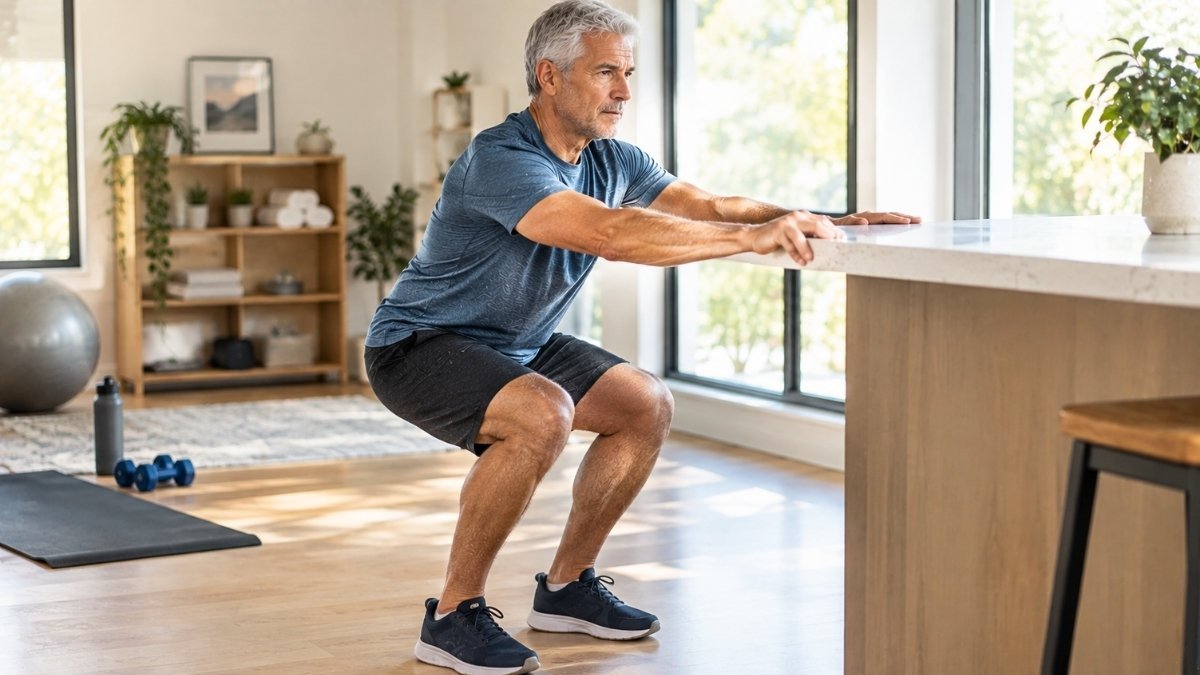
1. Sit to Stand Squats
This is the basic squat, but starting and ending in a seated position makes it safer to learn and easier to track progress. It works because the movement sends compressive load straight through the hips and lower spine at once, which is exactly the pattern researchers used in a well known 2018 trial published in the Journal of Bone and Mineral Research,
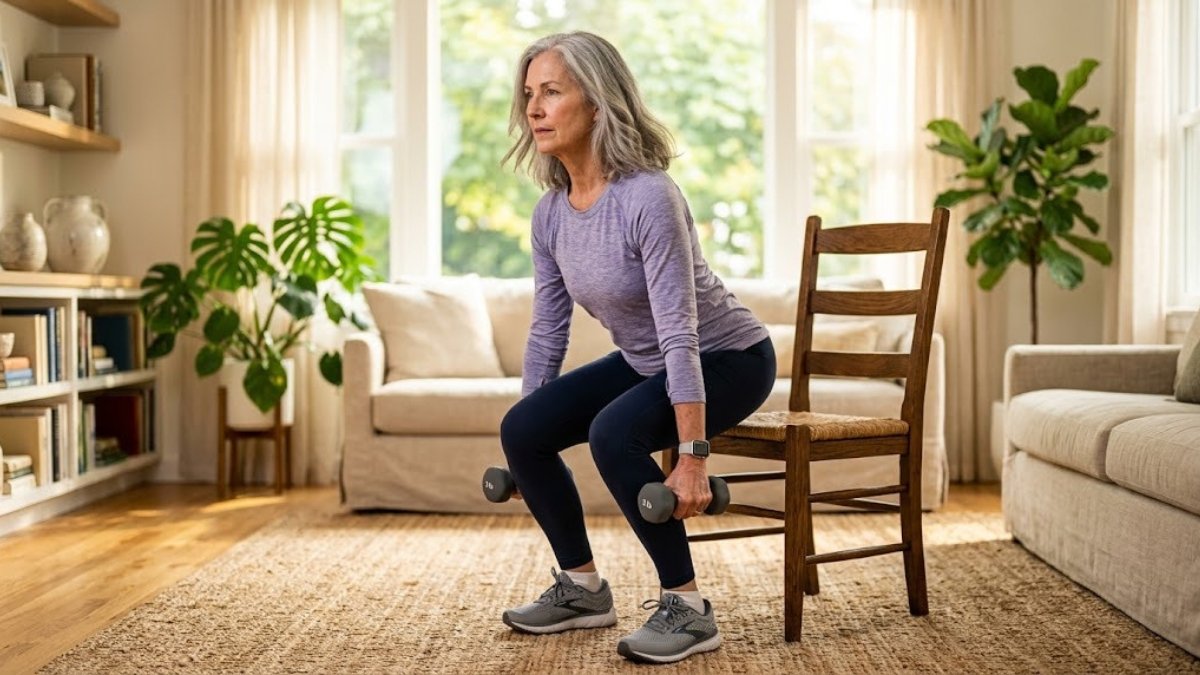
where postmenopausal women doing heavy squats and deadlifts gained close to 3 percent bone density at the lumbar spine over eight months.
To do it, sit on a sturdy chair, plant your feet hip width apart, then stand up slowly using your legs rather than your arms. Lower back down with control, taking about two seconds on the way down. Aim for 12 to 15 repetitions, three sets, three times a week, and add light weights in your hands once bodyweight feels easy.
2. Step Ups
Stair climbing and step ups are some of the most efficient hip loading movements there are, because standing on one leg at a time roughly doubles the force that leg has to absorb compared to a two legged squat. That single leg demand is precisely what stimulates bone at the femoral neck, the part of the hip that breaks most often in a fall.
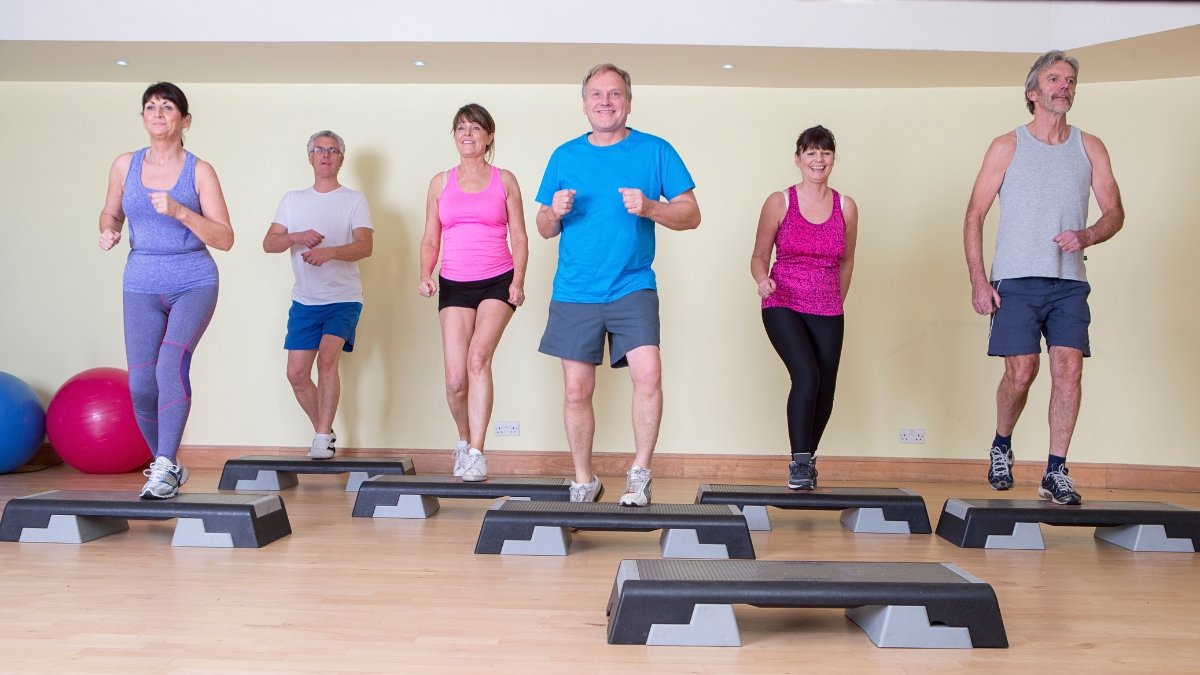
Find a sturdy step or the bottom stair in your home. Step up fully with one foot, bring the other foot to meet it, then step back down with control. Hold a rail for the first few weeks until your balance feels solid.
Everyone’s body responds differently, so check with your doctor before trying this if you have an existing condition or take medication.
Start with 10 repetitions per leg, two sets, three times a week, and increase the step height gradually as strength improves.
3. Heel Drops
This is one of the simplest bone loading exercises to fit into an ordinary day, and research measuring force through the hip during a heel drop found it generates roughly three times body weight in ground reaction force, transmitted straight up through the leg and into the hip. That is a meaningful mechanical signal for bone to respond to, without the joint stress of jumping.
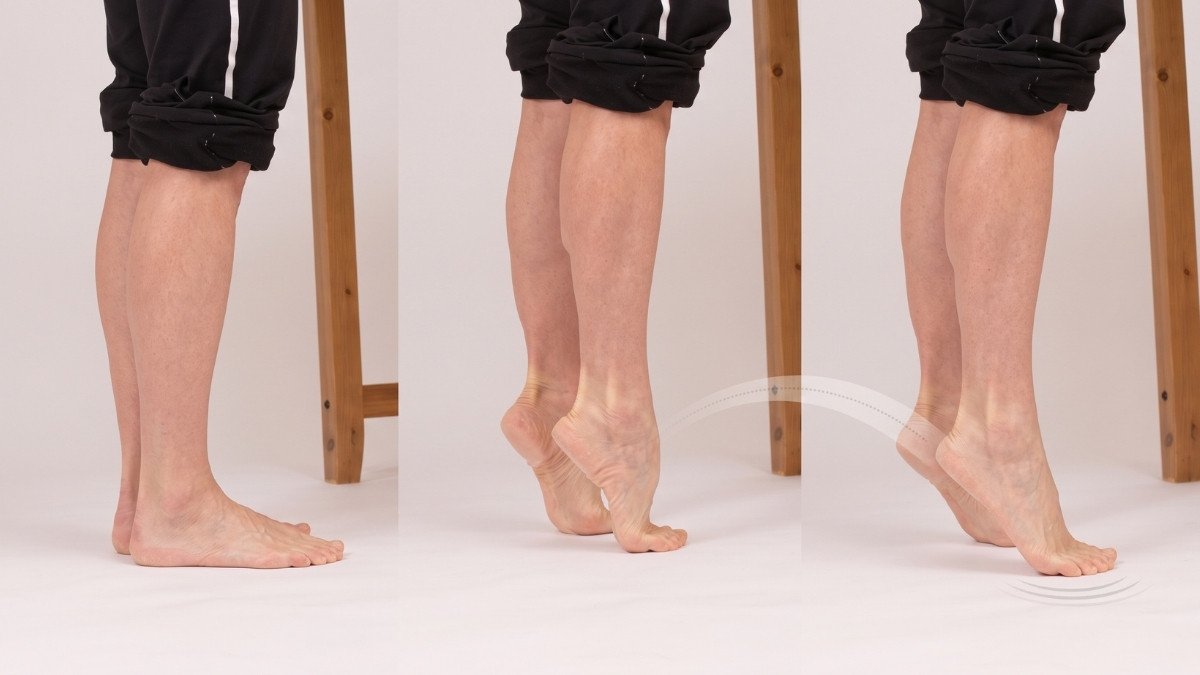
Stand near a counter or wall for balance, rise up onto your toes as high as you comfortably can, then let yourself drop and land firmly on your heels. The landing should feel like a small, definite jolt, not a slow lowering. Start with 10 to 20 drops a day and build from there, and skip this one or check with your doctor first if you have a known spinal compression fracture.
Try This Today: The Daily Habit That Actually Works
- Do 10 heel drops while the coffee brews or the kettle boils
- Take the stairs one flight a day instead of the elevator, holding the rail
- Add a 5 minute brisk walk after one meal, rain or shine
- Stand up from a chair without using your hands, once a day, as practice
- Keep a simple tally on your phone so consistency, not intensity, becomes the goal
4. Standing Back Extensions
The spine needs its own targeted work, separate from the hip, and the muscles that matter most are the ones running along your back that keep you upright. Mayo Clinic’s own bone health program specifically lists spinal extension exercises alongside weight bearing and strength training as tools that help maintain and improve bone density, and strong back extensors also protect against the forward, rounded posture that puts extra pressure on the front of the vertebrae.

This is intentionally the opposite motion of a crunch or a toe touch. Stand tall with your hands on your hips, gently arch your upper back and shoulders backward a few inches, hold for two to three seconds, then return to neutral. You can also do this lying face down, lifting your chest slightly off the floor. Aim for 10 repetitions, four to five times a week.
Movements That Help vs Movements That Hurt
Not every exercise that feels like it should build bone actually does, and a few common ones can raise fracture risk instead. This distinction matters more with age, since the front of the vertebrae is the part most likely to collapse under the wrong kind of pressure.
Osteo-Safety: Movement Dos & Don’ts
Which exercises safely build bone, and which put fragile spines and hips at risk.
5. Brisk Interval Walking
Walking at a steady, easy pace barely registers as a bone building signal once your body adapts to it. What works better is variation. Cleveland Clinic exercise specialists describe this as “surprising” your bones, by speeding up your pace, adding a hill, or changing direction partway through a walk, rather than doing the same flat, even stroll every day.
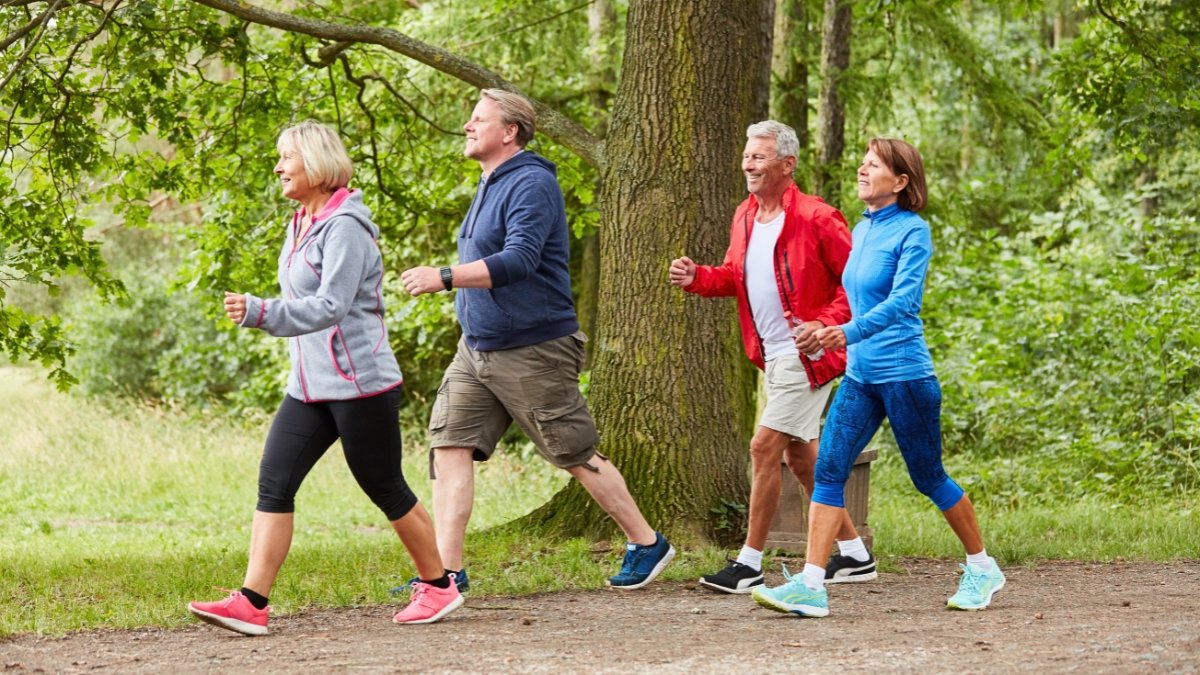
Aim for 30 minutes most days of the week, and inside that walk, add three to five short bursts of a faster pace or an incline. If your doctor has cleared you for it, a light weighted vest at 5 to 10 percent of your body weight can increase the loading force on the hip and lower spine by an estimated 15 to 20 percent, though this addition should be approached gradually and only once brisk walking alone feels comfortable.
How Fast Can You Expect This To Work
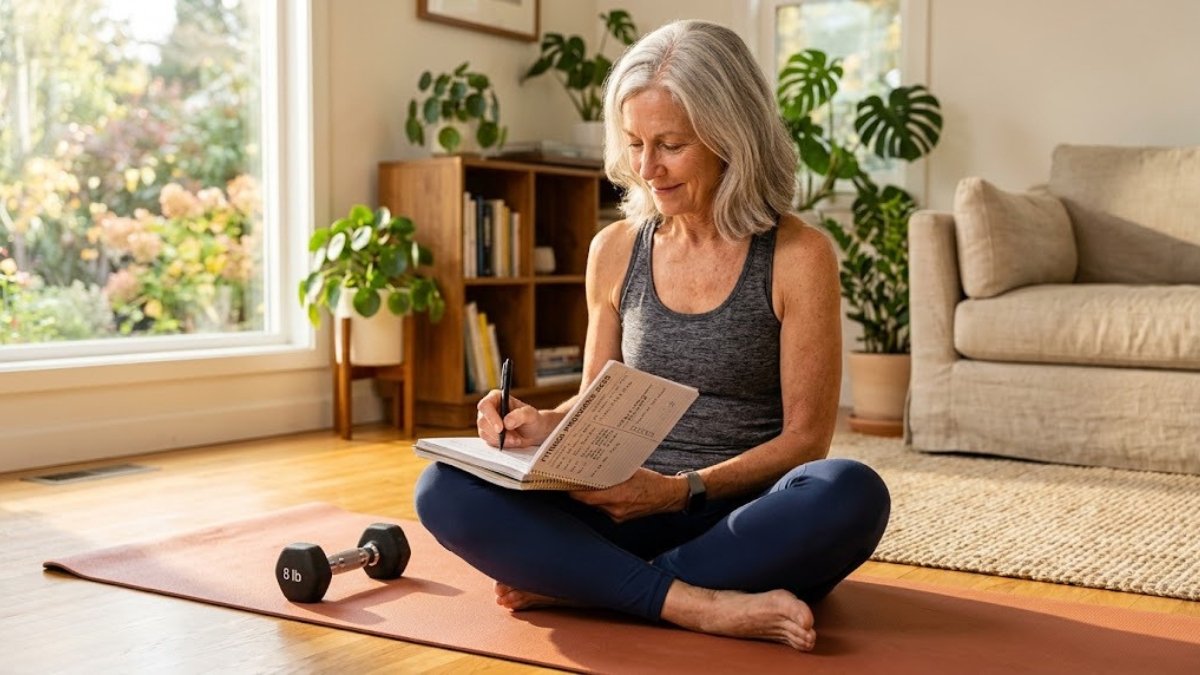
Bone remodels slowly, and results from consistent weight bearing exercise typically show up over months, not weeks. A realistic progression looks something like this.
| Timeframe | What To Focus On |
|---|---|
| Weeks 1 to 2 | Learn correct form on all five moves, low reps, focus on balance and control |
| Weeks 3 to 6 | Gradually increase reps and sets, add light hand weights to squats |
| Weeks 7 to 12 | Introduce a weighted vest for walking if cleared by your doctor, increase step up height |
| Month 4 onward | Reassess with your doctor, consider a bone density scan to track real change |
When To Stop and Call a Doctor
Most people can do these five exercises safely, but a few warning signs mean it’s time to get checked before continuing.
- Sudden back pain that appears without an obvious cause, such as a fall or lifting something heavy
- Noticeable height loss over time, which can signal a spinal compression fracture already in progress
- Hip or groin pain that develops or worsens after a minor stumble
- Inability to put weight on a leg after any kind of fall, however small it seemed
The Bottom Line,
None of these five moves require a gym membership, fancy equipment, or hours of your day. What they require is consistency, done together as a routine rather than picked once and forgotten, because bone responds to repeated mechanical signals over months, not a single good workout. Start with the version that feels manageable this week, and build from there.