
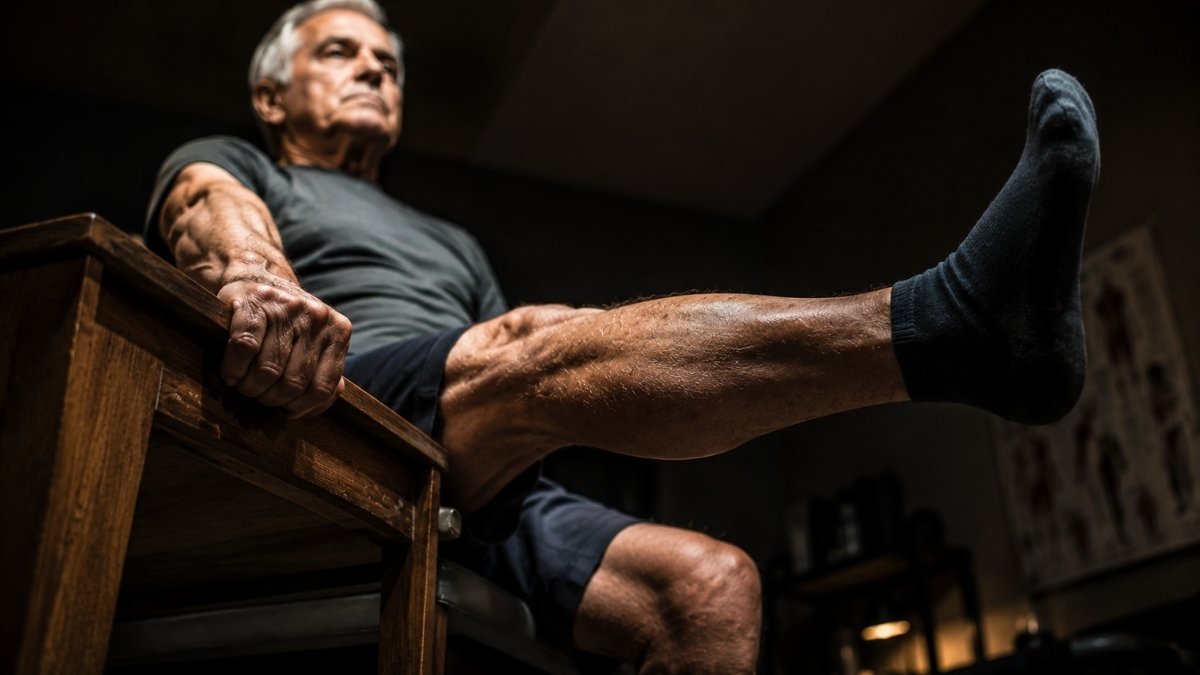
Walk into a physical therapy clinic at 62 expecting a treadmill and a stack of weights. There’s a good chance you’ll be handed a folding chair instead.
That’s not because your case is too mild for real exercise. Every year more than one in four adults over 65 fall, and those falls send about three million older adults to the emergency room.
These three moves exist because they target the exact muscles and reflexes standing between an ordinary stumble and a trip to the hospital. Most people have never been told why, and once you see the mechanism behind them, you will probably want to start tonight.
Before making any changes based on this article, talk to your doctor or physical therapist first, especially if you are currently taking medication, recovering from surgery, or have a diagnosed heart, joint, or balance condition.
Physical therapists working with patients over 60 do not choose a starting point at random. They pull from decades of research on why people lose independence as they age, and the answer almost always traces back to the same three things:
Leg strength, balance, and the coordination between your feet and your nervous system. Strengthen those, and everything else on a treatment plan gets easier. Skip them, and no amount of fancy equipment will matter much.
The Quick Check That Tells You Where You Stand
Before getting into the exercises themselves, it helps to know your starting point. Physical therapists commonly use a simple test called the thirty second chair stand to measure lower body strength in adults over 60.

It takes thirty seconds and a sturdy chair with no wheels. Sit in the middle of the chair with your arms crossed over your chest. On a count of go, stand all the way up, then sit back down, and repeat as many times as you can in thirty seconds without using your hands or arms for help.
Here is how your score compares to typical ranges from research on community dwelling older adults, first published by researchers Rikli and Jones and still used as a clinical benchmark today.
| Age Range | Men (stands in 30 seconds) | Women (stands in 30 seconds) |
|---|---|---|
| 60 to 64 | 14 to 19 | 12 to 17 |
| 65 to 69 | 12 to 18 | 11 to 16 |
| 70 to 74 | 12 to 17 | 10 to 15 |
| 75 to 79 | 11 to 17 | 10 to 15 |
| 80 to 84 | 10 to 15 | 9 to 14 |
Scoring below these ranges, or needing to push off with your hands, is generally associated with lower functional strength and a higher risk of falling. It is not a diagnosis, just a starting marker so you can track progress over the coming weeks.
Everyone’s body responds differently, so check with your doctor or physical therapist before trying this test, or any of the exercises below, if you have joint pain, dizziness, chest pain, or a diagnosed heart condition.
Why These Three Movements Come Before Anything Else
Here is the part most patients are never told. Muscle mass naturally declines with age, typically by 3 to 8 percent per decade after 30, and that rate speeds up noticeably after 60.

The muscle fibers lost fastest are called fast twitch fibers, the ones responsible for a quick catch when you trip or lose your footing. That is a major reason falls become more common in this decade of life, not simply because people are “getting older” in some vague sense, but because a specific, measurable type of strength is fading faster than the rest.
The three exercises below were chosen because they directly retrain the strength and reflexes lost first. A physical therapist gives these before anything else because building on top of weak fundamentals just wastes time, and in some cases increases injury risk.
1. The Sit to Stand (Chair Rise)
This is the single most common first exercise given to patients over 60, and it is also the self test described above. As a training exercise rather than a test, the goal shifts from speed to control.
The mechanism matters here. Standing up from a seated position uses the quadriceps, glutes, and hip muscles in a coordinated pattern that mimics dozens of daily movements: getting off the toilet, out of a car, or up from a low couch. Weakness in this pattern is one of the strongest predictors of future falls and loss of independence identified in aging research.
To practice it, sit toward the front of a sturdy chair with feet flat on the floor, hip width apart. Lean slightly forward, push through your heels, and stand up slowly without using your hands, then lower back down with control over about three seconds. Start with two sets of eight to ten repetitions, most days of the week, and only add speed once the slow version feels easy.
If standing without your hands is too difficult right now, that is normal and expected. Use your hands or arms to assist at first, and reduce the assistance gradually as strength builds. A therapist would rather see ten controlled repetitions with a little hand support than three shaky ones without it.
2. The Single Leg Stance
Balance is not one skill, it is several systems working together: your vision, the inner ear, and sensors in your feet and joints called proprioceptors that tell your brain where your body is in space without you having to look. All three tend to weaken with age, and this exercise trains the system directly.
Stand behind a sturdy chair or countertop and hold on lightly with both hands. Lift one foot a few inches off the floor and hold the position, aiming to work up to 30 seconds per side over time. As it gets easier, reduce your hand support to one finger, then to no hands at all, always staying within reach of something solid.
Do this once or twice daily, alternating legs. Research using this same movement as part of standard fall risk assessments has found it reliably reflects a person’s real world stability, which is part of why so many therapists include it as a foundational exercise rather than an advanced one.
3. The Heel to Toe Walk (Tandem Walk)
This exercise, sometimes called the tandem walk, trains something the first two do not directly address: dynamic balance, meaning your ability to stay stable while actually moving rather than standing still.
Find a hallway or open stretch of floor near a wall you can reach if needed. Place one foot directly in front of the other so the heel touches the toes of the back foot, then step forward into the same position with the opposite foot, walking in a straight line for about ten steps.
Go slowly, and keep your eyes forward rather than looking down at your feet, since training your brain to balance without visual cues is part of the point. Ten steps forward, turn around, and repeat, aiming for a total of two or three passes most days.
A quick note on numbers: the repetitions and durations above are general starting points used in many rehabilitation settings, not a fixed prescription. A physical therapist will adjust frequency, sets, and support based on your specific joints, balance level, and any conditions you already manage.
Quick Reference: All Three Exercises At A Glance
Mobility & Balance Basics
Essential daily exercises to retrain stability and strength.
Sit to Stand
2 sets of 8-10, most daysRebuilds the strength pattern behind nearly every daily transfer movement.
Single Leg Stance
1-2x daily, both sidesRetrains the feet, inner ear, and vision to work together for stability.
Heel to Toe Walk
2-3 passes of 10 stepsTrains balance while moving, which static exercises cannot replicate.
Try This Today

The Daily Habit That Actually Works
- Do the sit to stand test once this week, just to know your starting number.
- Pick one exercise to do first thing in the morning, right after brushing your teeth, so it becomes automatic.
- Keep a sturdy chair or counter within reach any time you practice balance work.
- Track reps in a phone note or on a calendar. Small visible progress keeps people consistent far longer than good intentions alone.
- Wear supportive, non slip shoes for practice. Loose slippers or socks on a smooth floor increase fall risk during the exercise itself.
When To Stop And Call Your Doctor

Most people can do these three exercises safely at home, but a few warning signs mean it is time to check in with a doctor or physical therapist before continuing.
- Sharp or sudden pain in a joint, as opposed to mild muscle fatigue.
- Dizziness, lightheadedness, or your vision going dark when standing up.
- Chest pain, unusual shortness of breath, or a racing heartbeat during the movement.
- A fall or near fall that happens while practicing, even a minor one.
These symptoms do not always mean something serious is happening, but they are the kind of signal a professional should evaluate rather than push through.
Common Mistakes That Cancel Out The Benefit
Mobility Training: Dos & Don’ts
Key practices to rebuild strength safely and avoid injury.
Standing up slowly with control.
Using momentum or rocking to launch out of the chair.
Practicing balance near a stable support surface.
Practicing near furniture that can slide, like a rolling chair.
Building up hold times gradually.
Jumping straight to no hands, no support.
Doing a little most days.
Doing a lot once, then skipping a week to recover.
Wearing supportive, non-slip shoes.
Wearing socks or worn-out slippers on hardwood or tile.
A Few Things Patients Usually Ask Next
How long until these actually make a difference? Many people notice their chair stand count improving within two to four weeks of consistent practice, since strength and coordination gains tend to show up before major visible muscle changes.
Balance improvements from the single leg stance and tandem walk often follow a similar timeline, though everyone progresses at a different pace depending on their starting point.
Who should be more cautious with these exercises? Anyone recovering from a recent hip or knee surgery, anyone with a diagnosed inner ear or vestibular disorder, and anyone who has had a fall in the last few months should check with their doctor or a physical therapist before starting, since the exact starting intensity may need to be adjusted.
Do these replace a full exercise program? No, and a physical therapist would not present them that way either. They are the foundation a broader program gets built on, which is exactly why they come first rather than being the whole plan.
Is it normal to feel wobbly at first? Yes, especially with the single leg stance and tandem walk. That wobble is the nervous system being challenged, which is the entire point of a balance exercise. It should ease as you practice, and having a wall or counter close by makes it safe to work through.
The Bottom Line
None of these three exercises look impressive. There are no weights involved, no fancy studio, nothing that would make for a dramatic before and after photo.

That is exactly why they get overlooked, and exactly why physical therapists keep coming back to them as the starting point for patients over 60.
Leg strength, static balance, and dynamic balance are the three pillars underneath almost every other physical goal at this stage of life, from staying active to simply staying independent at home.
Start with the chair stand test this week. Pick one of the three moves to practice today. The rest tends to follow once that first habit sticks.
This article is for informational purposes only and is not a substitute for professional medical advice, diagnosis, or treatment. Always consult your doctor or a qualified healthcare provider before making changes to your diet, exercise routine, or medications, especially if you have an existing health condition.