
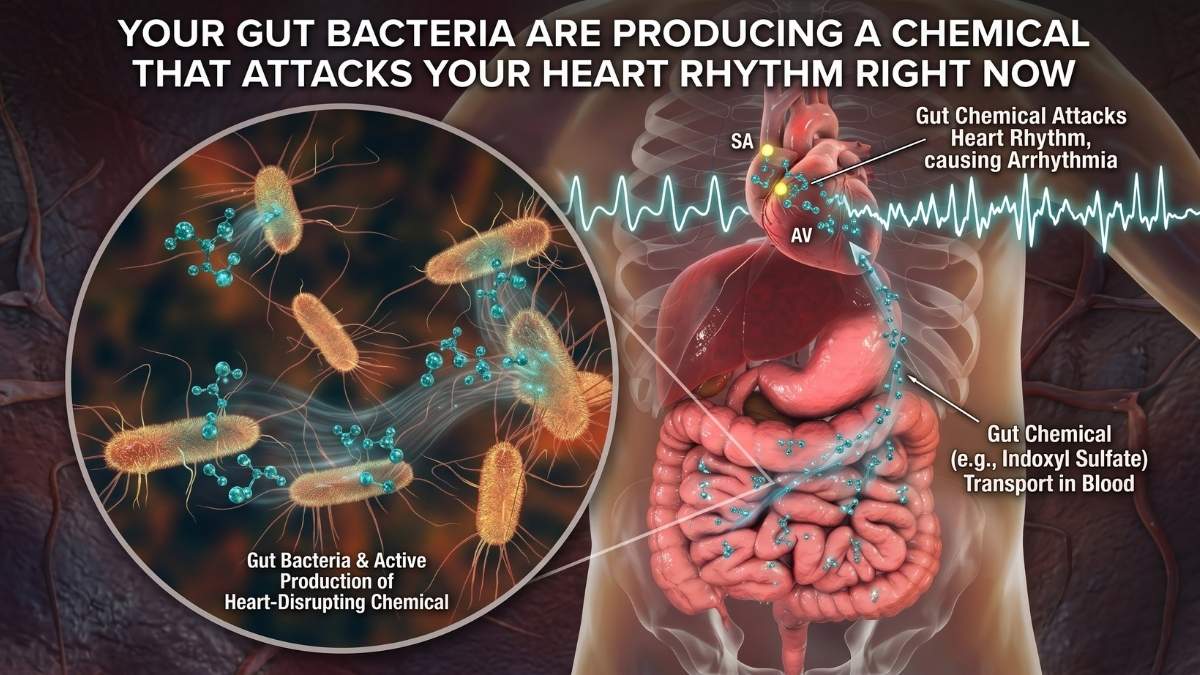
Somewhere in your gut right now, bacteria are breaking down the eggs, red meat, or dairy from your last meal, and turning part of it into a chemical that heads straight for your heart.
That chemical does not just pass through quietly. It changes the electrical signals that keep your heartbeat steady, and researchers just linked it directly to atrial fibrillation, the most common heart rhythm disorder there is.
Millions of people carry this risk without ever knowing the cause traces back to their gut, not their heart. There is a name for this chemical, a real study behind the claim, and a handful of specific changes that can lower it. None of it requires a new prescription.
Before making any changes based on this article, talk to your doctor, especially if you are currently taking medication or have a diagnosed heart condition.
The Chemical Has A Name: TMAO
The chemical is called trimethylamine N oxide, or TMAO for short. It starts as a nutrient in your food, specifically choline, phosphatidylcholine (also called lecithin), and L carnitine. These are abundant in red meat, egg yolks, full fat dairy, and certain shellfish.
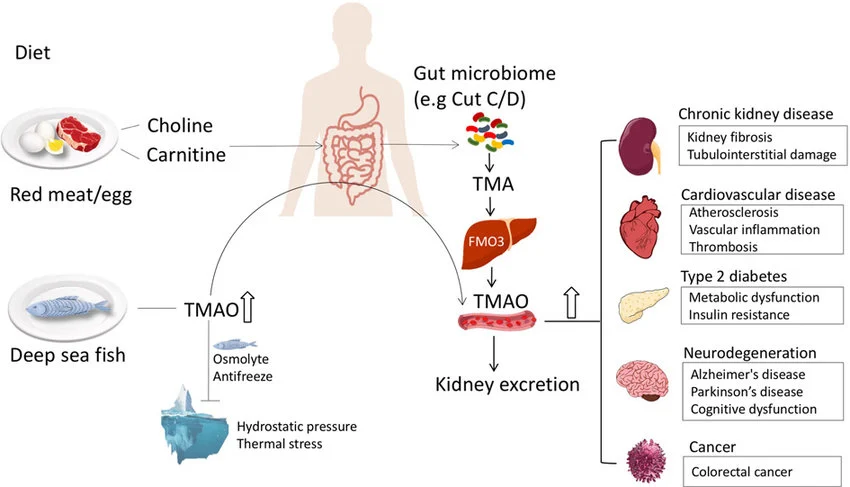
Gut bacteria digest those nutrients and produce a gas called trimethylamine, or TMA. That TMA travels to the liver, where an enzyme called FMO3 converts it into TMAO. From there, TMAO enters the bloodstream and circulates throughout the body, including straight to the heart.
Scientists have studied TMAO for more than a decade because of its ties to heart attack, stroke, and kidney disease. What is newer, and what is driving fresh headlines, is a direct connection to heart rhythm problems specifically.
How Gut Bacteria Turn Food Into A Heart Rhythm Problem
Here is the part most articles gloss over: the actual mechanism. TMAO does not just sit in the blood and cause generic damage. Research shows it acts directly on small nerve clusters near the heart’s upper chambers, called ganglionated plexi.
When TMAO reaches these nerve clusters, it appears to activate an inflammatory signaling pathway (researchers call it NF kB) that increases nerve activity in that region. Over time, this contributes to electrical remodeling and fibrosis, essentially scar like changes in the tissue that controls your heartbeat’s timing.
That remodeling shortens the window in which heart cells reset between beats, called the atrial effective refractory period. A shorter reset window means the heart’s upper chambers are more prone to firing out of sync, which is exactly what happens during an atrial fibrillation episode.
The Study That Made Cardiologists Pay Attention
This is not a fringe theory. A Cleveland Clinic led study, published in the Journal of Clinical Investigation, analyzed blood samples from more than 5,000 people undergoing heart procedures.
Led by electrophysiologist Dr. Robert Koeth, the research team found that elevated TMAO levels were independently associated with a higher likelihood of having atrial fibrillation, even after adjusting for other risk factors.

The team also ran laboratory experiments in cells and in mice bred to develop the condition. Mice fed a TMAO rich diet developed atrial fibrillation sooner than those that were not, which supports the idea that TMAO is not just a bystander showing up alongside heart problems. It appears to actively contribute to them.
Atrial fibrillation affects at least 2.7 million Americans, making it the most common rhythm disorder that starts in the heart’s upper chambers. A separate study, the AF RISK study, measured TMAO in patients with different stages of the condition and found that those with more advanced, persistent atrial fibrillation had significantly higher TMAO levels than those with earlier, occasional episodes.
That pattern suggests TMAO may track with how far the condition has progressed, not just whether someone has it at all.
| Food Or Habit | Effect On TMAO | Better Swap |
|---|---|---|
| Red meat (beef, pork, lamb) | High in L carnitine, a major TMAO precursor | Swap two meals a week for beans, lentils, or tofu |
| Egg yolks | Rich in choline, which converts to TMA in the gut | Use mostly whites, or limit yolks to a few per week |
| Full fat dairy | Contains choline, often paired with saturated fat | Choose low fat dairy or a plant based alternative |
| Carnitine supplements or energy drinks | Delivers a concentrated TMAO precursor directly | Skip these unless a doctor has specifically recommended them |
| Shellfish and saltwater fish | Naturally high in TMAO itself, absorbed with little gut involvement | Not a major concern for most people, still worth eating in moderation |
Everyone’s gut microbiome and heart health profile are different, so check with your doctor before making major dietary shifts, especially if you take blood thinners or any heart medication.
What Actually Happens, Step By Step
It helps to see the full chain of events laid out plainly, from the first bite of food to the effect on your heartbeat.
| Stage | What Happens | Why It Matters |
|---|---|---|
| Step 1: Digestion | Gut bacteria break down choline, lecithin, and L carnitine from food | This is where the process starts, and where diet has the most influence |
| Step 2: Gut to liver | Bacteria produce trimethylamine (TMA), which travels to the liver | The liver enzyme FMO3 converts TMA into TMAO |
| Step 3: Bloodstream | TMAO circulates through the body and reaches nerve clusters near the heart | This is the mechanism researchers point to for electrical instability |
| Step 4: Heart | The heart’s upper chambers become more prone to erratic electrical signals | Over time this raises the risk of atrial fibrillation |
Try This Today
The Daily Habit That Actually Works
Five small, specific moves — the kind you can actually start before lunch.
Add One High-Fiber Meal Daily
Beans, oats, and vegetables all help — fiber appears to blunt the TMAO spike that follows a meat-heavy meal.
Swap Red Meat, Twice This Week
Try fish, poultry, or a plant-based protein in place of red meat at least twice this week.
Skip Carnitine and Lecithin Supplements
Unless your doctor has specifically recommended them for another condition, these are worth skipping for now.
Protect Your Sleep
Even a single night without sleep has been shown to raise TMAO levels — rest is part of this, not separate from it.
Ask About a TMAO Blood Test
Testing is now widely available in clinical practice — it’s a reasonable thing to raise at your next visit.
Who Should Pay Closer Attention
This matters most for people who already have risk factors that overlap with atrial fibrillation: high blood pressure, a family history of the condition, kidney disease, or a diet heavy in red meat and processed foods.
Older adults are also more likely to see TMAO climb, since levels tend to rise with age regardless of diet.
That does not mean everyone else can ignore it. It simply means the people in these groups have the most to gain from making changes early, before any symptoms show up.
Questions Worth Asking
Does this mean red meat causes atrial fibrillation? Not directly, and not on its own. TMAO is one contributing factor among several, including blood pressure, sleep apnea, alcohol use, and genetics. The research shows a meaningful association, not a single cause.
How long does it take to lower TMAO? Diet changes can shift TMAO levels within weeks in some studies, though the amount of change varies by person and depends heavily on what your gut bacteria already look like. People who eat mostly plant based diets tend to produce far less TMAO from the same meal than habitual meat eaters do.

Can probiotics help? Some studies suggest probiotics and a high fiber diet can help, since both feed the type of gut bacteria associated with lower TMAO production. The evidence is promising but still developing, and results are not consistent across every study.
Should I get a TMAO test? That is a conversation for your doctor, particularly if you already have a heart condition, kidney disease, or a strong family history of atrial fibrillation. Testing alone will not change your risk. What you do with the result is what matters.
| Helps | Hurts |
|---|---|
| High fiber foods (beans, oats, vegetables) | Frequent red meat and processed meat |
| Plant based proteins several times a week | Carnitine or lecithin supplements without medical need |
| Consistent, adequate sleep | Chronic sleep deprivation |
| Probiotic rich foods like yogurt or kefir | Ignoring new heart palpitations or an irregular pulse |
When To Call Your Doctor

Red flags that mean it is time to stop reading and get checked:
- A racing, fluttering, or irregular heartbeat that comes on suddenly
- Shortness of breath, especially at rest or with mild activity
- Chest pain or pressure of any kind
- Dizziness, lightheadedness, or fainting
- Sudden, unexplained fatigue that does not match your activity level
None of these symptoms should wait for your next scheduled appointment. If any of them show up out of nowhere, treat it as urgent.
The Bottom Line

The link between gut bacteria and heart rhythm is one of the more concrete examples of how the body’s systems talk to each other in ways that used to get overlooked. TMAO is not a mystery toxin.
It has a clear source, a clear mechanism, and a clear body of research behind it, including a large scale Cleveland Clinic study that connected the dots between gut chemistry and atrial fibrillation risk.
The reassuring part is that diet, sleep, and fiber intake all appear to influence how much TMAO your gut produces in the first place. Small, consistent changes matter more here than any single dramatic overhaul.
This article is for informational purposes only and is not a substitute for professional medical advice, diagnosis, or treatment. Always consult your doctor or a qualified healthcare provider before making changes to your diet, exercise routine, or medications, especially if you have an existing health condition.