

You’ve probably felt it before you could name it — strength you had at 45 that quietly disappeared by 55, without a single injury to explain it.
Here’s what’s happening. After 50, men lose muscle mass at a rate of one to two percent per year, and strength declines even faster, dropping 1.5 to 3 percent per year through the sixth decade. That acceleration is not random. A large portion of it is hormonal, and the hormone most responsible is one that most men have never had tested.
Your cortisol is rising whether you feel it or not. A study analyzing 177 cortisol profiles from men and women aged 18 to 83 found that mean cortisol levels increased by 20 to 50 percent between age 20 and age 80.
The nocturnal nadir, the point at which cortisol should drop lowest overnight, showed the most pronounced increase. In plain terms: aging men are carrying more cortisol through the night, which means less recovery, less anabolic signal, and more muscle breakdown by morning.

The standard annual physical almost never includes a cortisol test. Total testosterone might appear on the panel. Cortisol will not. So a man comes in, gets told his numbers are “fine,” and goes home with no explanation for why his body keeps changing.
High cortisol in men over 50 does not show up on a standard panel. It doesn’t announce itself with dramatic symptoms. It shows up quietly, in the body composition changes that accumulate over years and get blamed on aging.
Aging is part of the story. But cortisol is the accelerant.
How Cortisol Eats Muscle Before Protein Ever Arrives
You might be eating 150 grams of protein a day and still losing muscle. That’s not a math problem. It’s a hormonal one.
What’s breaking your muscle down is not age. It’s a specific biological sequence cortisol sets in motion. Specifically, cortisol is linked to activation of the ubiquitin-proteasome system [the cell’s internal protein-disposal machine, which tags muscle proteins to be broken down and recycled].

When cortisol is chronically elevated, this system runs harder than it should, targeting fast-twitch muscle fibrs — the ones responsible for strength and explosive power — for degradation.
At the same time, cortisol has been shown to suppress IGF-1 [insulin-like growth factor 1, the growth signal that muscle cells need to use incoming protein for repair and growth] and is associated with inhibition of mTOR
[the mammalian target of rapamycin, the molecular switch inside muscle cells that initiates protein synthesis when activated]. These are the two pathways protein relies on to actually become muscle tissue. When cortisol disrupts both, dietary protein has nowhere to go.
Eating more protein when cortisol is high is like pouring water into a bucket that already has a hole — the bucket has to be fixed before the water matters.

This is why the standard advice fails so many men over 50. Protein is not the problem. The signal that allows protein to work is the problem. And the signal is being jammed by cortisol.
You can eat perfectly and still stay in a catabolic state if this sequence is running. Cortisol and muscle protein breakdown are not separate events — they are part of the same hormonal chain.
What protein can’t fix, cortisol is actively doing. The next section names all three ways it’s working against you at once.
The Three Ways Cortisol Works Against You at the Same Time
Most men address one problem at a time. Cortisol doesn’t work that way. It attacks from three directions simultaneously, and each one makes the others worse.
Pathway 1: Direct muscle breakdown
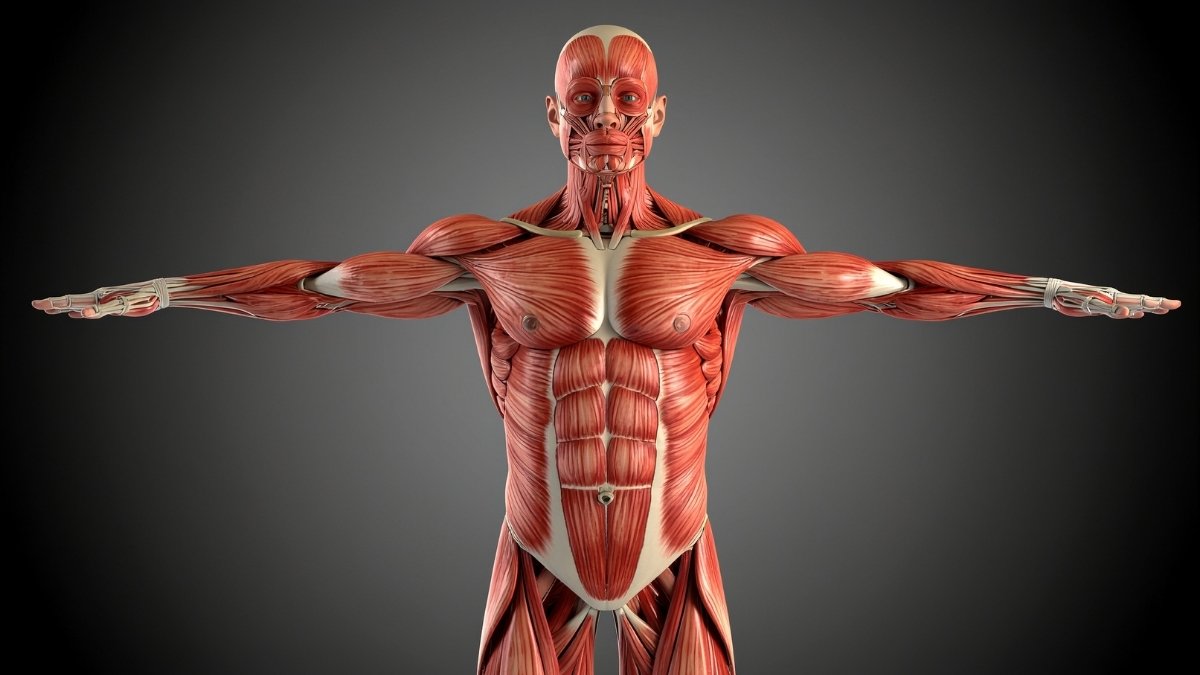
As covered above, cortisol is linked to activation of the ubiquitin-proteasome system in muscle tissue, degrading the proteins that make up muscle fibers, particularly fast-twitch fibers, which are the first to shrink. It also disrupts the growth signals that protein depends on to enter the repair cycle.
Pathway 2: Testosterone suppression
Chronically elevated cortisol suppresses the HPG axis [the hypothalamic-pituitary-gonadal axis, the hormonal command chain that runs from the brain to the testes to produce testosterone]. Cortisol is associated with reduced GnRH [gonadotropin-releasing hormone.

The signal from the hypothalamus that starts testosterone production] pulsatility and lower LH [luteinizing hormone, the pituitary signal that tells the testes to produce testosterone] output. Less free testosterone means less anabolic signal. The muscle-building environment weakens further.
Pathway 3: Sleep disruption
Poor sleep raises cortisol. Higher cortisol worsens sleep. In a study of healthy young adults, one night of total sleep deprivation reduced muscle protein synthesis by 18 percent, raised cortisol by 21 percent, and lowered testosterone by 24 percent.

Animal research suggests this cycle compounds over time, though direct confirmation in men over 50 has not yet been established in human trials.
Each pathway feeds the next. Cortisol breaks down muscle directly, lowers testosterone so the anabolic environment weakens, and disrupts sleep so cortisol rises again the next morning. This is the cycle that drives muscle loss for men over 50 with chronically high cortisol.
Talk to your doctor before changing your exercise or supplement routine if you’re managing a chronic condition, on prescription medication, or recovering from injury.
What a High-Cortisol Day Actually Looks Like in Your Body
You probably know something’s off. The question is whether you’ve connected it to cortisol.
High cortisol symptoms in men don’t always arrive as dramatic events. They arrive as a slow drift — a pattern that builds over months and gets rationalized as normal aging.
Here’s what that pattern looks like:
- Morning fatigue that doesn’t lift. You wake up tired. Coffee helps briefly. You feel slightly better by midday but never fully alert.
- Belly fat that doesn’t respond to diet. Chronically elevated cortisol is associated with abdominal fat storage, particularly as visceral fat [fat stored around the internal organs, which raises metabolic and cardiovascular risk].¹¹ This happens even when caloric intake is controlled.
- Poor recovery after training. Soreness lasts longer than it used to. Workouts feel harder for the same output.
- Irritability and brain fog. Chronically elevated cortisol interferes with prefrontal function, the part of the brain responsible for focus, patience, and clear thinking.
- Grip strength declining before muscle size visibly changes. Research from a cohort of 1,196 community-dwelling older adults found that high salivary cortisol was associated with a higher risk of losing grip strength over time.⁶ Strength loss leads mass loss.
None of these symptoms confirm high cortisol on their own. But four or five of them together, in a man over 50 who isn’t getting better despite consistent effort, tell a very specific story.
The pattern points to the source. The next section addresses it directly.
How to Lower Cortisol Before Protein Can Do Its Job
Once you understand that cortisol is the problem, the instinct is to train harder or eat cleaner. Both can make things worse if cortisol is already high. The protocol has to run in a specific order.
1. Fix sleep first.

Sleep is the most powerful cortisol regulator available without a prescription. Poor sleep raises cortisol. Higher cortisol worsens sleep the following night. Breaking the cycle starts here. Seven to nine hours of quality sleep per night is the target. Consistency of sleep and wake times matters as much as total duration.
2. Adjust training intensity.

Training harder when cortisol is already elevated makes the problem worse, not better. In a study of community-dwelling adults aged over 65, low to moderate resistance training was associated with significant reductions in cortisol immediately after exercise.
Aerobic exercise at moderate, consistent doses has also been shown to support restoration of the diurnal cortisol rhythm over time. If you’re training hard every day, that may be sustaining the problem rather than solving it.
3. Add a structured stress-reduction practice.

Your body has a measurable response to stress-reduction practice and it shows up in muscle breakdown markers. An eight-week mindfulness-based stress reduction program in male athletes reduced both cortisol and creatine kinase
[a blood marker that rises when muscle tissue is being broken down] compared to an active control condition, with large effect sizes. Twenty minutes a day. Eight weeks. Measurable results.
Only after these three are in place does protein timing become meaningful.
The sequence matters. Cortisol down first. Then the anabolic environment can actually work. Then protein can do its job.
What to Tell Your Doctor and What to Ask For

Most men leave the doctor’s office without a cortisol number because they never asked for one. The standard panel doesn’t include it automatically.
The test you need is simple — you just have to know to ask for it. Morning serum cortisol [a blood test drawn between 7 and 9 a.m. that measures cortisol at its natural daily peak] is the most common first-line test. Normal range at 8 a.m. is roughly 5 to 25 mcg/dL.¹⁰ Request that the blood draw happen before 9 a.m., when cortisol levels are closest to their daily maximum.
A single morning test gives you a snapshot. It can miss patterns. Ask your doctor whether salivary cortisol testing, measured at four points through the day, makes sense in your case. It is less commonly ordered in primary care but provides a more complete picture of the cortisol rhythm.
Ask for these alongside cortisol:
- Free testosterone (not just total testosterone, which can look normal while free testosterone is low)
- SHBG [sex hormone-binding globulin, the protein that binds testosterone and makes it unavailable to cells]
- A basic metabolic panel
Total testosterone alone is not enough. Getting your cortisol tested is the most important step a man over 50 can take before changing his training or diet. If SHBG is elevated, which cortisol promotes, a man can have a “normal” total testosterone reading and still have very low usable testosterone.
The number your doctor shows you may not reflect what your muscles are actually receiving.
Bring this conversation in writing. Name the tests. Name the connection between cortisol and muscle loss. Doctors respond better to a patient who arrives with a specific request than one who describes a feeling.
Lastly,

The first step is not eating more protein — it’s finding out whether cortisol is the reason protein isn’t working. Ask your doctor to test your morning cortisol level, and start one of the three cortisol-lowering habits in this article today.
Sleep, training intensity, and stress practice — in that order. When cortisol drops, the muscle loss men over 50 keep experiencing finally has a reason to stop.
DISCLAIMER⚠️:
This article is for informational purposes only and does not constitute medical advice, diagnosis, or treatment. The content addresses high cortisol and muscle loss in men over 50 and is intended for general educational purposes only. Health conditions vary significantly between individuals — always consult a licensed physician or qualified healthcare provider before making any decisions about your health or medical care.