
Your cells are not just aging. They are aging on a schedule — and you may be running that schedule 3 hours late every single day.
Most people have heard “get better sleep.” But nobody tells you that the timing of what you do — when you eat, when you see light, when you move — is sending direct instructions to every cell in your body. Those instructions decide whether your cells repair themselves or slowly break down.
This is not about willpower or expensive supplements. It is about a 24-hour biological clock that runs inside every single one of your 37 trillion cells.
What You Will
Learn
What that clock actually is.
Why disrupting it speeds up aging at the cellular level.
Which common daily habits are quietly damaging it.
Four simple actions that can help you fix it starting today.
What Is Your Circadian Rhythm — And Why Does Every Cell Have One?
Most people think the circadian rhythm is just a sleep schedule. It is not.
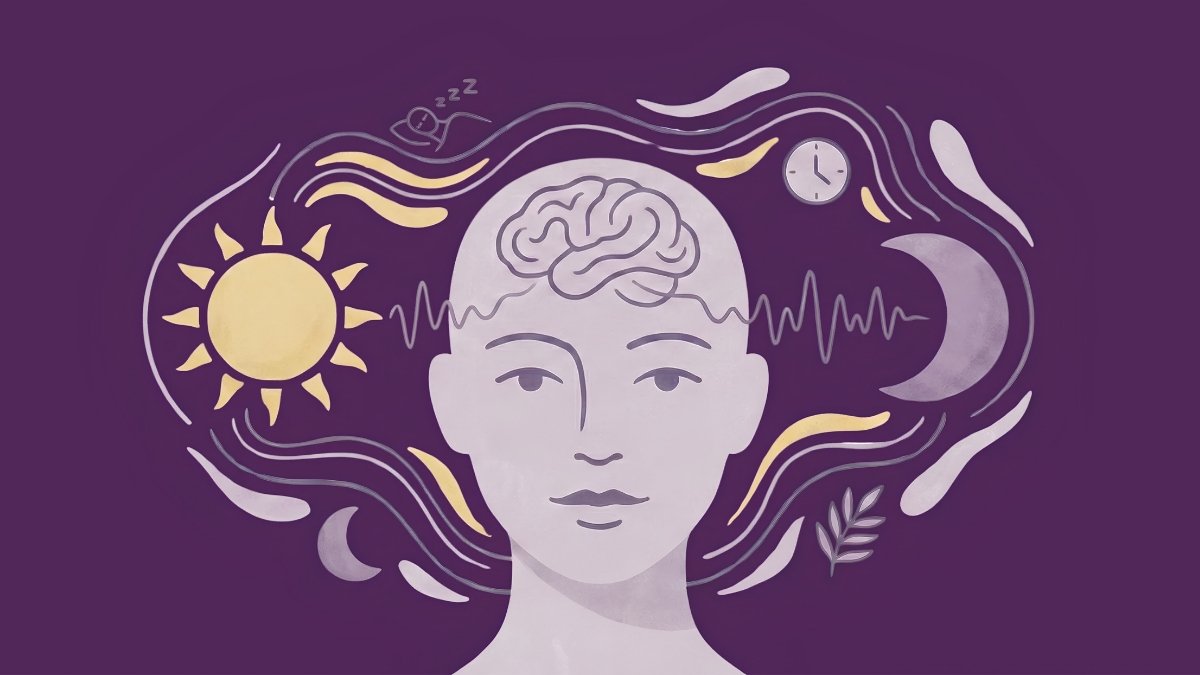
It is a 24-hour molecular clock running inside nearly every cell in your body — your liver cells, your skin cells, your heart muscle cells. Not one clock. Trillions of synchronized clocks all working together.
There is a master clock in your brain. It sits in a tiny region called the suprachiasmatic nucleus (SCN). Think of it like an orchestra conductor. Every organ — your gut, liver, immune system — plays its own part. But they all follow the conductor’s beat.
At the molecular level, two proteins called CLOCK and BMAL1 switch on hundreds of genes every morning. Then another set of proteins called PER and CRY build up during the day, switch everything off at night, and the cycle resets. This happens every 24 hours, inside every cell.
When this system works properly, your body repairs DNA, regulates hormones, clears waste, and rebuilds tissue — all on a precise schedule.
When it breaks down, every one of those processes slows or stops. That is when aging accelerates.
Practical Tips:
- Wake up at the same time every morning, including weekends. This is the single most important signal your master clock receives.
- Think of your daily schedule as biology instructions, not just time management.
- If you feel jet-lagged without traveling, your clocks are already out of sync — that is a warning sign, not just tiredness.
How a Broken Clock Directly Speeds Up Cellular Aging
Circadian disruption does not just make you feel tired. It speeds up the exact processes that define biological aging.
Here is what happens at the cellular level. Your chromosomes have protective caps on their ends called telomeres. Think of them like the plastic tips on shoelaces.
Every time a cell divides without proper repair, those tips get a little shorter. When they get too short, the cell stops working properly. It either goes dormant — what scientists call cellular senescence — or it dies.
Circadian disruption speeds up telomere shortening. One clinical study found that people with the lowest sleep efficiency had more than seven times the odds of faster telomere shortening compared to people who slept well.
The CLOCK protein also directly runs your DNA repair system. When your circadian rhythm is disrupted, that repair window gets missed. Damage builds up. Day after day.
The human proof is clear. Night shift workers — people with chronically disrupted clocks — show higher rates of breast cancer, heart disease, type 2 diabetes, and metabolic syndrome. In October 2025, the American Heart Association formally recognized circadian disruption as a modifiable health risk, putting it alongside smoking and poor diet.
Practical Tips:
- Poor sleep quality — not just short sleep — is the stronger predictor of accelerated cellular aging. Track your sleep efficiency, not just hours.
- Cellular repair happens mostly at night. Every night you stay up past midnight, you are skipping a scheduled maintenance window.
- Ask your doctor for a C-reactive protein (CRP) test — it is a simple blood marker for the kind of inflammation that circadian disruption triggers.
The 4 Daily Habits That Are Breaking Your Internal Clock
You do not need to work night shifts to disrupt your circadian rhythm. Most people do it quietly, every day, without realizing it.
“`html
4 Major
Disruptors
Artificial Light
Blue-spectrum light from screens after sunset tells every clock it is still afternoon. Cells delay repair and melatonin does not rise on time.
Late Eating
Liver and gut clocks sync to food. Eating after 8 or 9 pm forces organs to work while winding down, causing insulin resistance, fat storage, and inflammation.
Irregular Sleep
Shifting your wake time by just 60 to 90 minutes on weekends (social jetlag) is enough to throw peripheral organ clocks out of sync.
Sitting Indoors
Removes a strong reset signal. Physical movement during daylight hours activates pathways that help keep your internal clocks aligned.
Practical Tips:
- Set a “last meal” alarm on your phone for 7 or 8 pm. Use it as a hard stop for eating each night.
- Dim your home lights after 9 pm. A simple warm-toned bulb in your living room costs under $10 and makes a real difference.
- A 10-minute walk outside during lunch is not just exercise — it is a biological clock reset signal.
4 Things You Can Actually Do to Slow Cellular Aging Right Now

The good news is this: the same things that break your clock can be reversed. The fixes are free, simple, and backed by recent research.
4 Actionable
Fixes
Morning Sunlight
Go outside within 30–60 mins of waking. 10–15 mins is enough. No sunglasses.
Resets your master SCN clock and directly enhances BMAL1 expression for daily repair.
Eating Window
Eat within a consistent 8 to 10-hour window. Not less food, just fewer hours. No calorie counting.
Significantly reduces average blood sugar levels (proven in a 108-adult study).
Consistent Sleep
Keep the same sleep and wake times every day — 7 days a week.
Supports every clock in your body simultaneously, keeping peripheral clocks synchronized.
Reduce Bright Light
Dim screens, switch to night mode, and use warm lighting 2–3 hours before bed.
Lets your pineal gland release melatonin on schedule, telling every cell to begin nighttime repair.
Practical Tips:
- Start with just Fix 1 this week. Morning light is the highest-leverage change you can make with zero cost and zero equipment.
- The myCircadianClock app (free, from the Salk Institute) helps you log meals, sleep, and light to track your circadian patterns over time.
- Exercise in the morning if possible. It acts as a second reset signal alongside light — and the combination is more powerful than either alone.
How to Know If Your Clock Is Already Out of Sync

You do not need a lab test to suspect something is off. Your body tells you.
Do you find it hard to wake up at the same time each morning? Do you feel wiped out in the afternoon even after a full night’s sleep? Do you get hungry late at night, or feel alert when you should feel sleepy? These are not random symptoms. They are signs that your central and peripheral clocks have drifted apart.
Your chronotype also matters here. Some people are naturally morning people. Others are night owls. That is partly genetic. But chronic misalignment between your natural timing and your actual schedule is where the cellular damage builds up over years.
If you want to check measurable markers, ask your doctor about fasting insulin, HbA1c, and C-reactive protein. These are standard blood tests that reflect the kind of metabolic and inflammatory stress that disrupted circadian rhythms produce.
For free tracking right now, the myCircadianClock app (Salk Institute) lets you log everything and see your patterns. Wearables like Oura Ring and WHOOP now include circadian alignment scoring in their dashboards.
Practical Tips:
- Log your first meal, last meal, and wake time for just one week. Most people are shocked by how far outside a healthy window they are already living.
- Feeling wired at 11 pm but groggy until 10 am is a shifted circadian phase — not a personality trait. It can be corrected.
- Talk to your doctor about leukocyte telomere length testing if you want a direct biological marker of how fast your cells are aging.
Lastly,

Your cells are aging on a clock — and you control more of it than you think.
Morning light, consistent meals, regular sleep times, and dimmer evenings are not wellness trends. They are biological instructions. Start with one. The science is clear: small timing changes produce real, measurable results at the cellular level.
Your circadian rhythm and cellular aging are not fixed fates. They are daily choices.
Medical Disclaimer
Savvy Hipster is for informational purposes only and is not a substitute for professional medical advice, diagnosis, or treatment. Always consult a qualified healthcare professional before making any changes to your diet, exercise, or supplement routine.
Health results vary individually, and you should stop immediately and seek medical help if any unusual symptoms occur. By using this website, you take responsibility for your own health decisions.