
By the time you read this sentence, your body has already lost a tiny fraction of the muscle it had at 30. But the seniors who age strongest have one thing in common: they never stopped moving.
Most people over 50 feel weaker and slower. They worry it is too late to do anything about it. They try random workouts or walk occasionally, but without a clear plan, nothing sticks.
These are the
7 Exercises
that actually work for seniors.
This article gives you exactly what aging researchers, physical therapists, and longevity experts keep pointing to.
You will learn what they are, why they matter, and how often to do each one. The best exercises for seniors over 50 are not complicated. They are consistent.
Point One: Why Staying Inactive After 50 Is the Fastest Way to Age
Most people treat exercise like a luxury after 50. Science says it is a necessity.
Here is the hard truth. After age 30, you lose 3 to 5 percent of your muscle every decade. After 60, that loss speeds up even more. According to AARP and researchers at the University of South Florida, muscle mass can drop by up to 8 percent per decade — and even faster after 60.
This condition is called sarcopenia. It affects 10 to 16 percent of older adults worldwide. After age 80, it affects up to 50 percent of people. When you lose muscle, carrying groceries gets hard. Getting out of a chair gets harder. Eventually, your independence shrinks.
But here is the good news. Research from the National Institutes of Health found that six months of resistance exercise can substantially reverse aging at the cellular level. Your muscles can respond, rebuild, and get stronger at any age. The seven exercises below are what the research keeps pointing back to, week after week.
Quick Tips:
- Start tracking your activity now — even 10 minutes counts
- Talk to your doctor before starting any new routine
- Focus on consistency first, not intensity
Point Two: Resistance Training — The Exercise That Directly Fights Muscle Loss
Of all seven exercises on this list, this one has the most direct research behind it.
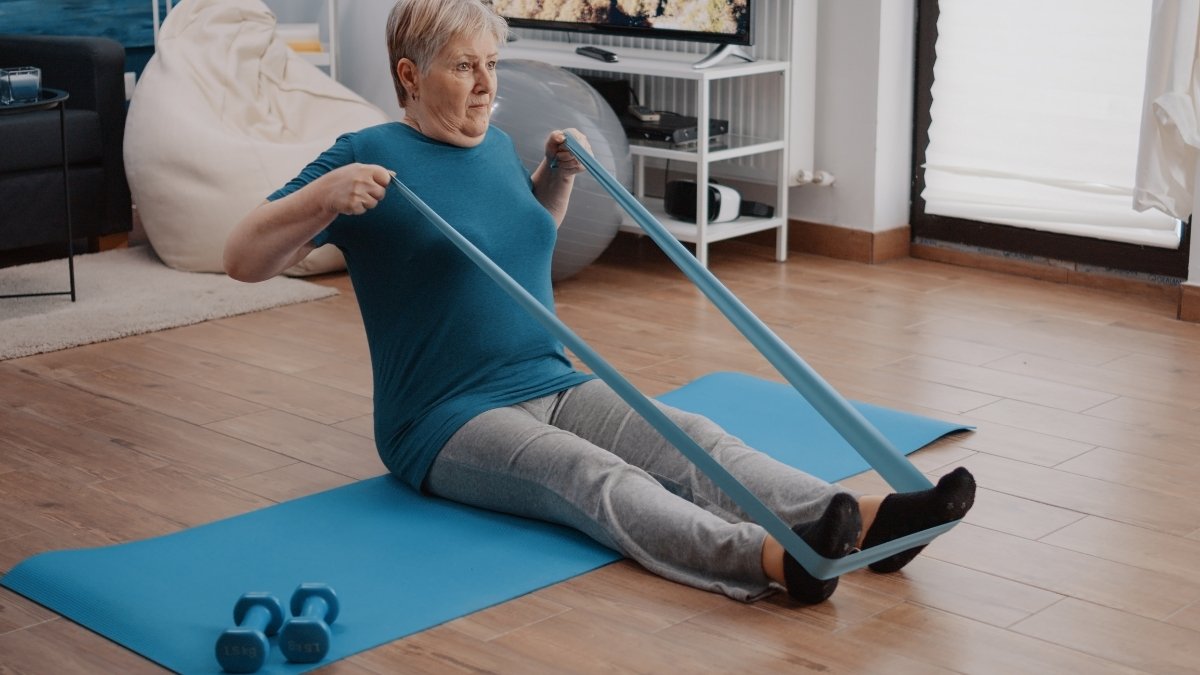
Resistance training means using weight or tension to work your muscles. Think dumbbells, resistance bands, or your own body weight. It is not about lifting heavy. It is about challenging your muscles regularly.
A 2025 study in the Archives of Gerontology and Geriatrics found that resistance training lowers blood pressure in adults over 60. A separate meta-analysis from PubMed Central found it improves grip strength, balance, coordination, and lower body strength in older adults. These are the exact things that protect your independence.
One important fact: older adults need at least 16 weeks of consistent training to see real muscle gains, due to slower protein use in the body. That means patience matters. You will not see results in two weeks. But by week 16, the change is real.
Start with two sessions per week. Try wall push-ups, seated leg presses, resistance band rows, or light dumbbell squats. Form comes before weight. Always.
Quick Tips:
- Start with resistance bands — they are safe, cheap, and effective
- Do 2 sets of 10 reps, two to three times per week
- Rest at least one day between sessions to let muscles recover
Point Three: Balance Training — The Exercise That Keeps Seniors Out of Hospital
Falls are the leading cause of injury-related hospitalization for adults over 65. And most of them are preventable.
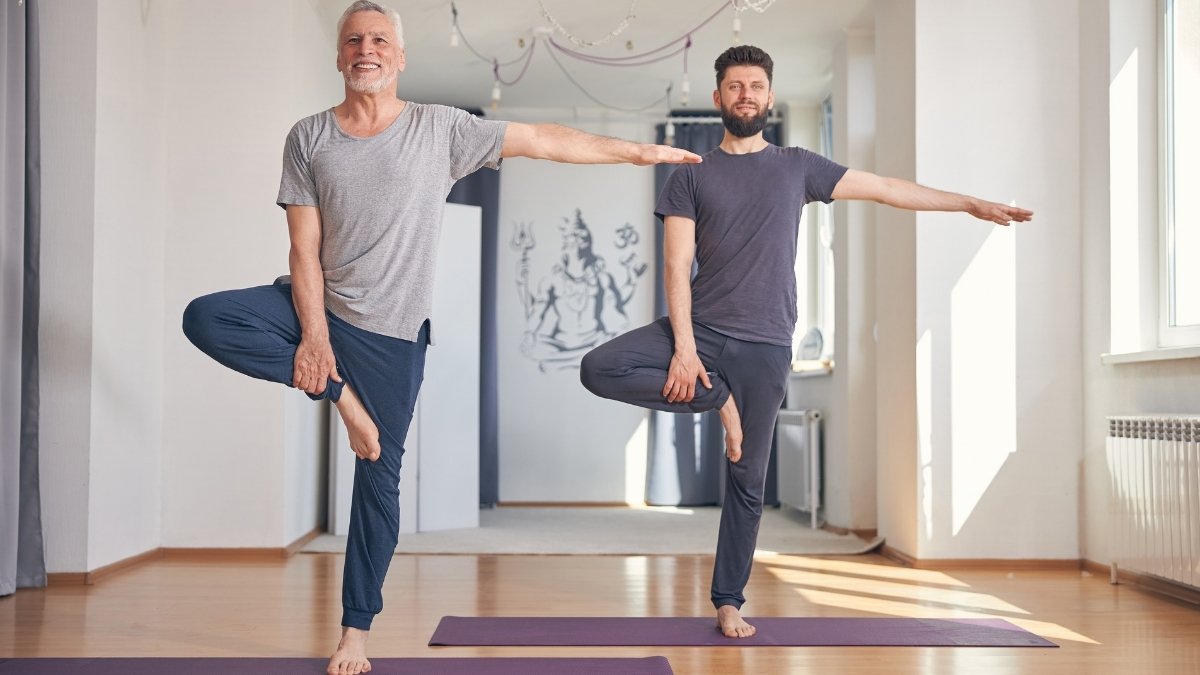
Poor balance is the main cause of falls. As you age, the signals between your brain, eyes, and feet slow down. This makes it harder to catch yourself when you stumble. But balance is a skill. And like any skill, you can train it.
A 2025 study from PubMed Central found that three-dimensional exercises — movements in all directions, like Tai Chi or dance — reduce fall risk by 30 to 40 percent. Data from 2025 also shows that seniors who practice balance routines regularly cut their fall risk by up to 40 percent.
A 2024 study in the Journal of Geriatric Physical Therapy found that consistent exercisers experienced 30 percent fewer falls on average.
You do not need a gym for this. Stand near a counter and lift one foot for 5 seconds. Walk heel to toe across the room. Stand on a folded towel. These small exercises build serious stability over time.
Quick Tips:
- Always practice balance exercises near a wall or sturdy chair
- Start with 10 seconds per leg and build up weekly
- Do balance training three to four times per week for best results
Point Four: Brisk Walking — The Simplest Exercise With the Biggest Brain Benefits
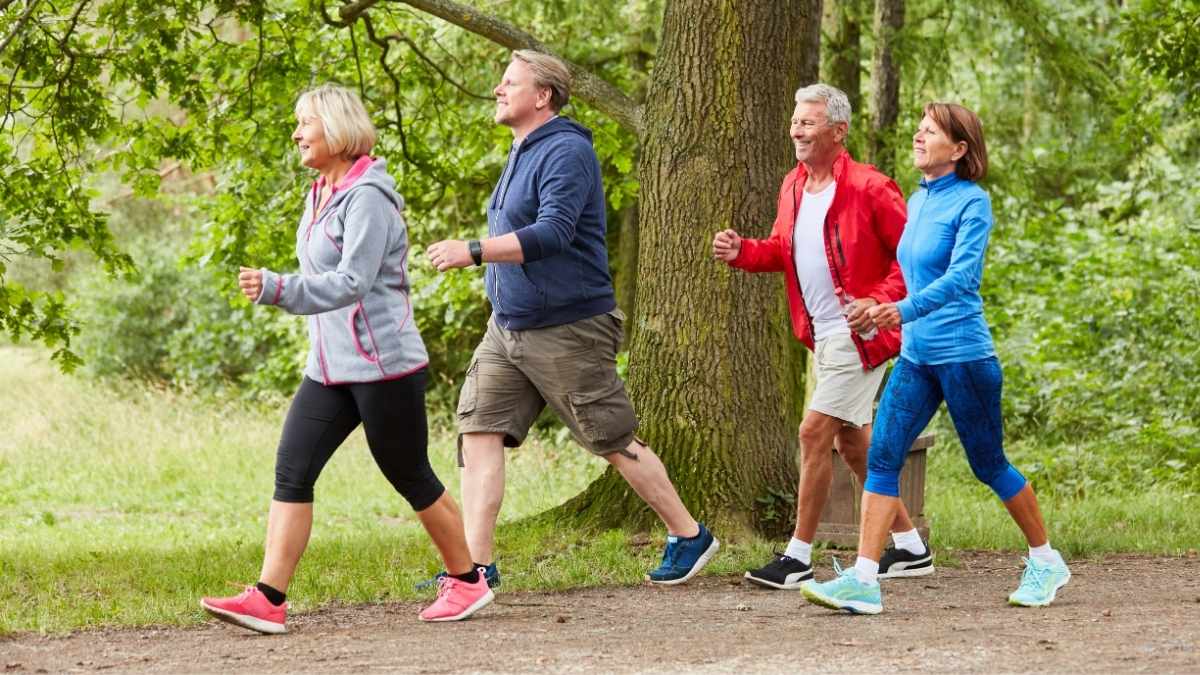
Do not let the simplicity fool you. Walking done right is one of the most powerful tools for aging well.
There is a big difference between a casual stroll and a brisk walk. A brisk walk should make talking slightly harder. Not impossible — but effortful. That is the sweet spot where your heart and brain get the benefit.
Research published in JAMA Network Open in 2025 found that people who stayed physically active in midlife and later life had more than a 40 percent lower risk of dementia compared to those who moved the least. That is a huge number for something you can do for free, outside, starting today.
Current WHO guidelines and senior fitness standards recommend 150 minutes of moderate activity per week. That is just 30 minutes, five days a week. Or three 10-minute walks per day. The total is what counts, not how you split it.
Walking also helps your heart, your mood, and your sleep. It asks nothing from you except time and a pair of shoes.
Quick Tips:
- Use the talk test — you should be able to speak but not sing
- Break your 30 minutes into two or three shorter walks if needed
- Walk after meals to also help with blood sugar control
Point Five: Water Aerobics — The Full-Body Workout That Loves Your Joints
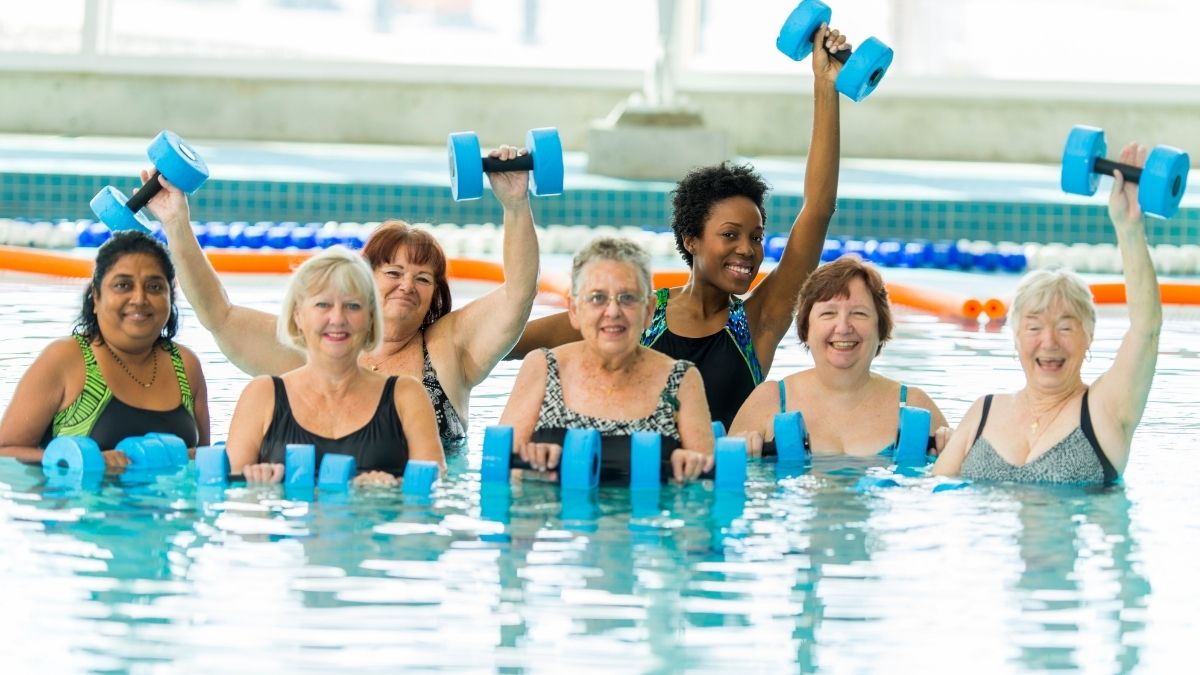
If your knees, hips, or back stop you from exercising on land, the pool changes everything.
Water is not just comfortable. It is functional. When you are in water up to your waist, it supports up to 90 percent of your body weight. That means your joints barely feel the impact. But your muscles still work hard because water creates natural resistance in every direction.
Senior Fit Now reported in 2026 that swimming and water aerobics help seniors improve cardiovascular health, muscle strength, and joint flexibility all at once. According to Planet Fitness health research, water eliminates the need for weights in strength training because the resistance is already built in.
This makes water aerobics perfect for people with arthritis, osteoporosis, obesity, or chronic joint pain. It is not a soft option. It is a smart one.
Many YMCAs and senior centers offer Silver Sneakers aquatic classes, often free with Medicare Advantage plans. You can also find beginner water aerobics videos on YouTube. The social side of group classes is a real bonus — it keeps you coming back.
Quick Tips:
- Search “Silver Sneakers near me” to find local aquatic programs
- Aim for two to three water sessions per week
- Even slow movement in water counts — the resistance is always working
Point Six: Tai Chi — The Ancient Practice That Modern Research Keeps Validating
Tai Chi looks gentle. That is exactly why researchers keep studying it — because its results are anything but.
Tai Chi is a series of slow, flowing movements done in sequence. It looks like a slow dance. But it challenges your balance, coordination, strength, and focus all at the same time. That combination is rare in a single activity.
A Harvard Medical School study cited in 2025 identified Tai Chi as one of the most powerful tools for active aging after 60. Research from PubMed Central shows it reduces fall risk by 30 to 40 percent. Multiple clinical trials confirm it improves cognitive function, memory, and quality of life in older adults.
Lifeline Canada also notes that the breathing and meditation aspects of Tai Chi measurably reduce depression and anxiety — two things that often increase after 50 and are closely linked to physical decline.
You do not need any equipment. You do not need a gym. A 10-by-10-foot space in your living room is enough. Dr. Paul Lam’s Tai Chi for Health Institute has free beginner videos on YouTube with millions of senior viewers.
Quick Tips:
- Start with Dr. Paul Lam’s free beginner videos at taichiforhealthinstitute.org
- Practice three times per week for at least 20 minutes per session
- Group classes add social connection — check your local senior center
Point Seven: Stretching and Flexibility — The Exercise Most Seniors Skip and Regret
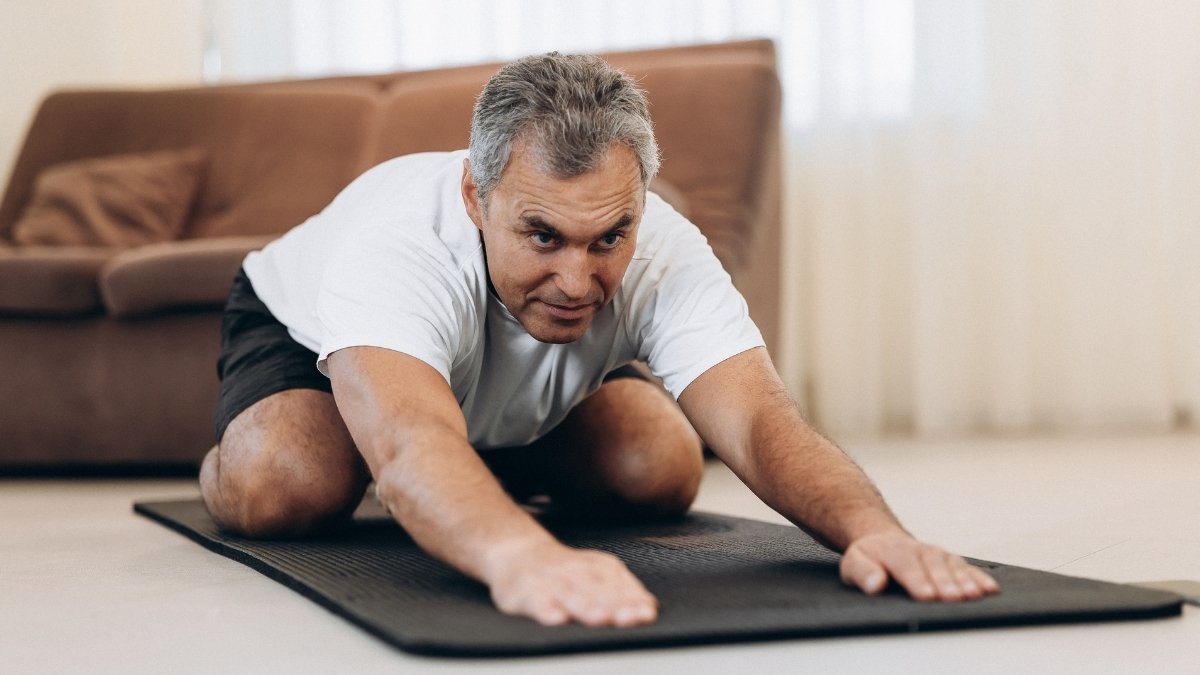
Ask any physical therapist what the most neglected part of a senior fitness routine is. They will say the same word: stretching.
After 50, your joints get stiffer. Tight hips change how you walk. Tight shoulders hurt your posture. Tight hamstrings increase your fall risk. One AARP expert put it clearly: “Motion is lotion for the joint.” Stop moving a joint, and it will stiffen faster.
According to Planet Fitness health reporting, exercises that target joint mobility — like yoga and light stretching — preserve joint health, improve posture, and may reduce arthritis symptoms. A 2025 analysis also found that gentle exercise lasting 30 to 60 minutes has a measurable positive effect on depression in older adults.
You only need 10 to 15 minutes a day. Try these five stretches: hip flexor lunge, seated hamstring reach, chest doorway opener, lying spinal twist, and calf wall stretch. Chair yoga is a great option if standing stretches feel too difficult.
Do this daily — not just on workout days. Flexibility is built over weeks, not hours. But six weeks of daily stretching will produce a noticeable difference in how your body moves and feels.
Quick Tips:
- Stretch after exercise when muscles are warm — never cold
- Hold each stretch for 20 to 30 seconds without bouncing
- Search “chair yoga for seniors” on YouTube for safe, guided options
Conclusion:
Staying strong after 50 is not about going hard. It is about being consistent. Resistance training, balance work, brisk walking, water aerobics, Tai Chi, and stretching each protect a different part of your body. Start with two this week. Build from there.
The best exercises for seniors over 50 are not complicated — they are consistent.
Medical Disclaimer
Content on Savvy Hipster is for informational purposes only and is not a substitute for professional medical advice, diagnosis, or treatment. Always consult a qualified healthcare professional before making any changes to your diet, exercise, or supplement routine.
Health results vary individually, and you should stop immediately and seek medical help if any unusual symptoms occur. By using this website, you take responsibility for your own health decisions.