
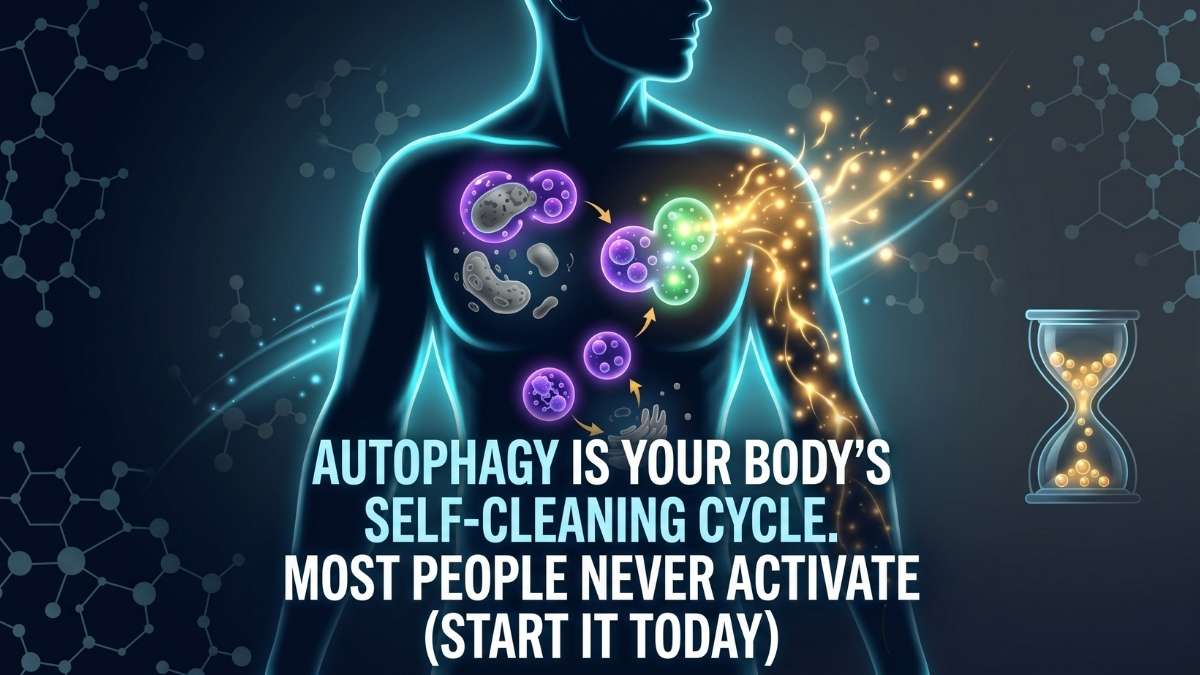
Every night while you sleep, your body tries to run a silent cleanup operation. It destroys damaged cells, recycles broken proteins, and clears out the debris that ages you. But there is a catch. It can only do this if you have stopped eating long enough to let it start.
Most people eat from the moment they wake up until they go to bed. That constant feeding keeps the body stuck in storage mode. The internal recycling system — called autophagy — never gets a chance to switch on.
The result is brain fog, faster aging, and low-grade inflammation that builds quietly for years.
This guide will show you what autophagy is, when it starts, and exactly how to activate it through fasting, exercise, food, and sleep — all backed by real research you can check yourself.
Point One: What Autophagy Is and Why a Nobel Prize Was Awarded for It
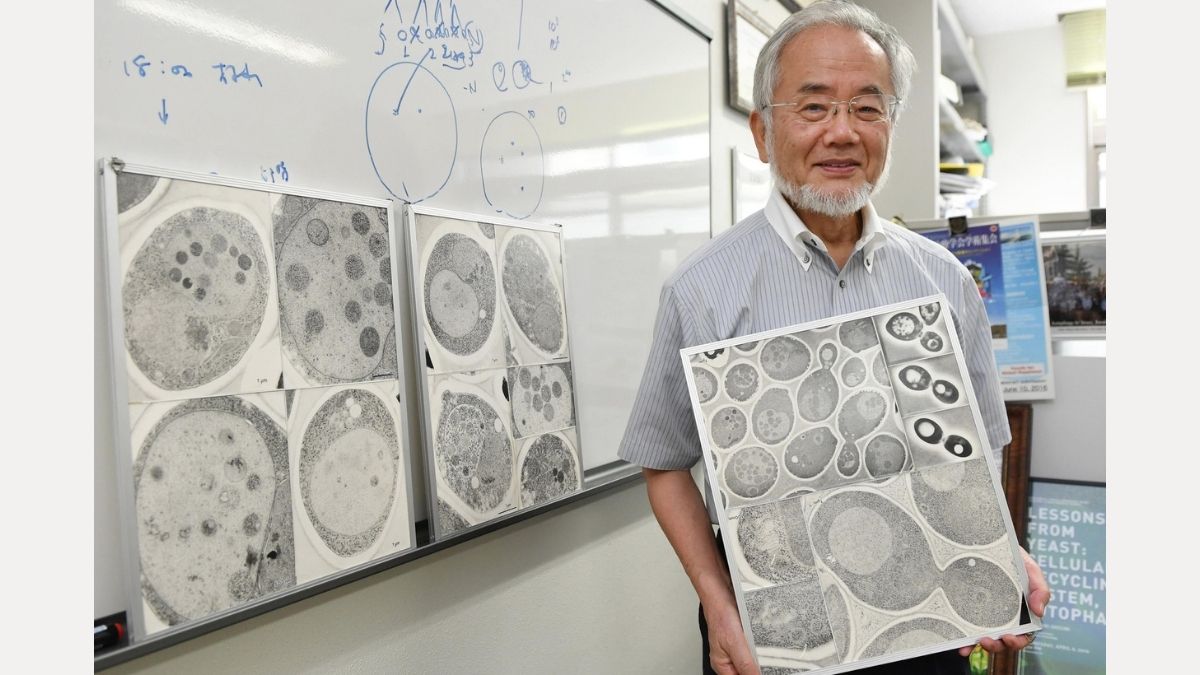
The word autophagy comes from Greek. Auto means self. Phagein means to eat. So autophagy literally means the cell eats itself — but in a good way. It is your body’s built-in recycling system.
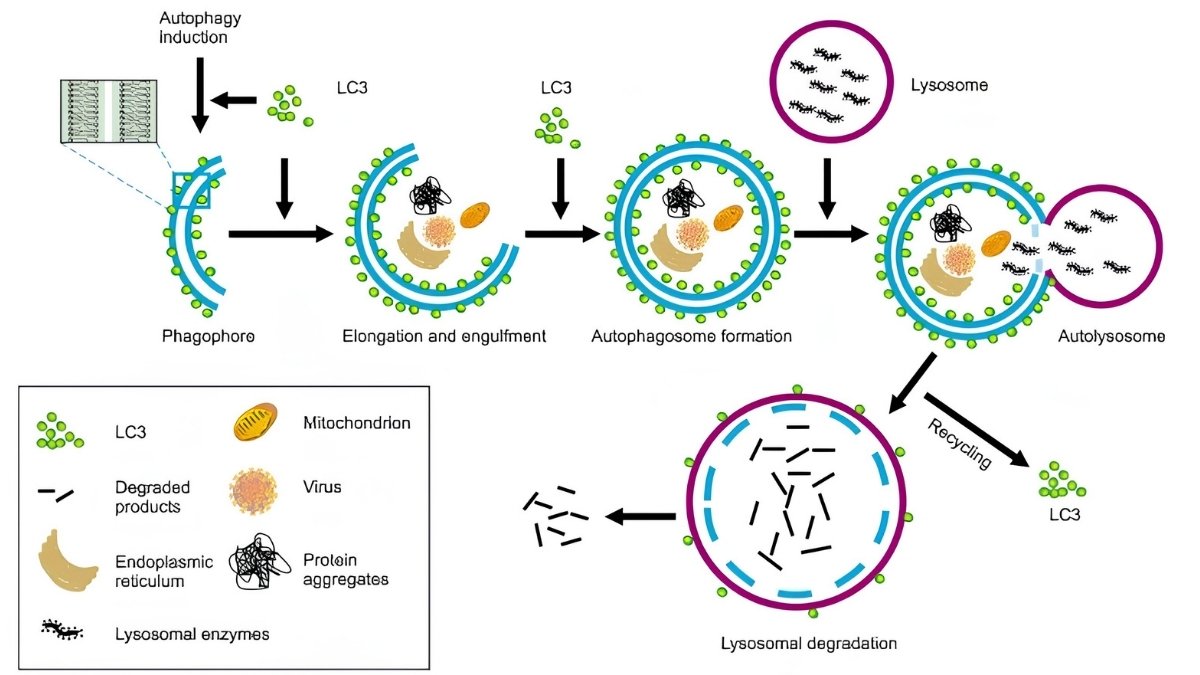
When your cells run autophagy, they capture old proteins, broken parts, and damaged organelles. They pack them into small sacs called autophagosomes. Those sacs travel to the lysosome, which breaks everything down and reuses the raw material.
In 2016, Japanese scientist Yoshinori Ohsumi won the Nobel Prize in Physiology or Medicine for figuring out how this process works. When he started studying autophagy, fewer than 20 scientific papers were published on it each year.
Today, more than 5,000 papers are published every year. That tells you how important this discovery was.
The Nobel Committee chair said it plainly: “Without autophagy, our cells won’t survive.”
This is not a wellness trend. It is a biological process your body depends on — and most people are never activating it.
Quick Tips:
- Think of autophagy as your cells taking out the trash. No trash removal means things pile up.
- The Nobel Prize in 2016 confirmed this is real science, not theory.
- Autophagy happens in every cell of your body — brain, muscle, liver, heart.
Point Two: The Autophagy Timeline — When Does Cleaning Actually Start?
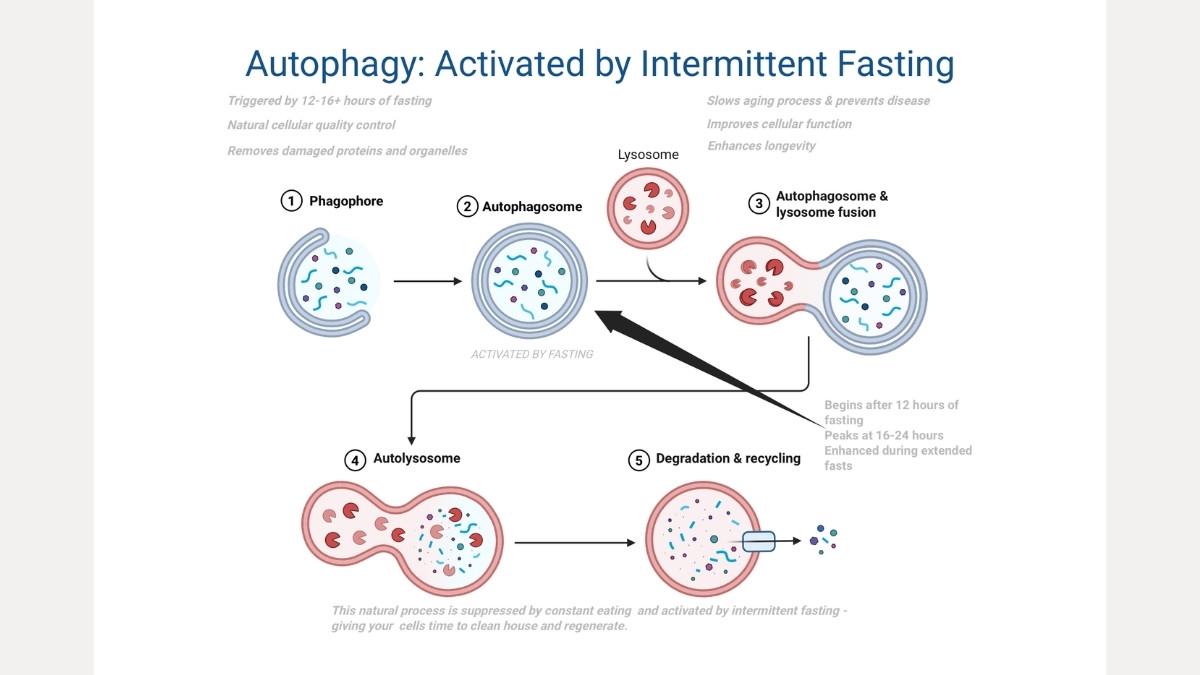
Autophagy does not flip on like a light switch. Think of it more like a dimmer. The longer you fast, the brighter it gets.
Here is what actually happens inside your body, hour by hour:
At 12 to 16 hours, your insulin levels drop. Your body starts switching from burning glucose to burning fat. A small amount of autophagy begins at this stage.
At 16 to 24 hours, a protein called AMPK activates. AMPK is your body’s energy sensor. When it turns on, it suppresses mTOR — the growth signal that blocks autophagy. This is when cleanup begins in earnest.
At 24 to 36 hours, autophagy markers increase by roughly 300% compared to your baseline. This is when serious cellular repair happens.
At 36 to 72 hours, autophagy reaches peak efficiency.
Important note: your personal timeline shifts based on your metabolic health. If you ate a high-carb meal before your fast, it takes longer to burn through glycogen before the cleanup begins.
Quick Tips:
- You do not need a 72-hour fast to get results. Start with 16 hours.
- Consistently doing 16:8 fasting builds autophagy signaling over time.
- Your pre-fast meal matters. Eat lower-carb before a fasting window to start faster.
Point Three: The First Human Trial That Proved Fasting Triggers Autophagy (2025)
For a long time, most autophagy research was done in mice and yeast. Researchers could not directly confirm it happened the same way in people. That changed in December 2025.
A first-ever human clinical trial found that a five-day Fasting Mimicking Diet (FMD) was directly linked to increased autophagy activity in the body. The trial also showed significant improvements in key metabolic health markers.
Thirty healthy adults took part. They were randomized into groups — some followed the FMD protocol, others kept eating normally. The FMD group showed measurable increases in cellular cleanup markers.
The FMD is a structured eating plan. It delivers just enough nutrients to keep the body functioning while triggering the same effects as a water-only fast. Researcher Dr. Valter Longo developed it at USC.
What this means for you in 2026 is simple. You do not need to starve yourself. A structured, consistent fasting approach — even a daily 16:8 window — produces real autophagy signaling in real humans.
Quick Tips:
- The 2025 trial used a 5-day protocol, not extreme multi-day water fasting.
- Structured eating plans can produce autophagy without dangerous calorie restriction.
- Look up Dr. Valter Longo’s research if you want the full clinical details.
Point Four: Exercise Is an Autophagy Trigger Most People Completely Ignore

You have probably heard that fasting triggers autophagy. What most people miss is that exercise does too — through a completely different pathway.
When you exercise, your muscles experience mechanical stress. That stress sends chemical signals through a process called mechanotransduction. These signals activate AMPK — the same energy sensor that fasting activates. AMPK then suppresses mTOR and starts the cleanup process.
A 2025 study published in Frontiers in Aging Neuroscience confirmed that exercise activates autophagy in the brain. This helps clear amyloid-beta and alpha-synuclein — the toxic protein clusters linked to Alzheimer’s and Parkinson’s disease.
Over 50 million people worldwide live with neurodegenerative conditions. Autophagy through exercise may help slow that process.
Exercise also increases production of BDNF and GDNF — proteins that protect and grow brain cells.
The best approach? Exercise in the morning before your first meal. You are already in a fasted state from the night before. Adding physical activity stacks both triggers at the same time. Even a 20-minute walk counts.
Quick Tips:
- Any exercise — walking, lifting, cycling — activates the AMPK cleanup pathway.
- Morning fasted workouts stack two autophagy triggers at once.
- You do not need intense training. Moderate effort is enough to start the signal.
Point Five: Foods and Drinks That Support Autophagy During Your Eating Window
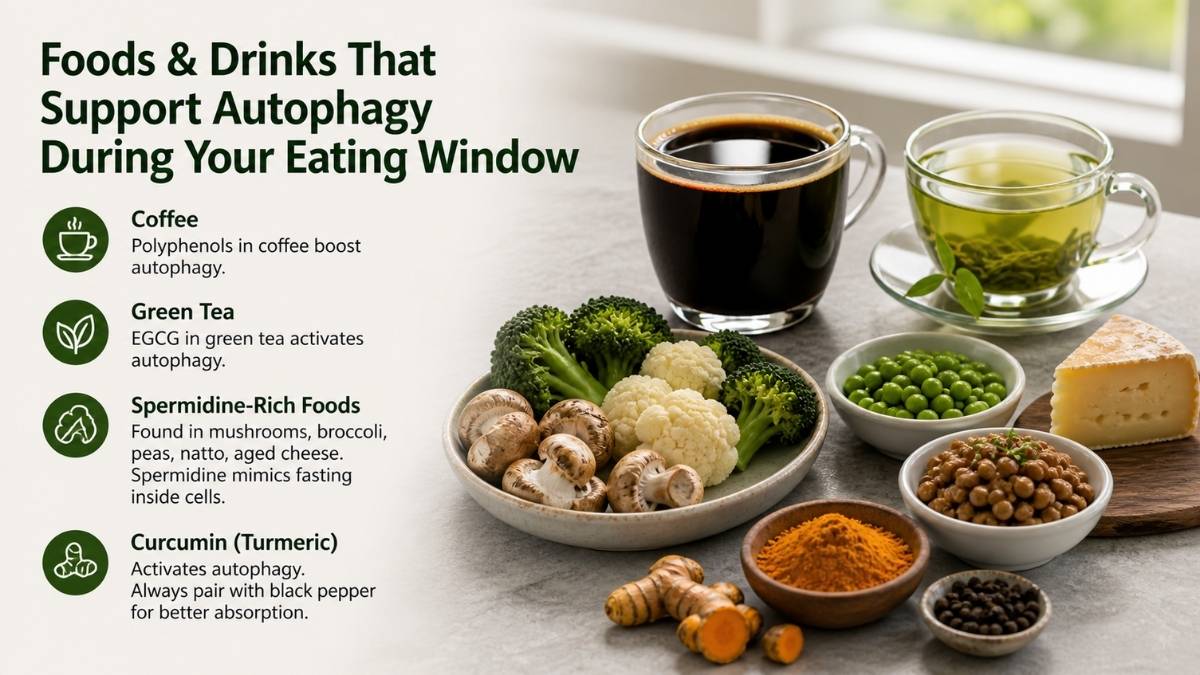
Certain foods and drinks can turn up your cellular cleanup signal — even when you are not fasting. This does not replace fasting, but it adds to it.
Coffee is a strong example. A 2014 study by Pietrocola and colleagues found that coffee increased autophagic activity in the liver, muscle, and heart. Decaffeinated coffee worked just as well as regular coffee. That tells you it is the polyphenols in coffee — not the caffeine — doing the work.
Green tea contains a compound called EGCG. Research shows EGCG activates autophagy in the brain and liver. It also protects brain cells from toxicity and helps restore memory function damaged by chronic stress.
Spermidine is a compound found in mushrooms, broccoli, cauliflower, peas, natto, and aged cheese. Diets high in spermidine-rich foods are linked to lower risk of death in epidemiological studies. Spermidine can mimic the effects of fasting inside your cells.
Curcumin — the active ingredient in turmeric — also activates autophagy. Pair it with black pepper to make it absorbable by your body.
Quick Tips:
- Drink black coffee or plain green tea during your fasting window. Both are safe and supportive.
- Add mushrooms and broccoli to your meals regularly for spermidine.
- Always combine turmeric with black pepper. Without pepper, your body absorbs very little.
Point Six: What Happens to Your Body When Autophagy Is Never Switched On
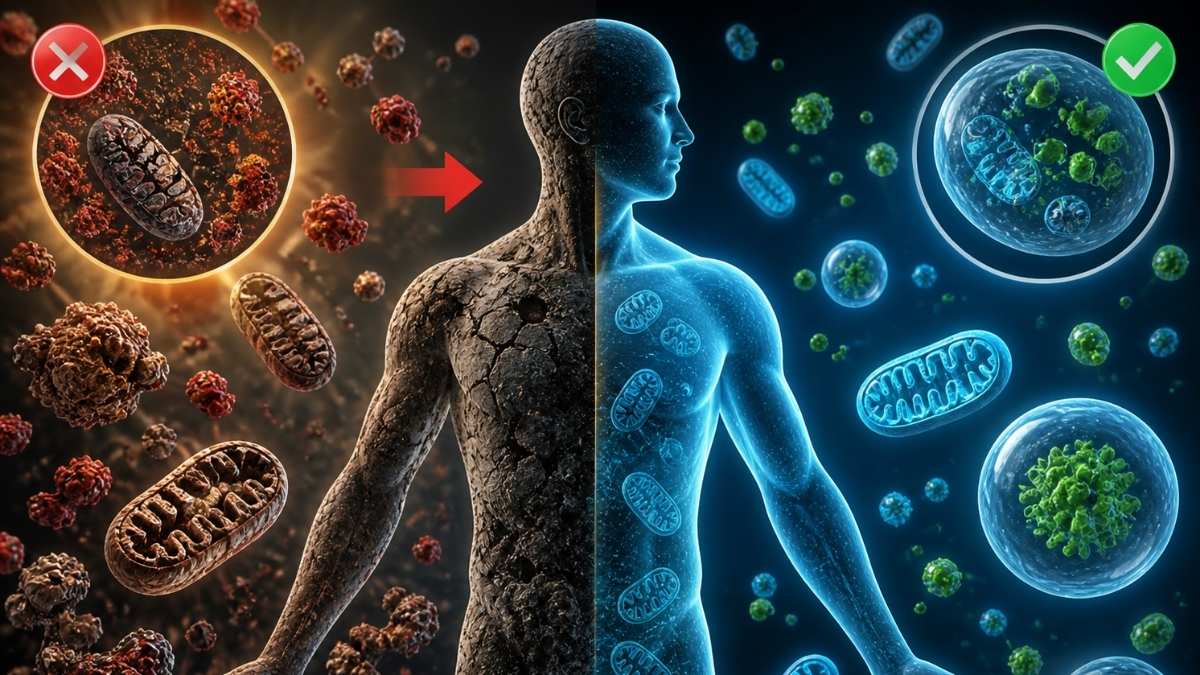
Here is the problem nobody talks about. When you eat constantly — morning snacks, afternoon grazing, late-night food — your body never gets a signal to clean up. The mTOR pathway stays permanently switched on. mTOR is a growth promoter. When it is always active, autophagy is always off.
The result builds slowly. Damaged proteins collect inside your cells. Broken mitochondria — the energy producers — never get cleared. Your immune system works harder to compensate. Inflammation rises quietly.
Over time, this shows up as chronic fatigue, persistent brain fog, skin that ages faster, and a body that feels inflamed even when nothing specific is wrong. Your bloodwork may come back normal. But at the cellular level, things are backing up.
The connection to disease is serious. Alzheimer’s disease is directly linked to disrupted autophagy. The toxic protein clusters that damage brain cells — amyloid-beta and alpha-synuclein — accumulate when the cleanup system stops working.
Autophagy decline is now listed as one of the hallmarks of aging. It is not optional. It is essential.
Quick Tips:
- Constant eating keeps mTOR active and autophagy inactive. Give your body a break.
- Brain fog and fatigue can be early signs that cellular cleanup is not happening.
- You do not need a diagnosis to start improving cellular health today.
Point Seven: Your Simple Autophagy Protocol for 2026 — Start This Week
The Autophagy Protocol
Step 1 16:8 Fasting Window
Stop eating at 8 PM and wait until noon. Autophagy signaling begins at 12 hours and ramps up between 16-24 hours.
Step 2 Weekly 24-Hour Fast
Close one eating gap per week (Dinner to Dinner). This causes autophagy markers to jump by up to 300%.
Step 3 Fasted Exercise
A 20-minute walk or resistance session before your first meal stacks two cleanup triggers simultaneously.
Step 4 Autophagy Foods
Incorporate black coffee, green tea, mushrooms, and cruciferous vegetables to support the active process.
Step 5 Consistent Sleep
Prioritize 7-9 hours of rest. Poor sleep raises cortisol, which blocks the cellular cleanup signal.
You do not need an expensive program. You need a consistent plan. Here is one that works.
Quick Tips:
- Start with 16:8 for two weeks before adding a 24-hour fast.
- Log your fasting times using a free app like Zero to stay consistent.
- Do not try all five steps at once. Add one per week.
Point Eight: Signs Your Autophagy Is Working — and Four Mistakes That Shut It Down

You cannot measure autophagy at home with a test strip. But your body gives you signals when cellular repair is active.
You will notice sharper mental focus. Afternoon energy crashes reduce. Hunger during fasting windows becomes manageable instead of unbearable. Some people report clearer skin and more stable moods within two to four weeks.
Now here are four mistakes that cancel all of that.
4 Critical Autophagy Mistakes
Breaking Fast Too Early
Black coffee and water are safe, but protein shakes, milk, and food are not. Even a small amount of amino acids restarts mTOR and stops autophagy cold. Wait until you are ready to end the fast intentionally.
Relying on a Single Strategy
Fasting alone, exercise alone, or diet alone will not get you there. All three together create a compounding effect that maximizes cellular cleanup.
Unsupervised Extended Fasting
Attempting fasts beyond 48 hours without medical advice is unsafe. This is strictly inappropriate for people with diabetes, an eating disorder history, or pregnancy.
Ignoring Sleep & Stress
You cannot fast your way past a lack of recovery. High cortisol from poor sleep or chronic stress directly suppresses autophagy signals.
Quick Tips:
- Stick to black coffee and water during fasting windows. Nothing else.
- Combine fasting, exercise, and food choices. Each one multiplies the other.
- Fix your sleep before anything else. Without it, the rest of the protocol loses half its power.
Final Words,
Autophagy is free. It is built into your biology. You do not need supplements or expensive programs to switch it on.
Fast for 16 hours. Exercise before your first meal. Eat spermidine-rich foods. Sleep consistently. Start with one step tonight.
Your cells have always known how to clean themselves. Now you know how to let them.