
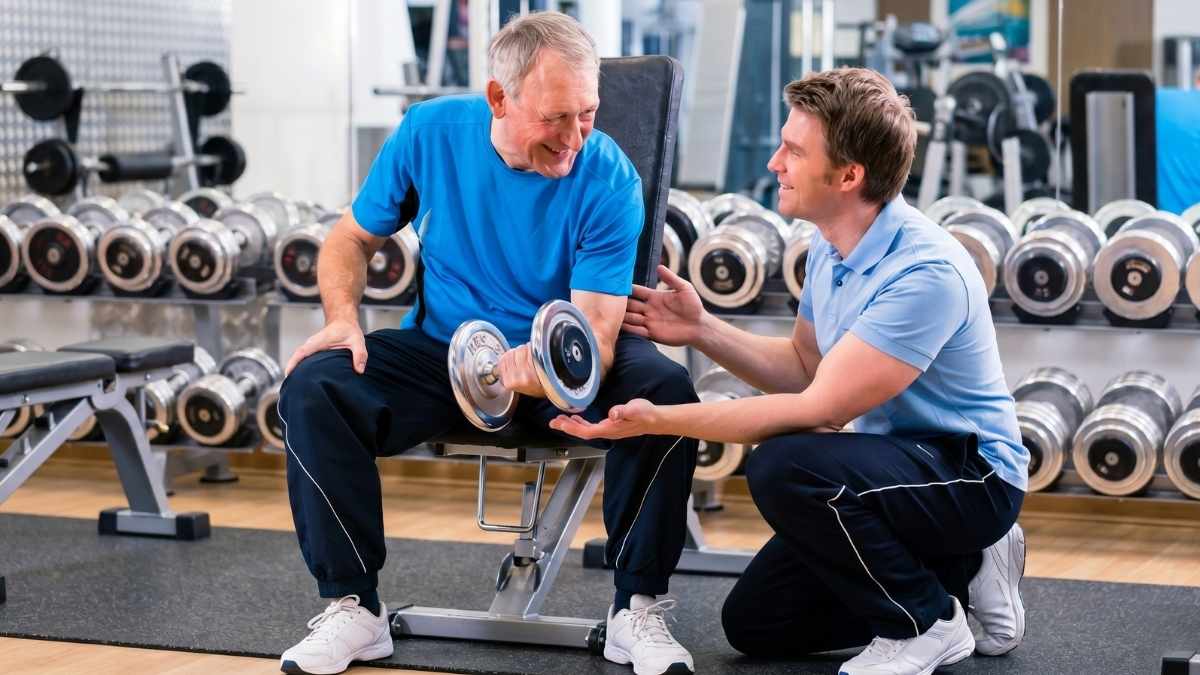
You are not losing muscle because you are getting old. You are losing it because your body has quietly stopped responding to the signals that used to keep it strong.
Maybe you are walking every day. Maybe you are watching what you eat. But you still feel weaker. Carrying groceries feels harder. Getting off the couch takes effort. Stairs leave you winded.
This is not normal aging that you just have to accept. There is a specific biological reason this is happening. It has a name. And it is at least partly reversible.
In this article, you will learn exactly:
1. The Shocking Number Behind Muscle Loss After 50
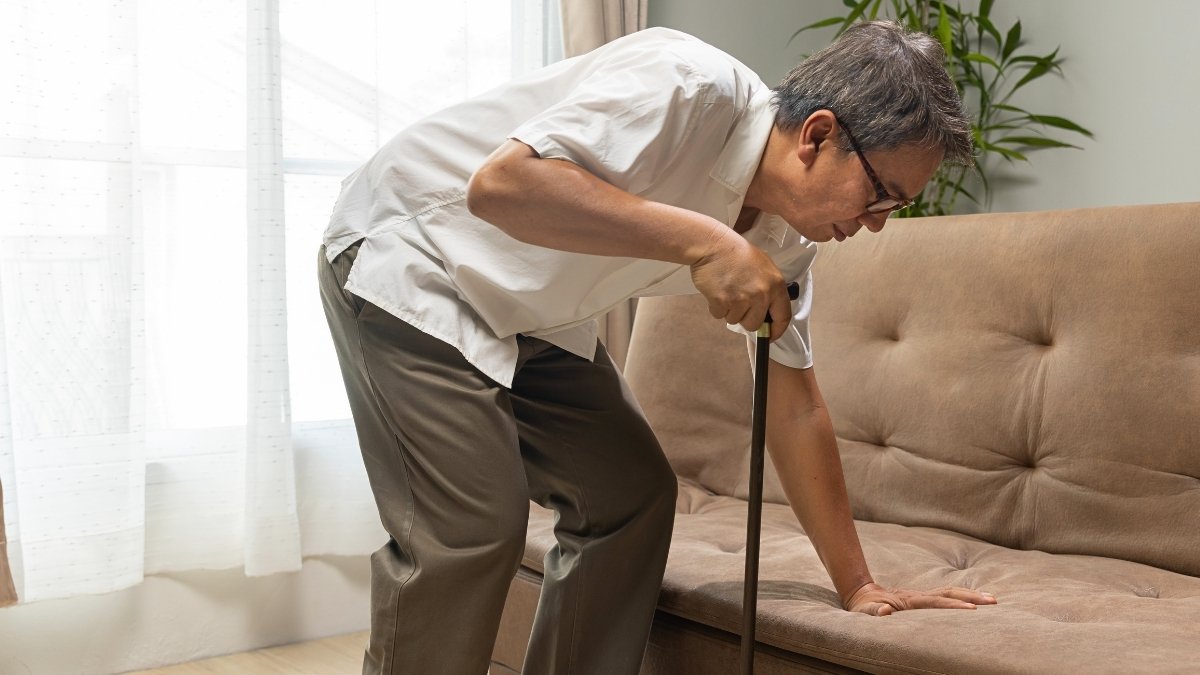
Here is a number most doctors never tell you. After age 50, you lose 1 to 2 percent of your muscle mass every single year. That sounds small. But over ten years, that adds up to losing a fifth of your total muscle.
It gets worse. Your strength drops even faster than your muscle size — up to 5 percent per year in some people. You can look roughly the same but feel dramatically weaker.
Between ages 50 and 60, strength falls about 1.5 percent each year. After 60, that rate jumps to 3 percent per year. A 2025 study from NYU School of Medicine tracked thousands of adults and found sarcopenia — the clinical name for age-related muscle loss — affected just 5 percent of people aged 65 to 69. By ages 85 to 89, that number hit 36 percent.
This is not just about how you look. Weak muscles raise your fall risk, slow your metabolism, and chip away at your independence. The good news? This process can be slowed significantly with the right action.
3 Practical Tips:
- Weigh yourself monthly and note if your clothes fit looser in the legs or arms — that signals muscle loss, not just fat loss
- Ask your doctor about a DEXA scan to measure your actual muscle mass, not just body weight
- Start tracking how easy or hard it is to stand from a chair without using your hands — this is a real marker of leg muscle strength
2. The Real Reason Most Over 50 Lose Muscle — It Is Called Anabolic Resistance
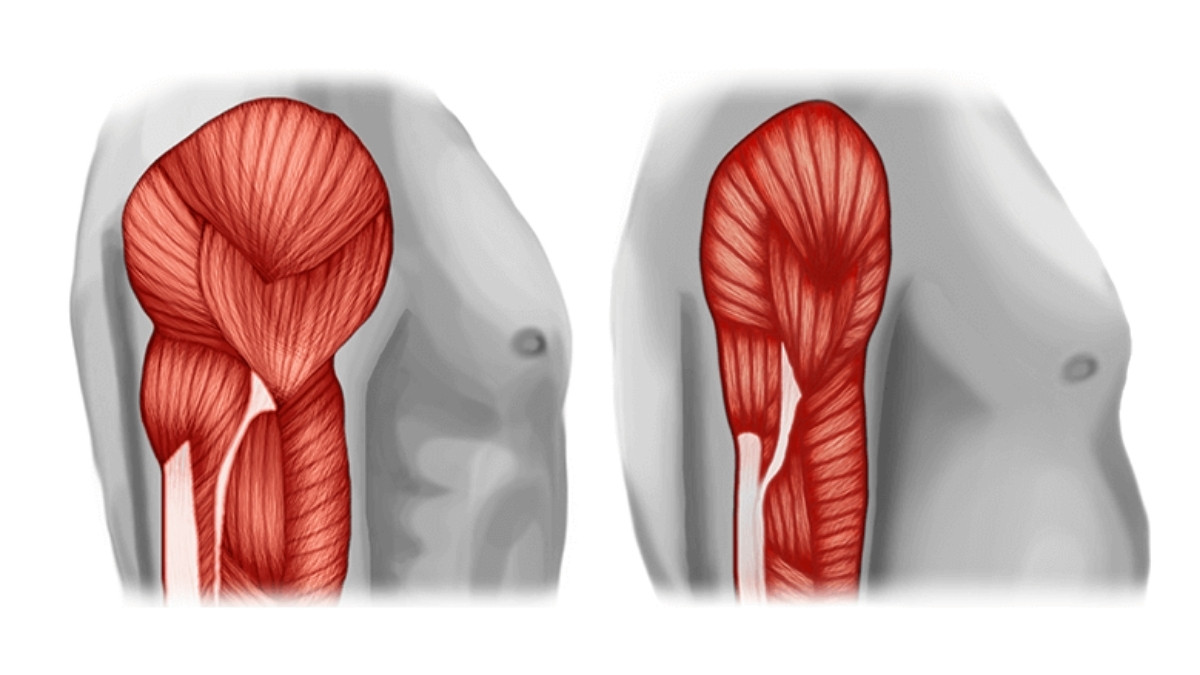
Here is what most trainers never explain. Your muscle loss is not just about doing less or eating poorly. There is a biological shift happening inside your cells.
It is called anabolic resistance. In simple terms, it means your muscles have stopped responding properly to the two things that build them — protein and exercise. Your body used to hear those signals loudly and clearly. After 50, it starts to ignore them.
Think about it this way. The same chicken breast that helped build muscle in your 30s is now doing far less work in your 50s. Same meal. Same effort. But a much weaker result.
A 2025 peer-reviewed review published in the journal Nutrients confirmed that anabolic resistance is a key driver of age-related muscle decline. Being inactive and carrying extra body weight makes this resistance even worse. The biological mechanism involves a pathway called IGF-1 and mTOR — basically the system your cells use to build new muscle protein. After 50, this system becomes sluggish.
The good news is that physical activity done before eating protein can help re-sensitize that system. That is exactly why the two exercises later in this article are so important.
3 Practical Tips:
- Do not rely on protein alone to build muscle — your muscles need the stimulus of resistance exercise first to absorb that protein properly
- Spread your protein intake across three meals instead of loading it all at dinner — this improves how well older muscle can use it
- Avoid long periods of sitting — even a 10-minute walk after meals improves insulin sensitivity, which helps your muscles respond to nutrients again
3. The One Daily Habit That Is Secretly Accelerating Your Muscle Loss
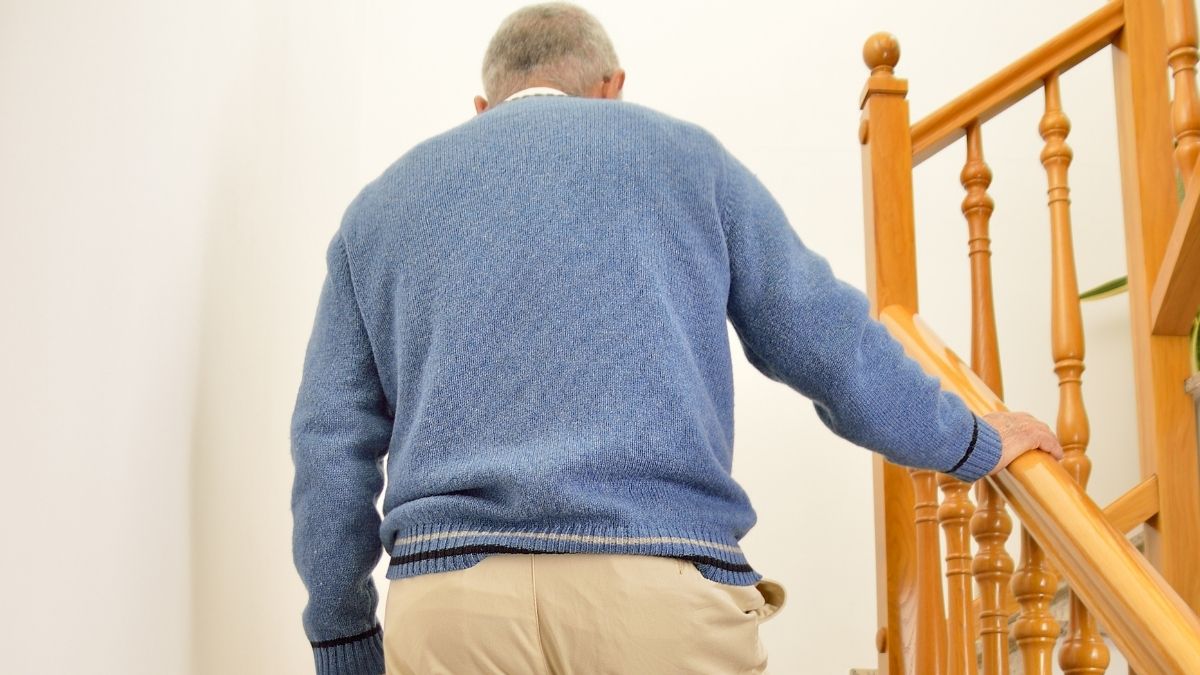
Most people over 50 who care about their health are already doing something. They walk. They take the stairs. They stay active around the house. And they are still losing muscle.
Why? Because walking does not create enough mechanical tension in your muscles to override anabolic resistance. It keeps your heart healthy. But it does not send the right signal to your muscle fibers to grow or hold their ground.
Research from McMaster University found that even short periods of reduced physical activity cause an accelerated loss of both strength and muscle mass in older adults — and older people recover from that loss far more slowly than younger people do.
For women, this is even more urgent. After menopause, the drop in estrogen speeds up both muscle and bone loss at the same time. Stanford Lifestyle Medicine researchers found this makes resistance training not optional but essential for women over 50.
The fix is not more cardio. It is not longer walks. It is adding resistance — something that physically loads your muscles and forces them to adapt. Two specific exercises do this better than almost anything else for this age group.
3 Practical Tips:
- Replace one 30-minute walk per week with a 20-minute resistance session — you will get more muscle protection from that trade
- If you sit for most of the day, set a timer to stand and do 10 bodyweight squats every hour — this alone reduces muscle loss from inactivity
- Women over 50 should treat resistance training as non-negotiable, the same way they treat calcium for bone health
Move 1 — Goblet Squat
Every time you sit down and stand back up, you are doing a squat. Right now, how hard is that? In five years, without resistance training, it will be harder.
The goblet squat is the safest, most practical version of this movement for adults over 50. You hold one dumbbell or kettlebell at your chest with both hands. That weight keeps your torso upright and reduces pressure on your spine. It is much safer than a traditional barbell squat.
This exercise works your quads, glutes, and core all at once. Those are the exact muscles that prevent falls, keep you mobile, and let you live independently as you age.
Here is how to do it. Stand with feet a little wider than hip-width apart. Hold the dumbbell at your chest, elbows pointing down. Push your hips back and bend your knees until your thighs are close to parallel with the floor. Drive through your heels and stand back up. Keep your chest tall the whole time. Do 3 sets of 8 to 12 reps with 90 seconds of rest between sets.
3 Practical Tips:
- Place a sturdy chair behind you when starting out — it removes the fear of falling backward and helps you squat with confidence
- Start with a light weight, like a water jug, before buying dumbbells — form matters more than load in the beginning
- Once 12 reps feel easy, add 5 pounds every two weeks — this is called progressive overload, and it is what forces your muscle to keep adapting
Move 2 — Romanian Deadlift
The back of your body is where most people over 50 fall apart — literally. Your hamstrings, glutes, and lower back are the muscles responsible for posture, balance, and protecting your spine. And they are almost always the most neglected.
The Romanian deadlift — called an RDL — targets all three at once. You stand holding two dumbbells in front of your thighs. You push your hips back slowly, lowering the weights down your legs, feeling a stretch in the back of your thighs. Then you drive your hips forward and stand back up. That is the whole movement.
This exercise also replicates something you do every day — picking things up from the floor. Doing it with proper form and added weight trains your body to do that safely, without straining your back.
The key is the slow lowering phase. A 2 to 3 second descent is where most of the muscle-building signal comes from. Do not rush it. Do 3 sets of 8 to 12 reps. Focus on feeling the stretch in your hamstrings, not on how heavy the weight is.
3 Practical Tips:
- If you cannot feel your hamstrings working, the weight is too heavy and your lower back is taking over — drop the weight by 30 percent and slow down
- Practice the movement first with no weight, pushing your hips toward a wall behind you until the pattern feels natural
- Keep the dumbbells close to your legs throughout — if they drift forward, your lower back will compensate and take on strain it should not have
6. How to Start This Week — A Simple, No-Gym Plan for Adults Over 50
You do not need a gym. You do not need an hour. You need two sessions per week, each lasting about 20 minutes.
Each session is the same. Do 3 sets of 10 goblet squats. Then do 3 sets of 10 Romanian deadlifts. Rest 90 seconds between every set. That is it. Two exercises. Twenty minutes. Twice a week.
On the nutrition side, research supports aiming for 1.2 to 1.6 grams of protein per kilogram of your body weight every day. For most people, that means roughly 80 to 100 grams of protein daily — spread across meals, not dumped into one.
If this still feels like too much, try what Stanford researchers call “strength snacks.” Do 10 squats in the morning. Do 10 hip hinges after lunch. Small doses of resistance throughout the day still add up and help fight anabolic resistance.
Within 4 to 8 weeks of consistent training, most people notice they stand from chairs more easily, feel steadier on stairs, and have less lower back discomfort. Those are real signs that your muscles are responding again.
3 Practical Tips:
- Write your two weekly sessions into your calendar like appointments — people who schedule exercise are far more likely to follow through than those who plan to “fit it in”
- Track one simple marker each week, such as how many reps you can do before the set feels hard — progress is motivating and keeps you consistent
- Eat a protein-rich meal or snack within two hours after each session — this is when your muscles are most ready to absorb and use amino acids for repair
Final Words,
Muscle loss after 50 is real. But it is not something you just have to live with. Anabolic resistance is the cause. Resistance training is the fix. Add goblet squats and Romanian deadlifts twice a week. Keep your protein up. Start this week — not next month.