
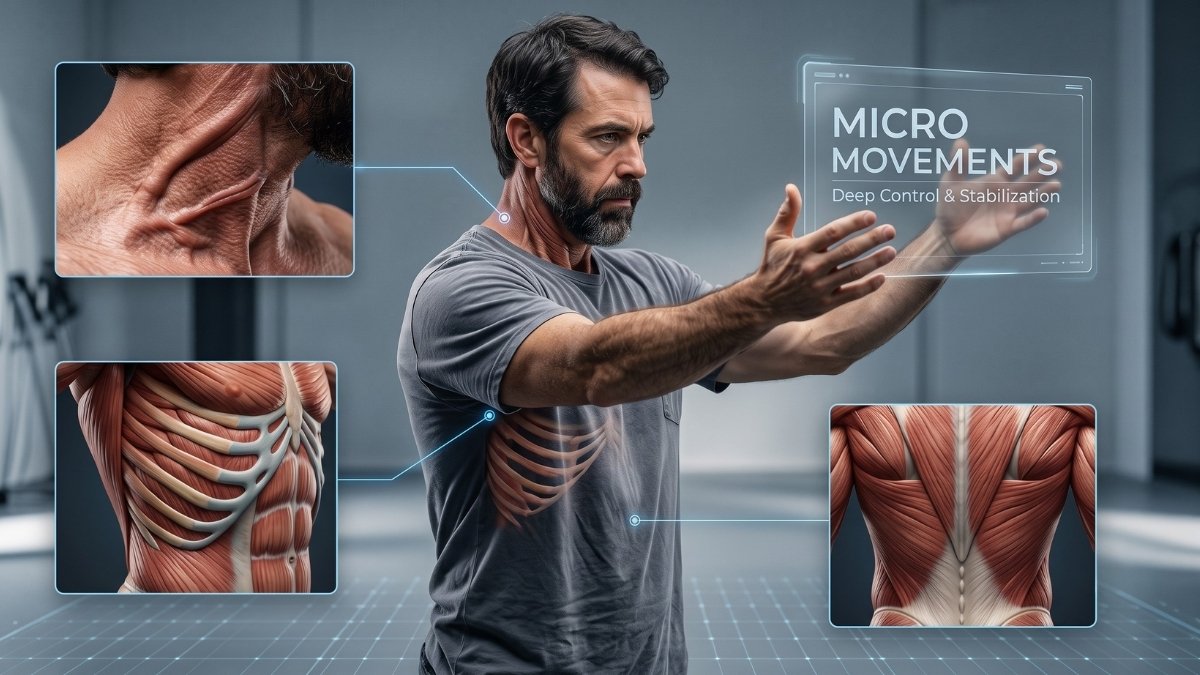
You did not skip your workout because you are lazy. You skipped it because the gym model was built for a life you no longer have.
Most people believe fitness only counts if it is 45 to 60 minutes long. Anything less feels like a waste. So when life gets busy, they do nothing at all. That all-or-nothing thinking is what keeps people stuck.
Here is the truth. Short bursts of movement — as little as 3 minutes — have real, proven health benefits. And the small movements you do all day, like standing, walking, and climbing stairs, burn more calories than most people realize.
Digital Wellness
Efficiency Guide
This framework covers 8 critical points. Discover the ultimate biological approach to staying lean and fit on a packed schedule.
Point One: What Are Micro-Workouts and Why Does Science Back Them?
A micro-workout is a short, structured burst of physical activity. It lasts between 1 and 10 minutes. It is not a warm-up. It is not a stretch break. It is an intentional effort that pushes your body hard enough to trigger a real response.
Here is the proof. A 2025 study in the British Journal of Sports Medicine found that women who averaged just 3.4 minutes of high-intensity movement per day were 51% less likely to have a heart attack. They were 67% less likely to develop heart failure. Even 1 to 2 minute bursts cut cardiac risk by 30%.
A 2024 review in the American Journal of Lifestyle Medicine confirmed that physical activity sessions under 10 minutes are a valid strategy for people who cannot meet standard exercise guidelines.
And a 2025 paper in the European Journal of Medical and Health Sciences called micro-workouts “a paradigm shift in exercise for health and longevity.”
Three minutes. Real results. The science is clear.
Quick Tips:
- Keep a timer on your phone. Set it for 3 minutes and go all in.
- Treat each micro-workout as a complete session, not a partial one.
- Pick one exercise you are comfortable with and master it first before adding more.
Point Two: NEAT — The Hidden Calorie-Burning System You Already Have

NEAT stands for Non-Exercise Activity Thermogenesis. It is the energy your body burns doing everything that is not sleeping, eating, or formal exercise. Walking to your car. Standing at the kitchen counter. Fidgeting in your chair. All of it counts.
Dr. James Levine of the Mayo Clinic coined the term and proved something remarkable. NEAT can vary by up to 2,000 calories per day between two people of the same size. The difference is not their gym routine. It is how much they move during regular life.
According to MedlinePlus data, standing burns 186 calories per hour. Sitting burns only 139. That is a 47-calorie difference every single hour. A moderate walk burns 324 calories per hour for a 170-pound person.
The NCBI reports that 36% of Americans are fully sedentary. Almost 48% are barely active. That means most people have a massive NEAT opportunity they are not using at all. You are likely one of them. And that is good news, because it means the gap is easy to close.
Quick Tips:
- Stand during every phone call you make. Do it starting today.
- Walk to a colleague instead of sending a message whenever possible.
- Set a timer every 40 minutes to stand up and move for 2 minutes.
Point Three: The Science of Exercise Snacks — Why Small Bites Add Up
Exercise snacks are brief bouts of movement — under 10 minutes — designed to break up long periods of sitting. Think of them as short interruptions to your sedentary day.
A major 2025 systematic review published in PMC analyzed 26 studies. The results were consistent. Exercise snacks improved blood sugar control, blood pressure, strength, and cognitive function across healthy adults, older adults, and people with obesity and type 2 diabetes.
Two separate studies on stair climbing — Allison et al. 2017 and Jenkins et al. 2019 — found that three short stair-climbing sessions per day improved VO2 peak in inactive adults. VO2 peak measures how well your heart and lungs work. Better VO2 peak means better cardiovascular health.
A 2025 study by Zhou et al. found that exercise snacks also changed plasma metabolomic profiles in obese adults. That means the benefits go deeper than calorie burn — your body’s chemistry actually shifts. A 2024 review in Communications Psychology confirmed that short bouts of exercise sharpen mood and mental focus.
Quick Tips:
- Climb stairs instead of taking the elevator at least twice per day.
- Do 20 bodyweight squats after every 90 minutes of sitting.
- Use a lunch break for a 7-minute brisk walk outside — even once a day helps.
Point Four: How to Build Your NEAT Stack — Simple Habits That Burn Calories All Day

NEAT stacking means designing your day so movement happens automatically. You are not adding a workout. You are making small choices that quietly add up to hundreds of extra calories burned.
Here are five habits with real impact. First, stand during calls and meetings. Per MedlinePlus, this burns 47 more calories per hour than sitting. Second, take the stairs. Three sessions per day improved cardiovascular fitness in multiple studies.
Third, walk during meetings when you can. Fourth, park farther or get off one stop early on your commute. Fifth, do 10 squats or calf raises while waiting for your coffee, microwave, or a webpage to load.
The 20-8-2 rule is a simple framework from ergonomics research. For every 30 minutes, sit for 20, stand for 8, and move lightly for 2. That cycle, repeated all day, qualifies as NEAT activity. Mayo Clinic-linked research shows this raises your basal metabolic rate by at least 10%.
You do not need equipment. You need a plan and the habit to follow it.
Quick Tips:
- Print or screenshot the 20-8-2 rule and stick it near your desk.
- Replace your “scroll break” with a 2-minute walk around the room.
- Count your daily steps for one week first. Then try to beat that number.
Point Five: A Micro-Workout Blueprint You Can Actually Do — No Equipment, No Gym

This plan takes 15 minutes total. It is split into three 5-minute sessions across your day. That is it.
The 15-Minute Micro-Dose
Split your fitness into three efficient 5-minute blocks to boost metabolism and energy.
Do 45s of jump squats, 45s of push-ups, and 45s of mountain climbers. Rest 15s. Repeat once. Finish with 30s of deep breathing.
Climb stairs for 3 rounds, OR do 20 bodyweight squats, 15 incline push-ups off a desk, and 10 lunges on each leg.
Do glute bridges, a plank hold, and reverse lunges. These are low impact but they hit your major muscle groups effectively.
The 2025 BJSM study showed that even 1 to 2 minute high-intensity efforts cut cardiac risk by 30%. So if you only finish one session on a hard day, you still win.
Consistency matters more than duration. A 3-minute workout done every single day delivers more long-term results than a 60-minute session done once a week.
Quick Tips:
- Link your morning micro-workout to an existing habit, like right after brushing your teeth.
- Use a free timer app to keep each exercise block honest.
- Write your three sessions in your phone calendar as real appointments.
Point Six: Combining Micro-Workouts and NEAT — Your Full-Day Active Living Formula

Micro-workouts and NEAT are not the same thing. Do not confuse them. Micro-workouts are planned, intense, and short. NEAT is ambient — it runs in the background of everything you do. You need both.
Together, they form what you can call the Active Day Formula. NEAT habits run all day long. Micro-workouts slot into natural breaks like before lunch or after work. The combination rivals traditional gym routines in several measurable health outcomes.
Dr. James Levine’s research confirmed that highly active NEAT practitioners can burn up to 2,000 more calories per day than sedentary people of the same size. And NCBI data shows that NEAT — not formal exercise — is the biggest driver of activity-based calorie burn for most people.
Here is what a full day looks like. Morning micro-workout after waking. Walk to transit or park far away. Take stairs at work. Stand during calls. Lunchtime stair session or walk. Evening bodyweight circuit. Short walk after dinner. Total intentional time: about 25 minutes. Results: equivalent to an active daily lifestyle.
Quick Tips:
- Plan your NEAT habits the night before. Write them into your schedule.
- Use the sample day above as a starting template, then adjust it to your own routine.
- Focus on just two NEAT habits and one micro-workout in week one. Add more in week two.
Point Seven: Tracking Progress Without Obsessing — What to Measure and What to Ignore
You do not need a $400 smartwatch to track this. Two metrics are enough to start. Count your daily steps and count how many micro-workouts you completed this week. That is your baseline.
According to WHO 2022 guidelines, aim for 8,000 to 10,000 steps per day. Also track how many times you broke up sedentary sitting. Over four to six weeks, check your resting heart rate. If it drops, your system is working.
What to ignore: calorie burn numbers from fitness trackers. Research shows they overestimate by 15 to 25%. Single-day results are also meaningless. And comparing yourself to gym-goers is counterproductive. You are playing a different game.
The 2025 PMC systematic review showed that measurable improvements in fitness, blood pressure, and mood happen within four weeks of consistent exercise snacking. Burning an extra 150 to 200 calories daily through NEAT and micro-workouts is more valuable than one intense session followed by a week of nothing.
Quick Tips:
- Use Apple Health or Google Fit — both are free and accurate for step counting.
- Do a 4-week check-in. Note your energy levels, sleep quality, and mood.
- Keep a simple paper habit tracker if apps feel like too much pressure.
Point Eight: Common Mistakes That Kill Results — And How to Fix Them Fast

Most people quit micro-workouts in two weeks. Not because the method fails. Because they make one of five easy-to-fix mistakes.
Mistake 1: Treating micro-workouts like a warm-up. Fix this by giving every 5-minute session a clear start, real intensity, and a defined finish. It is a complete unit.
Mistake 2: Relying only on NEAT and skipping intensity. NEAT is powerful, but without brief high-intensity bursts, you miss the cardiovascular benefits the 2025 BJSM study proved.
Mistake 3: Going hard in week one, then stopping. Fix this with habit stacking — attach a micro-workout to something you already do, like making coffee or sitting down for lunch.
Mistake 4: Moving fast and sloppy. Ten controlled squats with full range of motion beat twenty rushed, careless ones every time.
Mistake 5: Never making it harder. Once a session feels easy, add one rep, shorten rest by five seconds, or increase speed. This is progressive overload at a small scale. Without it, your body stops improving.
Quick Tips:
- Write “Intensity = Results” somewhere visible near your workout space.
- Attach your first micro-workout to an existing morning habit this week.
- Every two weeks, make one small change to each session to keep your body adapting.
Lastly,

You do not need a gym or a free hour. Three minutes of movement can lower your heart attack risk. NEAT can burn up to 2,000 more calories per day.
Stack micro-workouts and NEAT into your real life, and fitness stops being something you fail at and starts being something you actually do.