

Your smartphone isn’t just stealing your time—it’s literally aging your body faster than it should. Every notification, every scroll, every late-night screen session floods your body with stress hormones that speed up biological aging. You feel it: the constant tension, the shallow breathing, the exhaustion that sleep doesn’t fix.
You look in the mirror and wonder why you seem older than you should. The problem isn’t just stress—it’s how your phone triggers a stress response your body can’t shut off. This creates a cycle that ages your cells faster than your years.
But there’s a solution that costs nothing and takes just 10 minutes a day. Your vagus nerve—a built-in reset button running from your brain to your gut—can reverse this damage.
Recent research from 2024 and 2025 proves that simple daily exercises lower cortisol, improve heart rate variability, and measurably slow biological aging. You’re about to learn exactly how to use it.
The Connection: Tech & Biology
This article is structured into 8 points—read them one by one to understand how excessive phone use accelerates stress aging and how a simple 10-minute vagus nerve reset can help restore balance.
Point One: The Hidden Link Between Screen Time and Accelerated Aging

Check your phone first thing in the morning and your heart rate spikes before you’re even awake. That’s cortisol—your stress hormone—flooding your system. A 2025 study in BMC Medicine tracked 200 students who cut their screen time to 2 hours or less per day for three weeks.
The results? Significant improvements in stress, depression, and sleep quality. The problem is clear: excessive screen time doesn’t just waste your time, it breaks your body’s stress regulation system.
When you spend 4+ hours daily on screens, your cortisol levels stay elevated. Your body thinks it’s under constant threat. This isn’t chronological age—the years you’ve lived. This is biological age—how old your cells actually are. Stress hormones accelerate cellular aging, making your body older than it should be.
Blue light from screens suppresses melatonin, wrecking your sleep. Poor sleep means more stress. More stress means higher cortisol. It’s a cycle. An Austrian study of 7,000 adolescents found that 3-4 hours of daily smartphone use linked directly to higher depressive symptoms and elevated stress markers.
Social media manipulates dopamine, creating addiction patterns that keep stress hormones high. Your phone is literally aging you from the inside out.
But here’s the good news: your body has a built-in stress reset button that can reverse this process.
Point Two: Your Body’s Natural Stress Reset Switch

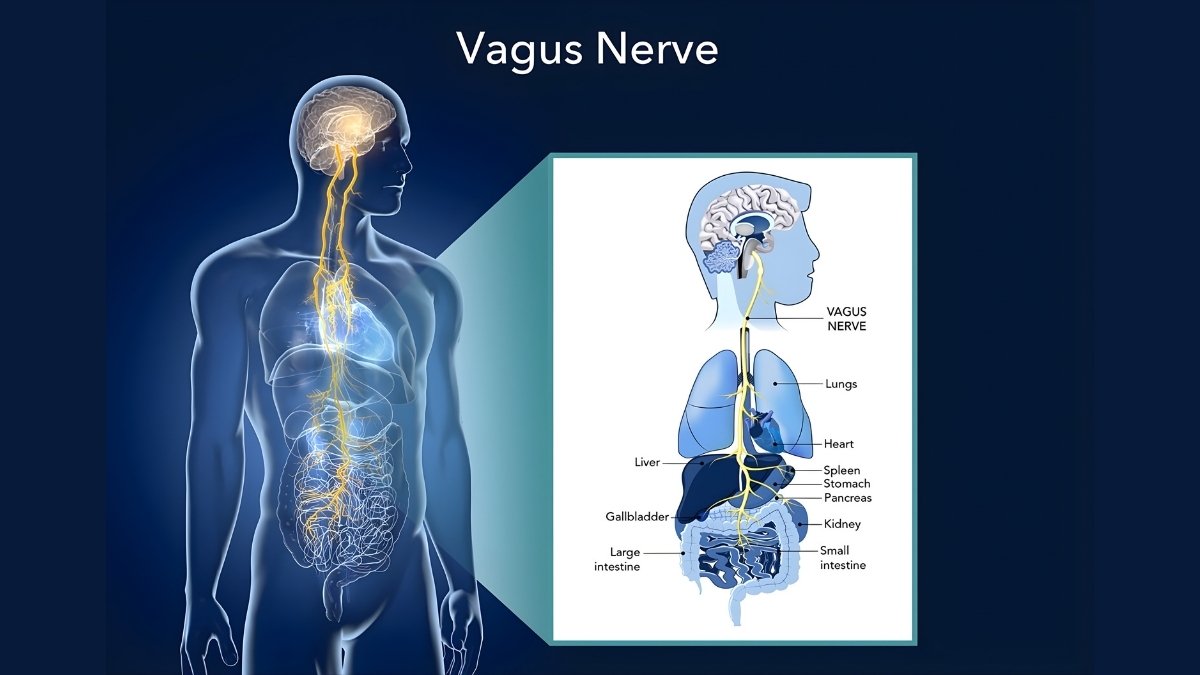
Think of the vagus nerve as a dimmer switch for your body’s stress response. It’s the longest nerve in your body, running from your brainstem down through your neck, chest, and into your abdomen.
This single nerve connects your brain to your heart, lungs, and digestive system. It controls your heart rate, blood pressure, and digestion. More importantly, it controls your parasympathetic nervous system—the “rest and digest” mode that shuts down stress.
Here’s what matters: vagal tone. This is how well your vagus nerve functions. Higher vagal tone means better stress resilience, better emotional control, and slower aging.
You can measure it through heart rate variability (HRV)—the time variation between heartbeats. HRV is the gold-standard marker of nervous system balance. Studies show you can improve HRV by 15-25% through vagus nerve stimulation.
When your vagus nerve activates, it triggers something called the cholinergic anti-inflammatory pathway. This suppresses inflammation markers like TNF-alpha and pro-inflammatory cytokines. Less inflammation means slower aging.
Your vagus nerve literally controls how fast you age. The stronger it is, the better your body handles stress, and the slower your cells deteriorate.
Recent research from 2024-2025 has revealed exactly how powerful this nerve is—and how easy it is to activate.
Point Three: What New Research Reveals About Vagus Nerve Resets
If you’re skeptical about a “10-minute reset,” the data from 2024-2025 should change your mind. In August 2025, Nature Translational Psychiatry published a study showing that transcutaneous auricular vagus nerve stimulation reduced anxiety-like behaviors by enhancing prefrontal cortex regulation.
This is the brain region that controls emotional responses and decision-making.
A March 2025 study from UT Dallas achieved something remarkable: 9 patients with treatment-resistant PTSD received vagus nerve stimulation paired with therapy. All nine achieved full symptom remission. At six months, the results held.
Another August 2025 study tracked elite shooters for four weeks of VNS. Stress dropped significantly (p < 0.01), cognitive and somatic anxiety plummeted (p < 0.001), and depression decreased (p < 0.01) while confidence increased.
A 2024 long-COVID study showed that 10 days of twice-daily 30-minute VNS improved cognition, anxiety, depression, and sleep. At one-month follow-up, the improvements remained or got better. Studies also show C-reactive protein—a key inflammation marker—can drop up to 30% through VNS.
How does it work? VNS activates the nucleus of the solitary tract in your brainstem, influences the HPA axis (your stress response system), and boosts prefrontal cortex activity. The science is clear and the results are measurable.
The best part? You don’t need expensive devices or medical procedures to access these benefits.
Point Four: Your 10-Minute Daily Vagus Nerve Reset Routine
Here’s your complete, science-backed 10-minute protocol you can do anywhere, anytime.
Minutes 1-3: Deep Diaphragmatic Breathing
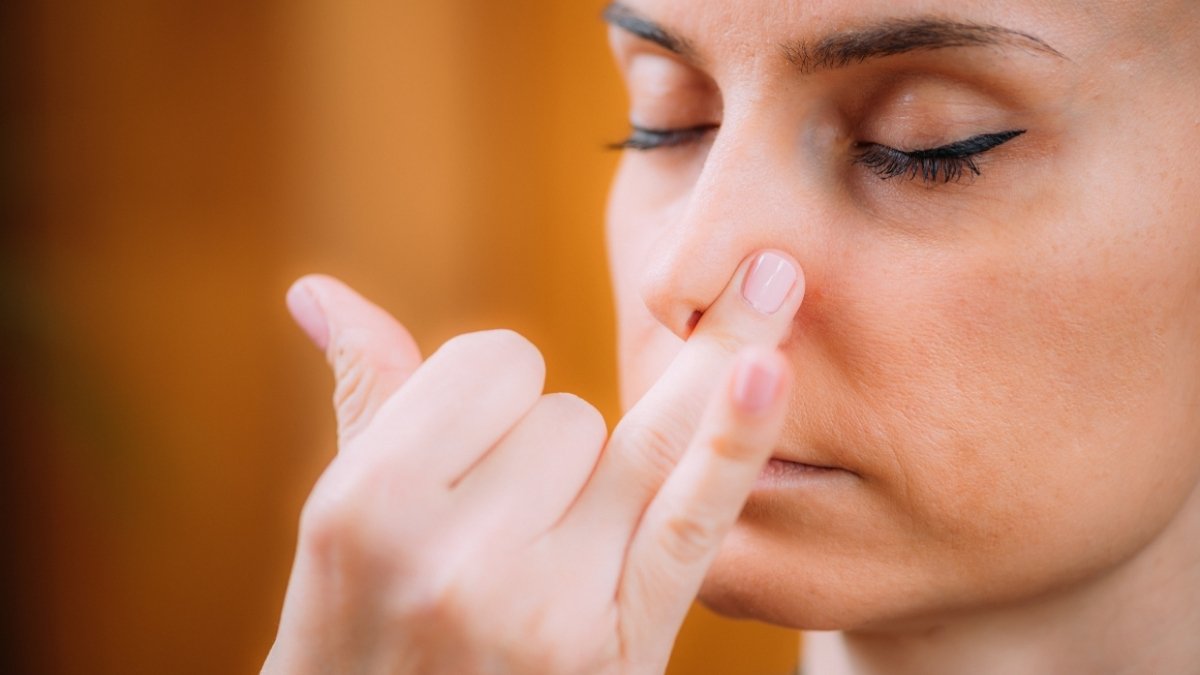
Sit comfortably and place one hand on your ribs. Inhale through your nose for 4 seconds—feel your ribs expand outward, not your chest rising.
Exhale through your mouth for 8 seconds, letting your ribs contract. Repeat for 6-8 cycles. This engages the diaphragm, which is directly connected to the vagus nerve, triggering your parasympathetic response.
Minutes 4-6: Humming Technique

Take a deep breath and exhale while humming a low-pitched “hmmmm” or “om” sound. Focus on the vibrations in your chest, not your throat. Gently plug or cover your ears to amplify the sensation inside your body.
Complete 5-10 rounds. The vibrations directly stimulate the vagal branches connected to your vocal cords, which increases HRV immediately.
Minutes 7-8: Cold Water Face Exposure

Splash cold water on your face, hold a cold compress to your face and neck for 30 seconds, or take a brief cold water rinse in the shower.
This activates the mammalian diving reflex, which slows your heart rate and promotes immediate vagal activation.
Minutes 9-10: Grounding Eye Movement
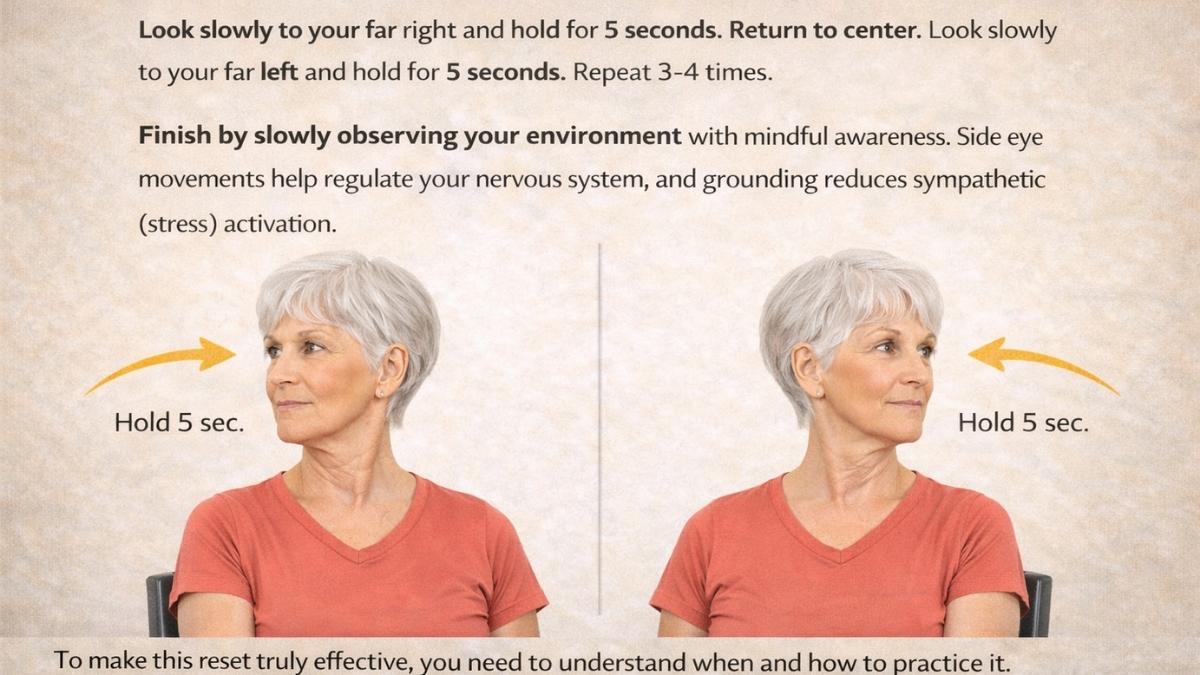
Look slowly to your far right and hold for 5 seconds. Return to center. Look slowly to your far left and hold for 5 seconds. Repeat 3-4 times.
Finish by slowly observing your environment with mindful awareness. Side eye movements help regulate your nervous system, and grounding reduces sympathetic (stress) activation.
To make this reset truly effective, you need to understand when and how to practice it.
Point Five: Timing Your Reset for Maximum Impact
Knowing the protocol is one thing—making it stick is another. The best time for your first reset is morning, before you check your phone. This sets your baseline for the entire day. Your cortisol naturally peaks mid-morning, so a second reset around 10-11 AM addresses this surge before it builds.
Use your reset immediately after stress spikes during the day—when you feel your heart rate increase or your breathing get shallow. Evening resets improve sleep quality by activating your parasympathetic system before bed.
Consistency beats intensity every time. A daily 10-minute practice is far superior to occasional 30-minute sessions.
Stack your reset with existing habits to make it automatic. After your morning coffee, before lunch, or right after your work commute are all good anchor points. Create environmental cues: put a note on your bathroom mirror, set a phone reminder, or place a cold washcloth by your sink.
The key is building vagal tone over time. One reset lowers your immediate stress. Daily resets for weeks rewire your nervous system’s baseline stress response. Think of it like strength training for your stress resilience.
While you’re building this practice, these common mistakes can sabotage your results.
Point Six: Common Mistakes That Prevent Results

Even with the right protocol, these five mistakes can prevent you from seeing results.
Shallow breathing instead of diaphragmatic breathing. If your chest rises but your ribs don’t expand outward, you’re not engaging your diaphragm. The vagus nerve needs diaphragmatic movement to activate. Place your hand on your ribs and make sure they move.
Rushing through exercises. Vagal activation requires slow, deliberate movements. Speed undermines effectiveness. Each exercise needs its full allotted time to activate vagal pathways. Don’t cut the 8-second exhales short or speed through the humming.
Inconsistent practice. Sporadic use won’t build vagal tone. Daily consistency is essential for measurable HRV improvements. Missing days resets your progress. Treat this like brushing your teeth—non-negotiable.
Immediately returning to your phone after the reset. This is the biggest trap. You complete your 10-minute protocol, then immediately check social media or email. This re-triggers your stress response and reverses the benefits. Wait at least 15-20 minutes before screen time.
Practicing while multitasking. Trying to do your reset while watching TV or scrolling defeats the entire purpose. Your nervous system needs focused attention to shift states. Put everything down and commit the 10 minutes.
Once you avoid these pitfalls, you’ll want to track whether it’s actually working.
Point Seven: Tracking Your Stress Age Reversal

You shouldn’t have to wonder if this is working—here’s how to know for sure. Heart rate variability is your gold standard metric. Download a free HRV app like Elite HRV, HRV4Training, or Welltory. Measure your HRV every morning before getting out of bed. Studies show 15-25% improvements in HRV with consistent vagus nerve practice.
Track subjective stress daily on a simple 1-10 scale. Morning stress level, evening stress level, and overall mood. This takes 30 seconds in a notebook or notes app. Sleep quality improves within 1-2 weeks for most people—that’s your first early indicator. Notice when you fall asleep faster or wake up less during the night.
Your resting heart rate should gradually decrease over time. Check it first thing in the morning. A drop of 5-10 beats per minute over a month indicates real improvement. Physical signs matter too: reduced muscle tension in your shoulders and jaw, better digestion, fewer stress headaches.
Expected timeline: You’ll feel immediate relaxation within minutes of each reset. Sustained improvements appear in 2-4 weeks. Long-term benefits emerge at 1-3 months of daily practice. Wearable devices like Apple Watch, Oura Ring, or Whoop can track HRV automatically, but they’re optional, not required.
While you’re building this practice, you can amplify the benefits with these additional strategies.
Point Eight: Enhancing Your Vagus Nerve Reset Beyond 10 Minutes

Ready to take your vagus nerve reset to the next level? These evidence-based additions can accelerate your results.
Signal Boosters
Protocol: Phone in another room after 8 PM. Measurable mental health gains.
Supports signaling from gut upward via the vagus nerve.
Try a 10-min walk immediately after your reset routine.
Eye contact and real presence activate the social nervous system.
Wellness devices (not medical) that may offer additional support.
These additions accelerate results but are not mandatory.
Lastly,
Your phone and chronic stress are measurably aging you faster than your years. The vagus nerve reset offers a scientifically validated, free solution backed by 2024-2025 research.

Ten minutes daily of breathing, humming, cold exposure, and grounding can lower cortisol, improve HRV, and reverse biological aging markers.
Start your first reset today—before you check your phone tomorrow morning. Track your HRV for 30 days and measure the difference. This vagus nerve reset isn’t just stress management—it’s biological age reversal you can feel.