
You know the type. That 85-year-old neighbor who eats bacon for breakfast, never counts calories, and still outpaces people half her age on morning walks. Meanwhile, you track every meal and still struggle to keep your cholesterol in check.
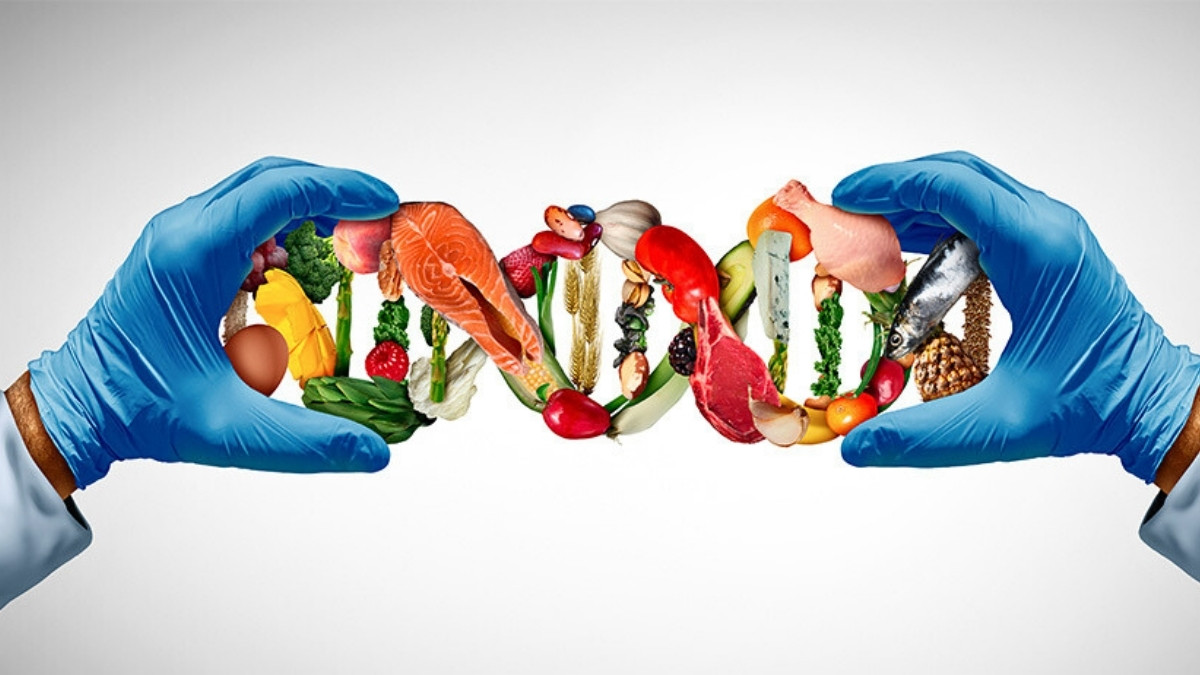
The difference might not be willpower. It could be written in your DNA.
You’re watching your friends age differently on similar lifestyles. Some seem to have “lucky genes” that protect them despite what they eat. Others follow strict plans with little to show for it. The confusion is real, and the advice you get rarely helps.
Here’s what you’ll learn: how genetic variations affect metabolism in seniors, what nutrigenomics testing actually shows, whether genetic testing is worth $200-$550, and what steps you can take based on current science.
This isn’t about blaming your genes or finding excuses. It’s about getting answers that actually fit your body.
Genetic Testing Guide!
Unlock Your DNA’s Secrets
Genetic Testing Basics:
How a simple cheek swab can reveal your body’s unique nutrition needs
The Cost:
Testing ranges from $200-$550; most insurance doesn’t cover it
Who Needs It:
Best for seniors struggling with weight, health issues, or family disease history
Important Genes:
4 main genes affect how your body processes food and ages
The Truth About “Lucky Genes”:
Lifestyle choices matter more than genetics (70-80% vs 20-30%)
What Tests Show:
How you process vitamins, handle caffeine, manage weight, and more
Action Steps:
What to do if you get tested (and what to do if you don’t)
Bottom Line:
Whether genetic testing is worth your money and time
The Science Behind “Lucky Genes” in Aging

Scientists studied people who live past 110 years old. They found something that might surprise you. Research on over 1,500 people from Japan confirms specific genetic patterns. The APOE ε2 gene shows up more often in people who live to 100 and beyond.
Here’s the catch: having one copy of the APOE ε4 gene cuts your odds of reaching 100 by roughly half. Your metabolism changes in four phases throughout life. Ages 60 and up mark the fourth phase. Mitochondrial function (your cells’ energy factories) declines 20-40% in older adults.
But here’s proof that lifestyle beats genetics: Nigerians carry the highest rates of APOE ε4 anywhere in the world. Yet they have the lowest Alzheimer’s rates globally. Why? Their traditional plant-based diet keeps cholesterol extremely low. The diet overpowers the genetic risk.
Four genes matter most for senior nutrition: FOXO3A (longevity), CETP (cholesterol), FTO (weight management), and MTHFR (heart health). These explain why two seniors eating identical meals get totally different results. Genetic variations can create 5+ year lifespan differences between people.
What Nutrigenomics Testing Actually Reveals for Seniors
The test is simple. You swab your cheek or spit in a tube. No blood needed. The lab analyzes 70+ genetic markers. Results come back in 2-4 weeks. You only test once because your genes don’t change with age.
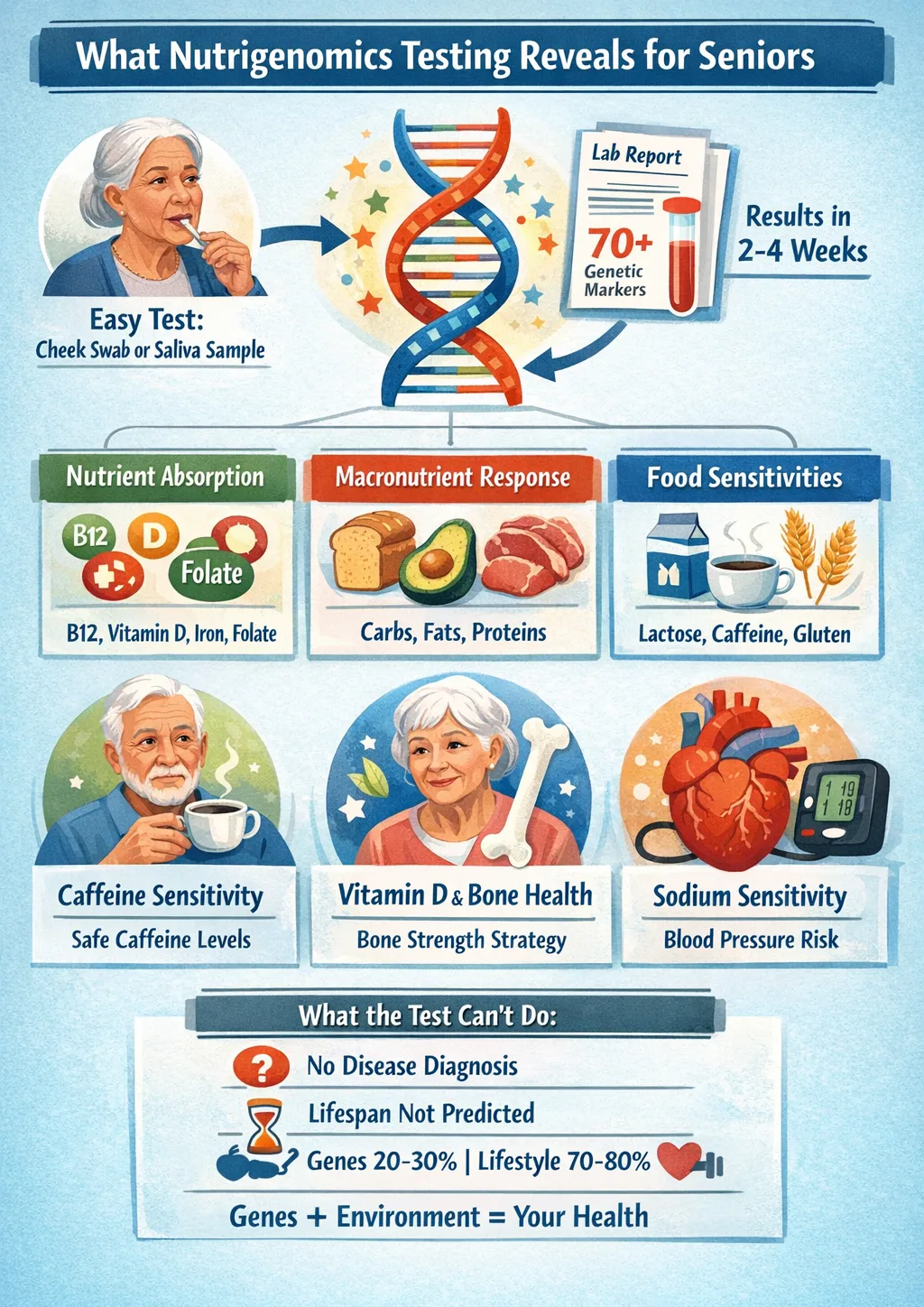
Studies show genes contribute 20-30% to lifespan. Environment and lifestyle account for 70-80%. The Food4Me Study found modest improvements with DNA-based advice, but it didn’t dramatically outperform regular recommendations.
The Real Costs and Benefits: Is Testing Worth It?

Let’s talk money. A comprehensive nutrigenomics test with professional consultation costs $400-550 in 2026. Nutrigenomix test package runs $549 and includes consultation. 3X4 Genetics test costs $350. Basic tests range from $200-400 but give limited interpretation.
Most health insurance doesn’t cover wellness-focused genetic testing. Medicare and Medicaid typically exclude it. Some FSA/HSA accounts may allow payment, but check first.
Who benefits most from testing? Seniors with unexplained weight gain despite eating well. Those with family history of heart disease, diabetes, or Alzheimer’s. People taking multiple supplements without knowing if they work.
Skip testing if you’re unwilling to work with a qualified nutritionist, you expect testing alone to solve health problems, or you’re already achieving excellent health outcomes.
The return on investment: many seniors waste money on supplements they don’t absorb well. A one-time test provides lifetime guidance. Research shows genetic information strengthens commitment to health goals.
What to Do With Your Results: Action Steps for Seniors

Work with a Registered Dietitian Nutritionist (RDN) with nutrigenomics training. Don’t try to interpret complex genetic data yourself.
Dietary changes depend on your specific genes. If you carry APOE ε4, emphasize a plant-based Mediterranean diet. Minimize saturated fat and cholesterol. For MTHFR variations, you may need methylated folate supplements instead of standard folic acid. For FTO variants, you may respond better to high-protein diets.
Only supplement based on demonstrated deficiency or genetic need. Common senior needs include vitamin D, B12, and omega-3s. Avoid taking everything. Targeted supplementation works better and costs less.
Lifestyle factors override genetics every time. Physical activity remains important regardless of your genetic profile. Social engagement links to longevity across all gene types. Caloric restriction shows benefits across genetic backgrounds.
Monitor progress with bloodwork, weight, blood pressure, and energy levels. Reassess with your nutritionist every 3-6 months initially. Share results with your primary care physician for integrated care.
Beyond Testing: What Science Says About Senior Nutrition in 2026

Current research shows metabolic flexibility decreases with age. NAD+ pool declines, affecting energy production in every cell. Research from January 2025 shows you can improve brain metabolism through increased NADH, NAD+, and ketone bodies while reducing blood glucose.
These interventions work regardless of your genes: caloric restriction (without malnutrition) extends lifespan across all species tested. Resistance training maintains muscle mass. Time-restricted eating may improve metabolic health. The Mediterranean diet pattern consistently shows benefits.
Your gut microbiome connects to longevity. Centenarians maintain more diverse gut bacteria. Fermented foods support beneficial bacteria: yogurt, kefir, kimchi, sauerkraut. Prebiotics feed healthy microbes: onions, garlic, leeks, asparagus, bananas, oats.
Emerging therapies show promise but aren’t ready yet: senolytic drugs, urolithin A, metformin, and NMN. Don’t rush to buy these.

What matters most: genes contribute only 20-30% to lifespan. Environmental and lifestyle factors account for 70-80%. Social connections prove as important as diet and exercise.
Final Thoughts:
Some seniors do have genetic advantages. But the majority of healthy aging depends on what you choose to do every day.
Nutrigenomics testing offers personalized insights worth considering, especially if you’re struggling despite following general advice. The real “luck” isn’t inherited genes—it’s making informed decisions and implementing them consistently.