
Sitting for more than 10.6 hours daily increases your risk of heart failure by 60%. But three simple Pilates movements can help reverse this damage.
Your hips feel stiff when you stand. Your back aches after sitting through dinner. You grab the armrest just to get out of your chair. These aren’t signs of aging you have to accept. They’re signs of sitting damage—and you can fix them.
Most seniors spend 6+ hours sitting each day. This causes tight hip flexors, weakened glutes, and a compressed spine. Traditional exercise feels too hard or risky. You need something that works without putting stress on aging joints.
The Real Damage Sitting Does to Your Body After 60
Research from 2025 shows sitting 10.6+ hours daily increases heart failure risk by 60%. People who sit extensively have a 147% higher risk of heart attack or stroke and a 112% higher risk of diabetes. Even if you exercise regularly, sitting still damages your cardiovascular system. Americans sit 11 hours daily on average.
Sitting causes hip flexor muscles to shorten, pulling on your hip joints and making your back unstable. Your glutes weaken and waste away. Your spine compresses. The discs between vertebrae squeeze together. Your shoulders round forward. Your neck juts out. Tight hip flexors limit how far you can step.
Weak glutes make you unsteady. Compressed spine causes back pain. Physical inactivity contributes to over 3 million preventable deaths worldwide annually. The good news? This damage is reversible.
Why Pilates Works Better Than Stretching Alone
Stretching provides only 15 minutes of relief because it doesn’t address the root problem. Your muscles have forgotten how to work properly. Pilates changes tightness at a neurological level by teaching muscles to activate differently.
A 2022 study shows 6 weeks of Pilates improves mobility in older adults. Pilates builds strength and stability, improves balance, and decreases fall risk. You’re not just stretching a tight muscle—you’re teaching weak muscles to support your joints properly. Pilates can be performed in non-weight-bearing positions, making it ideal for people with arthritis or joint pain.
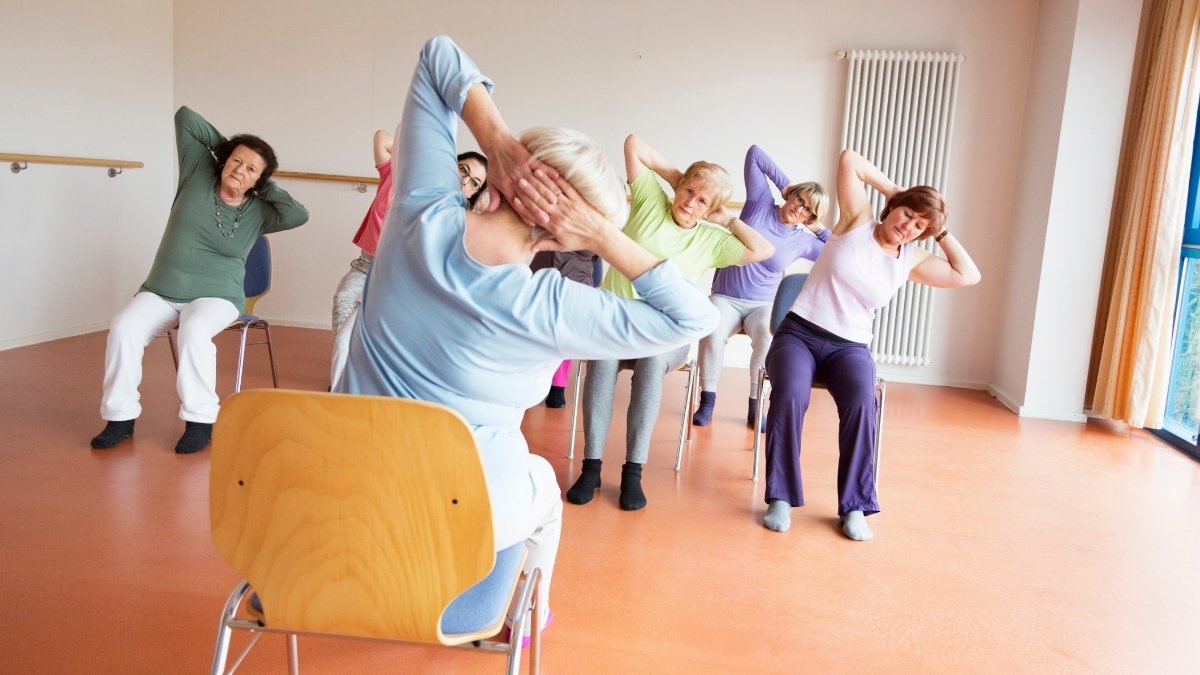
You can do every move in a chair if needed. Chair modifications make exercises accessible regardless of your mobility level. You don’t need special equipment or to get on the floor. You work at your own pace.
Move #1: The Mermaid Stretch (Spine and Hip Opener)
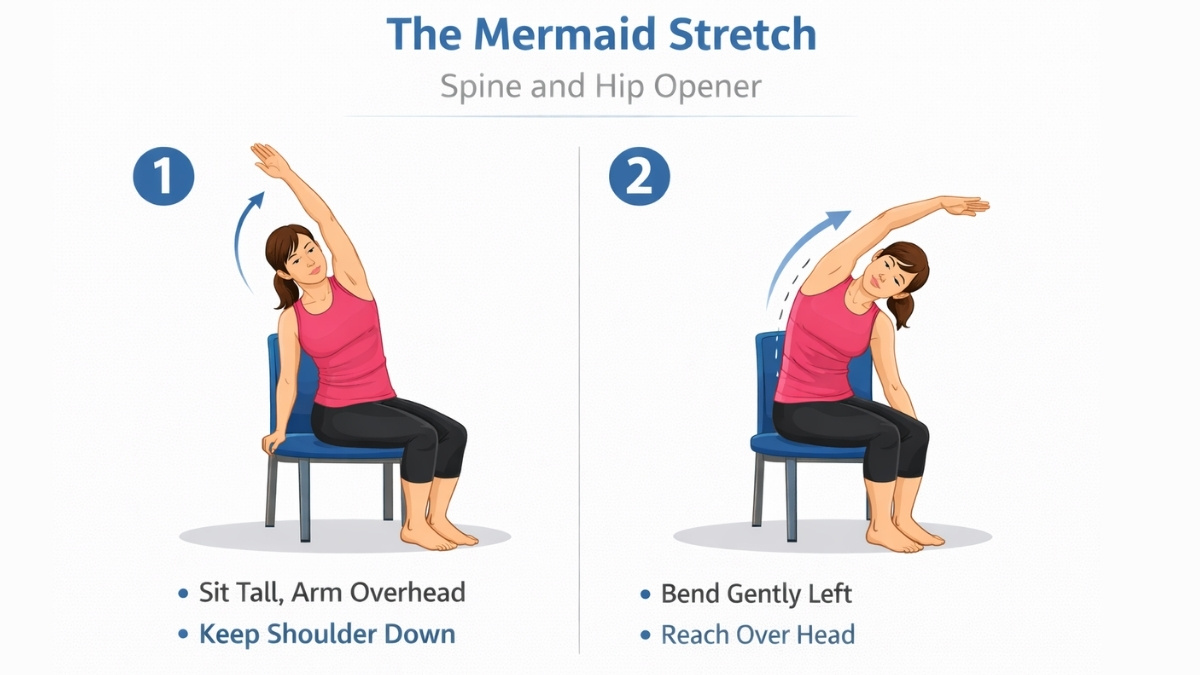
Pilates instructor Helen O’Leary calls the mermaid “my exercise for 2026” because it involves your whole body. This move targets lateral spine flexibility, hip abductors, and obliques—areas that compress from sitting. You’ll feel less stiff from day one.
Here’s how to do it:
Sit at the edge of a chair with feet flat. Place your left hand on the seat for support. Raise your right arm overhead. Keep your shoulder down. Breathe in. As you exhale, bend gently to your left side. Reach your right arm over your head. Hold for 20-30 seconds while breathing normally. Return to center. Switch sides and repeat.
Modifications that work:
Keep one hand on the chair arm for balance. If you can sit on the floor, cross your legs. Only bend as far as feels comfortable. Do 3-5 times on each side. The key is consistency, not how far you bend.
Move #2: The Spine Roll (Core Activation and Back Relief)
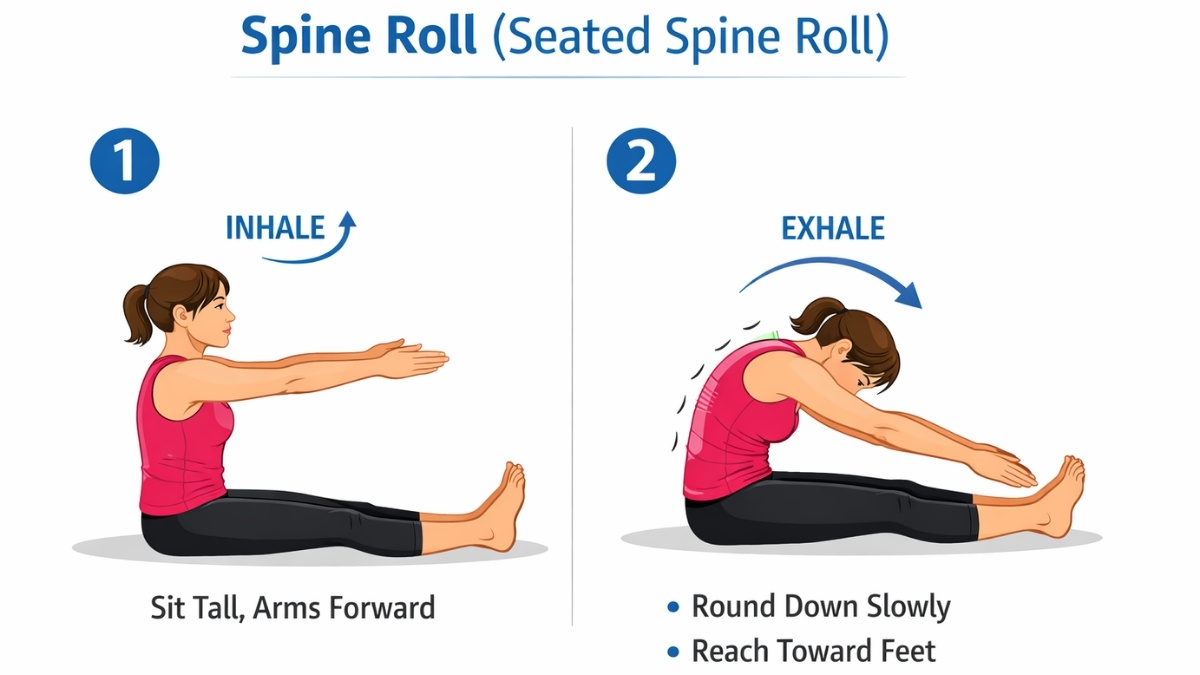
The Spine Roll helps improve posture by rotating through your thoracic spine—the part that rounds forward from sitting. This engages your oblique muscles to strengthen your core and reverses forward head posture. Each roll promotes vertebral articulation and disc decompression, creating space between vertebrae.
Here’s how to do it:
Sit on the floor with legs extended, feet flexed, shoulder-width apart. Extend arms forward at shoulder height. Inhale deeply to lengthen your spine. As you exhale, round your spine forward one vertebra at a time. Reach hands toward your feet. Hold for 3 breaths. Return slowly by rolling through your spine. Your head comes up last.
Modifications that work:
Bend your knees if hamstrings are tight. Sit on a folded towel to elevate hips. Use a resistance band around your feet for assistance. Do 6-8 repetitions. Focus on the rolling motion, not distance reached.
Move #3: Bridge with Hip Lift (Glute and Hip Flexor Work)
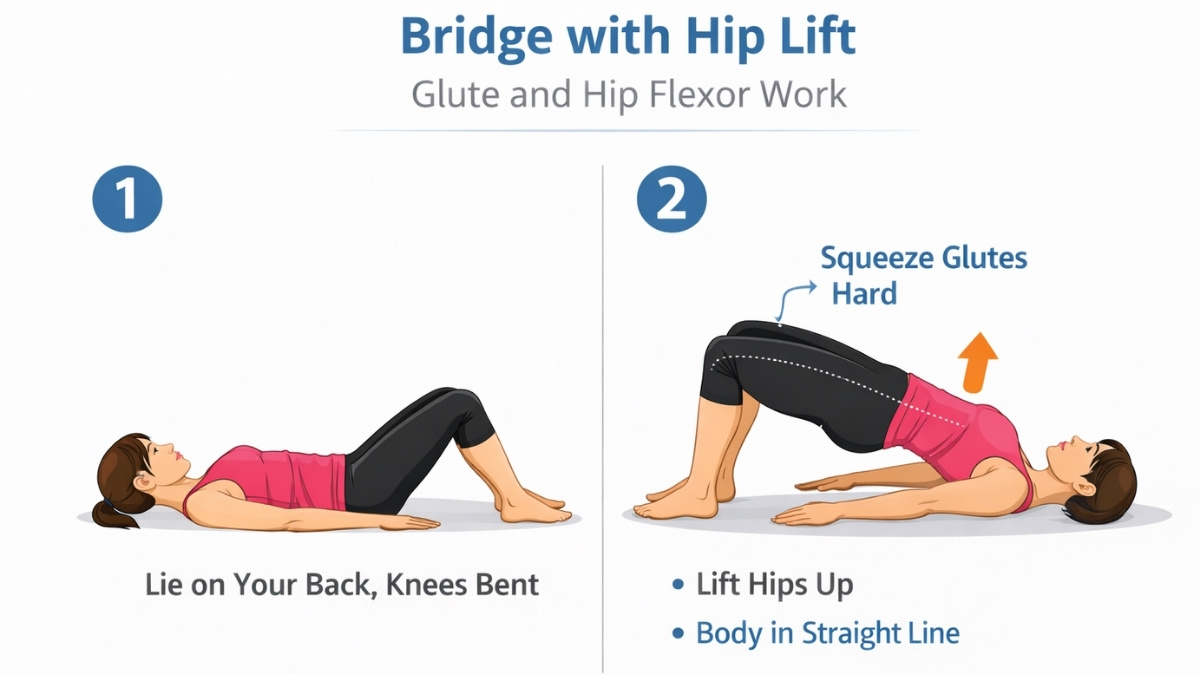
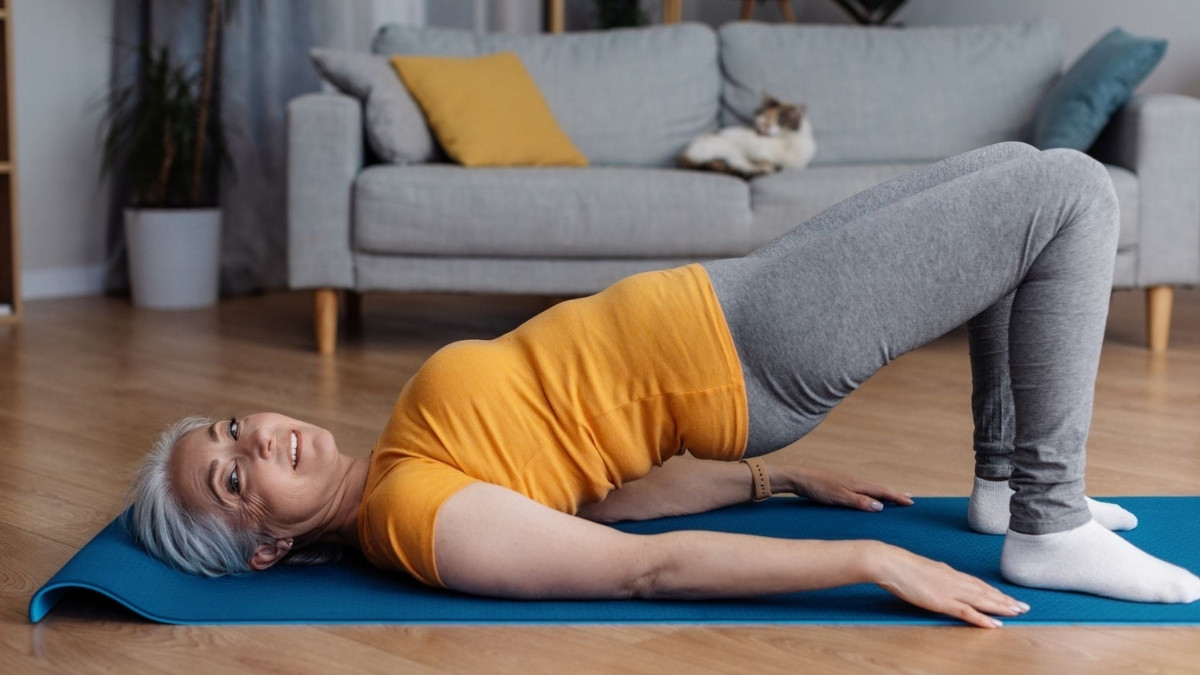
The bridge strengthens gluteal muscles while lengthening tight hip flexors. This is the most important move for reversing sitting damage. Sitting weakens large leg and gluteal muscles needed for walking and stability. This exercise wakes them up and improves pelvic alignment.
Here’s how to do it:
Lie on your back. Bend knees and place feet flat, hip-width apart. Arms at sides, palms down. Press through heels and lift hips. Squeeze glutes hard at the top. Your body forms a straight line from shoulders to knees. Hold 5-10 seconds. Keep breathing. Lower slowly, vertebra by vertebra. Repeat 10-12 times.
Modifications that work:
Place a pillow under your head if needed. Use a yoga block between knees to engage inner thighs. For advanced: lift one foot while holding the bridge. You’ll notice standing from chairs gets easier after a few weeks.
Creating Your Daily 10-Minute Routine
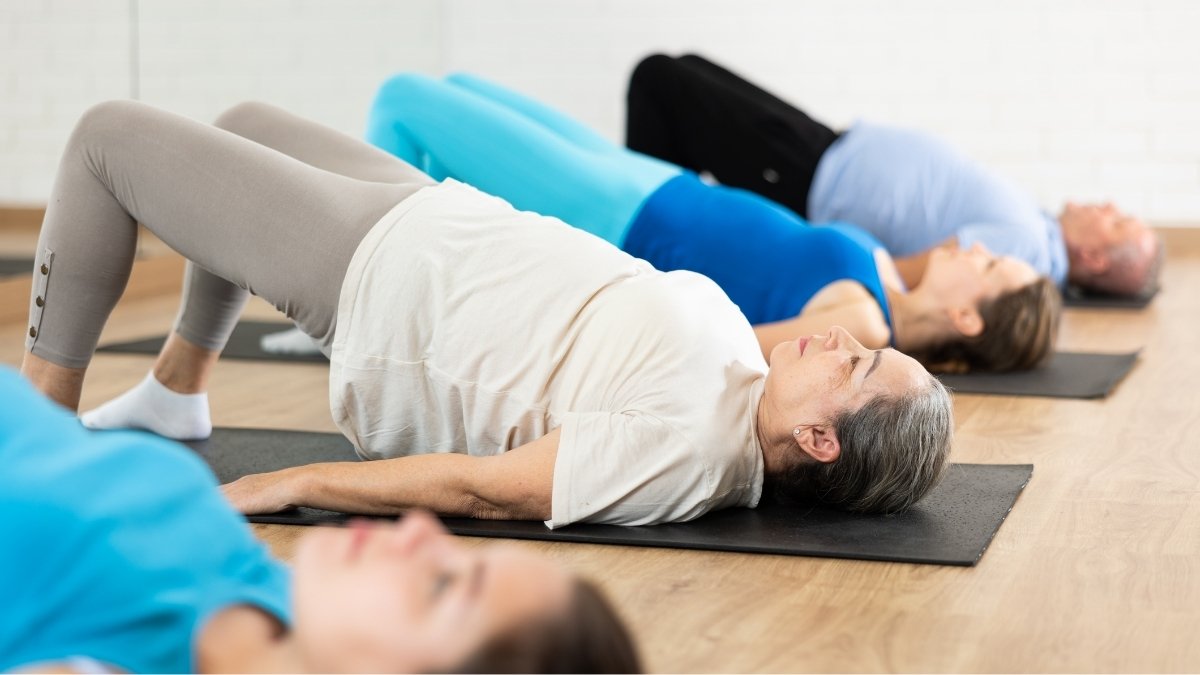
Consistency is more important than intensity for seniors. Doing these moves regularly beats doing them perfectly.
Perform this routine 2-3 times daily for best results. The best times are morning (to prepare your body), after prolonged sitting (to undo the damage), and evening (to release tension before bed). Pilates promotes breath with movement for mindful practice, which means you’re working your body and mind together.
Track your progress weekly. Notice improved range of motion when you reach for something. Check if you feel less stiff when you stand up. See if daily movements like getting out of the car feel easier.
This is your daily exercise routine for morning mobility. The 10 minutes protect years of independence. Your functional fitness improves week by week.
Start Moving Today:
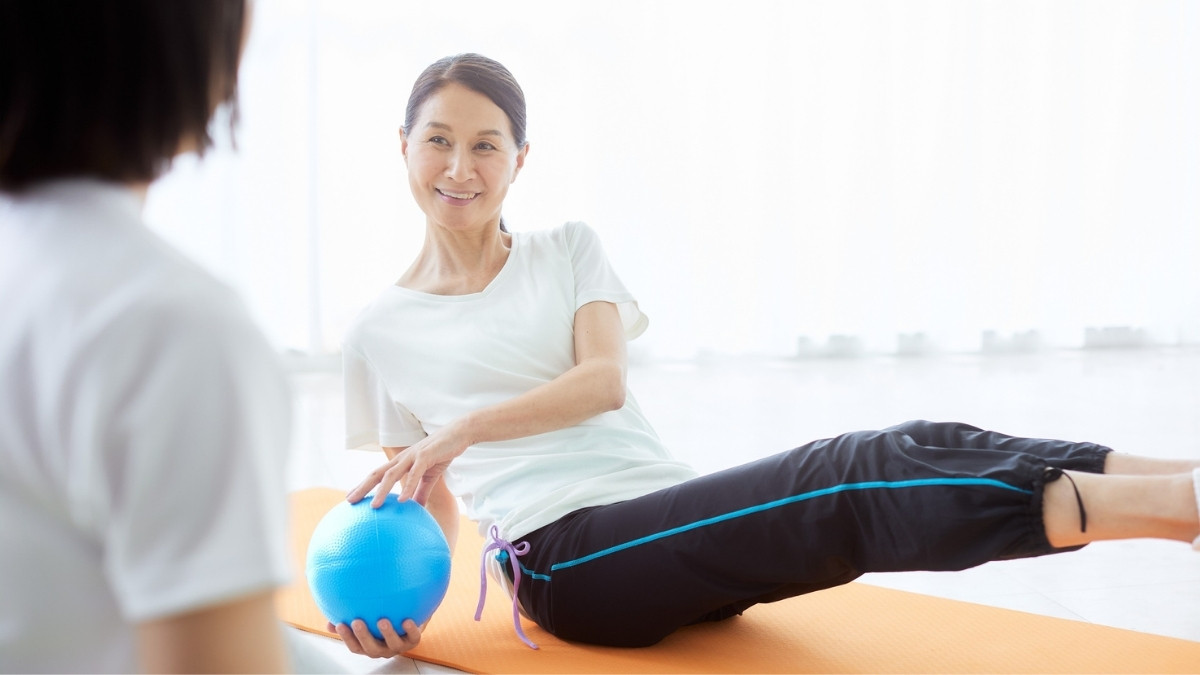
Prolonged sitting harms seniors’ health, but simple Pilates can reverse the damage. Just 10 minutes daily with the Mermaid, Spine Roll, and Bridge improves mobility, posture, and independence.
Start with one move today, add more gradually, and stay consistent. No gym or equipment needed—only commitment. Your body and future self will thank you.
Your future self will thank you for starting today.