
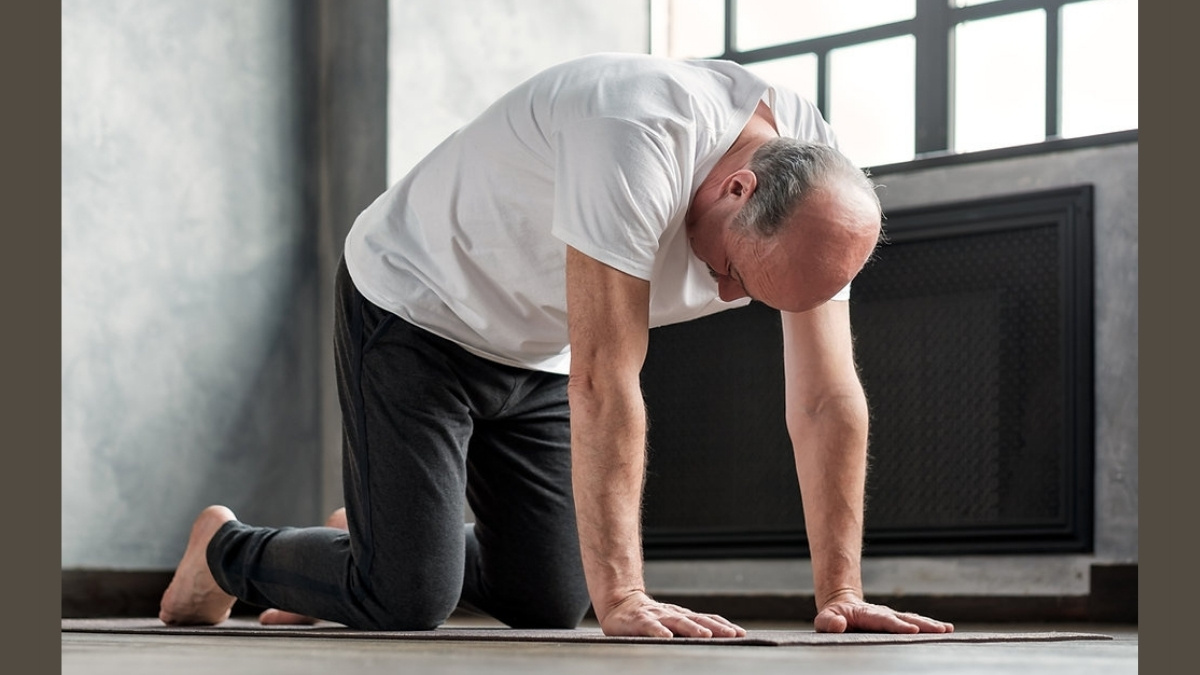
If you’ve noticed your reflection showing rounded shoulders or catching yourself hunching forward more often, you’re not alone. Between 20-40% of adults over 60 develop hyperkyphosis, an exaggerated forward curve of the upper back.
Maybe you’re struggling with chronic back or neck pain that limits what you can do. You feel self-conscious about your stooped appearance. You’re worried about falling and losing your independence. Breathing deeply feels harder. Simple tasks like reaching overhead or looking up have become difficult.
Here’s what you’ll learn: why posture changes after 60 (it’s not just “normal aging”), five specific gentle exercises that correct posture naturally, how to perform each exercise safely at home with no equipment, a simple daily routine to improve posture after 60 in 12 weeks, and warning signs that mean you should see a doctor.
These posture exercises for seniors over 60 work. Let’s get started.
Why Your Posture Changes After 60 (And Why It Matters)
Your spine curves more as you age. After 40, the upper back angle increases from 43 degrees to 52 degrees by age 66. Your muscles get weaker. The discs between vertebrae lose water and compress. Ligaments become stiff. This happens to everyone, but you can slow it down.
DRIFT
(Consistency > Intensity)
Between 20-40% of adults over 60 develop a hunched back. Research shows hunched posture increases death risk by 1.44 times. Up to 40% face more falls. Your lungs can’t expand fully. Breathing becomes harder. Daily tasks like dressing or reaching overhead get difficult. Poor posture predicts who loses independence first.
Daily exercises for 12 weeks improved posture by 11% in women over 65. You don’t need a gym. Gentle exercises work as well as intense programs. You’ll see results in weeks, not months. Your body responds at any age. Consistency matters more than intensity.
Your head juts forward. Shoulders round like you’re protecting your chest. You can’t lie flat without a pillow. Upper back pain won’t stop. You feel off-balance walking. These symptoms affect your health and independence. Time to take action.
The 5 Best Gentle Exercises to Correct Posture After 60
These five exercises target the muscles that keep you standing tall. They’re gentle enough for beginners but strong enough to create real change. Start with 2-3 repetitions and add more as you get stronger. You’ll feel the difference in weeks.
Exercise 1: Chin Tucks – Realign Your Neck
What This Exercise Does
Your head weighs 10-12 pounds. When it drifts forward, your neck muscles work overtime. Chin tucks strengthen your neck and pull your head back where it belongs—directly above your spine. This exercise improves neck strength, flexibility, and function. It fixes forward head posture, the main cause of neck pain and headaches.
How to Do Chin Tucks
Sit upright with your shoulders relaxed. Look straight ahead at eye level. Pull your chin straight back like you’re making a double chin. Don’t tilt up or down—move straight back. Hold for 5 seconds. You’ll feel a gentle stretch at the base of your skull. Return to the starting position. Repeat 10 times. You can do this sitting or standing.
Stay Safe and See Results
Move slowly and gently. You should feel a stretch, never pain. If it hurts, you’re pulling too hard. Most people notice less neck tension within 1-2 weeks. Do this exercise twice daily for best results.
Exercise 2: Shoulder Blade Squeezes – Open Your Chest
What This Exercise Does
Rounded shoulders make you look older and feel weaker. This shoulder blade squeeze strengthens the muscles between your shoulder blades. It pulls your shoulders back and opens your chest. You’ll stand taller immediately. This exercise fixes rounded shoulders, upper back weakness, and chest tightness. Your scapular muscles get stronger with each rep.
How to Do Shoulder Blade Squeezes
Sit or stand with your arms at your sides. Raise your elbows to 90 degrees. Now pull your shoulder blades together like you’re pinching a pencil between them. Squeeze hard. Hold for 5 seconds. Feel your chest open up. Release slowly. Complete 10-12 repetitions. Breathe normally throughout the movement.
Make It Harder and Use It Daily
Start with no equipment. When this feels easy, add a resistance band for more challenge. Do this exercise whenever you catch yourself slouching. At your desk. In your car. Watching TV. These quick squeezes help you improve posture naturally throughout your day.
Exercise 3: Wall Tilts – Strengthen Your Lower Back
What This Exercise Does
Lower back pain stops you from doing what you love. Wall tilts strengthen your pelvis and gluteal muscles. They teach your lower back the right position. This wall tilt exercise relieves lower back pain and improves your lower back posture. It fixes excessive lower back arch, pelvic tilt problems, and chronic pain that won’t quit.
How to Do Wall Tilts
Stand with your back against a wall. Place one hand behind your lower back. You’ll feel a gap there. Now tighten your abs and tuck your pelvis under. Feel your lower back flatten against your hand. The gap should shrink. Hold for 5 seconds. Release and repeat 10 times. Breathe normally.
Modifications and What to Expect
Can’t stand long? Sit in a chair with your back against the wall instead. You should feel your abs and glutes working gently. You’ll feel pressure on your hand as your back flattens. This pelvic tilt correction exercise works fast when done daily.
Exercise 4: Bird Dog – Build Core Stability
What This Exercise Does
A weak core makes everything harder. Getting up. Walking. Keeping your balance. The bird dog exercise strengthens your abs, hips, and back muscles all at once. It promotes good posture and relieves lower back pain. This exercise fixes weak core muscles, poor balance, and spinal instability that makes you feel unsteady.
How to Do Bird Dog
Start on your hands and knees on a padded mat. Keep your head neutral and look down at the floor. Extend your right arm forward and your left leg back at the same time. Make a straight line. Hold for 5 seconds. Return to start. Now do the opposite side—left arm, right leg. Complete 3-5 reps per side.
Start Easy and Stay Safe
New to this? Lift just your leg first. Master that. Then lift just your arm. Finally, lift both together. Keep your back straight the whole time. Don’t let your hips twist. This bird dog exercise for seniors builds core stability and improves balance when done three times per week.
Exercise 5: Shoulder Rolls – Release Tension Daily
What This Exercise Does
Your shoulders carry stress all day. Driving. Using your phone. Sitting at the computer. Shoulder rolls open your chest and loosen tight neck and back muscles. This daily posture exercise releases shoulder tension, chest tightness, and upper back stiffness. It’s the fastest way to feel relief when your body feels locked up.
How to Do Shoulder Rolls
Sit or stand tall with good posture. Lift your shoulders up toward your ears like you’re shrugging. Squeeze your shoulder blades together and pull them back. Feel your chest open. Press your shoulders down firmly. Return to neutral position. Repeat 8-10 times. Move slowly and breathe deeply.
Use This Exercise All Day
Do shoulder rolls multiple times daily. After an hour at the computer. When you finish driving. Anytime you feel tense. This tension release exercise takes 30 seconds. You can do it anywhere—at your desk, in line at the store, or watching TV. Your shoulders will thank you.
Your 12-Week Posture Improvement Plan
Weeks 1-4: Foundation Building
Start slow and focus on doing each exercise correctly. Perform all five exercises three days per week—Monday, Wednesday, Friday works well. Start with 5-8 repetitions of each exercise. Don’t rush. Form matters more than speed. Take side-view photos against a wall every two weeks. These photos will show progress you can’t feel yet.
Weeks 5-8: Building Strength
Increase to five days per week now. Add 2-3 more repetitions to each exercise. You’ll notice real changes in daily life—getting out of the car feels easier, reaching overhead doesn’t hurt. Reduce rest time between exercises from 60 seconds to 30 seconds. Your body is getting stronger. Measure the distance from the back of your head to the wall. It should be shrinking.
Weeks 9-12: Advanced Practice
Daily practice becomes automatic now. You don’t think about it—you just do it. Add resistance bands to shoulder blade squeezes if you want more challenge. You should see measurable posture improvement in photos. Focus on keeping good posture all day, not just during exercises. Your new posture becomes your default position.
Track Your Progress
Take side-view photos every two weeks in the same spot. Measure occiput-to-wall distance monthly. Write down your pain levels on a scale of 1-10. Note which daily activities get easier. Record when you complete each exercise session. These markers prove your exercise routine for seniors is working.
Make It Stick for Life
Set three daily phone reminders for your exercises. Pair exercises with existing habits—do chin tucks after your morning coffee, shoulder rolls before bed. Research shows just 6 minutes of physical activity improves mood in older adults. This 12-week posture improvement plan becomes lifelong wellness. Small daily actions create lasting change.
Beyond Exercise: Daily Habits That Support Better Posture

Set Up Your Workspace Right
Your computer screen should sit at eye level. You shouldn’t look down or crane your neck up. Get a chair with lumbar support that fits the curve of your lower back. Keep your feet flat on the floor. If they dangle, use a footrest. These simple ergonomics for seniors prevent eight hours of damage daily.
Sleep Smart for Your Spine
Your pillow matters more than you think. Choose one that keeps your neck neutral—not too high or flat. Sleep on your back or side. Never sleep on your stomach. It cranks your neck sideways for hours. Your spine needs seven to eight hours of proper alignment every night.
Move Throughout Your Day
Stand up every 30 minutes. Set a timer if you forget. Walk during phone calls instead of sitting. Practice posture checks every hour—pull your shoulders back, tuck your chin, engage your core. These daily posture tips cost nothing but save you pain.
Fix Your Environment
Adjust your car seat so you’re not reaching for the wheel. Check kitchen counter heights—you shouldn’t hunch to chop vegetables. Position your TV at eye level when sitting. Small changes to posture habits prevent big problems later. Look at where you spend most time and fix those spots first.
Add These Activities
Pilates effectively improves balance, flexibility, muscle strength, and posture in older adults. Try a beginner class. Tai Chi builds balance without strain. Gentle yoga stretches tight muscles. Water aerobics strengthens without joint stress. Pick one activity you enjoy and do it twice weekly. Your posture exercises work better with these additions.
Stand Taller Starting Today

Posture changes after 60 are common but fixable. These five gentle exercises target the muscles that keep you upright. Research proves 12 weeks of daily exercise produces 11% improvement in posture. Consistency beats intensity every time. Combined with smart daily habits, these exercises prevent further decline.
Start with just one exercise today. Choose the chin tuck—it’s gentle, takes 30 seconds, and works anywhere. Tomorrow, add shoulder blade squeezes. By week’s end, you’ll have all five in your routine. Your spine, balance, and confidence will thank you.
Remember, improving posture after 60 isn’t about perfection—it’s about progress. These gentle posture exercises for seniors over 60 help you stand taller, move easier, and feel better naturally.