

While most 50-year-olds struggle to pick up their grandchildren or climb stairs without fatigue, I’m 75 and can move through my day with the ease of someone decades younger. I’ve never touched a weight machine.
You might think gym machines are necessary for senior fitness. They’re not. You might be struggling with everyday activities that should be simple—getting up from the floor, carrying groceries, bending to garden. You’re watching younger, sedentary people struggle with these basic movements and wondering if that’s your future too.
It doesn’t have to be. Functional fitness changed everything for me. This approach focuses on bodyweight exercises that mimic the daily activities older adults actually do. No expensive gym memberships. No confusing machines. Just movements that make real life easier.
Here’s what you’ll learn: why functional fitness outperforms machine-based training for real-world activities. I’ll show you the science behind bodyweight training for seniors over 70. You’ll get a complete approach that trains your body for the movements that matter. And you’ll discover how to build strength that actually transfers to everyday life.
Weight machines might make you stronger at using weight machines. Functional fitness makes you stronger at living.
Why Traditional Weight Machines Fail Older Adults
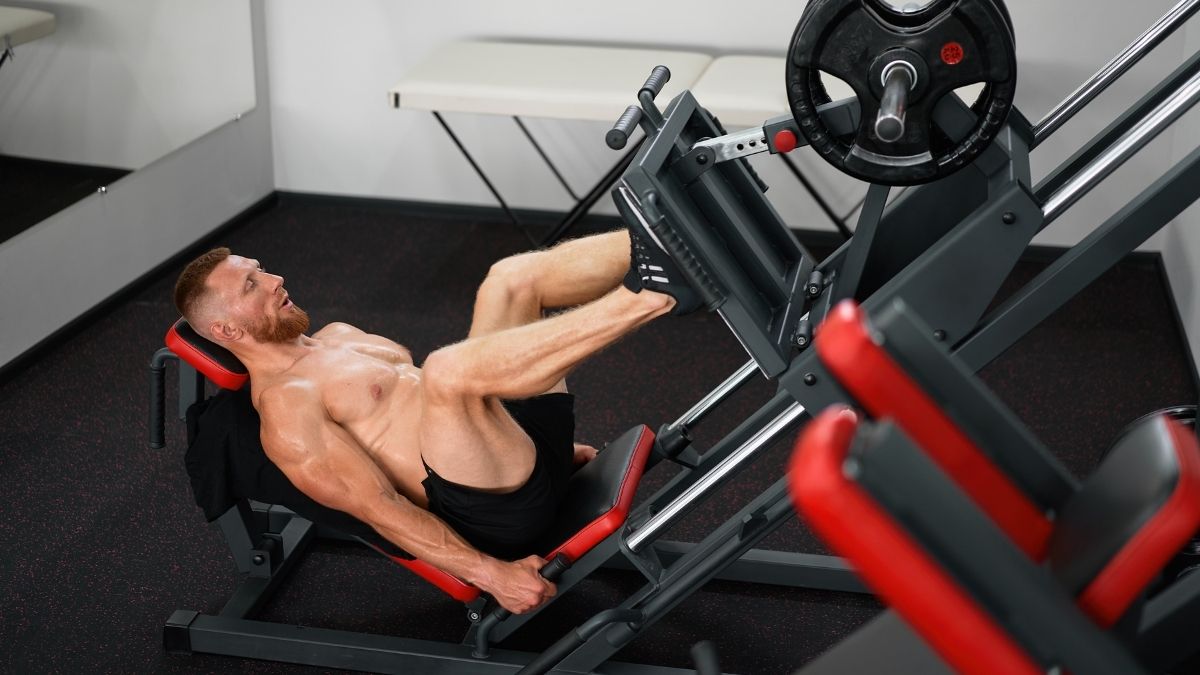
Picture this: you can leg press 150 pounds at the gym, but you still struggle to stand up from a low chair at home. This disconnect reveals the fundamental problem with machine-based training for older adults.
Machines lock you into fixed paths. Real life doesn’t work that way. When you reach for something on a high shelf or bend to pick up your grandchild, your body moves in multiple directions at once. Machines can’t teach your body these patterns.
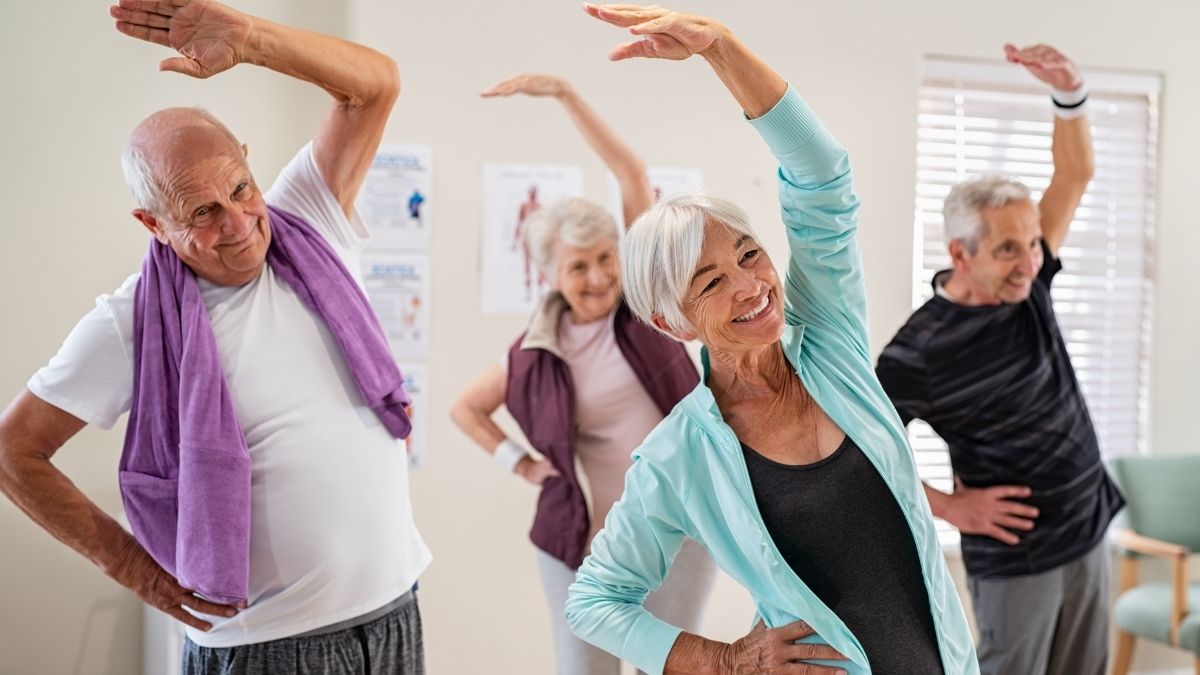
But here’s what research reveals: elderly populations over 75 lose 26 to 48 percent of their trunk muscle thickness compared to younger adults. And strength drops about 1 percent every year after age 50. Studies involving over 1,200 participants found older adults lost 12 percent lower body strength and 8 percent upper body strength.
Research comparing functional training to machine-based training showed something surprising. Women who did functional exercises gained more trunk flexor strength and could generate force faster than those using machines. The functional group also walked faster and performed better on daily activity tests.
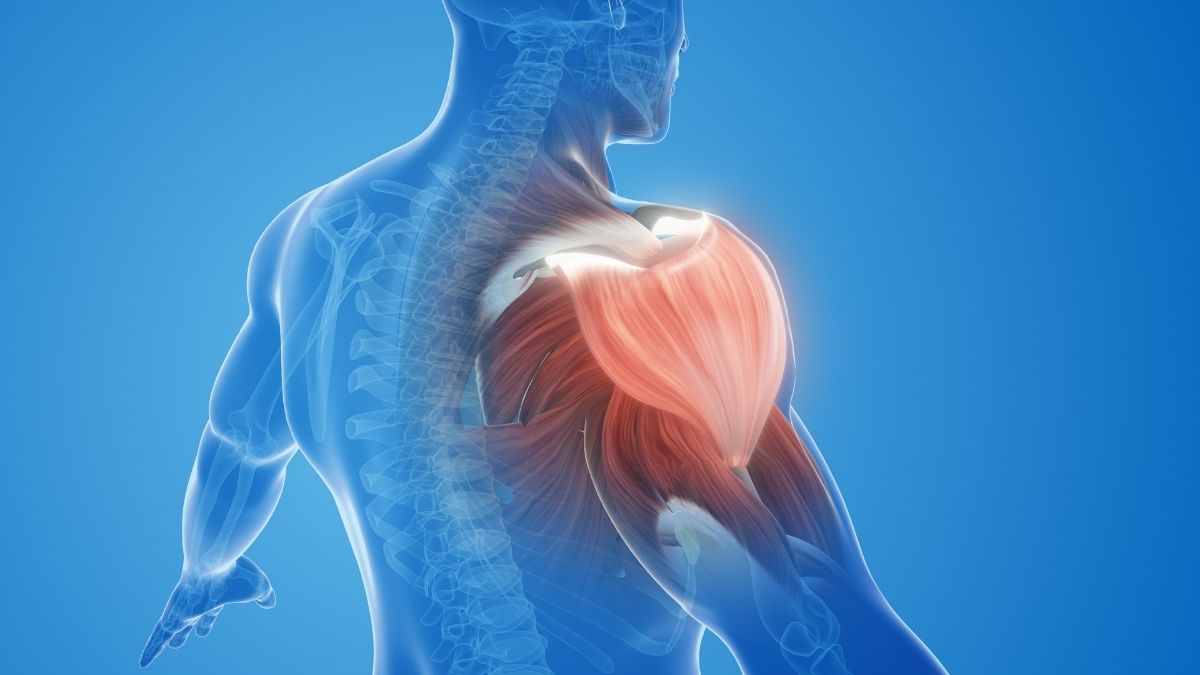
This explains why machine strength doesn’t help at home. Weight machines isolate single muscles. They ignore the stabilizer muscles you need for balance and coordination. Your body doesn’t work one muscle at a time in real life.
The Science Behind Functional Fitness for Seniors
Functional training teaches your muscles to work as a team. Instead of training one muscle at a time, you train movements you actually do every day. Squatting to garden. Rotating to reach behind you. Getting up from the floor.
Here’s what makes this different from gym machines: functional training uses multi-joint movements that copy real activities of daily living. You move in multiple directions. You shift your weight. You balance while you move.
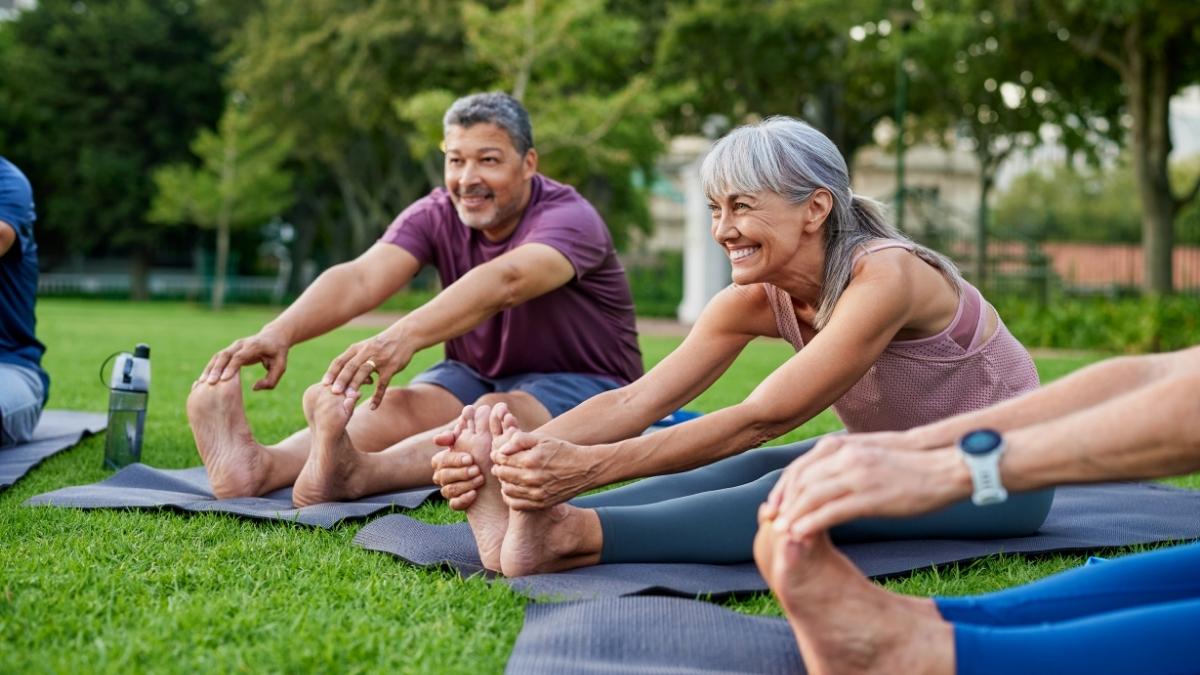
And the research backs this up. Exercise can slow down aging changes in your body. It sharpens your mind and helps manage chronic diseases. Studies comparing young adults to people in their sixties and seventies found something surprising: active seniors matched younger people in physical activity measures.
Physically active older women showed flexibility, balance, and agility more like younger participants than inactive people their own age. Age matters less than how you move.

The numbers are clear. Strength and balance training cuts falls and injuries by more than half in seniors. Twelve-week programs showed major improvements in muscle mass, strength, and physical performance for people 65 to 85+.
Functional training’s advantage comes from variety. Different movements. Different speeds. Constant balance challenges. This builds coordination, balance, and strength at the same time. Your body learns to work as one system, not separate parts.
Functional Exercises That Replace Weight Machines
You don’t need machines when you have these machine alternatives. Each functional exercise trains multiple muscles at once and builds the core stability you need for real life.
Instead of the Leg Press Machine
Bodyweight exercises recruit stabilizing muscles that machines ignore. Every rep becomes more balanced and functional because your body has to work to stay steady.
Squats: Stand with feet shoulder-width apart. Lower like you’re sitting in a chair. Keep your chest up and knees over your toes. Breathe in going down, out coming up. Start with 8-10 reps, work up to 15.
Reverse Lunges: Step back with one leg. Lower your back knee toward the floor. Push through your front heel to stand. This is easier on your knees than forward lunges. Do 8-10 per leg for 2-3 sets.
Step-Ups: Use a sturdy step or low bench. Step up with one foot, drive through that heel, bring the other foot up. Step down slowly. This mimics climbing stairs. Aim for 10-12 per leg.
Single-Leg Variation: Once regular squats feel easy, try holding one leg slightly off the ground. This doubles the challenge and builds serious balance.
Instead of Lat Pulldown
Inverted Rows: Lie under a sturdy table. Grab the edge with both hands. Pull your chest to the table, keeping your body straight. Lower slowly. Breathe out pulling up, in lowering down. Start with 6-8 reps, build to 12-15.
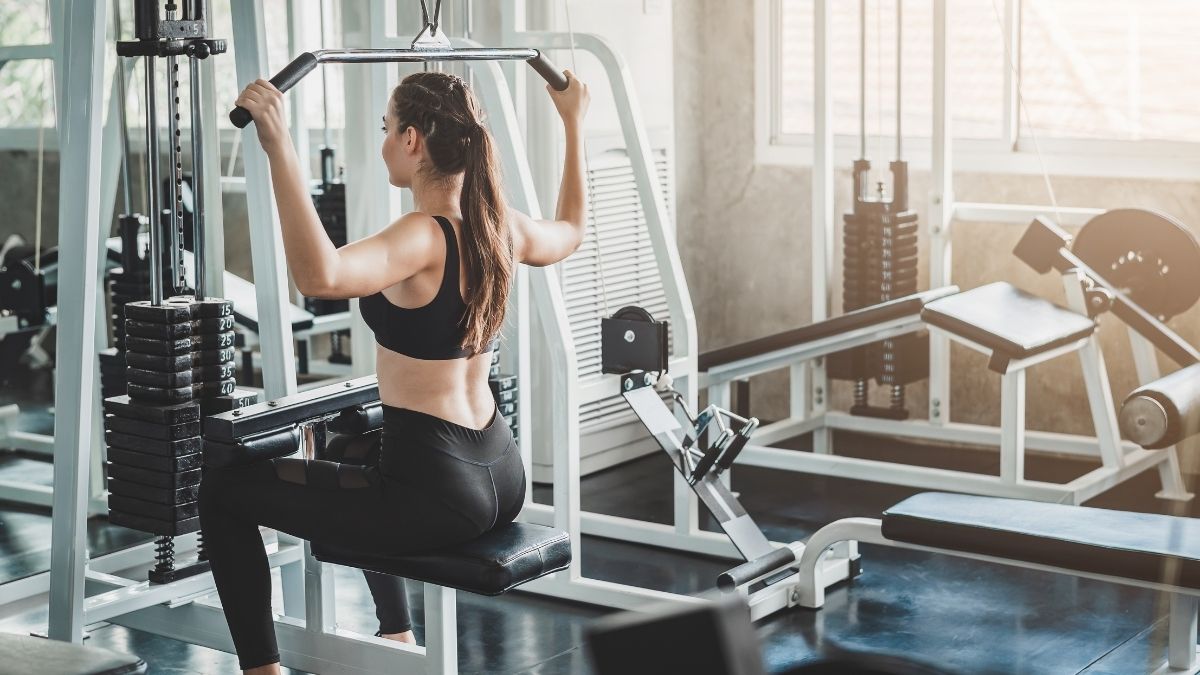
Resistance Band Pulls: Attach a band to a doorknob at chest height. Pull the band to your chest, squeezing your shoulder blades together. Control the return. Do 12-15 reps for 2-3 sets.
Doorway Pulls: Stand in a doorway, hold both sides. Lean back with straight arms. Pull yourself forward using your back muscles. This works if you can’t do full rows yet.
Instead of Chest Press
Wall Push-Ups: Stand arm’s length from a wall. Place hands on wall at shoulder height. Bend elbows to bring your chest close to the wall. Push back. Breathe in going down, out pushing up. Do 10-15 reps.
Elevated Push-Ups: Once wall push-ups feel easy, use a countertop or table. The lower the surface, the harder it gets. Work your way down to the floor over weeks or months.
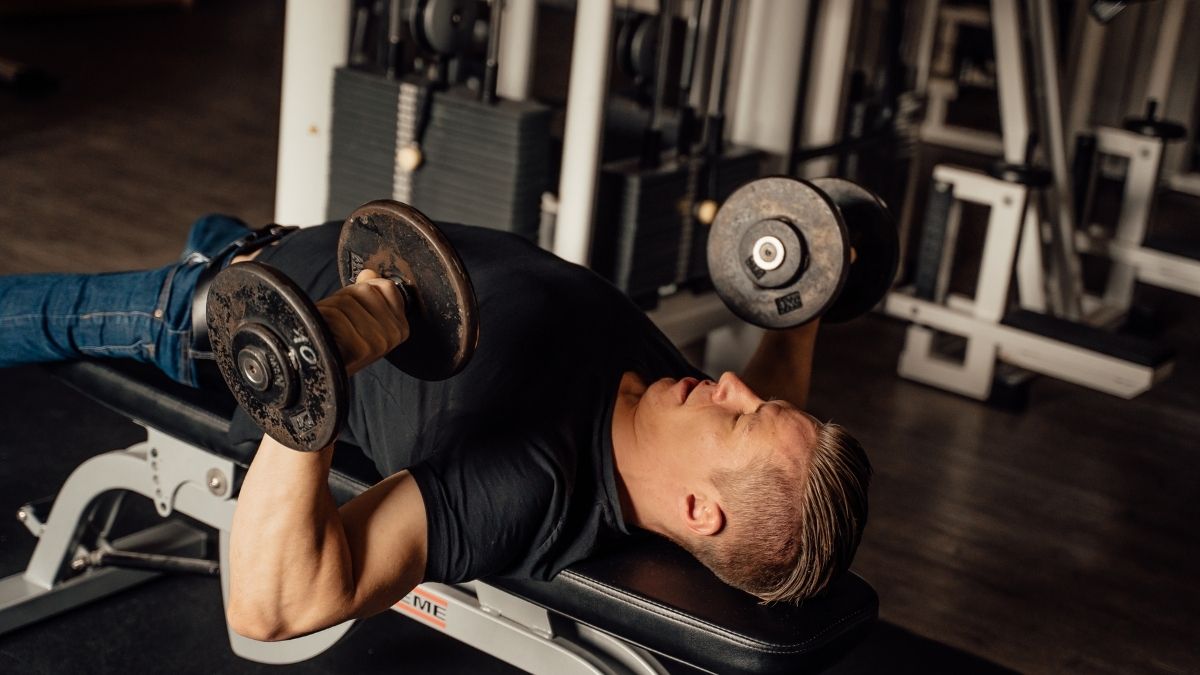
Chair Dips: Sit on the edge of a sturdy chair. Place hands next to your hips. Slide forward off the seat. Bend elbows to lower yourself, then push back up. This builds tricep and chest strength. Start with 6-8 reps.
Instead of Leg Curl/Extension
Glute Bridges: Lie on your back, knees bent, feet flat. Lift your hips until your body forms a straight line. Squeeze your glutes at the top. Lower slowly. Breathe out lifting, in lowering. Do 12-15 reps for 2-3 sets.
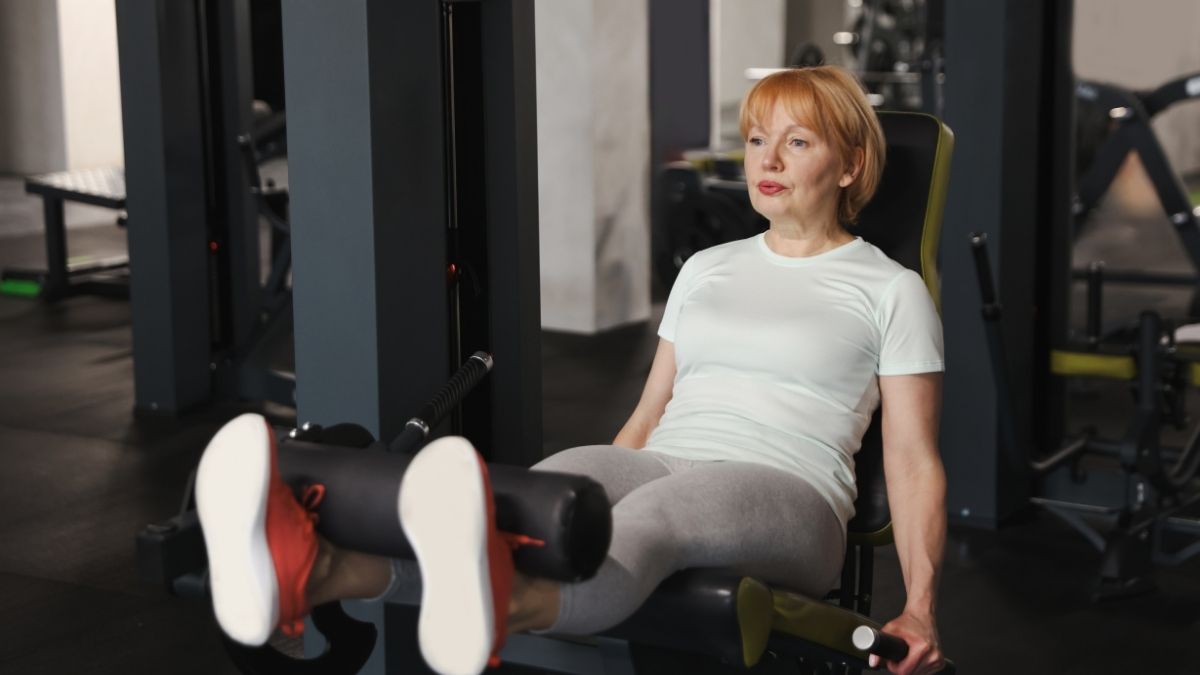
Single-Leg Deadlifts: Stand on one leg. Hinge at your hip, reaching your other leg behind you for balance. Keep your back straight. Return to standing. This builds hamstrings and balance together. Start with 6-8 per leg.
Walking Lunges: Step forward and lower down. Push up and immediately step into the next lunge. These compound movements work your entire leg and challenge your balance with every step.
Instead of Core Machines
Planks: Hold a push-up position on your forearms. Keep your body straight from head to heels. Don’t let your hips sag. Breathe normally. Start with 20-30 seconds, work up to 60+ seconds.
Dead Bugs: Lie on your back. Lift your arms and knees to 90 degrees. Slowly lower opposite arm and leg toward the floor. Return and switch sides. This builds deep core stability. Do 8-10 per side.
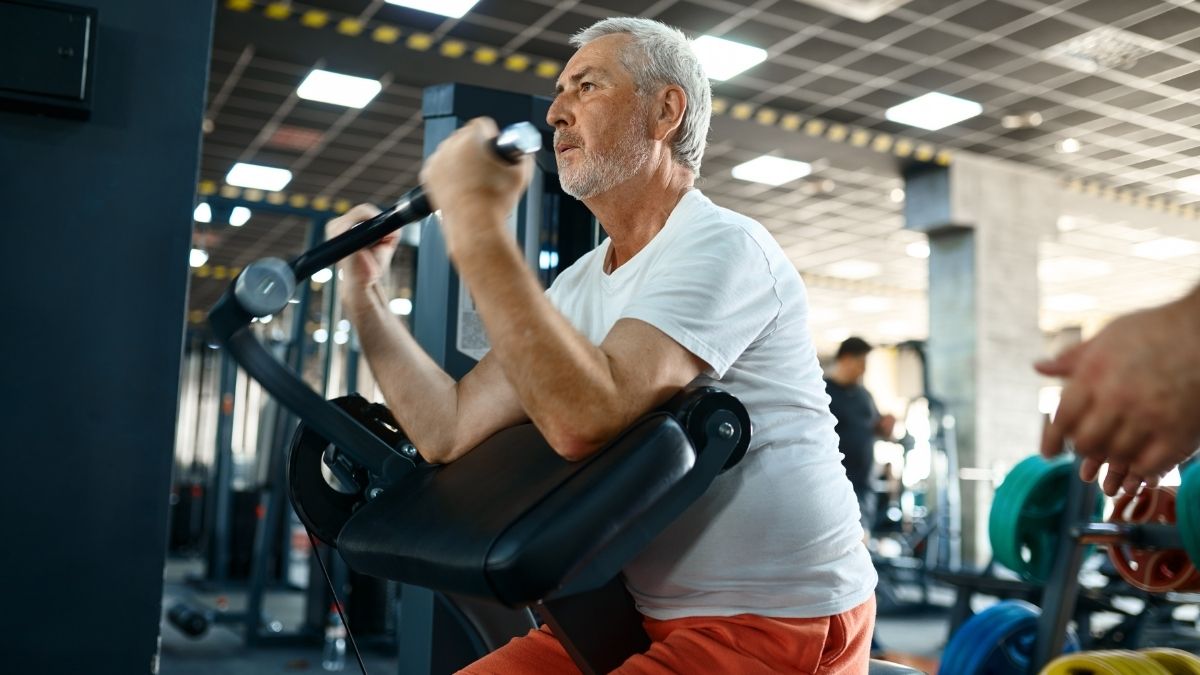
Bird Dogs: Start on hands and knees. Extend one arm forward and opposite leg back. Hold for 3-5 seconds. Return and switch. This trains balance and core strength at once. Aim for 10-12 per side.
Start with 2-3 sets of each exercise. Rest 60-90 seconds between sets. Your functional strength will grow faster than it ever did on machines.
How Functional Fitness Improved My Real-World Performance
Last week, I got up from the floor after playing with my grandson. My 52-year-old neighbor watched and said, “I can’t do that anymore.” That moment showed me how far I’ve come at 75.
Getting up from the floor is easy now. Carrying two bags of groceries in one trip? No problem. I garden for hours without my back screaming at me. Stairs don’t leave me winded halfway up.
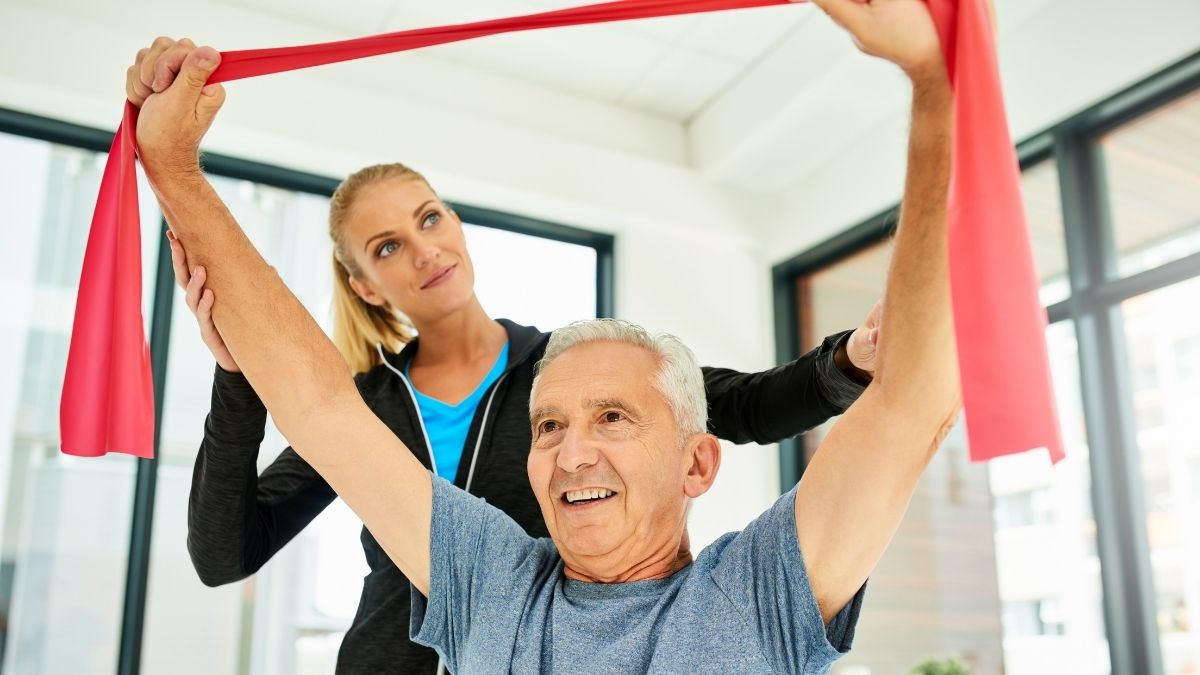
Here’s what surprises people most: I recover faster than sedentary 50-year-olds after any physical effort. My balance is better. My coordination is sharper. I move with confidence instead of fear.
The statistics tell a hard truth: about 10 percent of deaths among adults ages 40 to 69 come from physical inactivity. Only 24 percent of adults meet guidelines for both aerobic and muscle-strengthening activities. Most people are aging faster than they need to.

Functional fitness changed more than my body. It changed my mind. I’m not afraid of falling. I don’t worry about becoming dependent on others. This is what independent living looks like: the functional capacity to do what you want, when you want.
Injury prevention became automatic. Strong stabilizer muscles protect my joints. Better balance means fewer close calls. My quality of life at 75 beats what most 50-year-olds experience. And it keeps getting better.
Common Mistakes to Avoid
I made these training mistakes so you don’t have to. Learning from my errors will save you weeks of frustration and keep you injury-free.

Doing too much too soon is the fastest way to quit. Your enthusiasm will fade when your body aches for days. Start with five reps, not fifty. Gradual progression beats burnout every time.
Ignoring pain signals nearly ended my fitness routine twice. Discomfort during exercise is normal. Sharp pain is your body screaming stop. Listen to it. Proper technique matters more than pushing through pain.
Skipping mobility work seems like saving time. It’s not. Tight hips and stiff shoulders limit every movement you make. Spend five minutes on mobility before each session. Your joints will thank you.
Inconsistent practice kills results faster than anything else. Three times a week beats one intense weekend session. Your body adapts to regular signals, not occasional heroics.
Comparing yourself to others steals your joy. That person started years before you. They have different injuries, different genetics, different goals. Track your own progress against last month’s version of you.
Neglecting rest days stops your progress. Recovery is when your muscles actually get stronger. Train hard, rest harder. Take at least one full day off per week.
At the Last,
Functional fitness outperforms machines for real-world activities. The research proves it. My daily life proves it. Bodyweight training builds integrated strength and coordination that actually transfers to the things you do every day.
Consistency and proper progression matter more than intensity. You don’t need to destroy yourself in the gym. You need to show up regularly and train movements that matter.

Age is just a number when you train smart. Active 75-year-olds can match sedentary 50-year-olds in almost every measure of physical performance. The difference isn’t age. It’s movement.
Start today with just five squats and five push-ups against a wall if needed. Tomorrow, do it again. In 30 days, you’ll be amazed at what your body can do. No gym membership required.
Your functional fitness routine doesn’t need weight machines or expensive equipment. It just needs you, a commitment to daily movement, and the knowledge that your body at 75 can outperform sedentary 50-year-olds if you train it for the activities that actually matter.
At 75, I outperform sedentary 50-year-olds with functional fitness. No gym machines needed—just bodyweight exercises for real-world strength.