
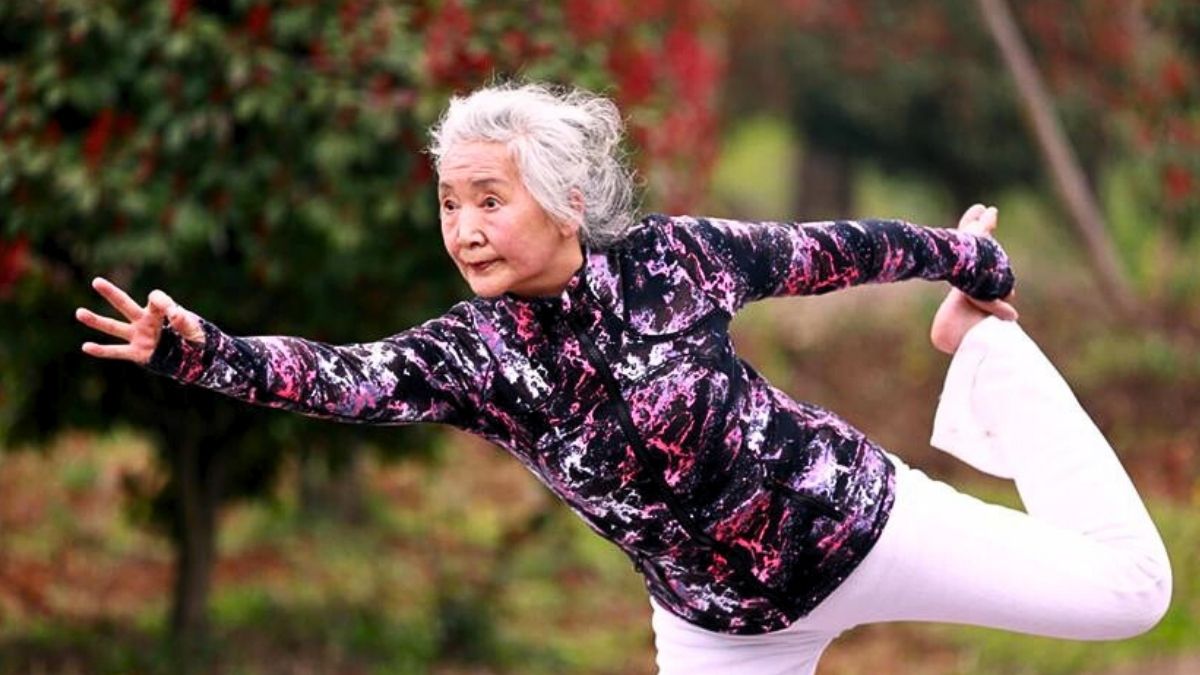
When my 78-year-old yoga instructor effortlessly folded into a forward bend while I struggled to touch my knees, I knew something had to change. She moved with ease while my body felt stiff and old—and I’m 30 years younger.
If you’re over 50, you’ve probably noticed your flexibility fading. Maybe you can’t bend down as easily. Your balance feels shakier. You’ve heard about muscle loss and worry about falling. Many people think yoga is too advanced for them or that age-related decline is just something you have to accept.
Here’s the truth: it’s not inevitable. Research proves that yoga for aging muscles works, especially for people in their 60s and 70s. In this article, you’ll discover why yoga specifically helps maintain muscle strength seniors need, a simple 5-pose sequence backed by science, how to modify yoga poses for older adults at any fitness level, and evidence showing it’s never too late to start building flexibility after 60.
Why Yoga Works for Aging Muscles (And What Research Shows)
Muscle loss starts in your 30s and 40s. If you’re inactive, you lose 3-5% of muscle mass every decade after 30. This condition, called sarcopenia, affects 5-13% of people aged 60-70 and jumps to 11-50% for those over 80.
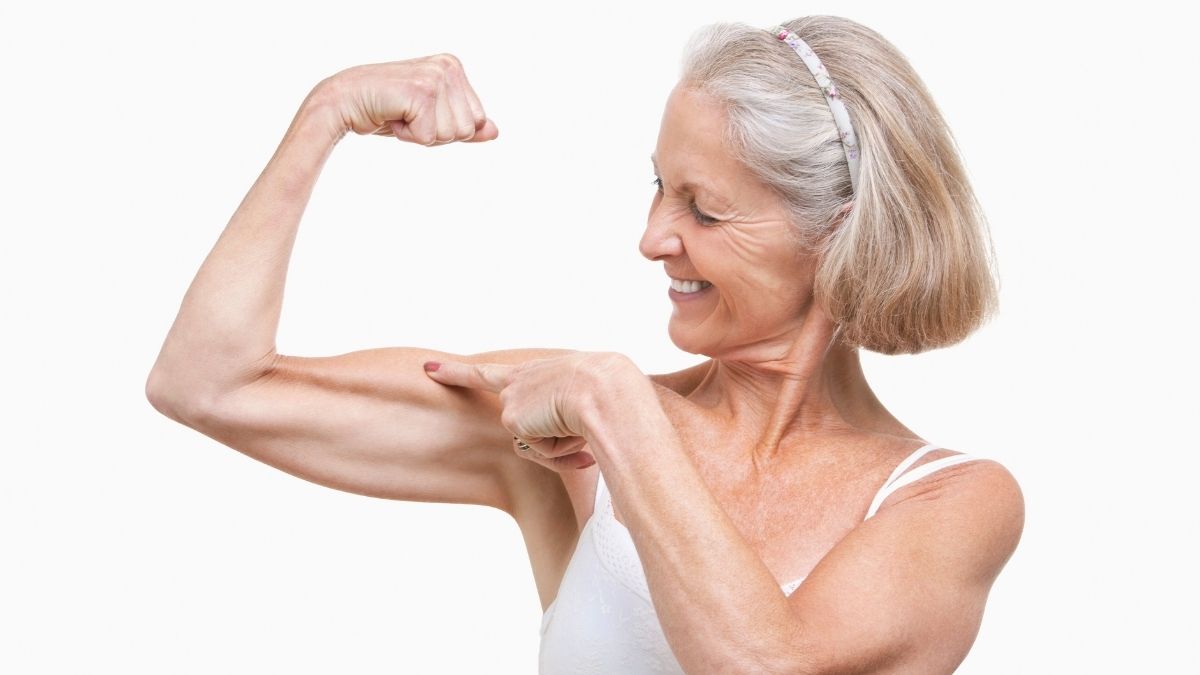
Here’s the good news: research shows yoga practice has moderately positive effects on muscle strength, balance, mobility, and lower body flexibility in older adults. The effect size was 0.58 for people in their 60s and 0.56 for those in their 70s. That means yoga for muscle strength works best for this exact age group.
A 2025 study found that older adults practicing yoga reached 60% of their maximum heart rate during sessions. That qualifies as moderate-intensity exercise, the same level doctors recommend for heart health.
Studies also show that long-term yoga practice may help maintain IGF-1 levels and reduce sarcopenia risk in adults over 70. IGF-1 is a hormone that helps build and maintain muscle.
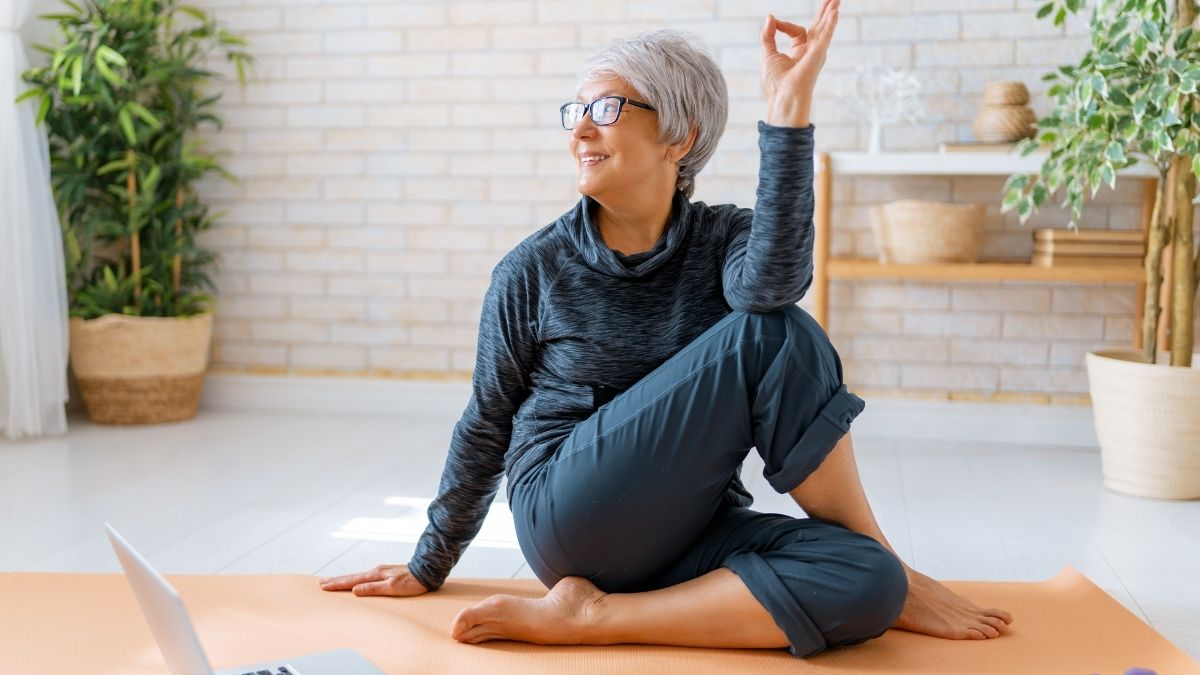
The optimal timeline? Nine to twelve weeks of consistent practice. That’s when flexibility training older adults shows measurable results. Three months of regular practice can reverse years of stiffness.
Inspiring Stories: Yoga Instructors in Their 70s, 80s, and Beyond
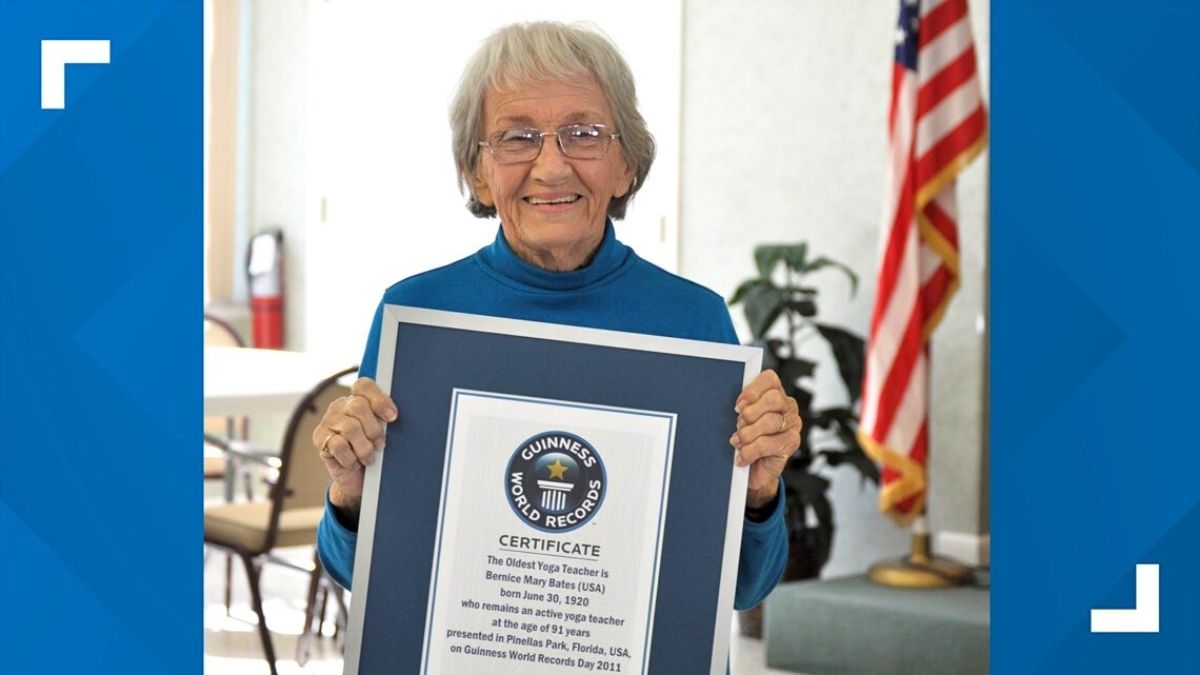
When Bernice Bates first tried yoga at age 60, her body was stiff and uncooperative. But she kept showing up. By 92, she held the Guinness World Record for oldest yoga teacher. Her secret? She started late and stayed consistent.
Tao Porchon-Lynch discovered yoga at age 8 and taught until she was 101. She took up competitive ballroom dancing in her 80s despite having three hip replacements. “There is nothing you cannot do if you put your mind to it,” she said. Her flexibility at any age proved her point.
V Nanammal started practicing at age 8 and never stopped. At 98, she can still perform difficult poses like peacock and headstand. That’s 90 years of continuous practice paying off.
What do these yoga instructors over 70 have in common? They all modified poses when needed. They stayed positive. They practiced regularly, not perfectly. Most importantly, two of them didn’t even start until later in life.
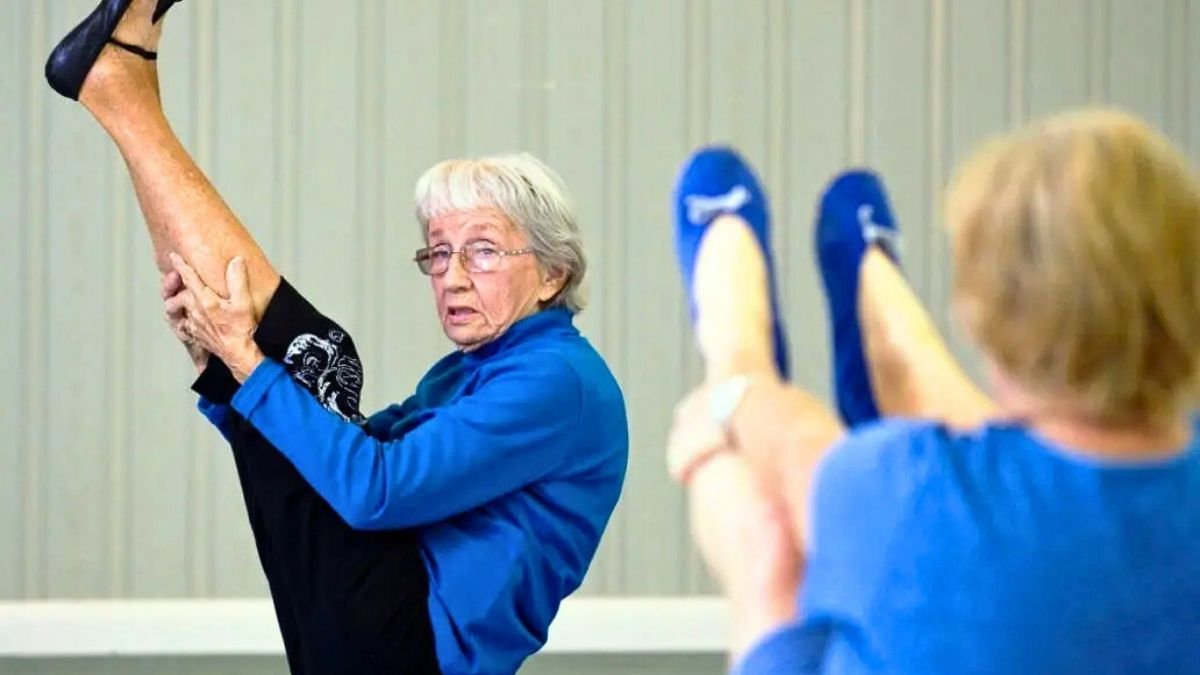
My 78-year-old instructor reminds me that starting yoga after 60 isn’t a limitation. It’s just a different starting point. Your body might be stiffer than a teenager’s, but that doesn’t matter. What matters is what you do today and tomorrow and the day after that.
The 5-Move Yoga Sequence for Aging Muscles
This yoga sequence for seniors targets the areas that decline with age: hip flexibility, spinal mobility, leg strength, balance, and core stability. Each pose includes modifications for different fitness levels. You can complete this in 15-20 minutes.
1. Cat-Cow Flow (Marjaryasana-Bitilasana)
What it does: Improves spinal flexibility, relieves back tension, and strengthens your core.
How to do it:
Start on your hands and knees. Put your wrists under your shoulders and knees under your hips. Inhale and arch your back, lifting your chest and tailbone up. This is Cow pose. Exhale and round your spine, tucking your chin to your chest. This is Cat pose. Flow between these two positions for 5-10 breaths. Move with your breath.
Can’t get on the floor? You can do this seated in a chair. Just arch and round your spine while sitting.
Why it works: This dynamic movement takes your spine through its full range of motion. It wakes up your back before the other flexibility exercises.
How long: Flow continuously for 1-2 minutes.
2. Low Lunge (Anjaneyasana)
What it does: Opens tight hip flexors, strengthens your legs, and improves balance.
How to do it:
Start on your hands and knees. Step your right foot forward between your hands. Make sure your knee stays over your ankle, not in front of it. Slide your left knee back until you feel a gentle stretch in the front of your left hip. Engage your core to protect your lower back. Keep your chest lifted. Take 5-8 deep breaths here.
Need support? Put a folded blanket under your back knee. Use yoga blocks under your hands if you can’t reach the floor comfortably.
Why it works: Sitting all day makes your hip flexors tight and weak. This pose opens them up and strengthens the psoas muscle that connects your spine to your legs.
How long: Hold for 30-45 seconds on each side.
3. Warrior II (Virabhadrasana II)
What it does: Builds leg and hip strength, improves stability, and enhances balance.
How to do it:
Stand with your feet 3-4 feet apart. Turn your right foot out 90 degrees. Turn your left foot in slightly. Bend your right knee until it’s over your ankle, aiming for 90 degrees.
Extend your arms out to the sides, parallel to the floor. Look over your right hand. Hold for 5-8 breaths. Then switch sides.
Finding it tough? Make your stance shorter. Use a wall for support. Don’t bend your knee as deeply.
Why it works: This pose builds strength in your legs and opens your hips. It also improves your overall stability, which helps prevent falls.
How long: Hold for 30-45 seconds on each side.
4. Tree Pose (Vrksasana)
What it does: Improves balance, strengthens your ankles and core, and sharpens focus.
How to do it:
Stand with your feet hip-width apart. Shift your weight onto your left foot. Bend your right knee and place your right foot on your ankle if you’re starting out. More advanced? Put it on your inner thigh instead.
Once you feel balanced, bring your hands to your chest. If you’re steady, raise them overhead. Hold for 5-10 breaths. Switch sides.
Feeling wobbly? Place your back against a wall. Keep your foot on your ankle rather than lifting it higher. There’s no shame in using support.
Why it works: Balance poses for older adults are critical. Hip problems become common later in life, and this pose keeps your hips mobile while training your balance system.
How long: Hold for 30-60 seconds on each side.
5. Bridge Pose (Setu Bandhasana)
What it does: Strengthens your glutes, lower back, and legs. It also stretches your chest and spine.
How to do it:
Lie on your back with your knees bent. Place your feet hip-width apart. Press your feet and arms into the ground. Lift your hips up to the ceiling.
Keep your lower back long. Don’t arch it too much. Keep your legs parallel to each other. Hold for 5-8 breaths.
Need less intensity? Place a yoga block under your sacrum for a supported version. Or just lift your hips halfway up instead of as high as you can.
Why it works: This is a weight-bearing pose that builds bone density. It strengthens your entire posterior chain, from your heels to your shoulders.
How long: Hold for 30-45 seconds. Repeat 2-3 times.
Your practice plan: Do this yoga sequence for seniors three to four times per week. Start with the modifications if you need them. As you get stronger and more flexible, you can progress to the full versions. Remember, consistency beats intensity every time.
Getting Started: Safety Tips and What to Expect

Talk to your doctor before you start yoga, especially if you have osteoporosis, recent surgery, or balance problems. Yoga safety for seniors starts with knowing your body’s limits.
Start slowly and be patient with yourself. Research shows that 9-12 weeks of consistent practice gives you the best results. That’s almost three months. Your body needs time to adapt.
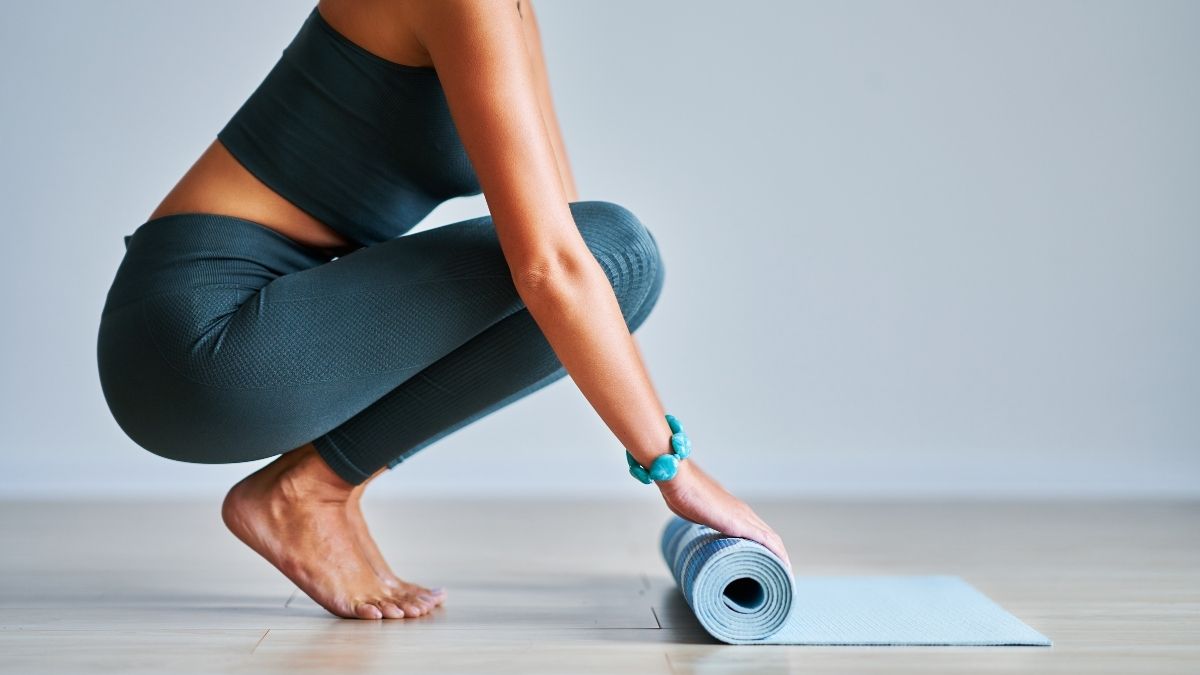
How often should seniors do yoga? Three to four times per week for 20-30 minutes works best. You don’t need hour-long sessions. Short and regular beats long and rare.
Learn the difference between discomfort and pain. Poses should never hurt. You should feel challenged but not strained. If something hurts, back off immediately.
Use props without guilt. Blocks, straps, chairs, and walls are your friends, not crutches. They help you do poses correctly while building strength. Even advanced yogis use props.
Progress gradually. Don’t add new movements until your body has fully adjusted to what you’re already doing. Gentle, regular stretches maintain muscle flexibility and prevent the stiffness that comes from decreased collagen as we age.
Remember these yoga modifications for beginners: shorter holds, smaller ranges of motion, and more support. You can always progress later.
Complementary Habits for Maximum Results
Yoga works better when you support it with smart lifestyle choices. Here’s what makes a real difference.
Eat enough protein. Research shows that higher protein intake combined with routine yoga practice helps you keep your muscle mass. Aim for 25-30 grams of protein at each meal. That’s a palm-sized piece of chicken, fish, or tofu. Protein for seniors isn’t optional if you want strong muscles.
Drink more water. Your joints need water to stay flexible. Your muscles need water to repair themselves. Keep a water bottle near your yoga mat and sip throughout the day.
Sleep well. Your muscles repair and grow during sleep, not during practice. Aim for 7-8 hours. This is when your body processes everything you worked on during the day.
Stay consistent, not intense. Doing yoga three times a week for 20 minutes beats doing it once a week for an hour. Your body adapts to regular movement, not occasional bursts of effort.
Add other activities. Walk on your non-yoga days. Try light resistance training with bands or small weights. Nutrition for muscle health plus varied movement equals active aging that actually works.
These habits aren’t fancy. But they work.
Your Next Step:
Age-related muscle loss and flexibility decline are common, but they’re not inevitable. Research proves that yoga for aging muscles specifically benefits adults in their 60s, 70s, and beyond. The 5-pose sequence you just learned targets the critical areas: hips, spine, legs, balance, and core.
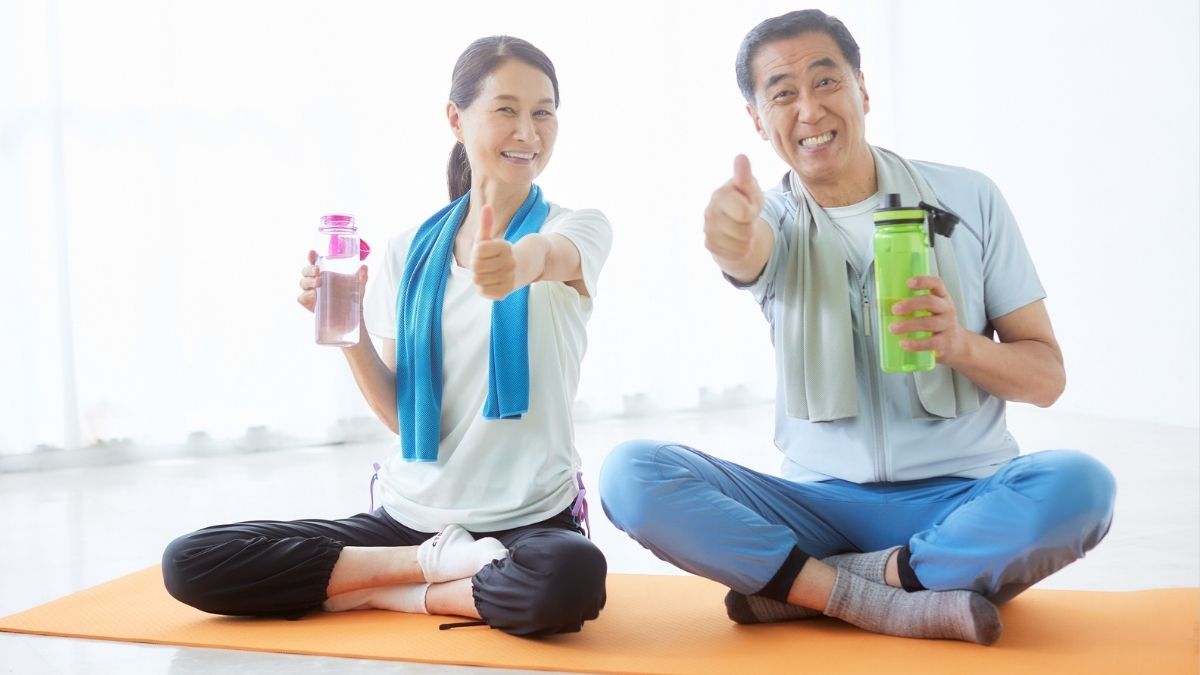
Real instructors in their 70s, 80s, and 90s show us what’s possible. Consistency matters more than perfection. Practice 3-4 times weekly for 9-12 weeks, and you’ll see measurable results in your flexibility after 60.
Start with just 10 minutes today. Choose one or two poses from the sequence and practice them with modifications. As my 78-year-old instructor always says, “The best time to plant a tree was 20 years ago. The second best time is today.” Your future self will thank you.