

Nearly half of American and Canadian workers say they feel work stress every single day.
If you’re reading this, you might be one of them—lying awake, replaying moments, and worrying about things that haven’t even happened.
Stress has become a long-term problem, and reports show it has grown worse since the COVID-19 pandemic. Your brain feels like it’s stuck in overdrive. It jumps to worst-case ideas and keeps your body tense even when nothing is wrong.
Here, you’ll learn why your mind gets trapped in stress loops and what the science says about breaking them. You’ll get proven methods that help you reduce stress naturally and break anxiety patterns.
You’ll also get an 8-week plan based on new 2024 research and tools that help you train your mind to stop stressing in simple steps you can use every day.

The Science Behind Why Your Mind Won’t Stop Stressing
Before you can stop stressing, you need to understand what’s happening inside your brain when anxiety takes over.
Your brain has three main players in the stress game. First, there’s your prefrontal cortex. This is the thinking part up front. It handles decisions and problem-solving. When you overthink, this area goes into overdrive.
It creates endless “what if” scenarios that feel real but aren’t.

Second, your amygdala acts like an alarm system. It sits deep in your brain and controls emotions. When you stress about everything, this alarm gets stuck in the “on” position. It floods your body with anxiety signals even when there’s no real danger.
Third, something called the default mode network kicks in. Think of it as your brain’s background app. It runs when you’re not focused on something specific.
For people who stress constantly, this network creates loops. You replay the same worries over and over. Your mind builds worst-case scenarios automatically.

Here’s what the numbers show. A study of 2,239 people found that simple mind training techniques significantly reduced stress. But 67% of workers still report burnout symptoms like low energy and lost motivation each month.
The good news? Your brain is remarkably plastic, capable of forming new neural pathways and adapting to new patterns of thinking. Let’s learn how to rewire it.
Technique #1 – Stop-Breathe-Be: The 3-Second Reset
You’re about to walk into a stressful meeting. Your heart races. Your thoughts spiral. You need quick stress relief that actually works.
Dr. Aditi Nerurkar, a Harvard physician, created the Stop-Breathe-Be technique. It’s simple. Before you enter any room or start any task, you pause. You breathe. You center yourself. That’s it.
Here’s how it works.
Step 1: Stop what you’re doing. Literally pause for three seconds.
Step 2: Take three deep breaths. Breathe in through your nose for four counts. Breathe out through your mouth for six counts.
Step 3: Say one centering phrase. Try “I’m ready” or “I’ve got this.”

This takes maybe ten seconds. But when you repeat it many times throughout your day, something changes. Your stress levels drop significantly. Think of it as hitting a mini-reset button on your brain.
Use this breathing exercise for stress before meetings, phone calls, or difficult conversations. Use it when switching between tasks. Use it before checking your email or opening a tough message.

Your body can’t be anxious and deeply breathing at the same time. That’s the science behind why this works.
While Stop-Breathe-Be handles acute stress moments, the next technique tackles the root thought patterns causing chronic stress.
Technique #2 – Cognitive Reframing: Change Your Thoughts, Change Your Stress
Your boss didn’t respond to your email. Your brain jumps to “I’m getting fired.” Sound familiar? This is where cognitive reframing for stress comes in.
Cognitive reframing means changing how you see a situation. You’re not lying to yourself. You’re just looking at the full picture instead of the worst-case scenario. Research shows this actually rewires your brain over time.

Here’s the step-by-step process. First, write down the negative thought. Get it out of your head and onto paper. Second, ask yourself: “Is this based on facts or assumptions?” Most stress comes from assumptions, not reality.
Third, replace it with a balanced perspective. Not fake positivity—just balance. Fourth, focus only on what you can control. You can’t control your boss’s response time. You can control your next action.
Let’s use a real example. You suggest an idea at a meeting. Nobody likes it. Your brain says: “I’m terrible at my job. Everyone thinks I’m incompetent.”
Reframe it: “People respect my input. I contribute good ideas regularly. This particular idea didn’t land, but that’s normal. One missed idea doesn’t define my work.”

Try this with your partner too. They seem distant today. Instead of “They’re mad at me,” try “They might be stressed about something else. I’ll ask them directly.”
The more you practice reframing, the more automatic it becomes. Your brain literally builds new pathways that change negative thoughts faster.
Technique #3 – Mindfulness Practice That Actually Works
You’ve heard about meditation for anxiety. Maybe you’ve tried it and quit after two days. Here’s why most people fail—and how to make it work.
Harvard researchers used brain scans to prove something big. Mindfulness meditation quiets the default mode network in your brain. That’s the part that creates those endless thought loops.
Studies show it reduces anxiety, depression, and even physical pain.
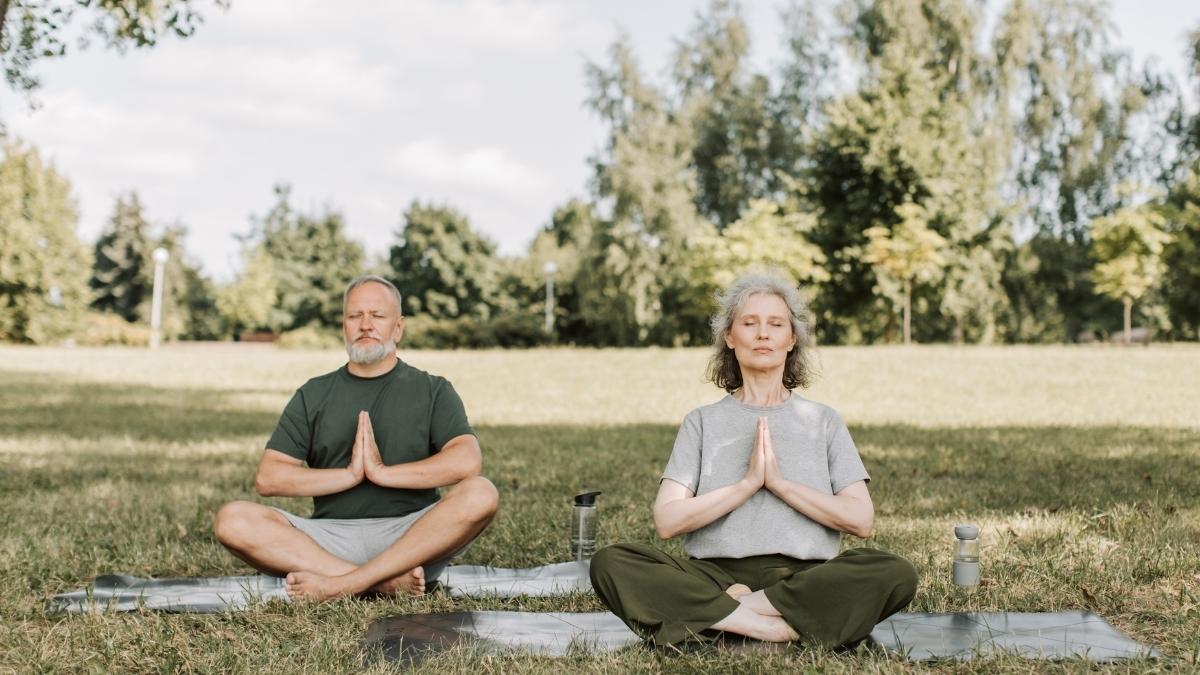
Here’s your 10-minute daily practice. Find a quiet spot. Sit comfortably. Close your eyes. Start with a body scan—the technique that works best for beginners.
Focus on your toes. Notice any tension or sensation there. Don’t judge it. Just notice. Move slowly up to your feet, ankles, calves. Keep breathing naturally. When your mind wanders (it will), gently bring it back to your body. Work your way up to your head over ten minutes.
Common mistakes to avoid: Don’t expect a blank mind. That’s not the goal. Don’t fight your thoughts. Just notice them and return to your breath. Don’t skip days thinking you’ll do extra tomorrow.

The numbers back this up. People using the Headspace app see 14% less stress in just 10 days. And 83% of people with serious anxiety feel better after 6 to 16 weeks of consistent mindfulness-based stress reduction practice.
Start with just ten minutes each morning. Same time, same place. Build the habit before you worry about doing it perfectly.
Technique #4 – The Cognitive Defusion Method
Your thoughts feel like facts. “I’m going to mess this up” seems real and true. But here’s what changes everything—it’s just a thought, not reality.
Cognitive defusion is one of the best stop overthinking techniques out there. Instead of believing every thought, you observe it from a distance. You don’t say “I’m a failure.” You say “I’m having the thought that I’m a failure.”

This small word change creates mental distance from anxiety. Studies prove it calms your amygdala—that alarm system in your brain. At the same time, it activates the parts of your brain that help you see things clearly.
Here’s how to practice thought observation daily. When a stressful thought hits, add this phrase in front: “I notice I’m having the thought that…” Say it out loud if you can. “I notice I’m having the thought that my boss hates me.”
Try the thought clouds visualization too. Picture your anxious thoughts as clouds floating by. You’re on the ground watching them pass. You don’t grab them. You don’t fight them. You just watch them move across the sky and disappear.

Do this for five minutes each day. Sit quietly and label your thoughts as they come. “There’s a worry about money. There’s a thought about tomorrow’s meeting.”
The goal isn’t to stop the thoughts. It’s to stop fusing with them—to stop treating them like absolute truth.
Technique #5 – The “Worry Window” Strategy
Worries pop up all day long. During breakfast. During work. At 2 AM. You try to push them away, but that makes them stronger. Here’s a better way.
The worry window is one of the smartest anxiety control techniques you’ll find. You pick one specific time each day—just 15 minutes—when you’re allowed to worry about everything. Outside that window, you postpone your worries.

Why does this work for worry management? Your brain stops fighting itself. Trying to suppress worries takes energy and usually fails. But telling yourself “I’ll think about this at 4 PM” actually works.
Here’s your step-by-step setup. Pick a worry time between 2 PM and 6 PM. Never right before bed—that ruins your sleep. Set a timer for exactly 15 minutes. Grab a notebook.
During your worry window, write down every concern. Let yourself fully stress about each one. When the timer goes off, you’re done. Close the notebook. Move on with your day.

Here’s the key part. When worries show up outside your window (and they will), say this: “Not now. I’ll think about you at 4 PM.” Write it down quickly if you need to remember it. Then return to what you were doing.
This teaches your brain that worries have a place and a time. You’re not ignoring problems. You’re just refusing to let them control your whole day. That’s how you stop stressing constantly.
Creating Your Daily Mind Training Routine
You’ve learned five techniques. Now here’s how to actually use them every single day for daily stress management.
Your morning anxiety routine sets the tone for everything. Wake up and do a 10-minute body scan meditation before checking your phone. Just ten minutes. Sit on the edge of your bed, close your eyes, and scan from toes to head.

At midday, use Stop-Breathe-Be before every meeting or task switch. That’s your reset button. Do it five to ten times between lunch and dinner. These three-second pauses add up fast.
Schedule your worry window for 3 PM. Set a phone reminder. Fifteen minutes of focused worrying beats eight hours of scattered anxiety. Write everything down, then close the notebook when time’s up.
Movement matters just as much as mental techniques. Daily movement is critical for managing stress—being sedentary actually harms your brain and body. Take a 20-minute walk. Do ten minutes of stretching. Just move.
At 9 PM, do another body scan before bed. This signals to your brain that the day is over. You’re winding down now.

Use habit stacking to make this stick. After you brush your teeth (existing habit), meditate (new habit). After you pour coffee (existing habit), do three deep breaths (new habit).
Put sticky notes where you’ll see them. “Stop-Breathe-Be” on your computer monitor. “Worry at 3 PM” on your desk. Environmental cues work.
Tell someone your plan. Text a friend daily when you finish your morning meditation. Accountability makes you 65% more likely to follow through.
Lastly,
Training your mind to stop stressing isn’t about eliminating all stress. That’s impossible. It’s about changing your relationship with it. The goal isn’t to stop thinking altogether—it’s to break the loop so that thinking becomes purposeful rather than compulsive.

Here’s what you need to remember. Your brain can change with consistent 8-week practice. Science proves it. Multiple techniques work together for best results—you don’t have to pick just one. Progress happens in stages, not overnight. Some days will feel harder than others. That’s normal.
Support tools like Headspace or Calm amplify your efforts. Use them. They’re designed to make this easier.
Start today with just one technique—the Stop-Breathe-Be method. Practice it three times before noon. Before you start your first task. Before a meeting. Before lunch. Then tomorrow, add one more practice. Small consistent steps create lasting change.

You now have the proven tools to train your mind to stop stressing. The science is clear. The methods work. Your calmer mind is waiting on the other side of practice.
Don’t wait for the perfect moment. Don’t wait until you’re less busy. Start right now with one deep breath.