If You Haven’t Lost These 8 Physical Abilities by 60, You’re Winning Aging

Your doctor checks your blood pressure and cholesterol, but what if the best predictor of how long you’ll live is whether you can stand on one leg for 10 seconds?
Most people don’t know if they’re aging well. Medical tests tell you about disease, but nothing measures your functional fitness—the real indicator of how many healthy, independent years you have left. You might have perfect lab results but struggle to get up from the floor. That struggle matters more than you think.
Here’s what you’ll learn: 8 simple physical tests backed by 2024-2025 research that predict longevity better than many medical exams. These are the healthy aging signs doctors now use to measure your real age.
Each test takes under 60 seconds and requires no equipment. Your physical abilities aging 60 determine your quality of life more than any blood panel. These tests show if you’re truly aging well at 60 and beyond.
Physical Abilities WINNING AGING
1. Stand Up From the Floor Without Using Your Hands (The Sitting-Rising Test)
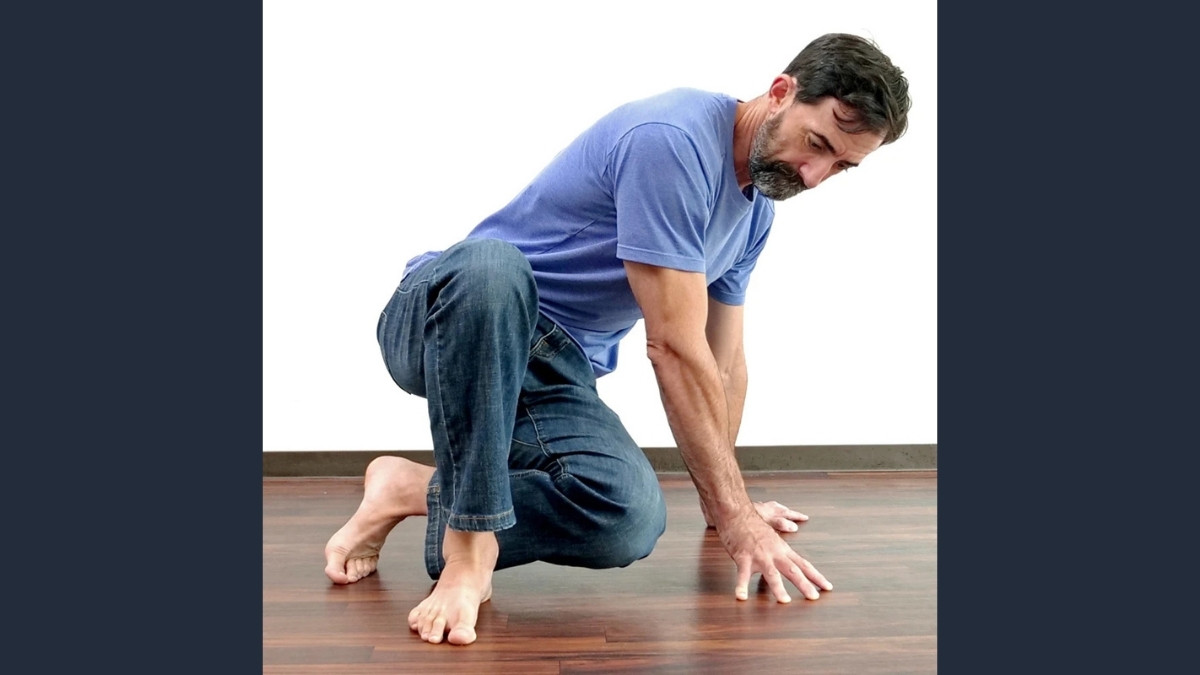
Can you sit on the floor and stand back up without using your hands, knees, or arms? If you can, you might live longer than most people your age.
This simple test is called the sitting rising test, and it predicts your longevity better than many medical exams. Dr. Claudio Gil Araújo studied 4,282 people ages 46 to 75 for up to 25 years. He found that low scorers faced 3.8 times higher risk of death. Those scoring 8 or above had significantly lower mortality risk.
Here’s what this longevity test measures: your leg strength, core stability, balance, and flexibility all at once. It’s functional fitness in action.
How to do it: Start standing. Sit down on the floor cross-legged. Now stand back up. You get 5 points for sitting and 5 points for rising—that’s 10 points total. Every time you use your hand, knee, forearm, or side of your leg for support, you lose 1 point.
Common mistakes: Rushing through it or using poor form. Go slow. Stay controlled.
Your score matters: 8-10 points means excellent. 3.5-7.5 means moderate risk. Below 3 means high risk. If you can’t do it yet, start by practicing getting up from a chair without hands first.
2. Balance on One Leg for 10 Seconds Without Support
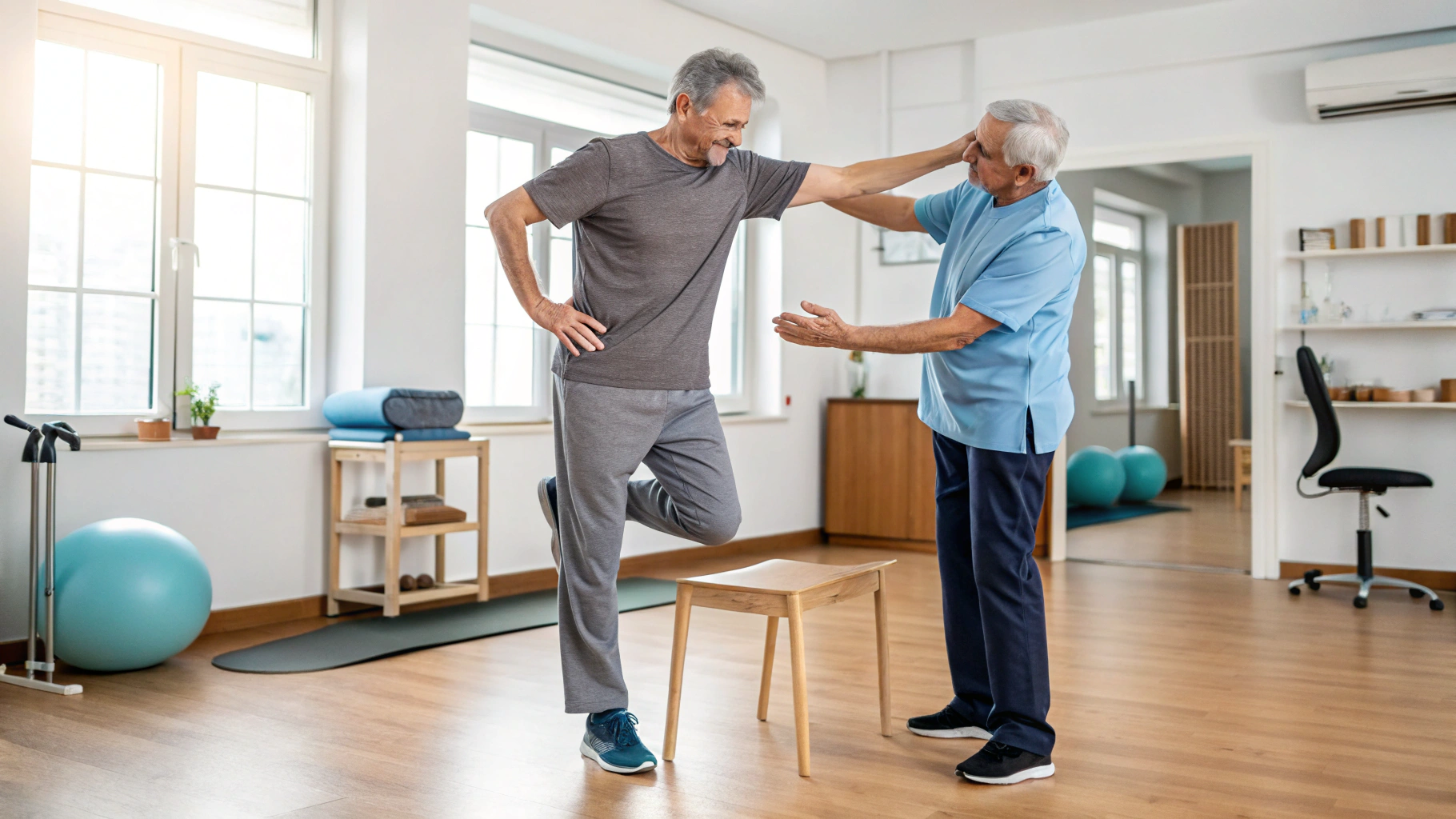
Stand on one leg. Close your eyes if you’re feeling confident. Can you hold it for 10 seconds?
This balance test aging predicts your survival better than you’d think. A 2022 study in the British Journal of Sports Medicine tracked 1,702 people ages 51 to 75 for seven years. People who couldn’t do this one leg stand had 84% higher risk of death within 10 years. The numbers are stark: 17.5% of those who failed died during the study versus just 4.5% who passed.
Your balance declines fast after 50. Failure rates jump from 5% at ages 51-55 to 54% at ages 71-75. It doubles in decline every five years.
Why this matters: Balance prevents falls and shows your brain-body connection is strong. Falls kill more seniors than you’d guess.
How to test: Stand near a wall for safety. Place your free foot on the back of your standing leg. Hold for 10 seconds. Don’t grab the wall unless you’re falling.
Can’t do it? Practice daily while brushing your teeth. Start with 3 seconds. Add one second each week. Your fall risk will drop as your balance improves.
3. Walk at Your Normal Pace (Your Gait Speed Tells Everything)

How fast do you walk? That speed might tell doctors more about your health than a blood test.
Walking speed aging matters more than most people think. A massive study tracked 34,485 adults over 65 for up to 21 years. The results were clear: your gait speed test predicts survival as accurately as complex medical assessments. For every 0.1 meters per second faster you walk, your death risk drops 10%.
Here’s the benchmark: 0.8 meters per second (about 1.8 mph) equals median life expectancy. Walk faster and you’ll likely live longer. Walk slower and your risk goes up.
Why does mobility aging matter so much? Walking uses everything: your heart, lungs, muscles, and nervous system. It’s your body’s report card.
Test yourself: Mark a 13-foot course. Use a stopwatch. Walk at your normal pace. Divide 13 by your seconds to get feet per second. Then convert: 4.3 feet per second equals 0.8 m/s.
Watch for decline: If your speed drops 0.030 m/s per year, that’s fast decline. It means 90% greater mortality risk. Test yourself twice a year to catch problems early.
4. Open a Jar Without Tools or Struggle
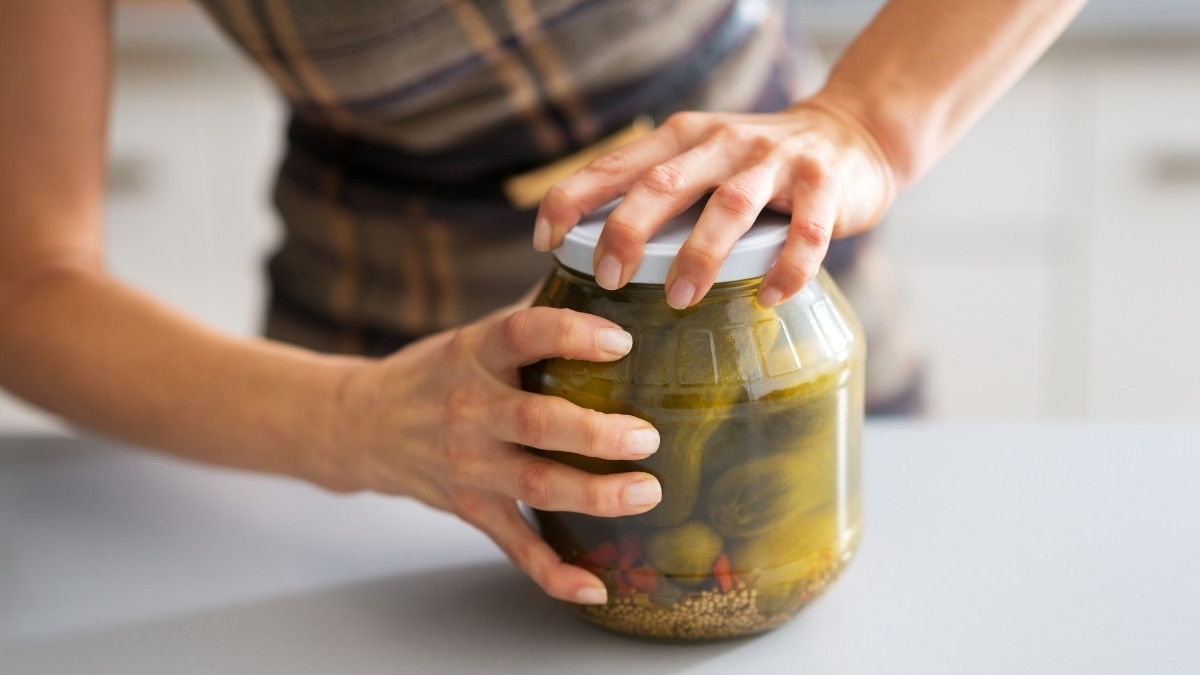
Can you twist open a new jar of pickles? Your grip strength aging tells doctors if you’re at risk of dying sooner.
This sounds strange but it’s true. Grip strength is one of the strongest predictors of all-cause mortality. It reflects your whole-body muscle mass and function, not just your hands. Doctors use it in frailty assessments because weak hands mean a weak body.
A hand strength test below the 25th percentile for your age and sex puts you at risk. It predicts hospitalization, disability, and death. The medical world takes this seriously—grip strength is included in the Fried Frailty Index.
Test at the doctor: They use a dynamometer, a device you squeeze. It measures pounds of force.
Test at home: Try opening a brand new jar. If you struggle or need tools every time, your muscle strength 60 needs work.
How to improve: Squeeze a tennis ball daily. Do farmer’s carries with heavy bags. Use hand grippers. Lift weights twice a week. Your grip will strengthen and so will the rest of your body. Strong hands equal a strong life.
5. Walk Up One Flight of Stairs Without Stopping to Rest

Can you walk up a flight of stairs without huffing and puffing? This simple test reveals a lot about your heart and lungs.
Stair climbing aging combines strength, cardiovascular health, and power in one movement. Your heart pumps harder. Your lungs work faster. Your leg muscles push against gravity. Research from 2025 shows stair climbing power declines 1.61-1.75% per year after 60. That’s faster than before age 60, when muscle strength only drops 0.7-1.0% yearly.
One flight equals 10 to 12 steps. You pass if you can walk up without stopping to rest. Here’s the key difference: your heart rate will go up—that’s normal. But you shouldn’t feel breathless or need to pause.
Why it matters: Your cardiovascular fitness 60 depends on this ability. If stairs leave you gasping, your heart might be struggling.
Build stamina: Start with 5 steps if needed. Add 2 steps each week. Take stairs instead of elevators when you can. Your heart will get stronger. Do this three times per week and watch your breathing improve within a month.
6. Walk a Mile Without Needing to Stop and Rest
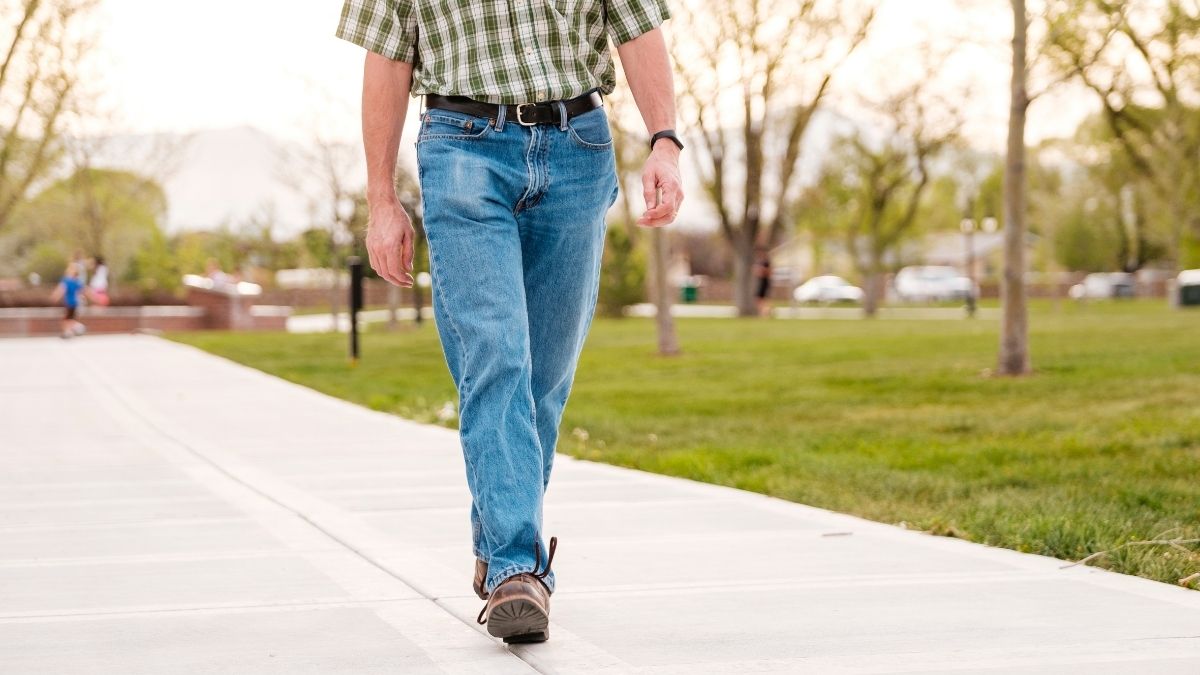
A mile seems short until you can’t walk it anymore. This distance is the benchmark for functional independence.
Walking endurance 60 reflects how well your body systems work together. Your heart pumps blood. Your lungs exchange oxygen. Your joints bend and flex. Your muscles fire in sequence. A mile tests all of this at once. It connects directly to activities of daily living—shopping, visiting friends, getting around your neighborhood.
At a healthy pace of 0.8 meters per second, a mile takes about 20 minutes. That’s the speed linked to median life expectancy. Faster is better. Slower means higher risk.
What counts as passing: You walk the full mile without sitting down to rest. Slowing down is fine. Stopping to rest is not.
Track it: Use a fitness tracker or smartphone. Walk outdoor routes or indoor tracks. Both work.
Build up gradually: Start with a quarter mile if needed. Add a tenth of a mile each week. Your cardiovascular health aging improves with every walk. Within 3 months, that mile will feel easy again.
7. Bend Down and Touch Your Toes (or At Least Your Shins)
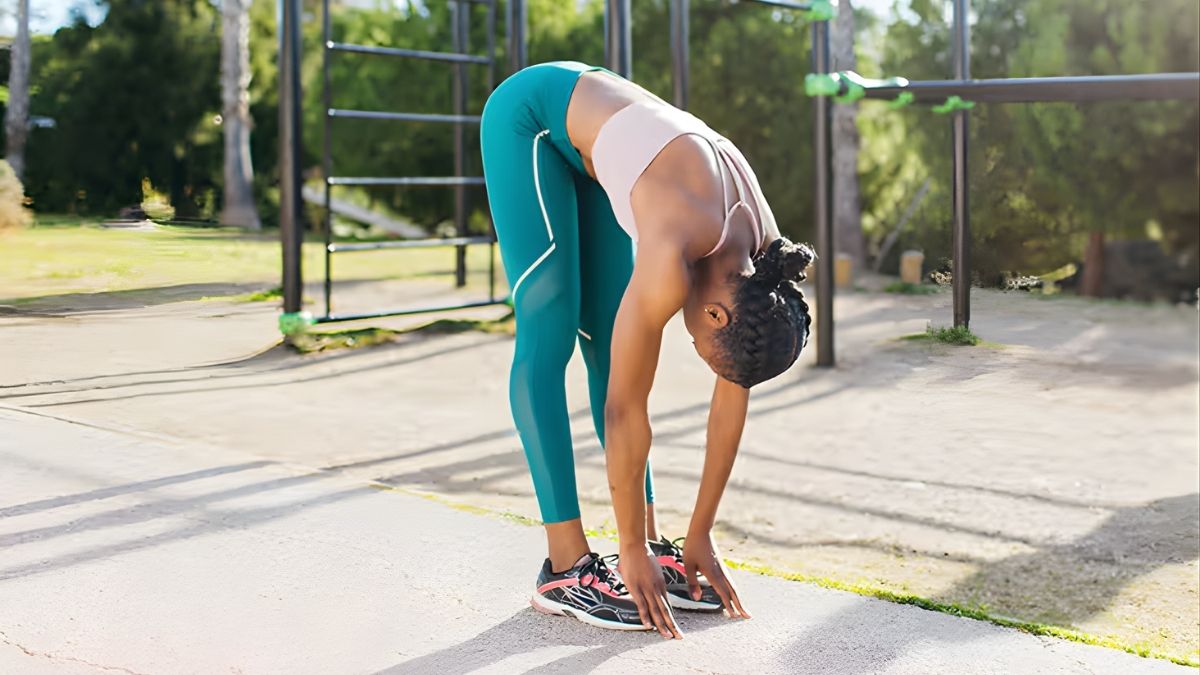
Can you reach down and touch your toes? If not, can you at least touch your shins? Your flexibility aging tells you a lot about your independence.
Flexibility is essential for the sitting rising test and dozens of daily tasks. You need it to tie your shoes, pick up dropped items, and get in and out of cars. Hip and spine flexibility prevent injuries that can end your active life. This ability declines significantly after 50, which is why doctors include it in the Short Physical Performance Battery—a test for comprehensive fitness.
Test safely: Stand with feet together. Bend forward slowly with straight legs. See how far you can reach. Touching your toes is great. Reaching your shins is acceptable. Can’t reach your knees? You need work.
Alternative test: Sit on the floor with legs straight. Reach forward. Measure the distance.
Daily routine for spine health 60: Stretch for 10 minutes each morning. Touch your toes 10 times. Hold each stretch for 30 seconds. Do cat-cow stretches. Your flexibility will return faster than you think.
8. Get In and Out of a Car Smoothly (No Pushing or Pulling)

Do you push off the car door to stand up? Do you pull yourself into the seat? These small struggles are often the first sign of declining function.
Getting in and out of a car tests your hip flexibility, leg strength, and coordination all at once. It’s a real-world functional mobility test that doctors use to predict independence in community living. The movements are similar to bathtub navigation—another daily task that gets harder with age.
What “smooth” means: You sit down without plopping. You stand up without using your hands to push. No grunting. No second tries.
Proper technique: Lead with your stronger leg when getting out. Sit down butt-first when getting in. Car seat height matters—higher seats make this easier.
Hip flexibility 60 exercises: Do daily hip openers. Practice chair sits without hands. Do goblet squats holding a weight. Strengthen your quads with leg extensions. These exercises keep your car mobility strong and prevent that awkward shuffle most older people develop. Practice three times per week and you’ll notice improvement in two weeks.
The Science: Why Physical Function Predicts Longevity

Your doctor checks your cholesterol. But these physical tests predict how long you’ll live better than most blood work.
Physical activity influences cellular aging mechanisms at a deep level. Recent longevity research 2025 shows something remarkable: 70-year-olds today function like 60-year-olds from previous generations. A study found 68-year-olds born in the 1950s perform like 62-year-olds from the 1940s. We’re aging slower than our grandparents did.
But here’s the problem: muscle mass still decreases 3-8% per decade after 30. It accelerates after 60. Sarcopenia—severe muscle loss—speeds up to 3% per year after age 60. By 80, you could lose up to 50% of your muscle mass. Between 11-50% of people over 80 have sarcopenia.
These tests measure your biological age versus your chronological age. Your birth certificate says one thing. Your body says another. A 65-year-old who passes all eight tests has the functional age of a 55-year-old. That’s 10 extra years of independence. That’s the difference between thriving and just surviving.
Failed a Test? Here’s Your Action Plan to Improve

You can improve at any age. Your sitting rising test scores can get better with training, even if you’re 70 or 80. The science is clear on this.
Resistance training 60 is the most effective way to maintain function. Lift weights at least twice per week. This aging exercise program works better than cardio alone. Balance training reduces your fall risk dramatically—try tai chi or practice standing on one leg while you brush your teeth.
Your weekly routine: Monday and Thursday, do strength training seniors workouts for 30 minutes. Hit all major muscle groups. Tuesday, Thursday, and Saturday, practice balance for 10 minutes. Every single day, stretch for 10 minutes.
Eat enough protein: You need 1.2-1.6 grams per kilogram of body weight daily after 40. That’s about 80-110 grams for a 150-pound person. Your muscles can’t rebuild without it.
Progressive overload: Start light. Add weight or reps each week. Your body adapts when you challenge it. Within 12 weeks, you’ll see real improvements in every test. Your functional age will drop even as your birthday count goes up.
Conclusion:

Most people worry if they’re aging well, but blood tests don’t answer that. These 8 simple tests do. Research from 2022–2025 shows they predict health and lifespan better. The good news is you can improve them at any age.
Test yourself this week, safely, with support nearby. Write down your scores, pick one exercise, and start. Retest in three months.
“Whether you’re 55 or 75, maintaining these physical abilities aging 60 and beyond determines your quality of life. These healthy aging signs are measurable, improvable, and powerful predictors of aging well at 60 and beyond.”