
You’ve probably tried to fix this before. You bought the resistance bands, watched the videos, maybe even joined a gym for a few months, and somewhere along the way it fizzled out.
That’s not a willpower problem. This article is written for adults over 50 who feel weaker than they used to and want a realistic, doable starting point, not another program you’ll abandon by March.
By the time you finish reading, you’ll know the smallest amount of exercise that actually works against muscle loss after 50, and three specific moves you can start today with no equipment.
Why Fighting Muscle Loss After 50 Hasn’t Worked for You
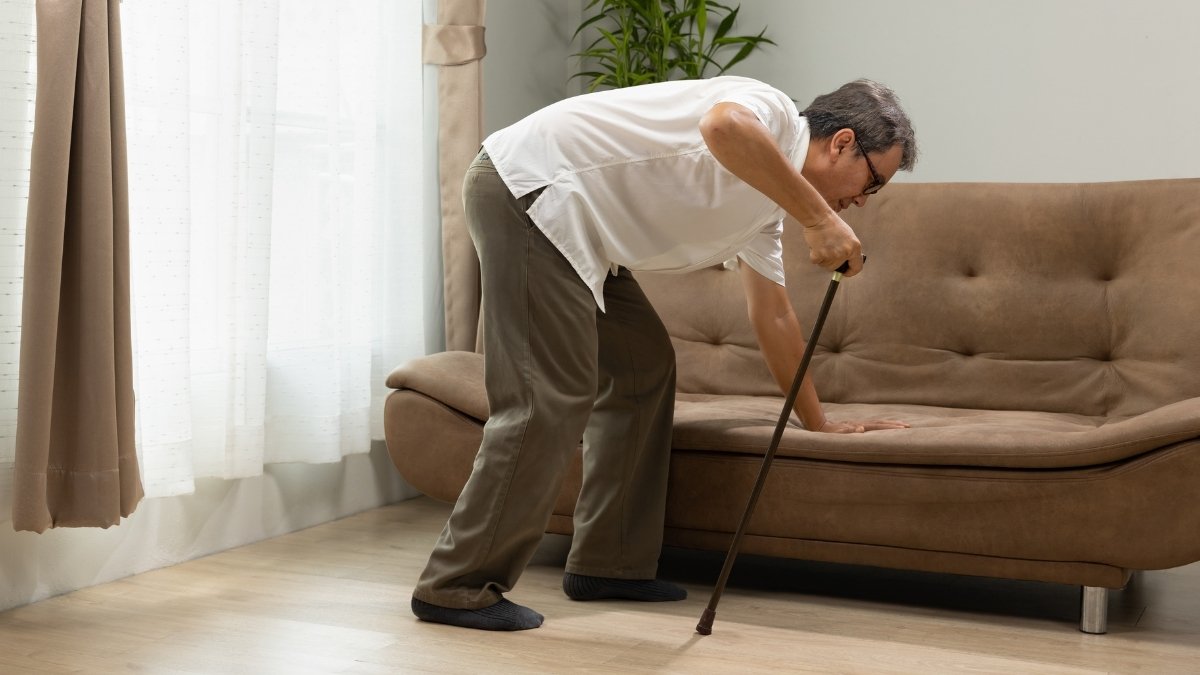
You feel it before anyone tells you. Jars are harder to open. Stairs take a little more out of you than they used to. Fighting muscle loss after 50 usually gets framed as a knowledge problem, as if you just haven’t found the right list of exercises yet. That’s not it.
The real problem is dose. Fewer than one in ten older adults in the United States actually meet the standard resistance training guidelines of two sessions a week.¹ You are not failing at a program. Most people never finish starting one.
That gap between “should do” and “actually do” is where every previous attempt has quietly died.
Talk to your doctor first if you have a heart condition, joint replacement, uncontrolled blood pressure, or any injury that limits movement, before starting any new exercise routine.
What you still don’t know is how small that starting dose can be and still count.
- • Eccentric Exercise: Slow, controlled lowering movements.
- • The muscle lengthens under tension instead of shortening.
- • You don’t need 5 days a week in the gym.
- • You don’t need 90-minute grueling workouts.
Exercise 1: The Sit-to-Stand
You already own the equipment. It’s the chair you’re sitting in.
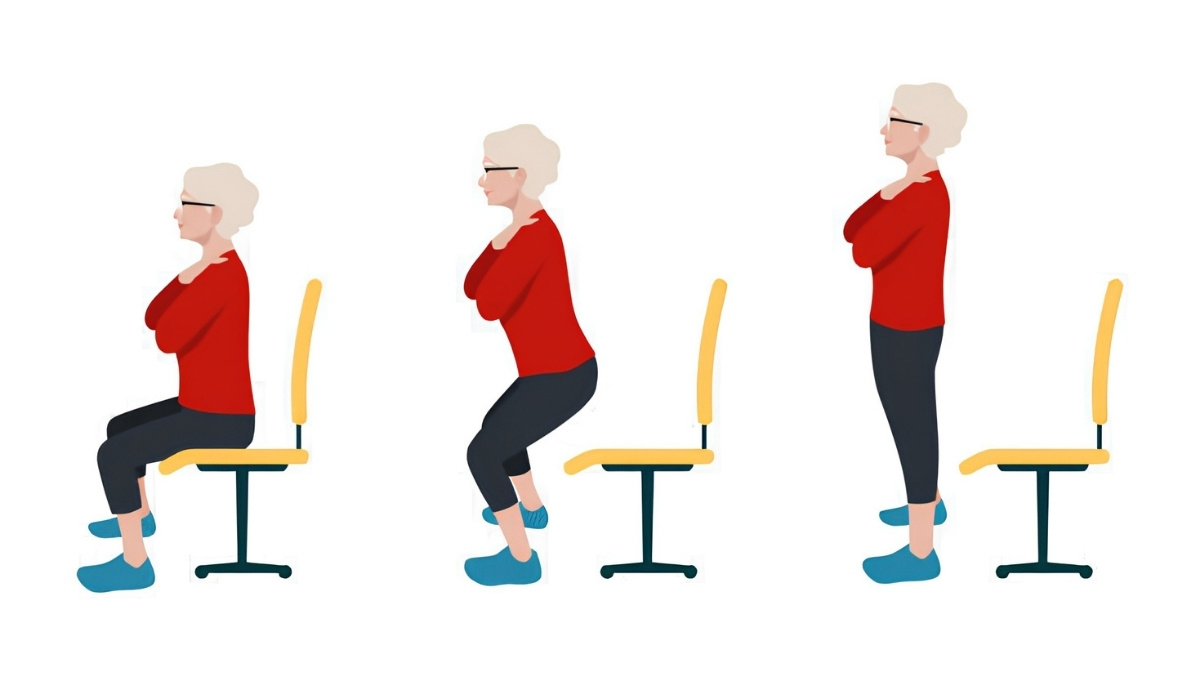
The sit-to-stand is exactly what it sounds like: standing up from a seated position and sitting back down, with control, using your legs instead of your hands.
Researchers who track leg power in adults ages 60 to 93 found that how well someone performs this movement is strongly linked to their overall leg strength and their ability to function independently.
Getting out of a chair without your arms isn’t a party trick. It’s a direct readout of the strength you’re trying to rebuild.
How to do it:
- Sit toward the front of a sturdy chair, feet flat on the floor
- Lean slightly forward and stand up without pushing off with your hands
- Pause at the top, then lower back down slowly, over a count of three or four
- Repeat eight to twelve times
- Too hard at first? Keep one hand resting on the armrest for balance, not for push
The lowering step matters more than the standing step. Take your time on the way down.
You’ve got the legs covered. The next move works the muscles most people forget until they’re already falling.
Exercise 2: The Slow Lower
Your legs just did the standing part. Here’s the eccentric training half most people skip. Stand facing a step or a sturdy low platform, about knee height.
Eccentric loading [lengthening a muscle under tension, like slowly lowering your body instead of dropping down] is the part of this exercise that does the real work.
Step up onto the platform with one leg, then lower yourself back down as slowly as you can, over a full four to five seconds, keeping the motion controlled the entire way.
This slow-lowering style of training appears to require less perceived effort for the same amount of muscle work compared with faster, standard exercise. It doesn’t feel as hard as it’s actually working.

Try this:
- Step up with your right leg, stand tall at the top
- Lower down over four to five seconds, controlling the descent
- Repeat six to eight times per leg
- Hold onto a rail or doorframe if balance is a concern
Your legs are handling the ground work. There’s still the half of your body that opens doors, lifts bags, and catches you if you stumble.
Exercise 3: A Simple Push
Picture the last time you pushed open a heavy door or pushed yourself up from a low couch. That’s the strength this move builds.
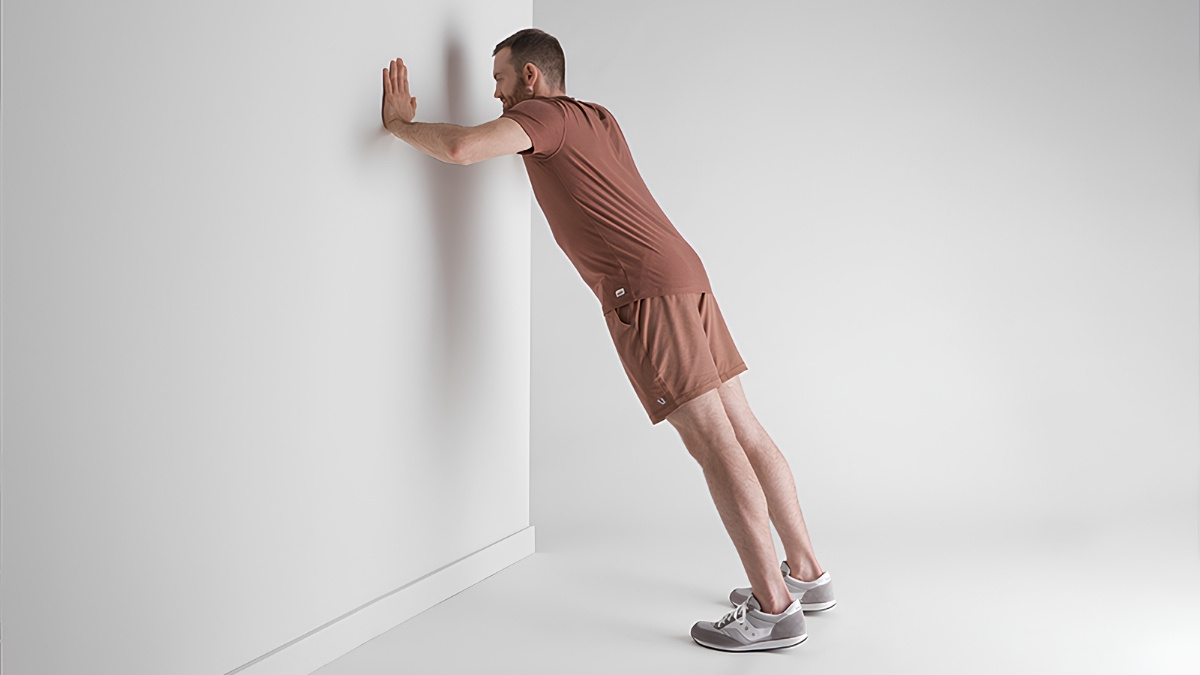
Stand facing a wall, an arm’s length away, hands flat against it at shoulder height. Lower your chest toward the wall, then push back to start. It’s a push-up with the floor removed as an obstacle.
A twelve-week trial that added upper-limb-focused training to older adults’ routines found meaningfully greater gains in arm-straightening strength compared with a lower-body-only program, in long-term care residents with a median age of 86.
Treat that as evidence the principle works at the far end of aging, not as a claim about your specific results at 50 or 60. The same logic, training the push motion directly, holds across younger older-adult groups too.
Give it a try:
- Stand an arm’s length from a wall, hands at shoulder height, slightly wider than shoulders
- Lower your chest toward the wall over three to four seconds
- Push back to the starting position
- Repeat eight to twelve times
- Step closer to the wall to make it easier, farther back to make it harder
Three moves, a few minutes, once or twice a week. What’s left is knowing whether it’s actually working.
How to Know It’s Working Without a Gym Test

You don’t need a body scan to know if this is working. You need to notice your own week.
Give it four to six weeks before judging whether you’re winning against muscle loss after 50. Strength changes are slow to show up and easy to miss if you’re only checking a mirror. If a movement causes sharp pain, rather than normal muscle fatigue, stop and check with your doctor before continuing.
You don’t need a plan you’ll abandon by spring. You need the one you’ll still be doing in a year.
Pick one of the three exercises and do it today, even in a shortened, easier version, rather than waiting to start a full program. Do the sit-to-stand right now, from the chair you’re sitting in, for five reps. That’s it. That’s the whole start.
Fighting muscle loss after 50 was never about finding the perfect program, it was about finding the smallest one you’d actually keep.
DISCLAIMER⚠️:
This article is for informational purposes only and does not constitute medical or professional fitness advice. The content addresses resistance exercises to counter age-related muscle loss and is intended for general educational purposes only. Exercise carries inherent risk – consult a qualified healthcare or fitness professional before beginning or modifying any training program, particularly if you have an existing injury or medical condition.