
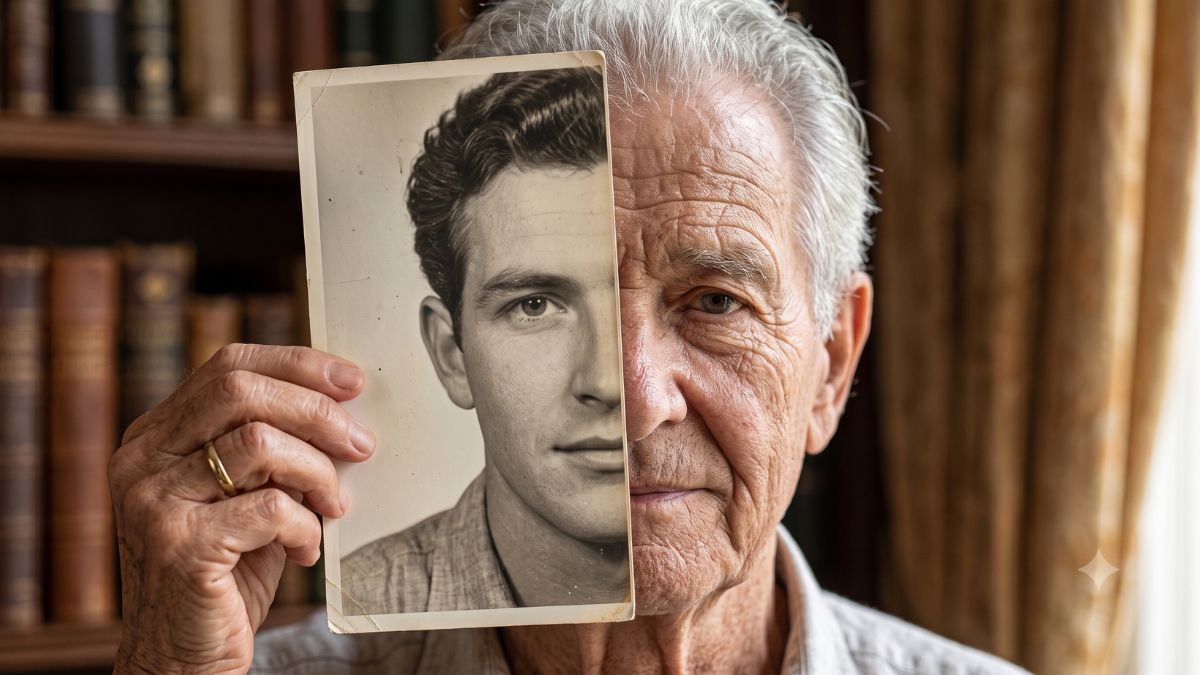
You saw the headline and felt that jump: maybe science just solved aging. That’s worth pausing on. It’s not quite what happened yet.
Headlines are calling this a cure for aging, but nothing has been proven in humans, and you deserve to know the difference before you get your hopes, or your money, ahead of the evidence.
If you’re over 50 and you follow anti-aging news, you’ve probably felt that same jump more than once this year. This is the first trial designed to reverse cellular aging in a living person, and it cleared a real FDA hurdle in January 2026.
By the end, you’ll know what got approved, why it started with eye disease, and how to spot the hype riding on its name.

What This Reverse Cellular Aging Trial Actually Cleared
You want the real answer, not the hype. In January 2026, the FDA cleared the first human trial testing whether a gene therapy called ER-100 can reverse cellular aging, starting with two eye diseases instead of the whole body.
You don’t need a medical background to follow this part. Before any new drug can be tested in people, the FDA has to sign off on the plan. Life Biosciences received that sign-off, called an IND clearance [the FDA’s approval to begin testing a new drug in humans], on January 28, 2026.
This wasn’t approval of a finished treatment, just permission to test the idea safely in a real person.

If you want to check any of this yourself, the trial has an official number, NCT07290244, listed in the federal registry that tracks every clinical trial in the country. Anyone can look it up and read exactly what’s being tested, which is the single best way to check a headline against reality.
You’re reading about something that has never happened before. No gene therapy built to make old cells act young again had reached human testing before this trial. Scientists call this idea cellular aging [changes in how genes switch on and off as cells get older], and reversing it is the whole premise behind ER-100.
What’s harder to explain in a headline is why a company chasing whole-body aging decided to start with someone’s eyesight.
Why Eyes Came First in This Trial
If you’ve ever worried about your eyesight as you’ve gotten older, this part will make sense fast. Life Biosciences didn’t pick eyes by accident. They picked the one organ where a small, contained test could answer a very big question safely.
If you’ve ever had eye drops prescribed, you already understand part of why. Your eyes are easier to treat directly than most organs. A doctor can send the therapy straight into the eye with a single shot,
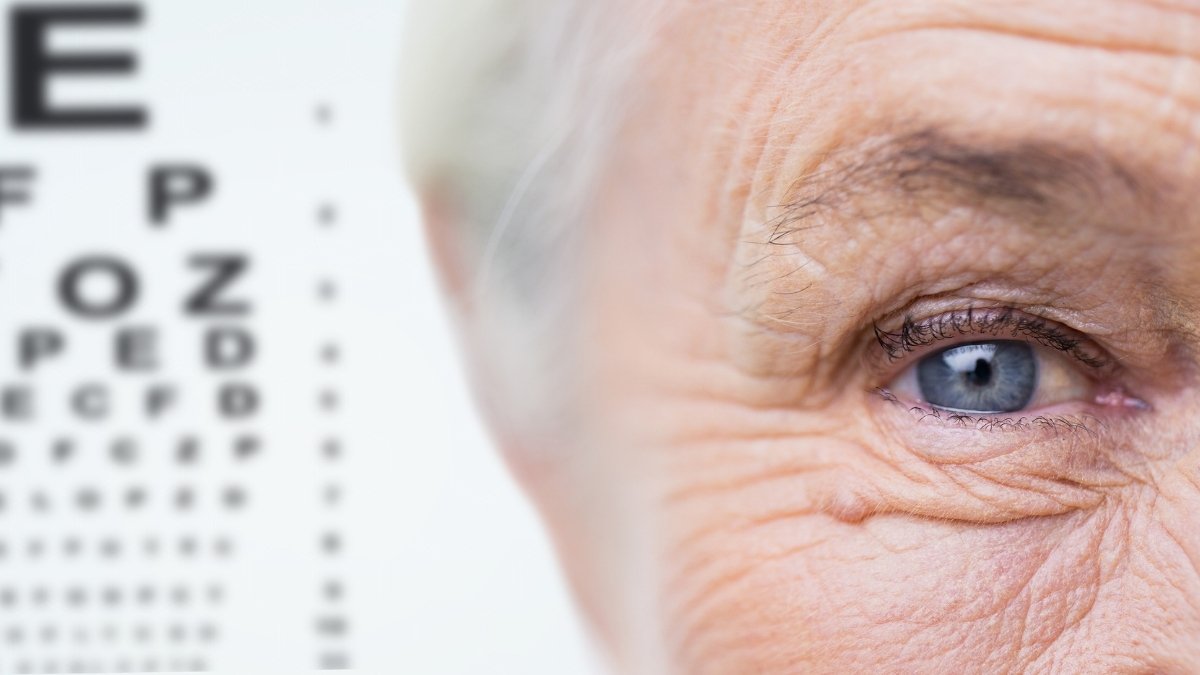
instead of releasing it into your bloodstream where it could reach organs nobody meant to test. This kind of shot is called an intravitreal injection [a shot delivered directly into the eye], and it lets researchers watch the effect in one contained place.
This reverse cellular aging trial matters to you specifically because vision loss tied to aging is more common than most people realize. An estimated 4.22 million Americans were living with glaucoma
[a group of eye diseases that damage the optic nerve and can cause permanent vision loss] in 2022, and the risk climbs with age. The CDC considers everyone over age 60 high-risk, regardless of any other factor.
That’s the real reason this trial matters to you even though you’ll probably never enroll in it. If the approach works for glaucoma and vision loss, the same idea could eventually apply to other tissues that age the same way.
Making a therapy work in the eye is one thing. Controlling it once it’s inside a living person is a much bigger problem, and that’s exactly what the next part solves.
The Off-Switch Built Into This Therapy
Handing someone a gene therapy sounds risky, and it should. This is the part where the science gets genuinely clever.
Here’s what actually goes into your eye. The therapy delivers three genes that tell aging cells to act young again. Researchers left out a fourth gene on purpose: in earlier animal studies, using all four at once has been linked to tumors forming, though that risk showed up in mice, not people, and this human trial was designed specifically to avoid it.
You might expect the genes to switch on right away. They don’t. The three genes that remain stay switched off until the patient takes a specific pill. Scientists call this class of genes Yamanaka factors [proteins that can reset a cell’s biological age without erasing what kind of cell it is].
The same pill used to treat acne is what turns this anti-aging therapy off.
You’ve probably taken something like it before. That pill is doxycycline, a common oral antibiotic already used for conditions ranging from acne to Lyme disease. Once it clears the patient’s system, the genes switch back off on their own, giving doctors a built-in way to stop the therapy if anything goes wrong.
Inside the Safety Switch
- The therapy delivers three genes with a single injection directly into the eye, not the bloodstream.
- Those genes stay dormant until the patient takes doxycycline, a common oral antibiotic already used for other conditions.
- Once the drug clears the body, the genes switch back off on their own.
- A fourth gene linked to tumor growth in animal studies was deliberately left out of the formula.
A safety switch answers how the therapy is controlled. It doesn’t yet answer whether calling this a reversal of aging is fair.
What Reverse Cellular Aging Does Not Mean Yet
It’s easy to read “reverse aging” and picture something bigger than what’s actually being tested. Here’s the more honest version.
Here’s the distinction that changes everything. Scientists split reprogramming into two very different categories. Full reprogramming turns a cell all the way back into something like an embryonic stem cell, wiping out what kind of cell it used to be.
This trial uses the other kind. Partial epigenetic reprogramming [resetting some of a cell’s age-related changes while keeping its identity intact] resets some of a cell’s aging markers without erasing its job in the body.
That distinction matters because it’s the difference between a controlled medical experiment and a claim borrowed for marketing. No approved reprogramming therapy exists yet, and people close to this work have been careful to say the realistic near-term goal is treating specific diseases, not reversing aging across an entire body.
So when this article’s title says the trial aims to reverse cellular aging, that’s accurate to the trial’s actual design, and it’s still a long way from a proven outcome in a person walking around today.
Knowing what’s actually being tested is one thing. Knowing whether you could ever take part in testing it is another question entirely.
Who Can Actually Join This Trial
You’re probably not eligible for this reverse cellular aging trial, and that’s worth knowing before you get excited about signing up.
The trial is enrolling a small group of adults with specific eye conditions, not the general public. Here’s what’s required:

- Adults between the ages of 40 and 85.
- A diagnosis of open-angle glaucoma or a recent case of NAION [a sudden loss of blood flow to the optic nerve].
- Willingness to receive a single eye injection followed by a period of oral doxycycline.
- Availability for close monitoring, including roughly ten clinic visits in the first six months alone.
That’s a narrow group by design, since this is still a safety study, not a released treatment. Life Biosciences dosed its first patient on June 9, 2026, meaning this is happening in real time, not hypothetically.
Since almost no one reading this can join, the more useful skill is knowing how to tell real progress from marketing that just borrows this trial’s name.
How to Spot the Hype Around This News
You’re going to see this trial’s name used to sell things it has nothing to do with. That’s not a guess, it’s just how anti-aging marketing works.
Manage your expectations here. This is a Phase 1 trial, which means its only job right now is proving the therapy is safe, not proving it works. Results on whether it actually helps vision are still months to years away.
You won’t have to wait forever for a real answer. Industry watchers expect the first safety results to be closely followed over the next one to two years, since this is the first human test of its kind.
Don’t be fooled by anything claiming to already offer this. No product on the market today has gone through the same testing as this reverse cellular aging trial, no matter what the label implies. If a product claims otherwise, that claim is the marketing, not the science.

The last question is what you should actually do the next time a headline like this one shows up in your feed.
Before you trust any headline or product built on this news, look up the trial itself instead of the marketing around it. Check the actual clinical trial listing, NCT07290244, before believing any product or supplement claims it’s the same breakthrough.
That single habit will protect you from almost every fake anti-aging claim riding on this story. This reverse cellular aging trial is real, it’s early, and it’s worth watching, but it isn’t something you can buy yet.
DISCLAIMER⚠️:
This article is for informational purposes only and does not constitute medical advice or an endorsement of any longevity intervention. The content addresses an FDA-cleared human trial testing reverse cellular aging and is intended for general educational purposes only. Individual health, genetics, and medical history significantly affect outcomes — consult a qualified physician before adopting any protocol discussed in this article.