
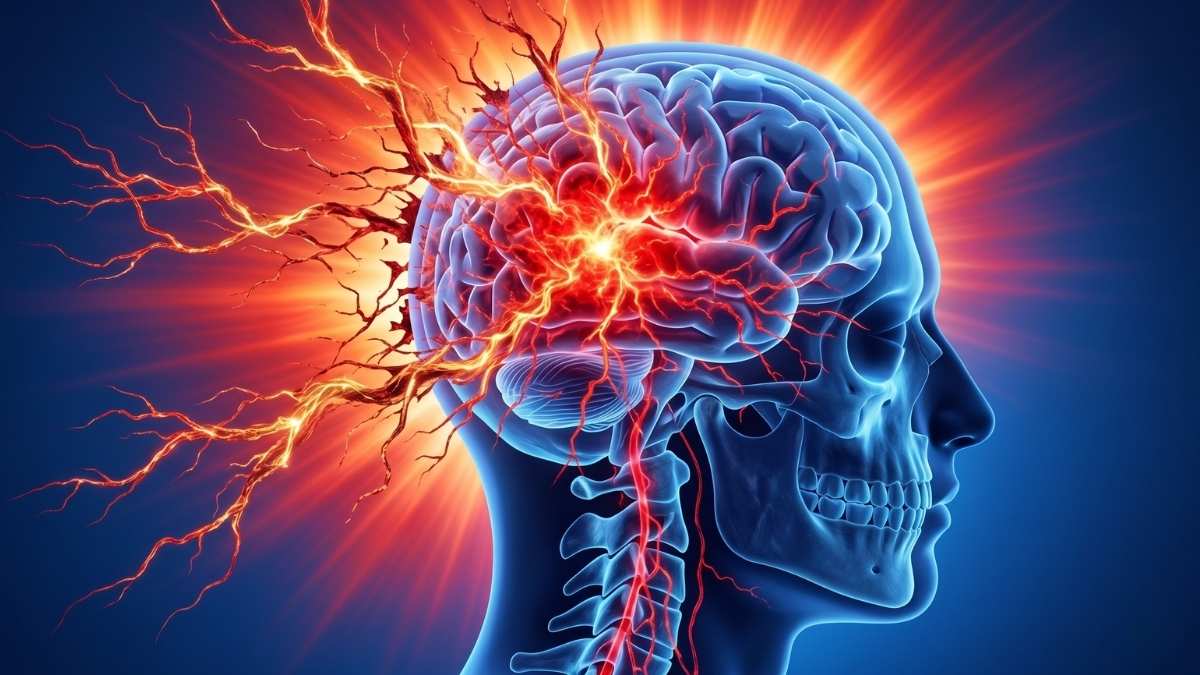
You felt that headache, took something for it, and moved on — but something about it nagged at you. Most people take a painkiller and go to sleep, never knowing that headache was the one warning their brain was able to send.
If you’re an adult 40 and older who gets occasional headaches, this matters more than most stroke articles will tell you. Most people have no idea that silent stroke warning signs can include a headache — one that feels almost like their usual headache but slightly off.
By the end of this article, you will know what that signal looks like and what to do the moment you feel it.
Sentinel Headache & Stroke Triage
Evaluate your recent headache symptoms to determine if it is a routine pain, a silent stroke warning, or an active medical emergency.
1. Headache Profile & Onset
Select the characteristics that best match your headache:
2. Neurological F.A.S.T. Check
Are you currently experiencing ANY of the following physical symptoms?
3. Context & Risk Factors
Final details to complete your risk profile:
MEDICAL EMERGENCY
Immediate action required.
Action Plan:
📖 Essential Reading Below
You cannot afford to ignore brain signals. Read the full article below to understand what silent strokes are, how they quietly damage the brain over time, and why the “7-Day Clock” is critical for your longevity.
The Headache You Don't Recognize
You know your headaches. That's exactly why this one bothers you. It's not quite a migraine. It's not quite tension. It feels like your headache but slightly wrong — more intense, or arriving differently, or not going away when it should.

That shift is what doctors call a sentinel headache [a warning headache that arrives before a more serious brain event].
A sentinel headache is not defined by how painful it is. It's defined by how unfamiliar it feels. Three things make a headache qualify:
- It's a type you have never had before
- It's a familiar headache with changed characteristics — more severe, arriving more often, or not responding to medication that normally works
- It peaks at maximum intensity within about 60 seconds of starting
That third type has its own name: a thunderclap headache [a sudden, extreme headache that reaches full intensity within one minute]. Thunderclap headache is a recognized medical emergency.
Research published in PubMed identifies it as a presenting feature of subarachnoid hemorrhage [bleeding between the brain and its surrounding membranes], ischemic stroke [a stroke caused by a blocked blood vessel], and several other serious brain events.
These are the silent stroke warning signs that emergency rooms see — and that most people explain away before they ever call anyone.
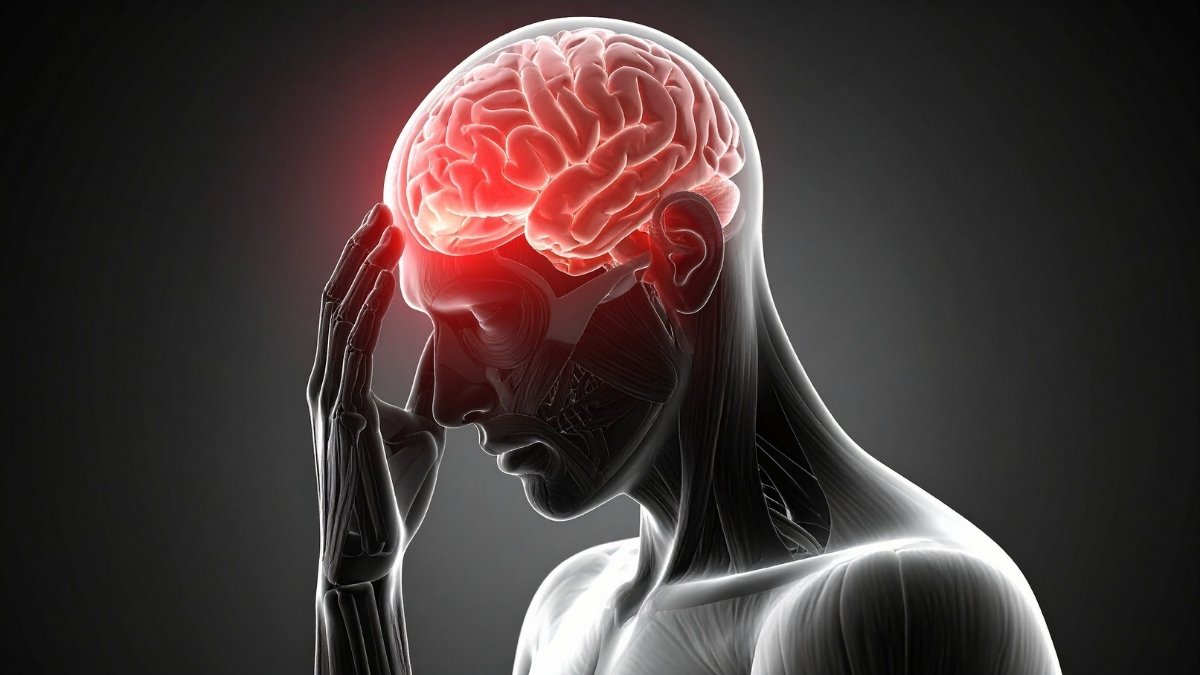
If your headache is the worst of your life and peaked within 60 seconds, don't finish this article. Call 911.
For most people reading this, the headache was subtler than that. But subtler doesn't mean safe.
What's Happening During a Silent Stroke Warning
Here's what's strange about silent strokes: the stroke itself may produce no obvious symptoms at all. You don't fall. You don't slur your speech. You don't go numb on one side. And yet something is happening.

A silent cerebral infarction [a stroke that damages brain tissue without causing the obvious warning signs most people recognize] occurs when a blockage cuts off blood to an area of the brain that doesn't control speech or movement. That area goes quiet. You go about your day.
A silent stroke can send one warning — a headache that feels like a stranger wearing your headache's clothes — and most people take a painkiller and go to bed.
You don't necessarily feel a headache because the stroke is severe. The headache arrives because blood vessel changes and pressure shifts activate pain-sensitive structures surrounding the brain.
Hemorrhagic stroke [a stroke caused by bleeding into or around the brain, rather than a blockage] is more likely to be associated with a severe headache. Blood in contact with the pain-sensitive membranes surrounding the brain is linked to this effect. Ischemic strokes are also associated with headache, particularly when blood flow changes affect the vessels that pain receptors monitor.
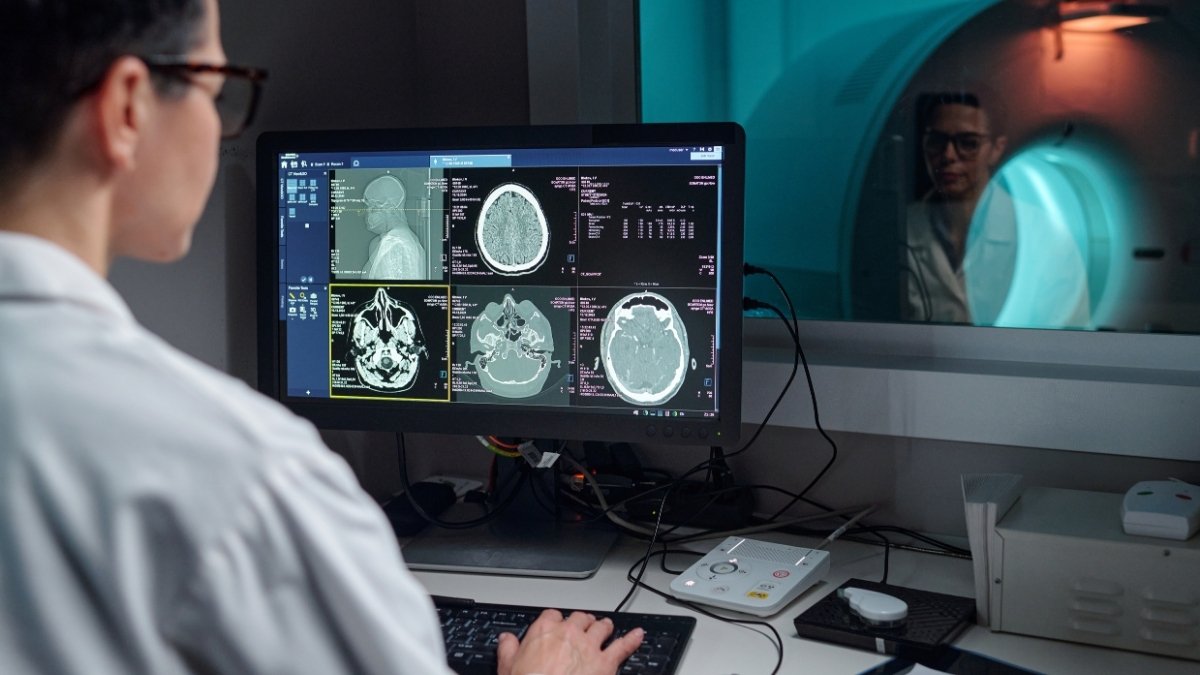
Estimates suggest 8 to 10 million Americans experience a silent stroke every year without knowing it. Most will find out only when a brain scan done for another reason shows an old area of tissue damage they never felt.
The biology of it doesn't wait for you to notice.
Who Misses It Most
Some people are more likely to write off a sentinel headache than others. Not because they're less careful. Because they have more reason to explain it away.
People who already get regular headaches are at highest risk of filing a sentinel headache under "just another one." If headaches are part of your life, a new type can feel like a variation instead of a warning. That pattern is one of the main reasons silent stroke warning signs get dismissed.
People with certain conditions face a compounding risk. In a study of patients with nonrheumatic atrial fibrillation [an irregular heartbeat that causes the heart to fire out of rhythm and raises the risk of clots forming], 14.7% already had evidence of one or more silent cerebral infarcts on CT imaging at the start of the study — before any new stroke event.
If you have high blood pressure, the risk compounds silently. High blood pressure damages small blood vessels in the brain over years — exactly the vessels most involved in silent stroke.

Age raises the number, too. Among adults over 70, the prevalence of silent stroke rises to 20-40%, depending on the population studied. Many attribute memory slips and coordination changes to getting older.
They're not wrong that age affects the brain. They're wrong that it can't be addressed.
What Silence Actually Costs
Here's what most people don't realize: the word "silent" describes the symptoms, not the harm.
A silent stroke still kills brain cells. It still leaves a scar. In a study of 1,015 adults aged 60 to 90 who were free of dementia and stroke at the start of the study, the presence of silent brain infarcts more than doubled the risk of developing dementia over the follow-up period, with a hazard ratio of 2.26.
Cumulative damage is the hidden danger. One silent stroke may not change how you feel. A series of them — each one quietly affecting a small cluster of cells — begins to show up as memory gaps, slower thinking, and trouble with coordination. The silent stroke brain damage in each of these events accumulates over time, and family members often notice before the person does.

What you feel now may not reflect your actual risk level. The next event after a silent stroke can be a full symptomatic stroke. The American Stroke Association estimates that for every symptomatic stroke, roughly 10 silent strokes occur.
"Absence of symptoms doesn't mean absence of brain injury," neurologist Mitchell Elkind, MD, of the American Heart Association, has stated on this directly.
What silence costs, it collects slowly. Then it collects all at once.
The 7-Day Clock
This is the finding that changes how you think about your last week.
The research behind this window is specific. In a controlled study published in the Journal of Headache and Pain, researchers studied 550 patients with confirmed first-ever ischemic stroke and asked every patient about headaches in the 7 days before their stroke. They asked a control group the same questions.
Among the stroke patients, 81 (14.7%) had a sentinel headache in the 7 days before their stroke. Among the 192 control patients, exactly one did.
A sentinel headache — defined as a new type of headache never felt before, or a familiar headache with changed characteristics such as higher severity, greater frequency, or failure to respond to the patient's usual medication — occurred in stroke patients at nearly three times the rate seen in controls.
The study population was patients with first-ever acute ischemic stroke confirmed by MRI or CT, with a mean age of 63.1. If you are in that range or approaching it, the data speaks directly to your situation.

The retrospective check
Think back over the last seven days. Did you have a headache that felt different from your normal pattern? If yes, tell your doctor today. You don't need to wait for another symptom. You need to say out loud: "I had a headache last week that felt unusual for me."
That one sentence opens the right conversation.
What to Do Right Now If Your Headache Feels Wrong
When a headache feels wrong, the hardest part is deciding whether to act. This section gives you the exact steps, in order, so the decision is already made.
Talk to your doctor before following any of these steps if you are on blood thinners, have a bleeding disorder, or are being treated for a heart condition. The steps are safe, but your medical context changes what comes next.
If the headache is the worst of your life and peaked within 60 seconds:
Call 911 right now. Do not drive yourself. Do not wait to see if it passes. This is a thunderclap headache and it is a medical emergency regardless of whether other symptoms are present.
If the headache feels new or different and you notice any of the following:
Use the FAST test from the American Stroke Association:

- Face: Ask the person to smile and look for drooping on one side.
- Arms: Ask them to raise both arms and watch whether one drifts down.
- Speech: Ask them to repeat a simple phrase and listen for slurring or strange word choices.
- Time: Note exactly when symptoms started, then call 911.
Stroke symptoms that improve or go away still require emergency evaluation. Do not talk yourself out of calling because the headache faded. Note the time the symptoms began — emergency teams need that information to make treatment decisions.
If your headache was unusual but has passed and you have no other symptoms right now, call your doctor today, not next week. Describe it as specifically as you can: where it was, how it felt different, when it started, how long it lasted.
Managing blood pressure, not smoking, and staying physically active all lower your risk of future events, per the American Heart Association and American Stroke Association 2024 stroke prevention guidelines.
Lastly,

If your headache felt off this week, the most important thing you can do today is tell your doctor and describe exactly how it was different from your normal headache.
If you notice a headache that feels new, different, or worse than any you have had before — especially with sudden confusion, one-sided weakness, or trouble speaking — call 911 immediately and tell them you suspect a stroke. Knowing the silent stroke warning signs is not about living in fear.
It's about knowing the difference between a headache you can sleep off and the one you can't afford to.
DISCLAIMER⚠️:
This article is for informational purposes only and does not constitute medical advice, diagnosis, or treatment. The content addresses recognizing unusual headaches as silent stroke warning signs and is intended for general educational purposes only. Health conditions vary significantly between individuals — always consult a licensed physician or qualified healthcare provider before making any decisions about your health or medical care.